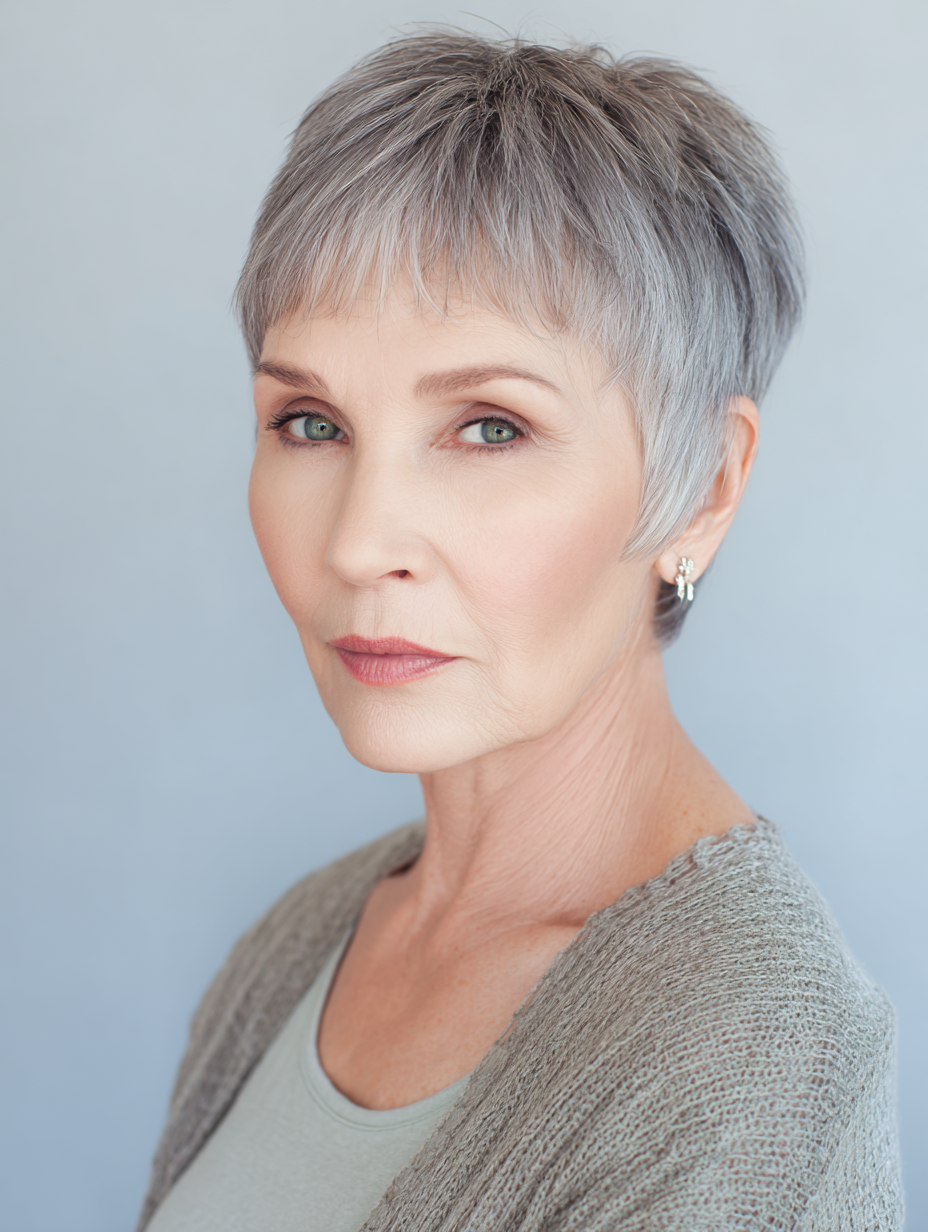
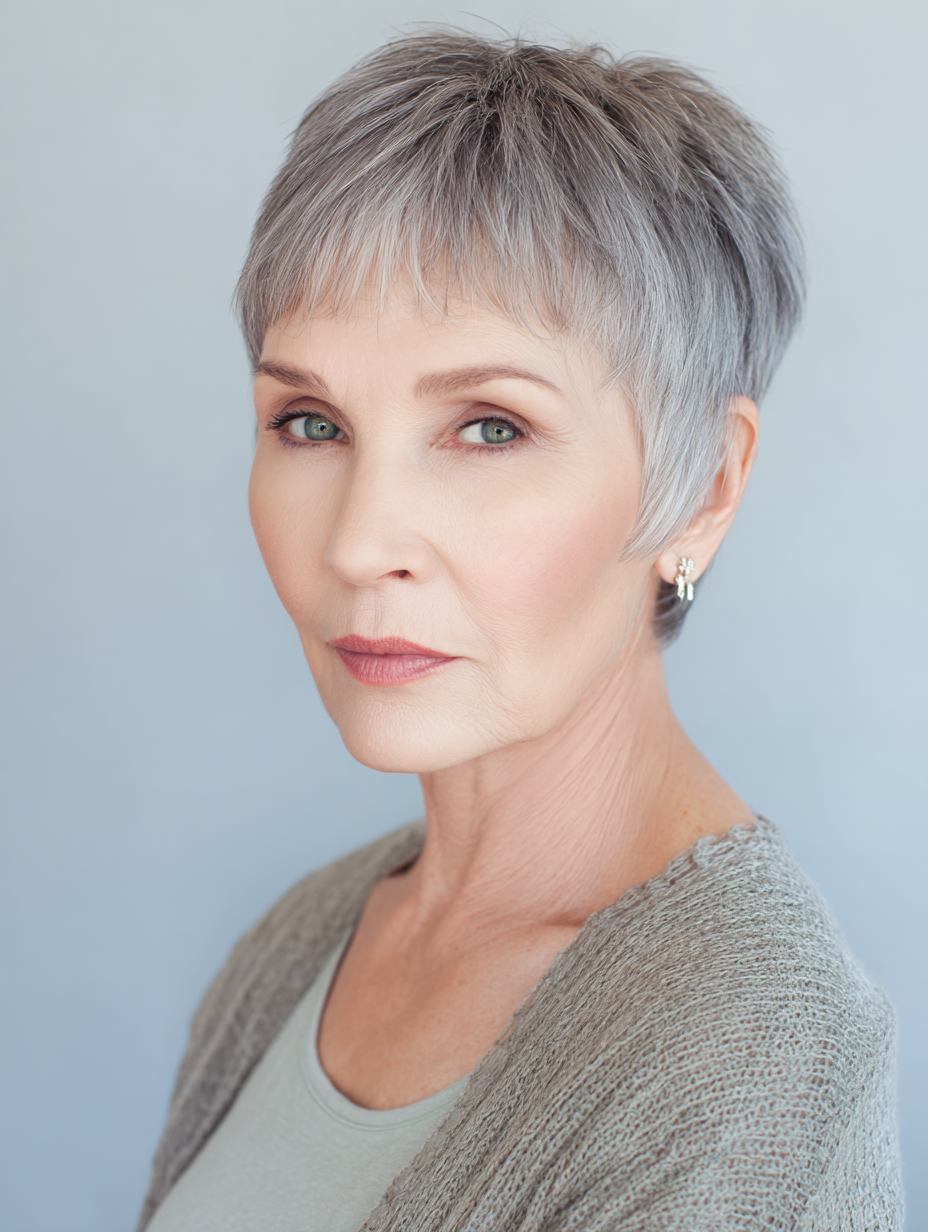
Most articles tell women over 60 with fine hair to go shorter. That is only half-right. Length is not really the problem — weight distribution is. Fine hair grown long pulls itself flat from the roots down, so what reads as “thin” is often just gravity winning. Cut the same hair to chin or shorter and that downward pull disappears. The hair stops fighting itself.
That is why the right short cut can take years off, while the wrong one — usually the wrong one is too uniform, too short on the sides, or too aggressively layered — makes thinning look more obvious, not less. The 25 cuts below are organized around that idea: shapes that put weight where fine hair needs it, and remove it where it does not.
Before You Choose This Hairstyle
Short cuts on fine hair flatter most face shapes, but the variations matter more than the category. Oval and softly square faces have the most flexibility. Round faces want a touch of crown lift and slightly longer pieces near the chin to add vertical balance. Heart-shaped faces look strongest with chin-length pieces that fill out the lower face. Long or oblong faces benefit from soft side volume rather than tall crown height, which can stretch the face further.
Density matters more than texture. Fine, thin hair gets the most lift from short cuts because the shorter length removes the weight that drags it flat. Coarse or thick hair can wear these shapes too, but the cutting strategy flips — the goal becomes weight removal rather than building fullness, which usually means more internal layering and a less stacked silhouette.
Plan on a few minutes of styling each morning, mostly at the roots. Trims every 6 to 8 weeks keep the silhouette crisp, since the shape itself is doing most of the work. A more detailed style guide appears at the bottom of this article.
25 Short Hairstyles for Women Over 60 with Fine Hair
Soft Layered Pixie for Fine Hair Over 60
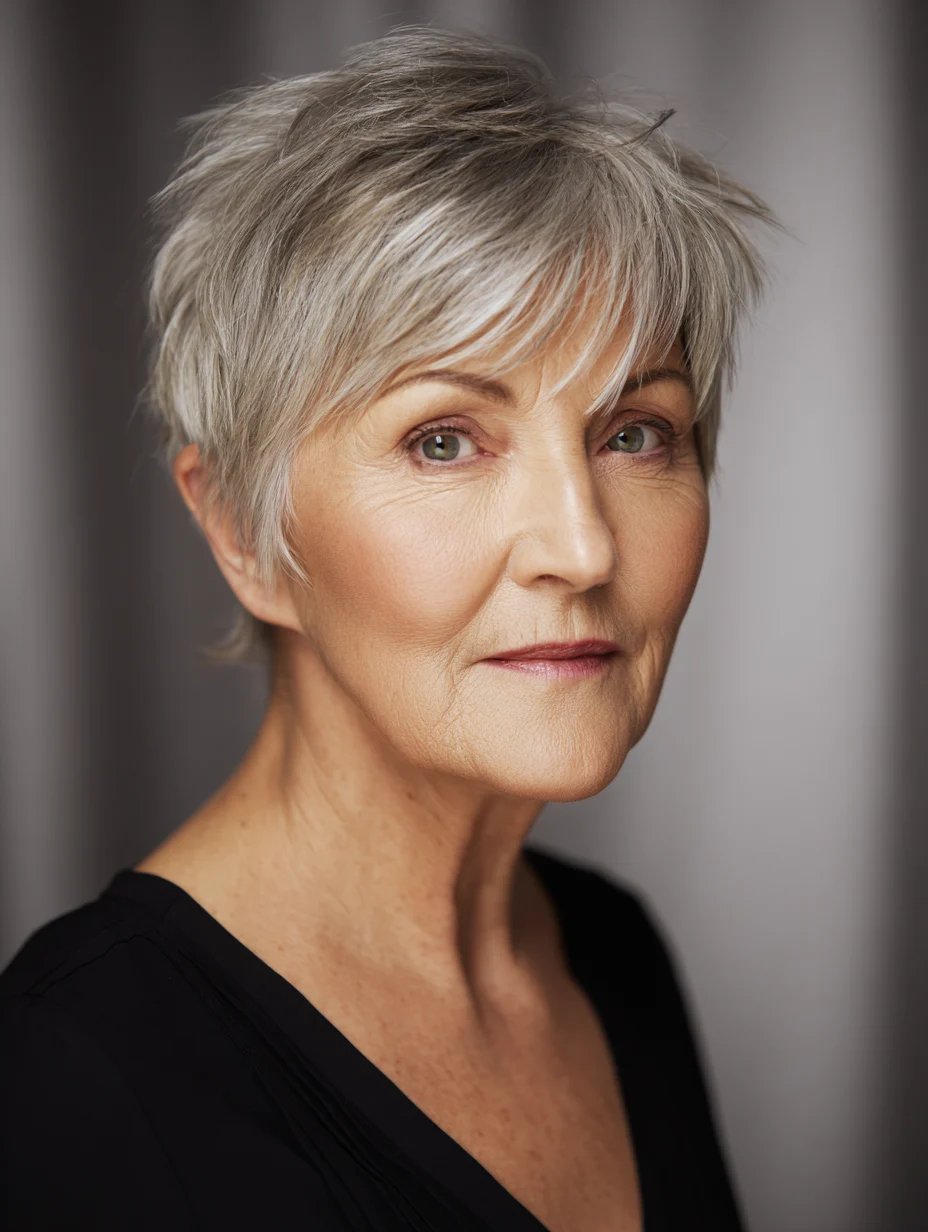
Ask your stylist for a pixie with the weight kept on top and the sides only lightly tapered — not buzzed. The shape works because most of the lift happens at the crown, where fine hair sits flattest with age. Soft layers through the top create movement without sacrificing density at the perimeter.
This is the cut I recommend most often for women new to short hair. It looks intentional but does not read as a “senior” haircut, and it grows out gracefully into a longer pixie or short bob if you decide to change direction.
Classic Short Bob with Feathered Ends
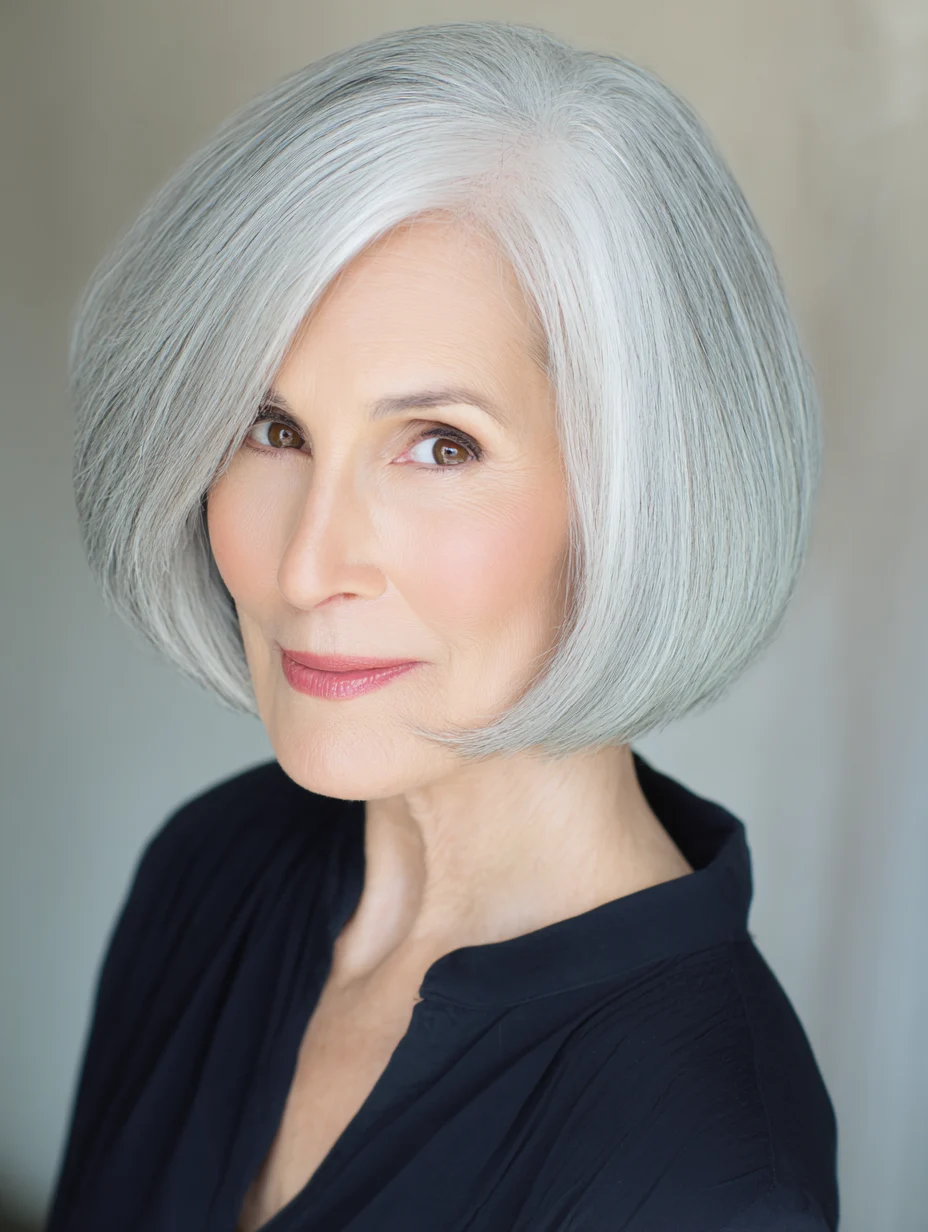
The bob sits at the jawline and stays mostly one length, with the ends gently feathered using point-cutting rather than full layering. The blunt-ish perimeter is what makes this work — blunt ends always read as fuller on fine hair than wispy ones do, even when the actual density is identical.
It is the cut that transitions easiest between a school run and a work meeting. A round brush and a low-heat blow dry are usually enough.
Tapered Crop with Subtle Volume
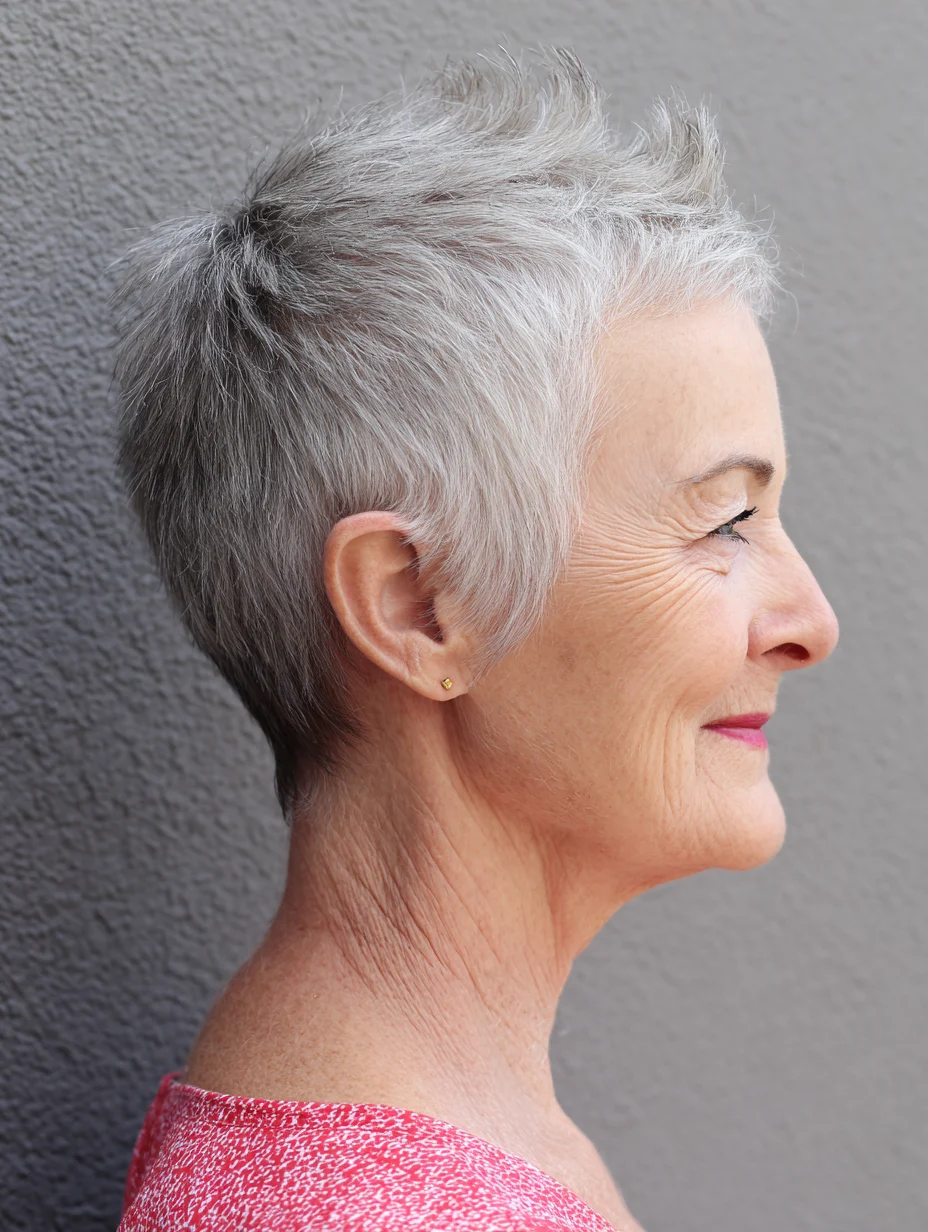
A tapered crop removes weight from the sides and nape and keeps the visual focus on the top. For fine hair, that is exactly the right trade — the parts of your head where density is least missed get cut close, while the crown stays full enough to lift.
Pairs especially well with glasses, since the clean sides keep the frames from competing with hair volume. Most women find the morning routine drops to under five minutes.
Short Shag with Wispy Layers
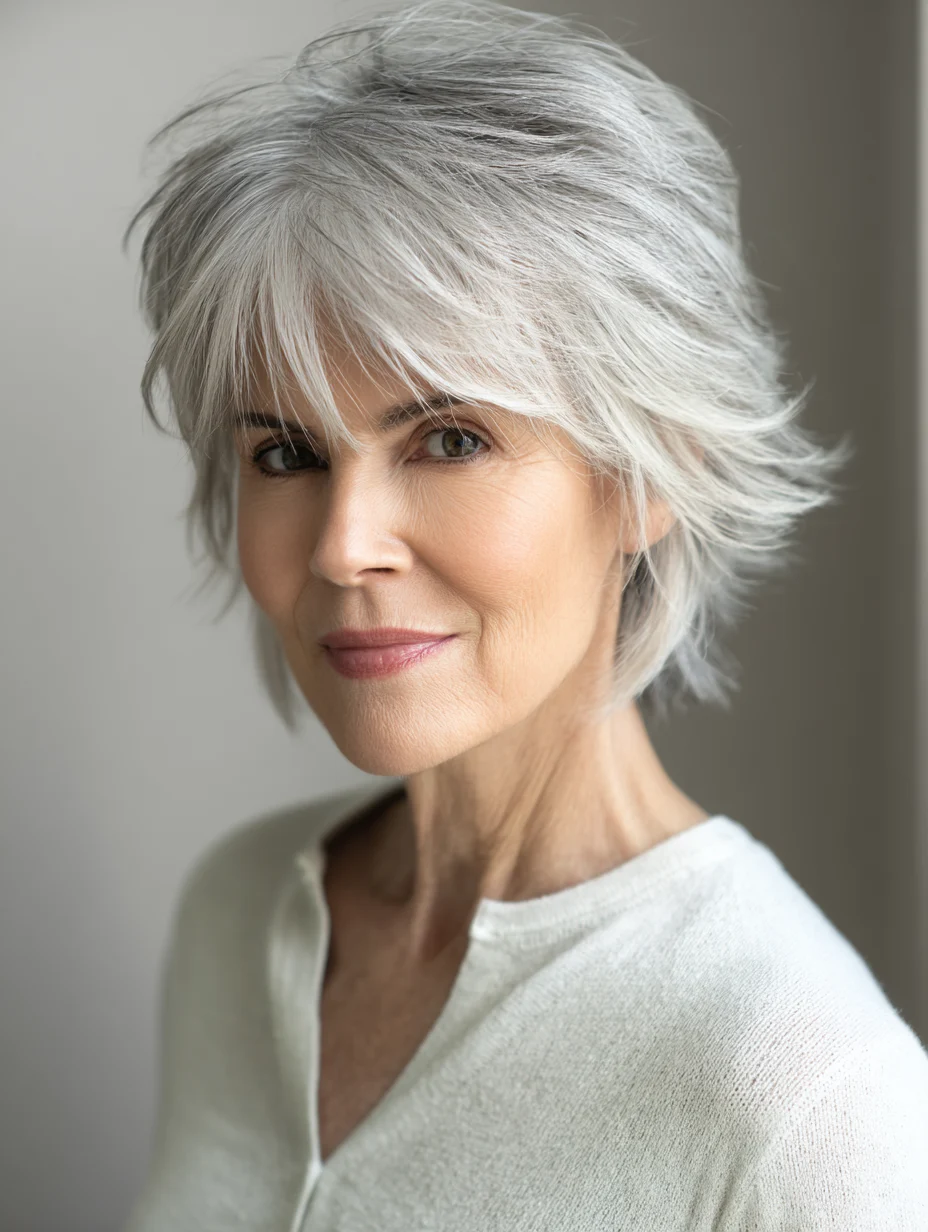
Shag cuts get a reputation for being too youthful, but the over-60 version is softer — fewer disconnected layers, more blended ones, and a perimeter that stays connected rather than choppy. The structure builds fullness around the crown and the temples, two areas where fine hair shows thinning first.
Skip heavy styling cream. A pea-sized amount of light mousse worked through damp hair before air-drying is usually all the shag needs.
Rounded Bob for Fine Hair Over 60
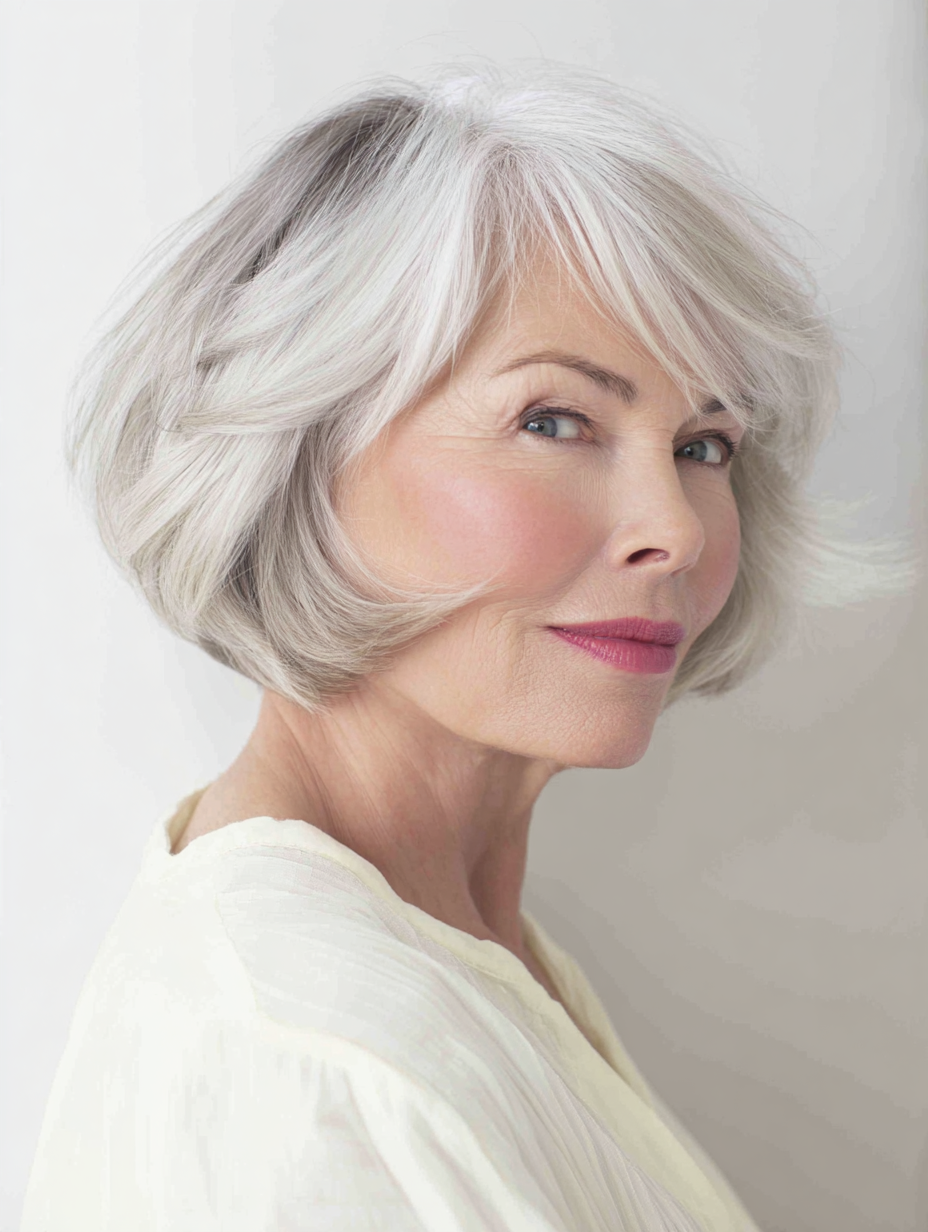
The rounded bob curves slightly inward at the ends rather than sitting straight. That curve does two things: it builds visible volume at the sides, and it draws the eye inward toward the face rather than down toward thinning ends. Pair it with a soft side fringe for extra coverage if your hairline has receded slightly.
This is one of the lowest-maintenance cuts on the list. It looks polished even on day-three hair.
Textured Pixie with Side-Swept Bangs
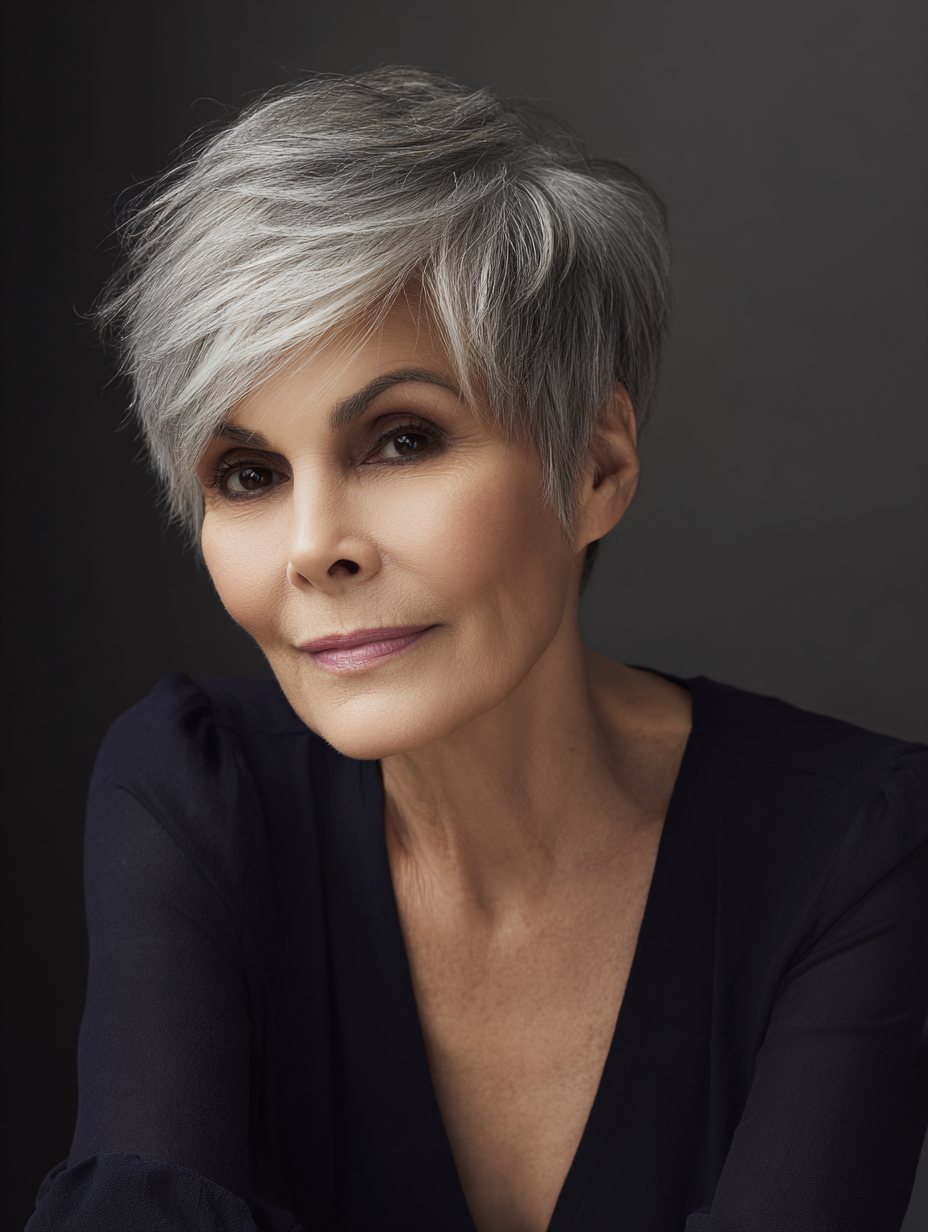
Side-swept bangs do quiet work on this cut: they break up the forehead horizontally, which softens vertical lines, and they give you somewhere to redirect attention if your part has widened over time. The pixie keeps the sides short enough to show off jewelry and earrings.
Slightly tousled finishes age better than slick ones on fine hair — slicked-down short cuts emphasize scalp visibility, which is the opposite of what you want.
Short Layered Bob with Light Graduation
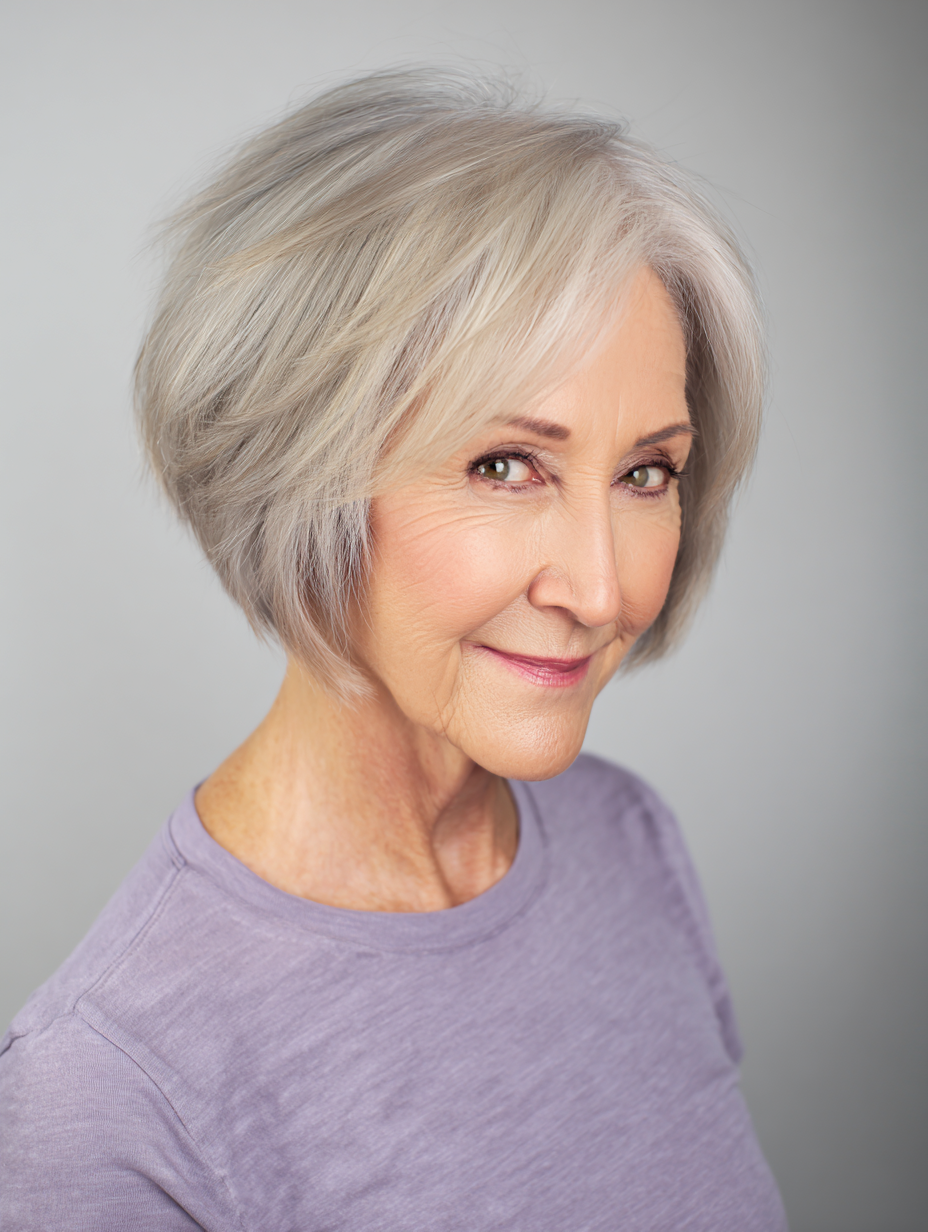
Light graduation means the back is cut just slightly shorter than the front, building a soft stacked shape at the nape. On fine hair, this is the gentlest way to add visible volume without it looking like an obvious ’90s stacked bob.
A side part adds further lift. Center parts on this cut can flatten the crown — worth knowing before you book.
Cropped Cut with Crown Lift

This cut is short throughout, with extra length deliberately left at the crown to be styled upward. The lift is the entire point — it creates the illusion of fuller hair through silhouette alone, no products required.
Daily styling is finger-combing the crown upward as it air-dries, then a brief shot of cool air from the dryer. Two minutes total.
Soft Short Bob with Side Part
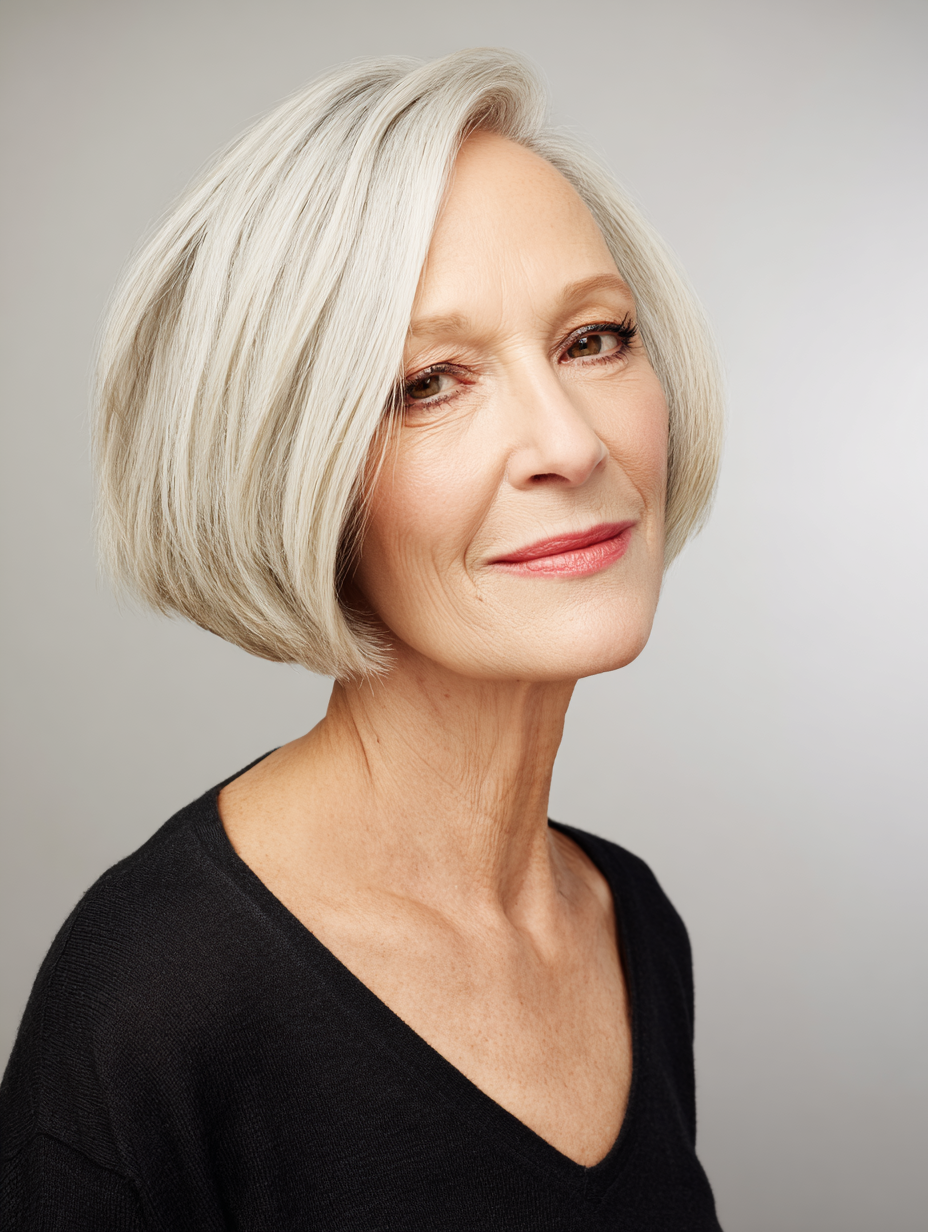
The side part is the unsung hero of fine hair after 60. It instantly adds visible volume on the heavier side, breaks up symmetry that tends to highlight thinning, and shifts attention horizontally rather than downward. Pair it with a gentle layer through the mid-lengths.
If your part has stayed in the same place for years, switching it can take a week or two of training but the volume payoff is immediate.
Short Pixie Bob for Fine Hair
Sometimes called a “bixie” — bob and pixie hybrid — this cut keeps the back short like a pixie but leaves the top long enough to curve toward the chin like a bob. The result reads as fuller than either parent shape because the eye sees length and structure at the same time.
Especially good with glasses. The shape draws focus toward the face rather than across it.
Short Feathered Cut with Natural Flow
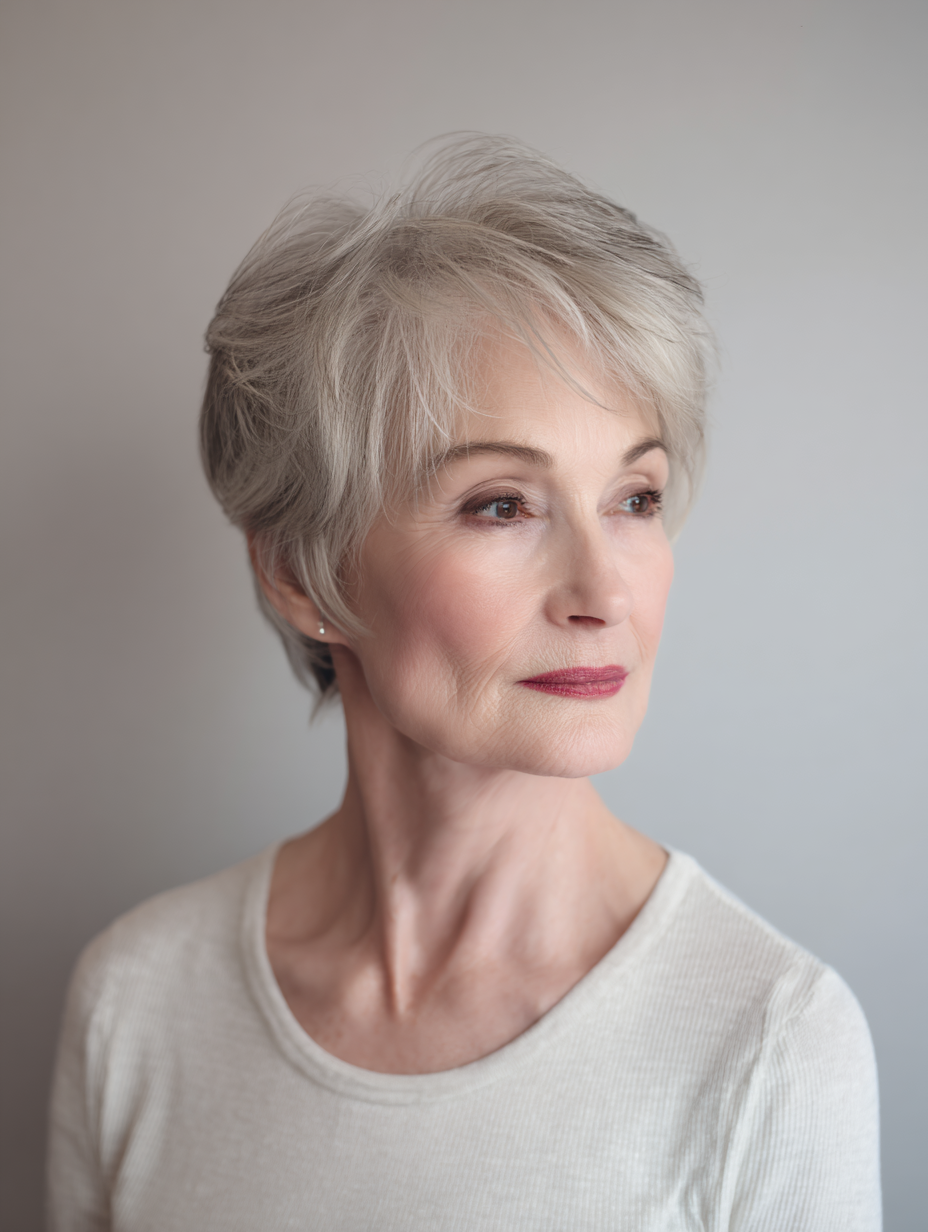
Feathered cuts use the scissors at an angle to soften ends rather than cutting straight across. On fine hair, this prevents the ends from looking thinner than the lengths above them — a common issue with blunt cuts that are not shaped properly through the perimeter.
The cut works particularly well with natural gray that is coming in unevenly, since the feathering blends color transitions visually.
Neat Crop with Soft Edges
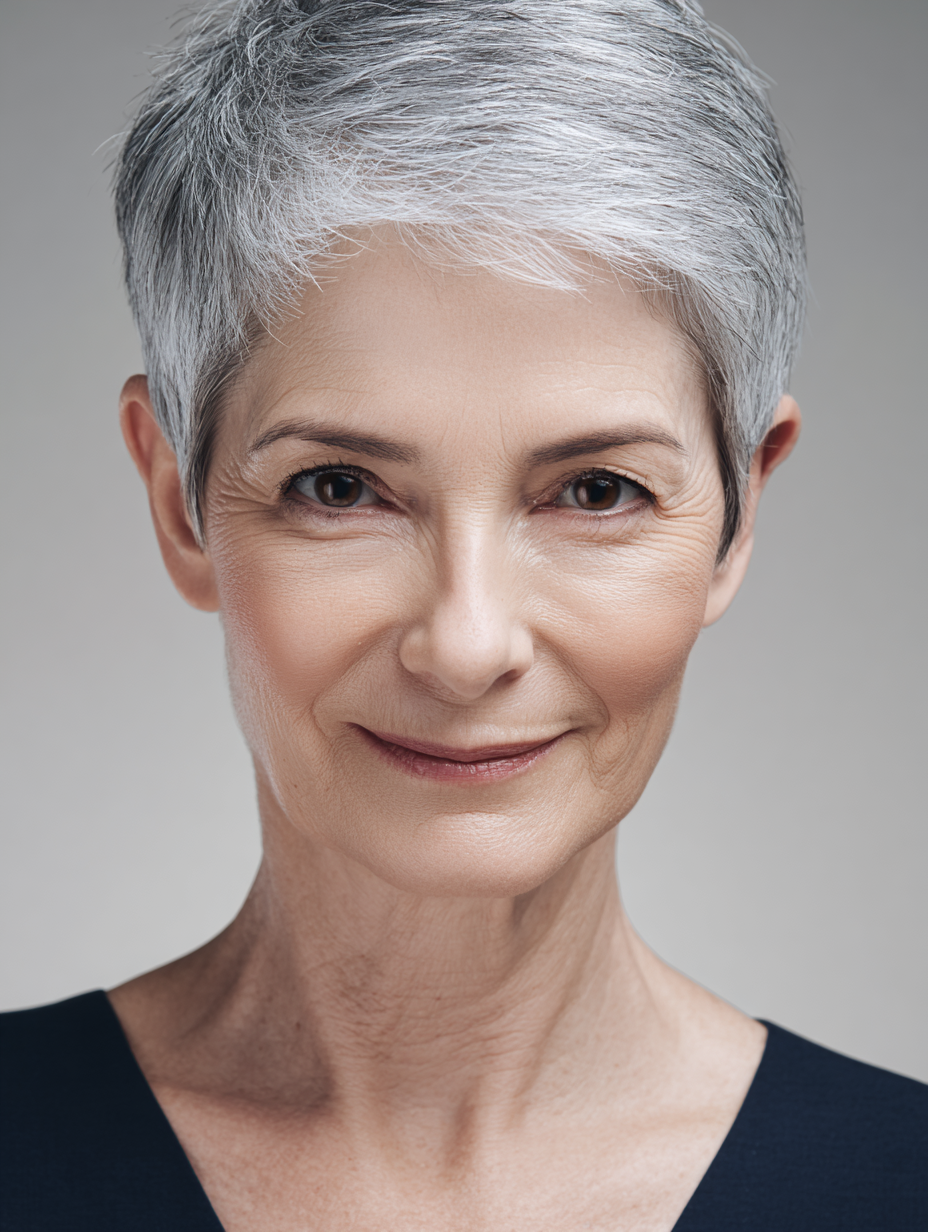
For women who like clean, deliberate hair without anything looking “done,” a neat crop with softened edges hits the right note. The shape is structured enough to look intentional but not so sharp that it reads as severe. Soft edges keep the cut feeling current rather than dated.
A surprising number of women in their 70s and 80s wear this cut beautifully. It ages with you instead of against you.
Short Bob with Wispy Bangs

Wispy bangs are not the same as full fringe. They are cut with a razor or with point-cutting to leave the ends piecey and translucent rather than solid. On fine hair, that translucency is the point — heavy bangs tend to flatten what little volume the rest of the hair has.
Skim the bangs across the forehead with your fingers when styling. Brushing them flat usually undoes the wispy effect.
Layered Crop with Gentle Texture

Gentle texture, in stylist-speak, means subtle internal layering that is invisible from the outside but creates lift from underneath. Most stylists use point-cutting for this rather than razor work, since razors can leave fine hair looking frayed at the ends.
The cut sits well between salon visits and grows out without dramatic shape loss.
Short Stacked Bob for Fine Hair
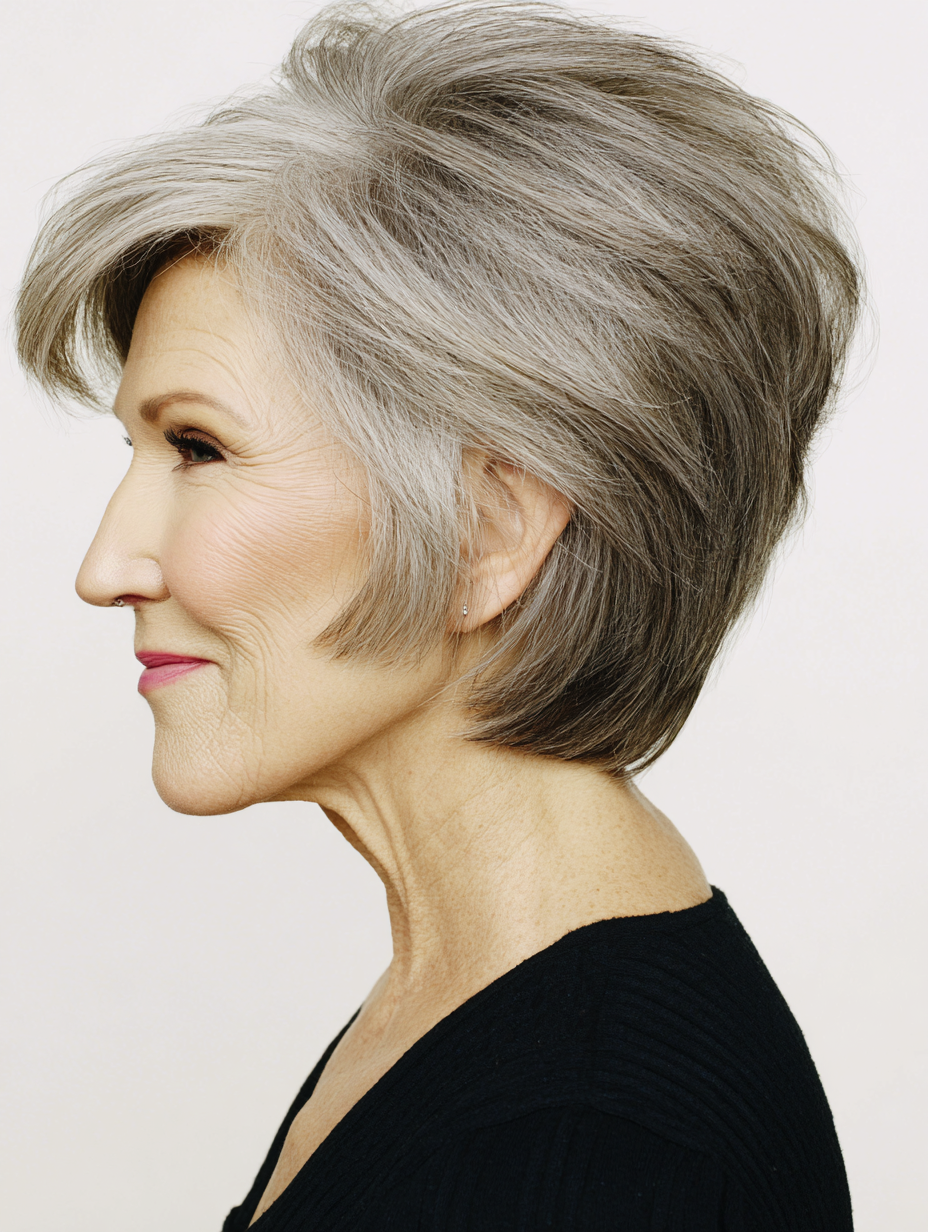
The classic stacked bob keeps length at the front and graduated layers at the back, building a rounded silhouette that is visibly fuller than a one-length bob. For fine hair, the back stacking is doing the work — it creates density where straight bobs tend to fall flat.
Worth asking your stylist to keep the front longer than the back by at least an inch. Less than that and the stacking effect gets lost.
Classic Pixie with Soft Tapering
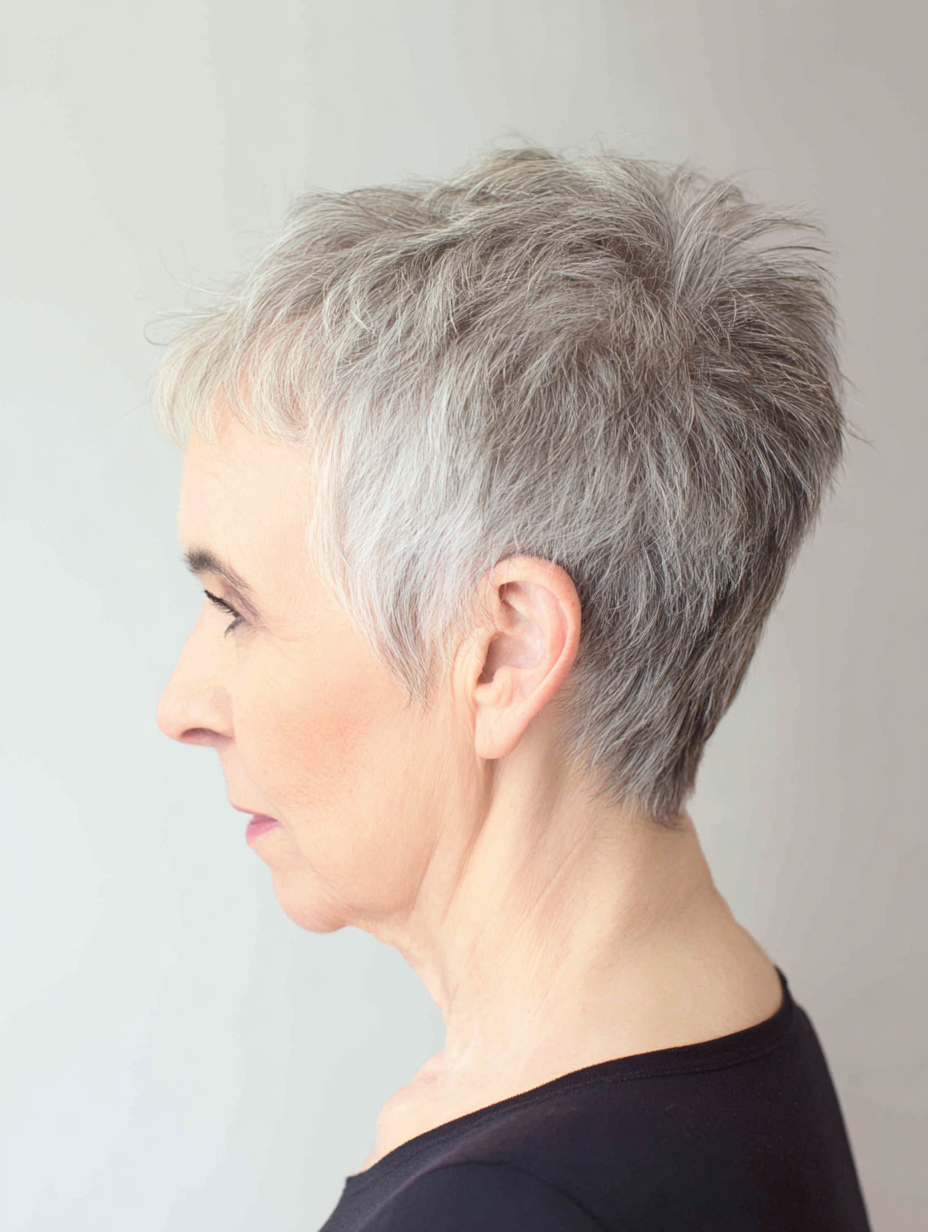
The classic pixie tapers gradually from longer on top to shorter at the nape, without any harsh transitions. Soft tapering is what separates a flattering pixie from a severe one — the cut should look like it is flowing into itself, not stacking in distinct sections.
This shape stays in style across decades. Audrey Hepburn’s pixie still looks current today; the shape is not going anywhere.
Short Bob with Light Face Framing
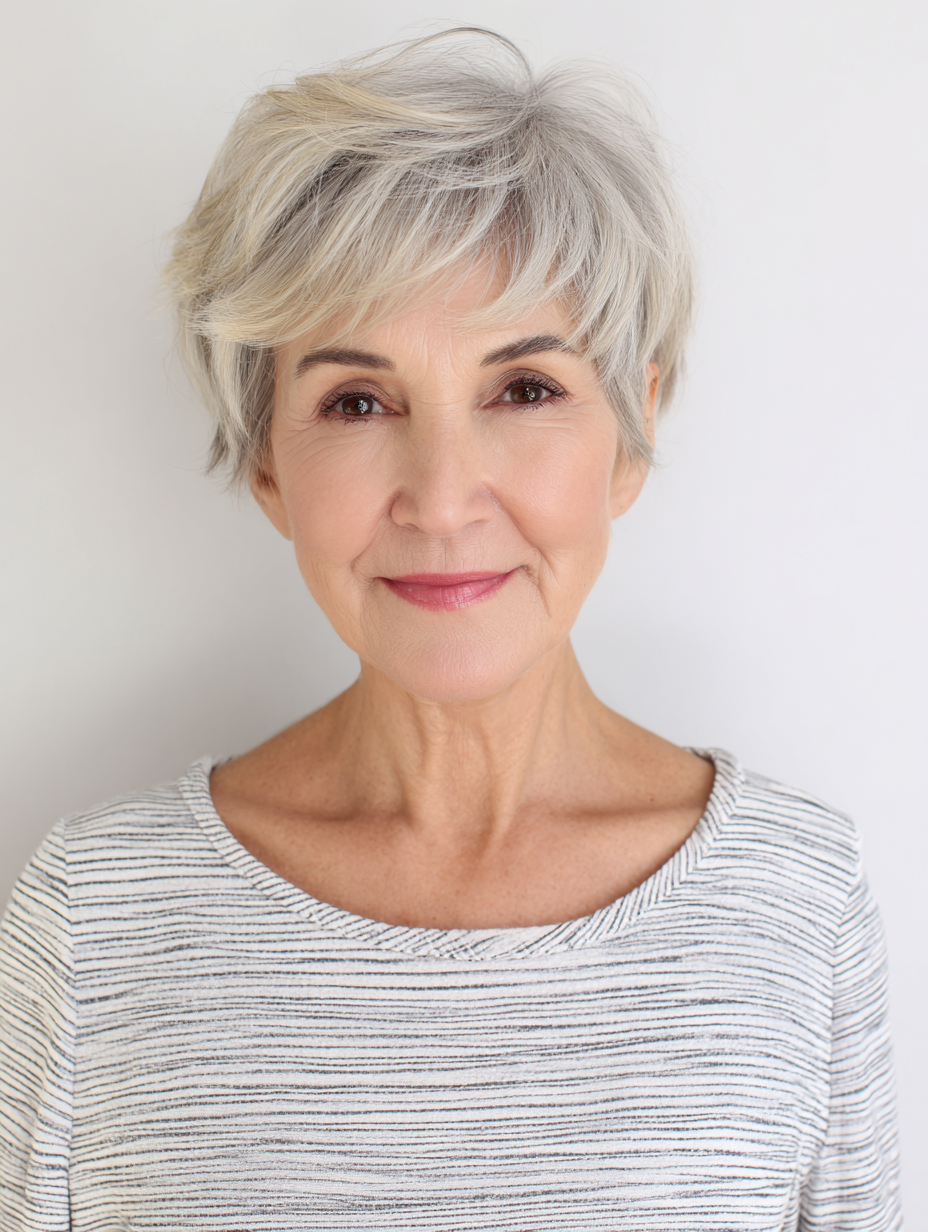
Face framing means slightly shorter pieces cut around the front to highlight the cheekbones and jawline. On a short bob, these pieces are subtle — not the dramatic curtain-bang version popular on longer hair, but a gentle taper that draws the eye toward the face rather than past it.
This adjustment alone can take an ordinary bob from “fine” to “flattering.” Worth requesting specifically by name.
Textured Crop with Natural Finish
Natural finish means the cut is designed to look good air-dried without heavy styling. For fine hair, that is a meaningful claim — most “low-maintenance” cuts still require a blow dry to look intentional. This one does not, because the texture is built into the cut itself rather than added through styling.
Apply a small amount of light mousse to damp hair, scrunch lightly, and let it air dry. That is the whole routine.
Short Layered Cut with Side Bangs
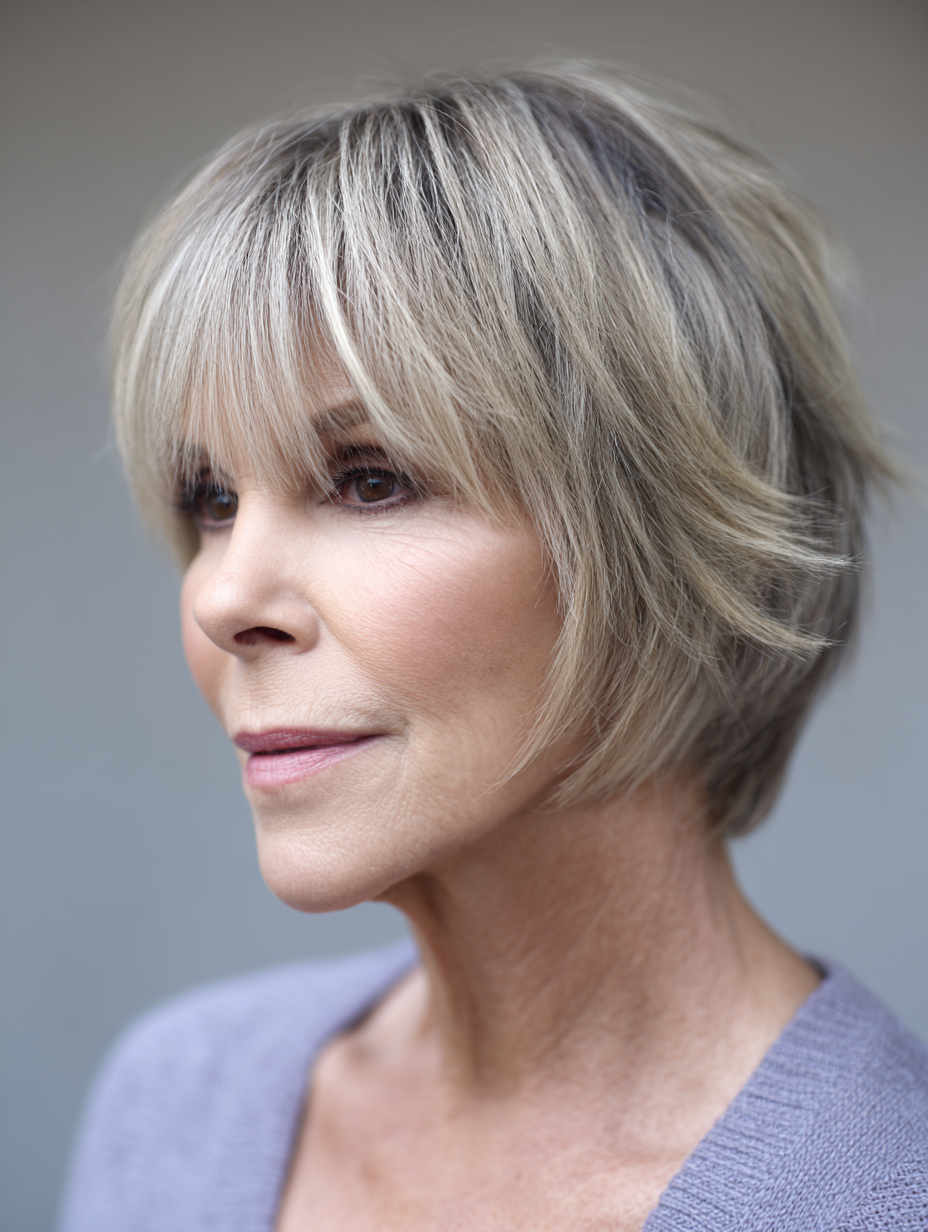
Side bangs are the most forgiving fringe option for fine hair. They sweep across the forehead at an angle, which means they cover any thinning at the hairline without requiring the density that straight-across bangs need to look intentional.
A blow dry across the bangs (not down, across) keeps them from settling flat against the forehead.
Low Maintenance Short Crop
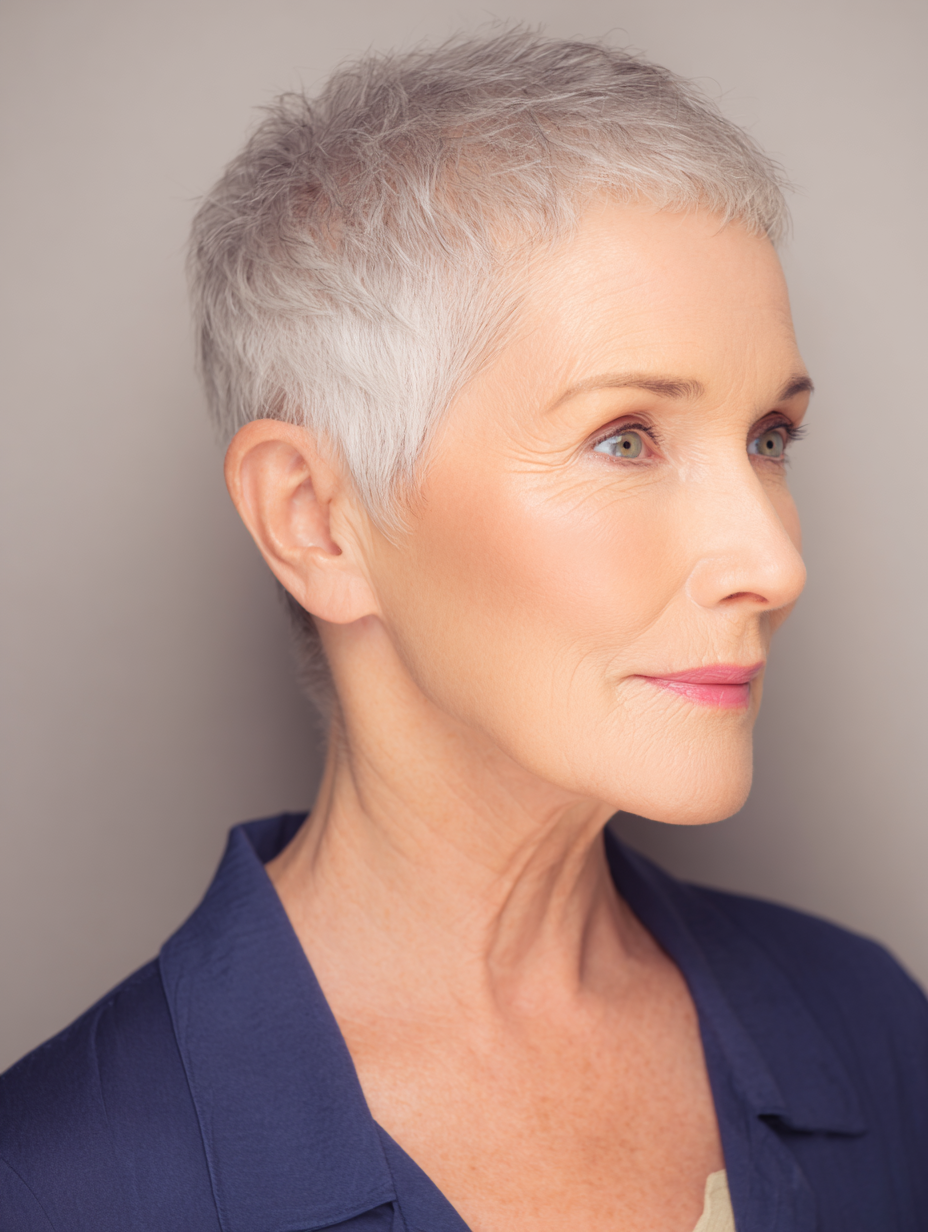
The low-maintenance crop is exactly what it sounds like — a shape designed to look good with minimal daily intervention. The cut does the work; you do not have to. The trade-off is more frequent salon visits, since the shape relies on a clean silhouette that grows out faster than longer cuts.
Six-week trims are the norm for this style. Anything longer and the shape starts to lose its definition.
Short Tousled Pixie for Fine Hair
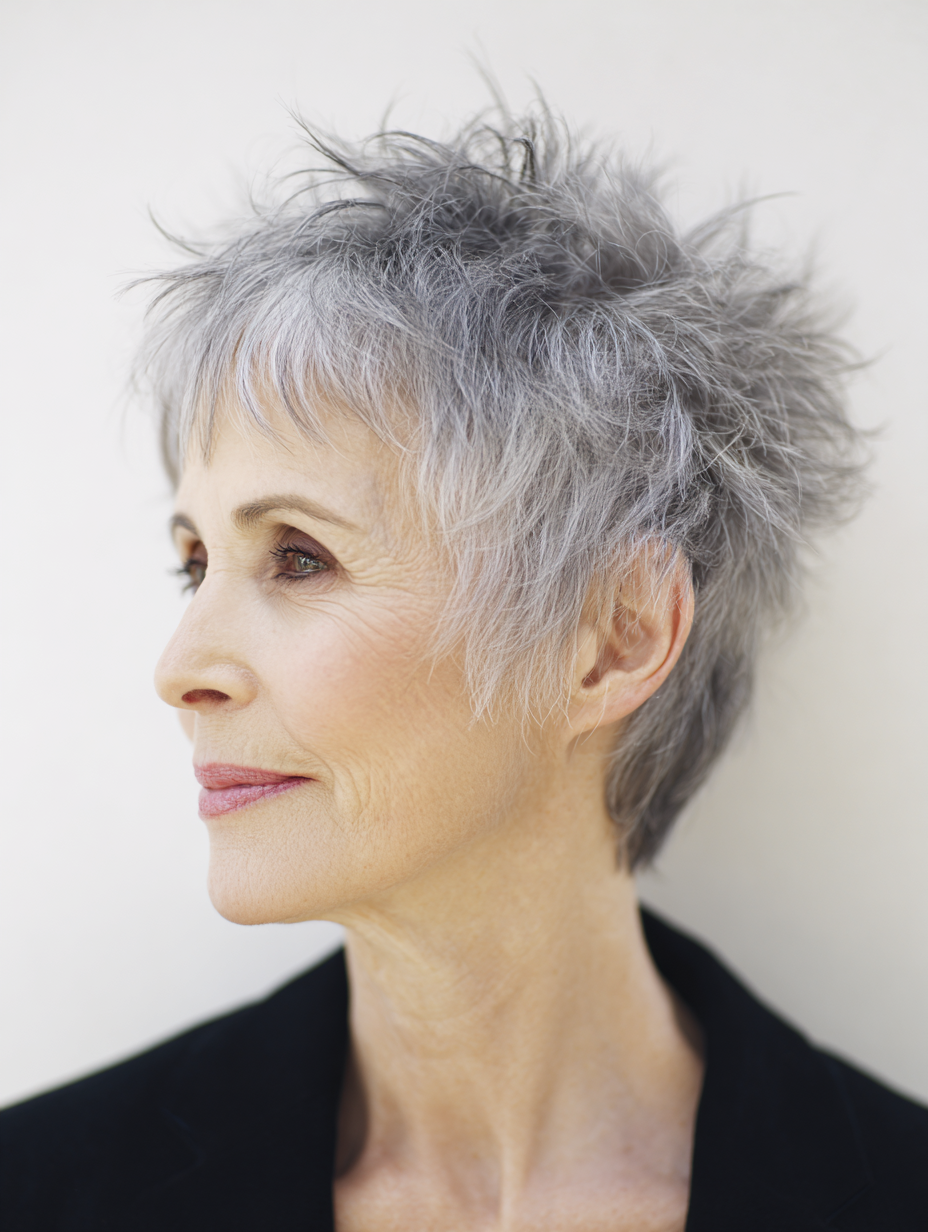
A tousled finish — slightly mussed, intentionally undone — works on fine hair specifically because it disguises the flatness that fine hair settles into when left smooth. The tousle creates the illusion of volume even when the actual density is unchanged.
Finger-styling beats brushing for this one. A boar bristle brush will smooth the texture right back out.
Chin Length Bob with Soft Layers
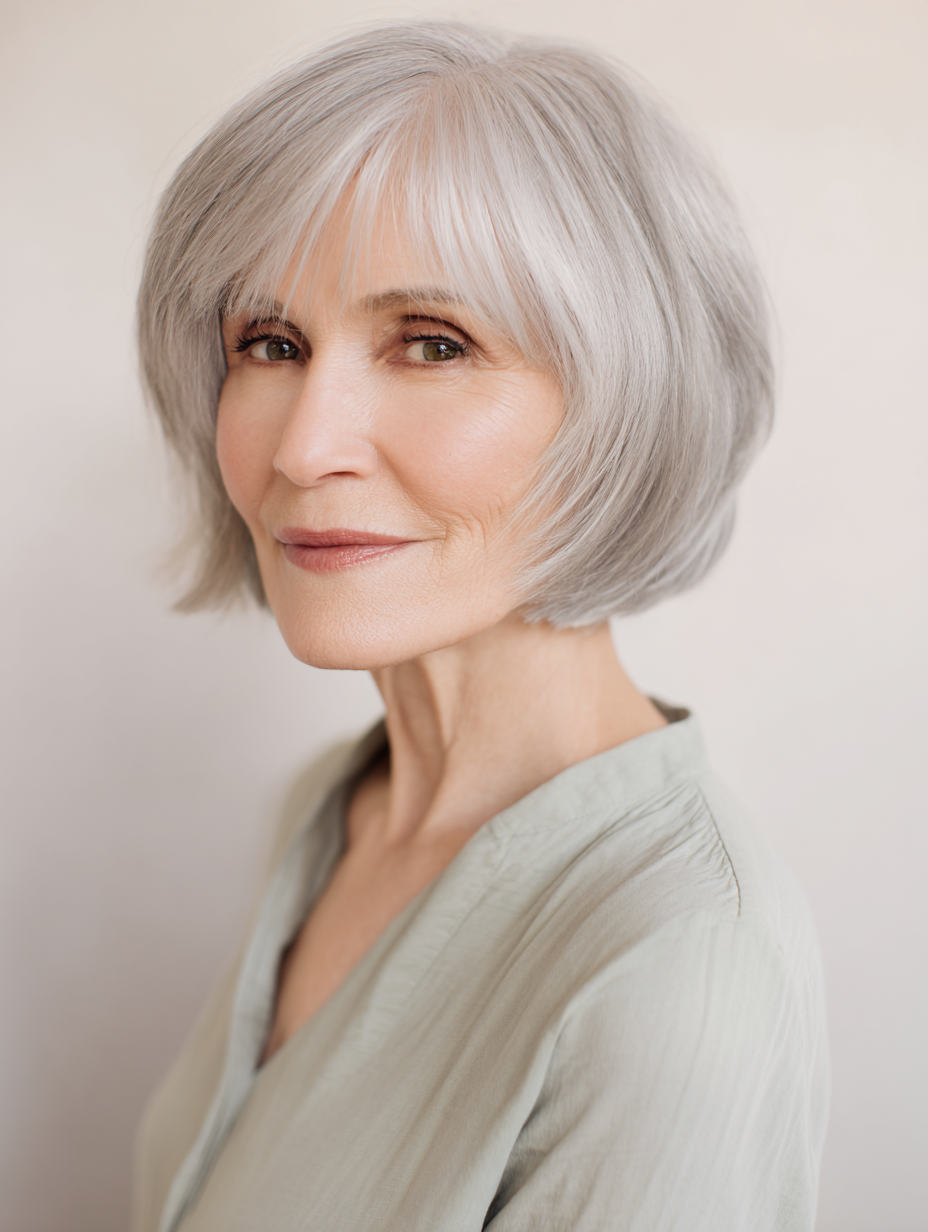
Chin-length is the shortest you can go while still having “real” length to work with. The bob sits at or just below the jaw, with soft internal layering that prevents the cut from looking flat without removing density at the perimeter.
Especially flattering for women who feel like very short cuts age them. This one keeps femininity in the silhouette while still giving fine hair the lift it needs.
Short Crop with Feathered Crown
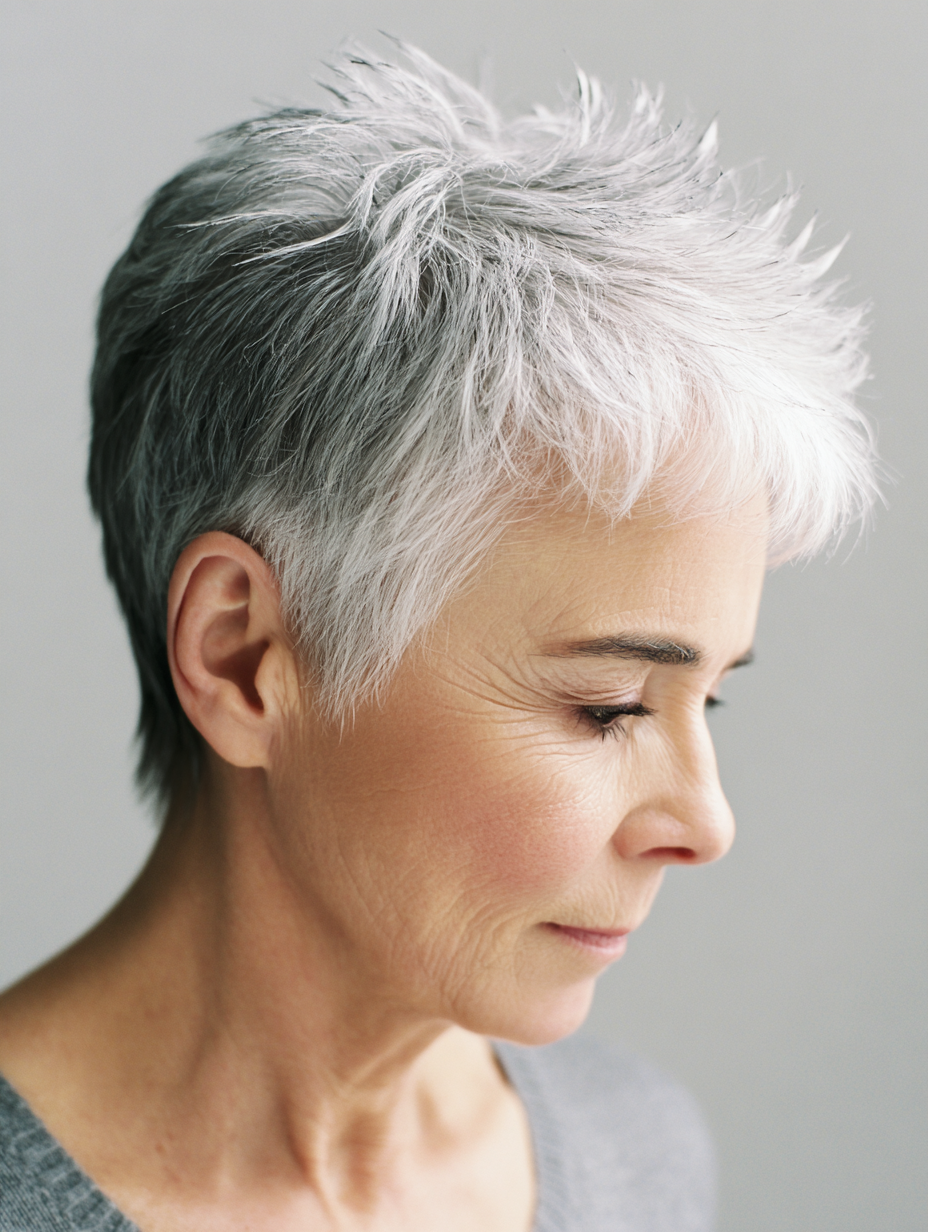
The feathered crown is the technical detail here — the top is cut at a slight angle so individual pieces lift naturally rather than lying flat. Stylists call this “weight line removal” and it is the difference between a cropped cut that looks flat and one that looks fuller.
Worth asking your stylist about specifically: “Can you remove the weight line at the crown?” They will know exactly what you mean.
Soft Boyish Cut with Volume
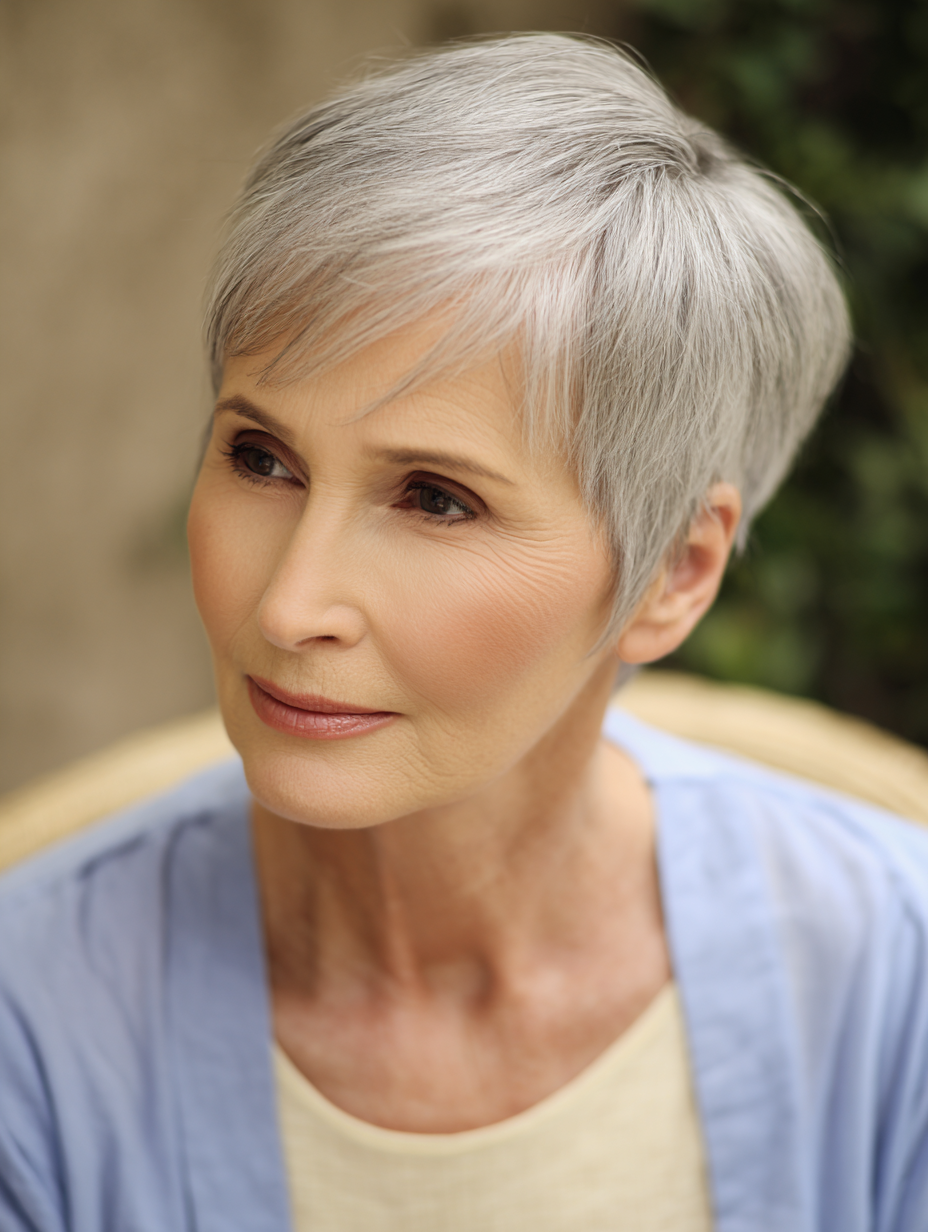
The boyish cut is shorter than a pixie but softer than a true crop. On older women with fine hair, it can be surprisingly elegant — the shape highlights bone structure and frames the face cleanly without any of the maintenance that longer styles demand.
Helen Mirren has worn versions of this cut for years and it still looks contemporary. That is the test of a shape that is working.
Short Elegant Cut with Side Texture
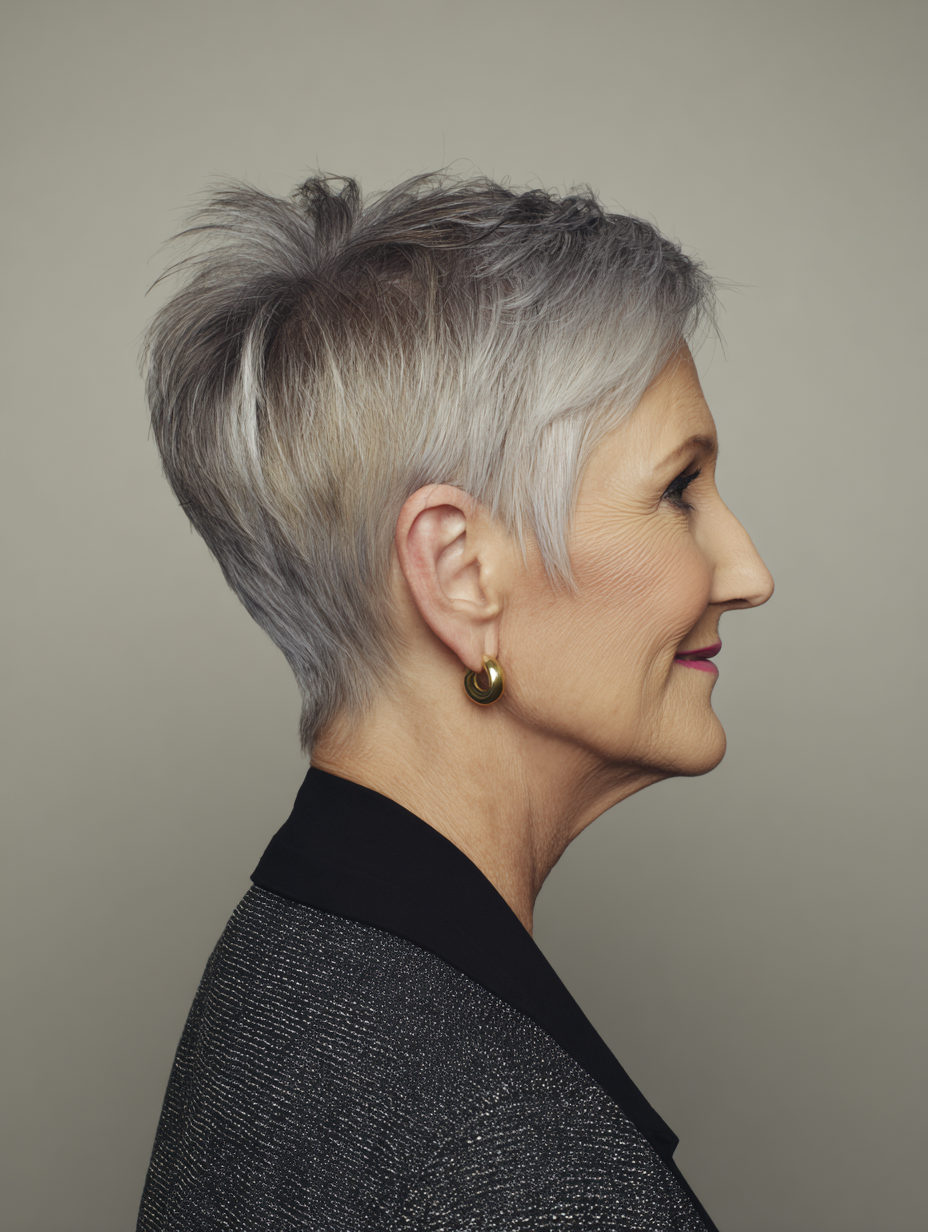
The final cut on this list focuses on the sides rather than the top. Side texture — subtle layering through the temples and ears — prevents fine hair from clinging flat to the scalp around the face, which is where thinning often shows first.
A flexible-hold spray applied at the sides, then ruffled with the fingers, is enough to keep the texture intact through the day.
Style Guide for Short Hairstyles for Women Over 60 with Fine Hair
Choosing the right short cut for fine hair after 60 comes down to three things: how much fullness you want, how your hair behaves day to day, and how much time you are willing to spend styling. This guide breaks each one down so you can choose based on your hair rather than the inspiration photo.
What Makes a Short Cut Work for Fine Hair Over 60
Fine hair tends to lose density gradually with age, and longer lengths emphasize that thinness because the weight pulls the hair flat against the scalp. A shorter cut removes that downward pull, letting the hair sit closer to the head — which the eye reads as fuller.
Built-in layers add lift at the crown, while a clean perimeter keeps the ends from looking wispy. The goal is structure and shape, not heavy texture or aggressive angles.
Pixie vs Short Bob
Both shapes are popular for fine hair after 60, and they create different effects.
A pixie crops the sides and back close, with most of the length on top. This builds strong lift at the crown — useful when fine hair has lost density at the roots specifically.
A short bob keeps a more even outline around the head and offers a softer, more traditional silhouette. The shape covers the ears and nape, which some women prefer.
Choose a pixie for maximum volume and minimum styling time. Choose a short bob for slightly more coverage and a gentler transition from longer hair.
Layering Approach
Layering on fine hair has to be controlled. Heavy or aggressive layering removes too much weight and leaves the ends thin and stringy. Soft, blended layers through the crown and sides build subtle lift without sacrificing the perimeter line.
Ask your stylist to keep the very ends slightly blunt. Blunt ends always read as fuller than feathered ones on fine hair, even when the actual density is identical.
Hair Texture and Density
Straight fine hair shows the shape of a short cut clearly, which is helpful — the silhouette is doing most of the work, so a clean shape pays off visually.
Wavy fine hair benefits because the natural bend adds volume that fine hair often lacks. Most stylists barely need to do anything beyond the cut itself.
Curly fine hair can wear short shapes too, but the cut needs to account for shrinkage. Guide lengths should be slightly longer than the straight-haired version, since curls compress when dry.
Face Shape Considerations
Round faces look balanced when the cut adds height through the crown and angles slightly longer pieces around the chin. Avoid uniform short shapes that emphasize roundness.
Long or oblong faces benefit from softer side volume rather than tall crown lift. The side fullness widens the face visually.
Square faces pair well with side-swept fringe and softer layering near the jaw, which softens strong angles.
Heart-shaped faces often look best with chin-length pieces that add fullness around the lower face, balancing a wider forehead.
Bangs or No Bangs
Bangs can be flattering after 60 because they soften the forehead and frame the eyes. Side-swept bangs are the easiest to wear and grow out, blending into the rest of the cut without much effort. Wispy or piecey bangs add softness without weight.
Skipping bangs is also a valid choice and keeps the forehead open, which can elongate a round face. The decision usually comes down to how comfortable you are with the upkeep — bangs need a trim every 3 to 4 weeks.
Color Choices for Fine Hair
Color can create the appearance of dimension that fine hair sometimes lacks. Soft highlights or lowlights through the crown create depth and texture visually, even without changing the actual density.
Solid all-over color can look flat on fine hair. Subtle tonal variation almost always helps.
Silver and gray tones look beautiful on short cuts and require less upkeep than maintaining a colored base. Many women find the gray-grow-out phase looks better with a short cut than with longer hair, since the demarcation line gets cut off faster.
Styling Effort and Maintenance
Short cuts on fine hair benefit from a light volumizing product at the roots and a quick blow dry with a round brush or your fingers to lift the crown.
Heavy styling products weigh fine hair down. A small amount of mousse or a root spray usually works better than creams or oils.
Trims every 6 to 8 weeks keep the shape lifted. The silhouette is what makes the cut work, so letting it grow out compromises the entire effect.
Growing It Out
Short cuts on fine hair grow out unevenly because the crown layers reach the perimeter at different rates. Reshaping trims every couple of months during the grow-out phase help keep the overall shape balanced.
Switching to a slightly longer bob is usually the easiest next stage if you want to move away from the short length without an awkward in-between phase.
Leave a Reply