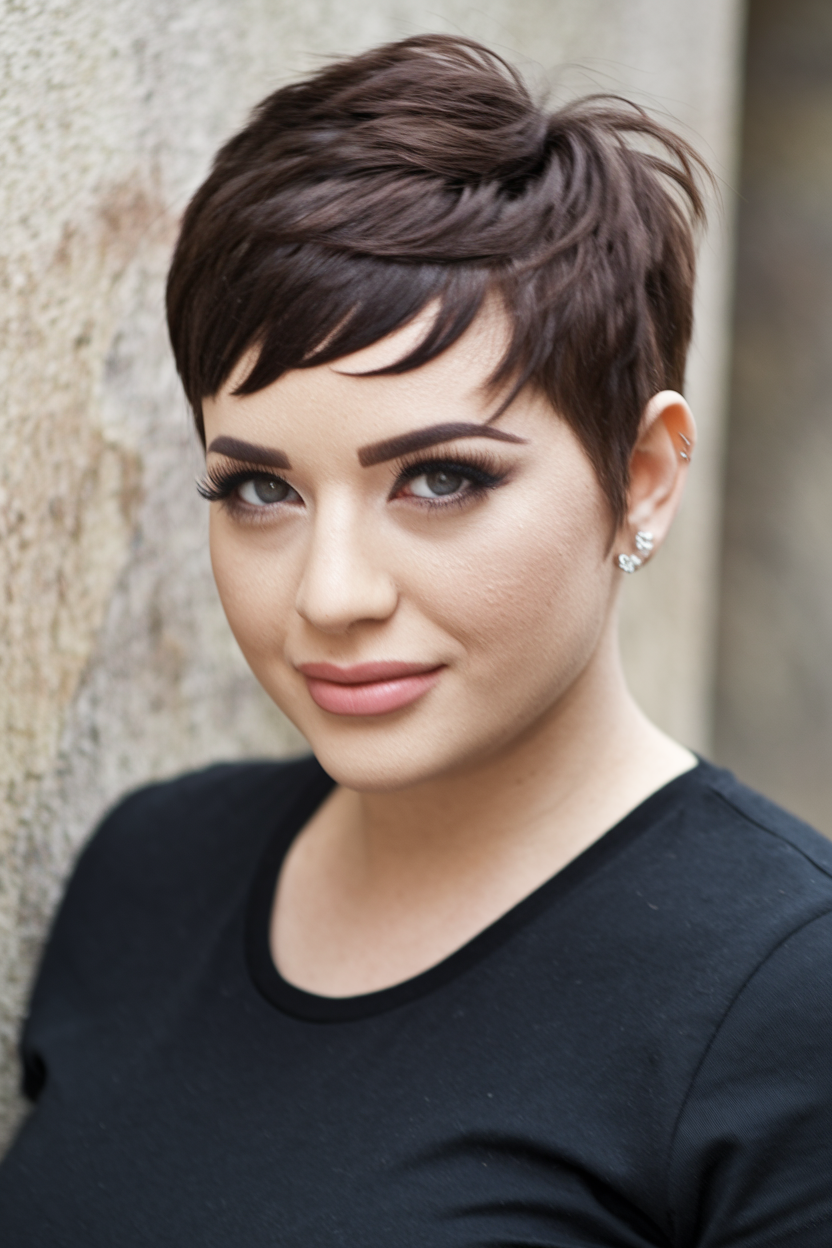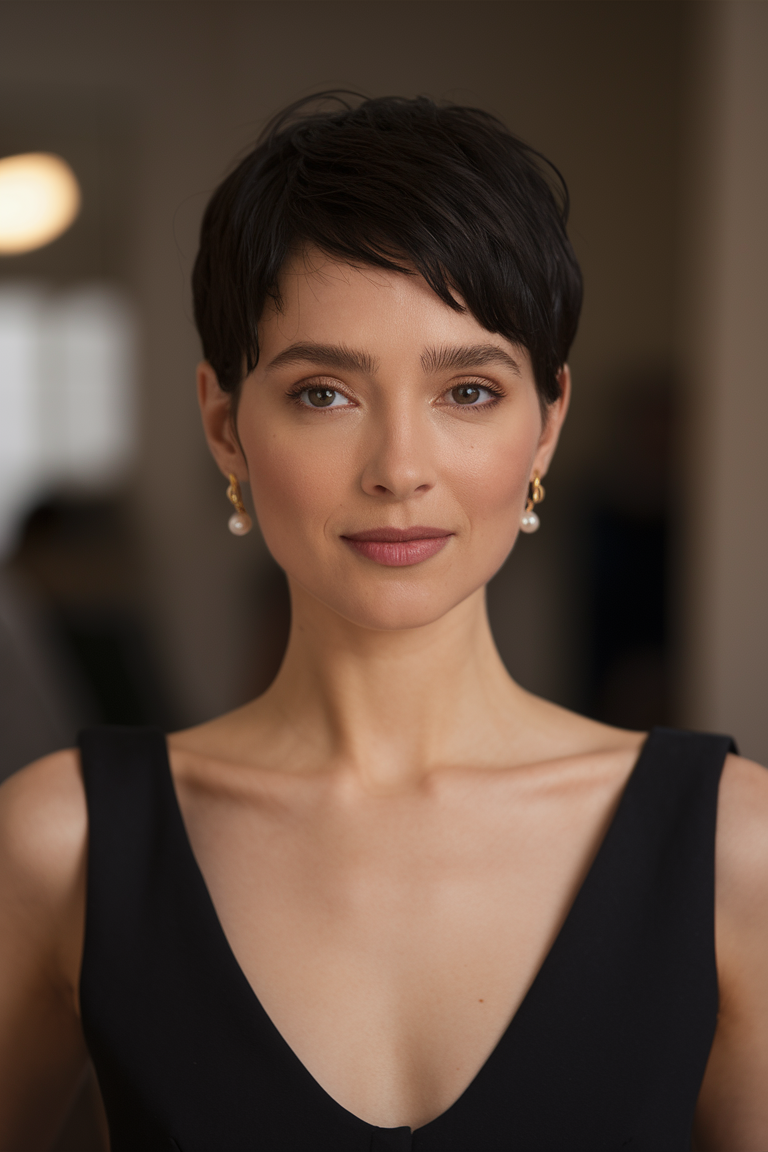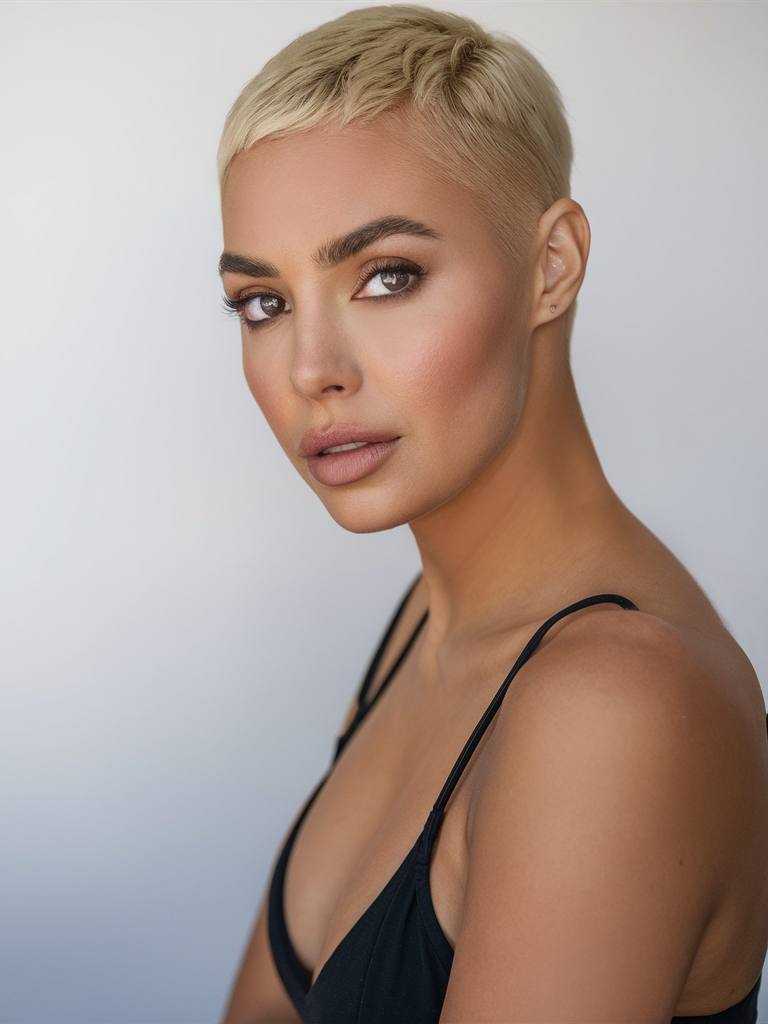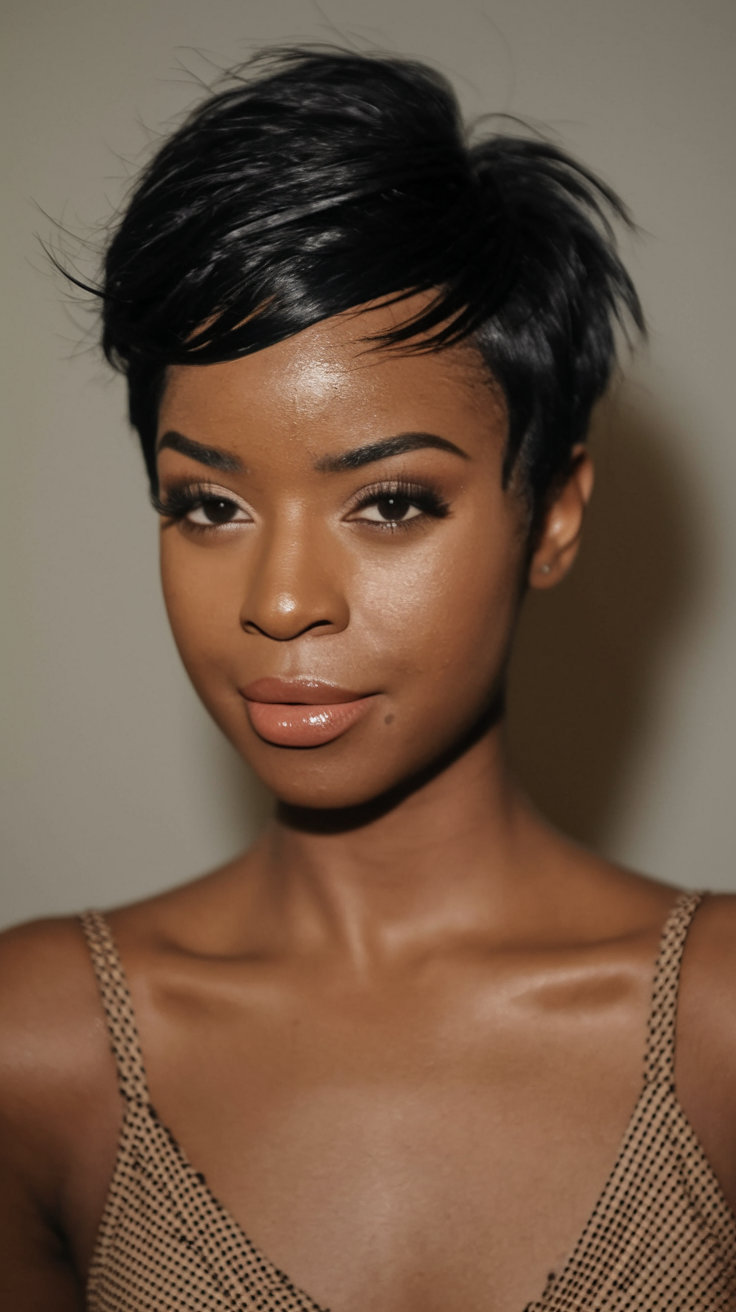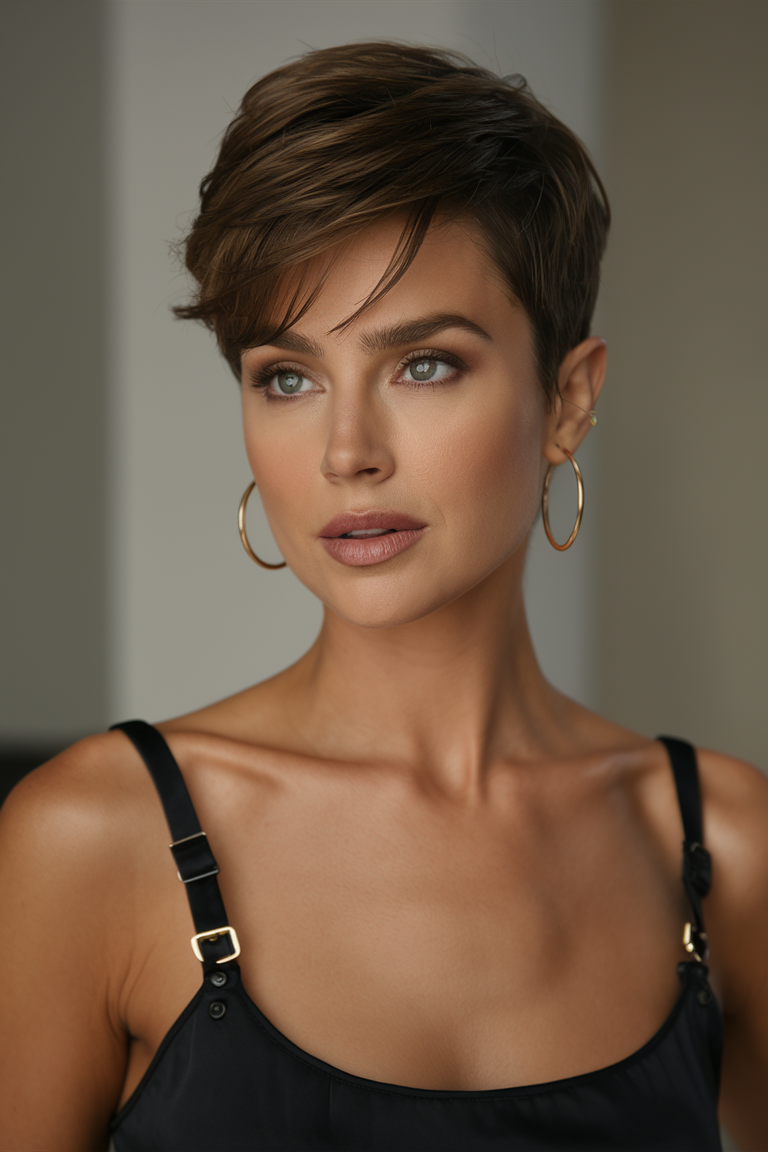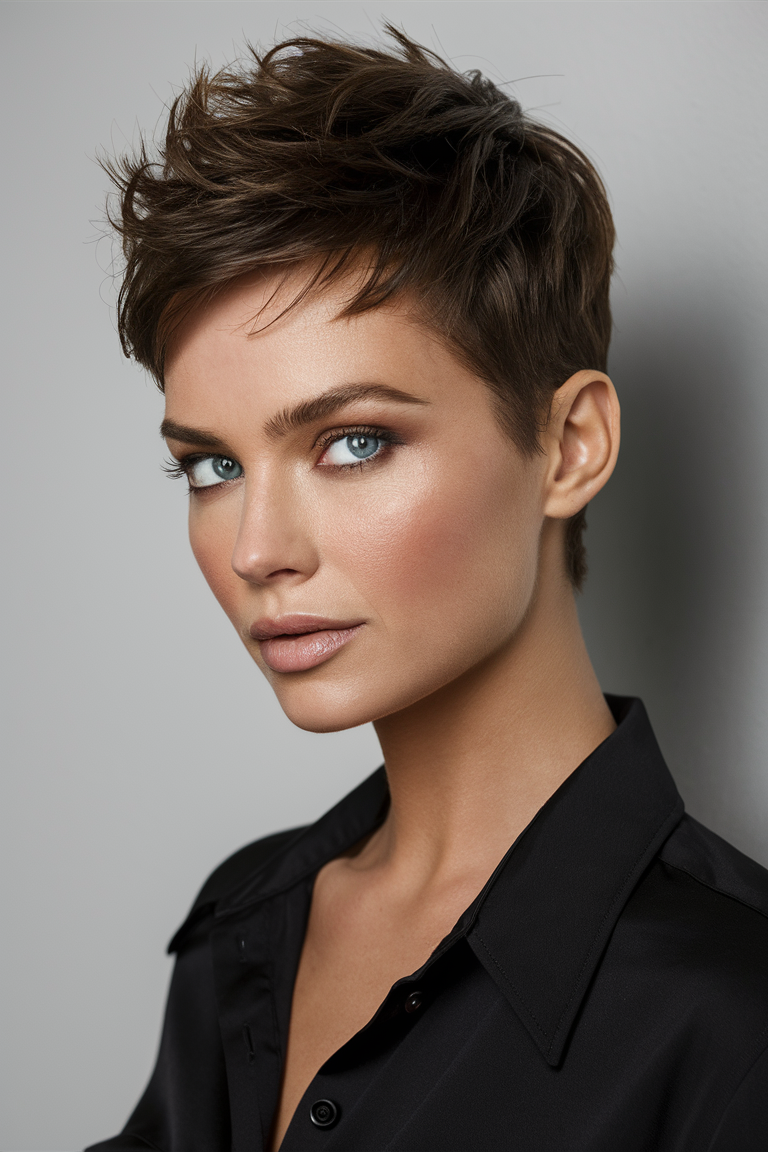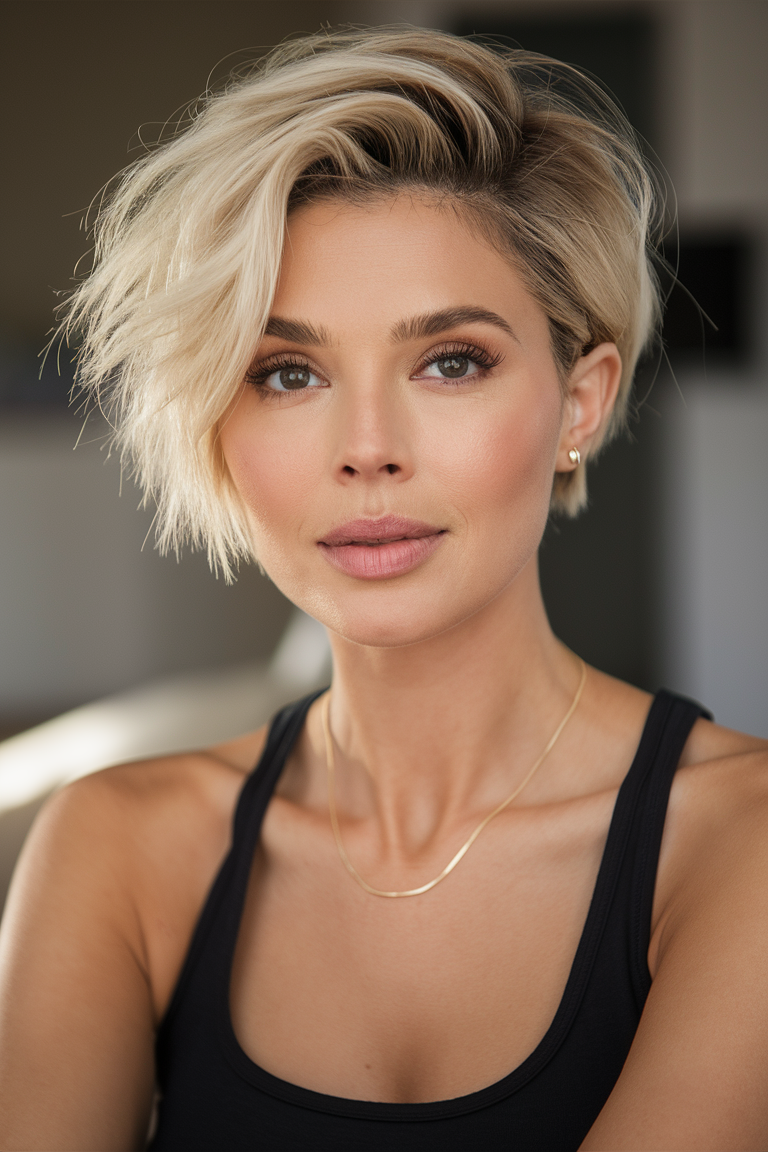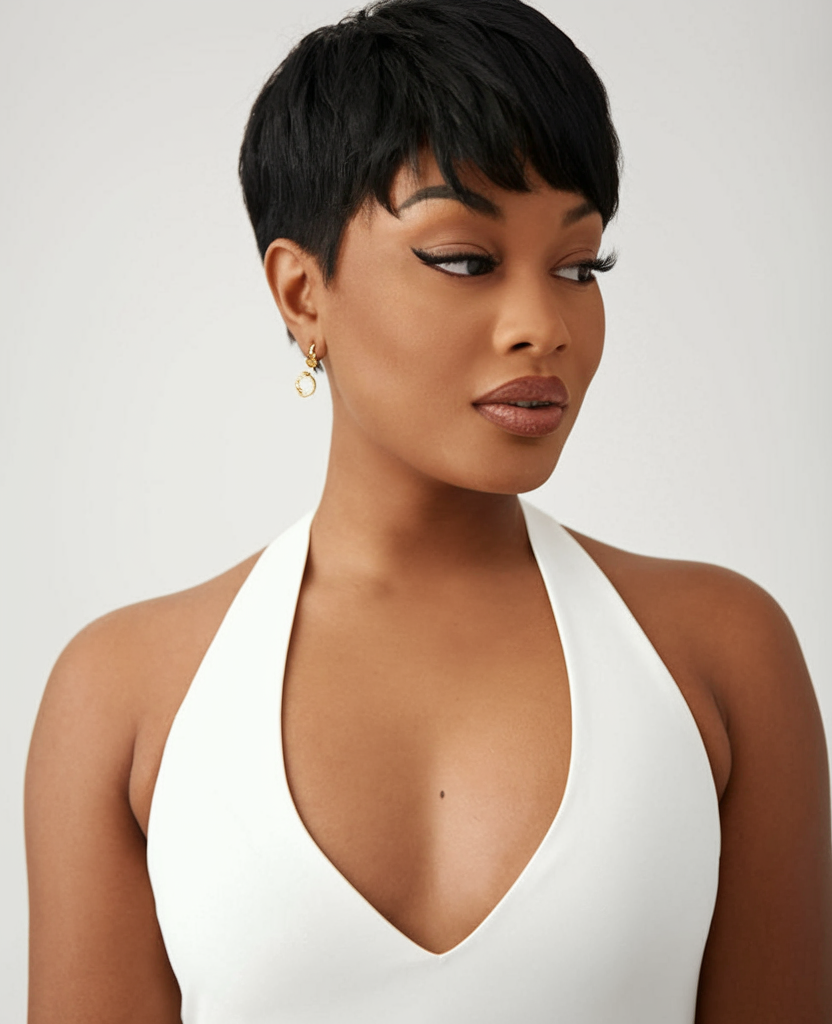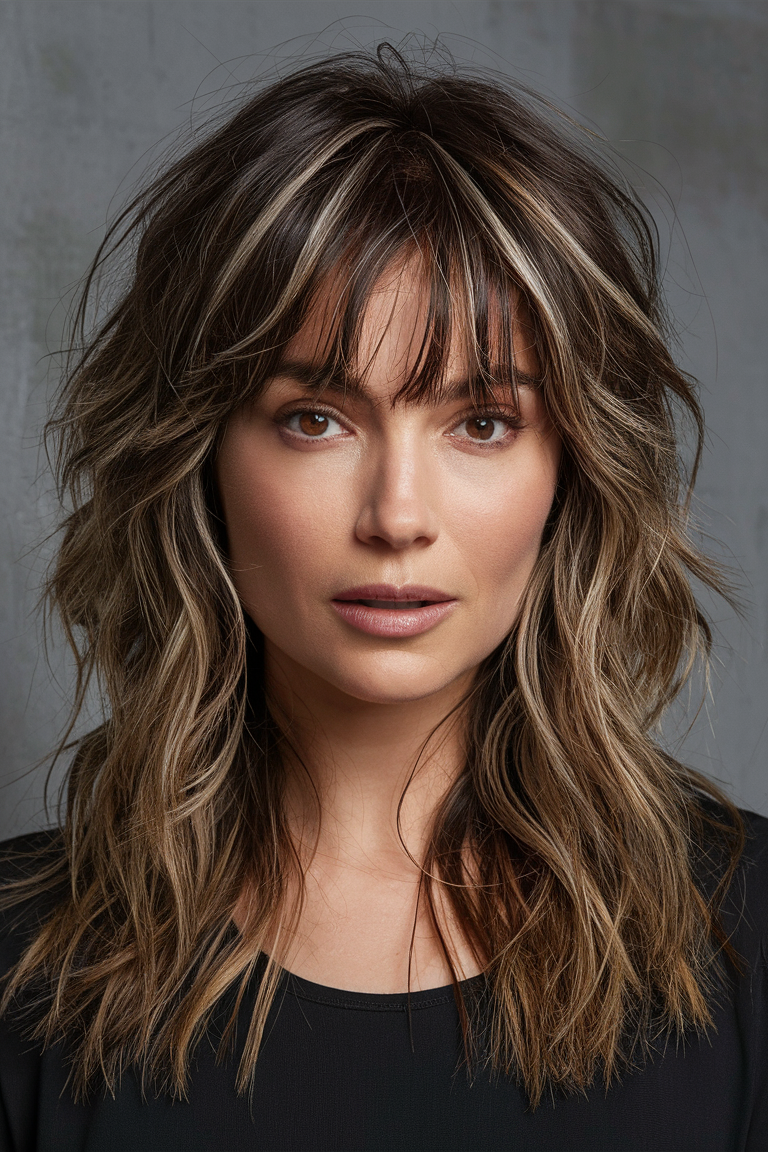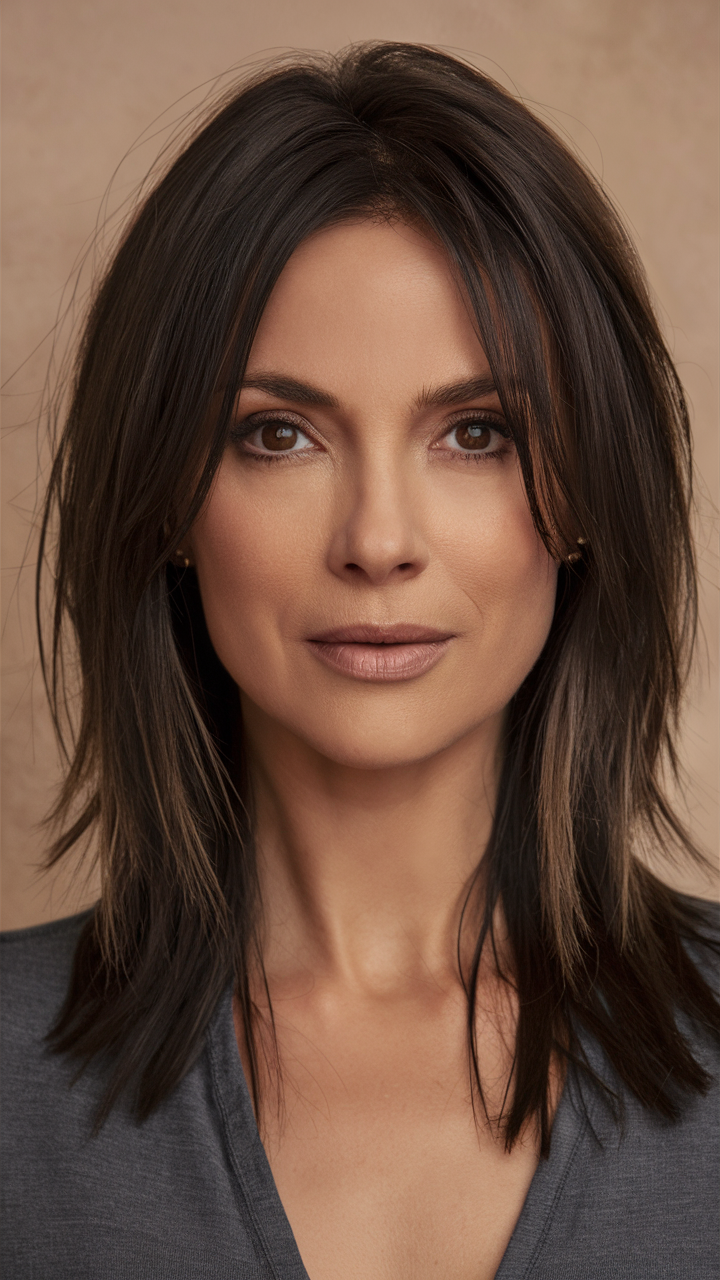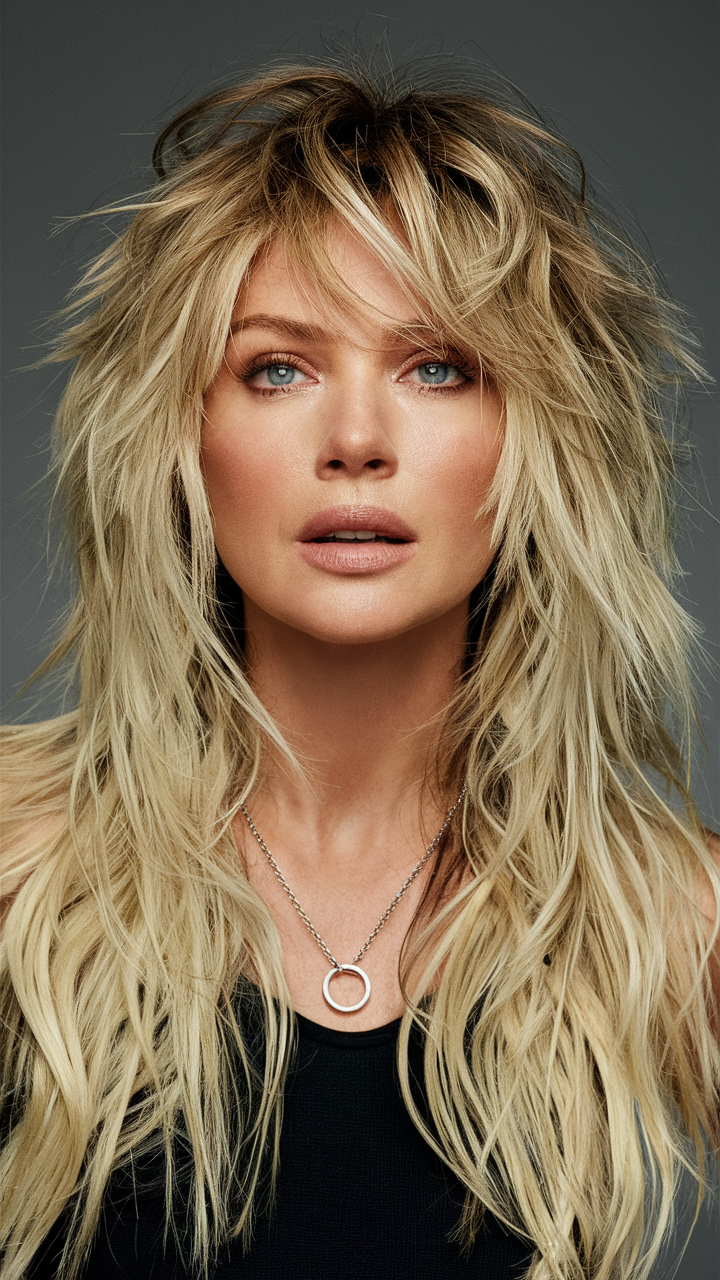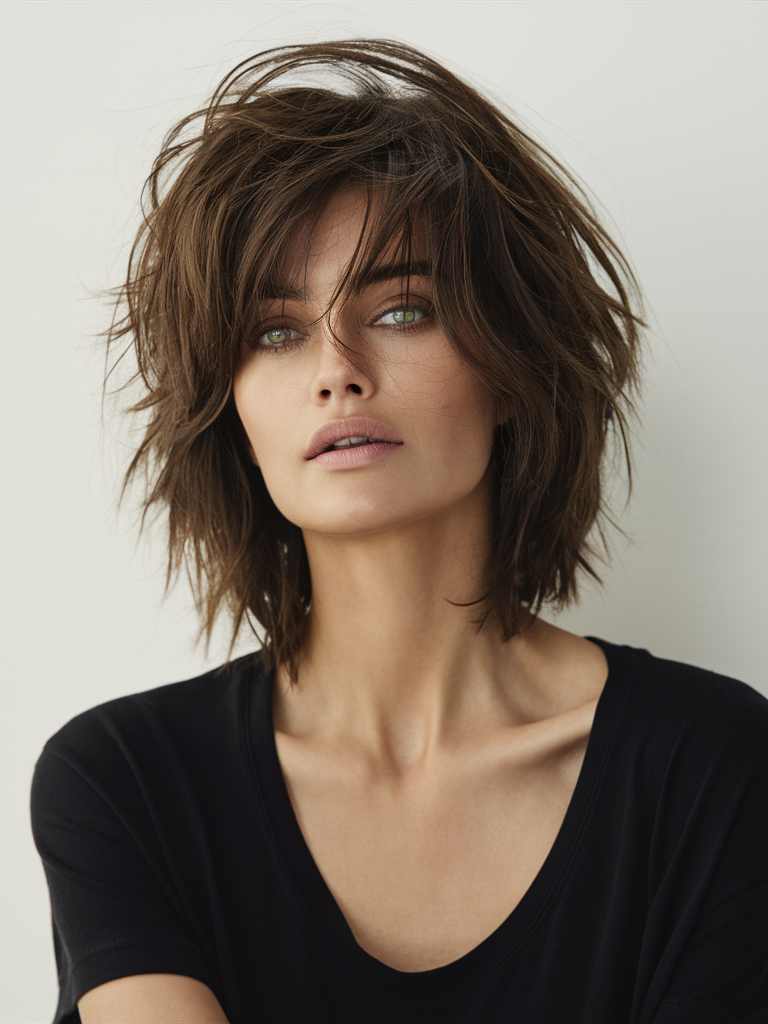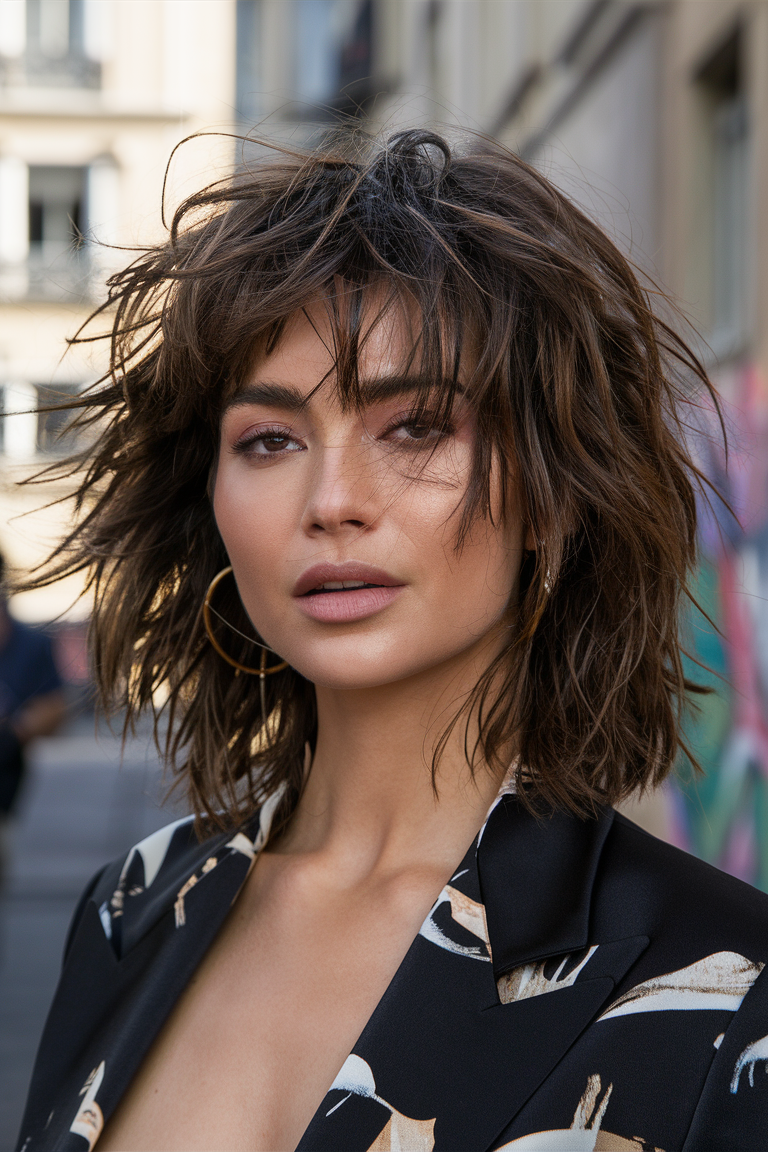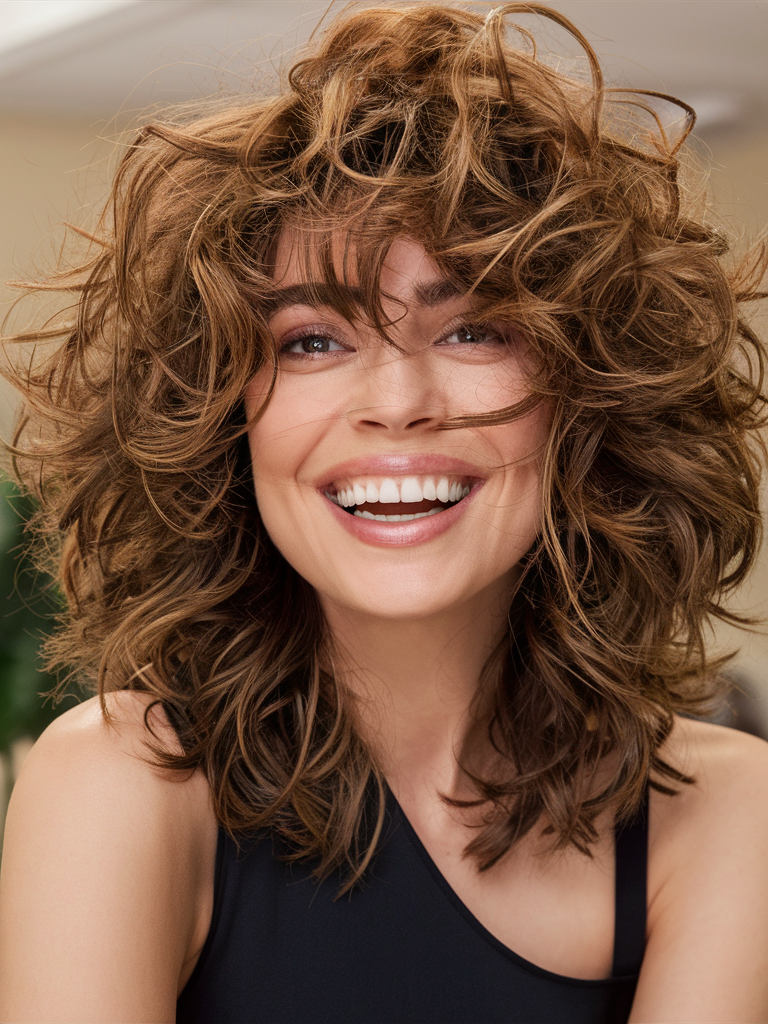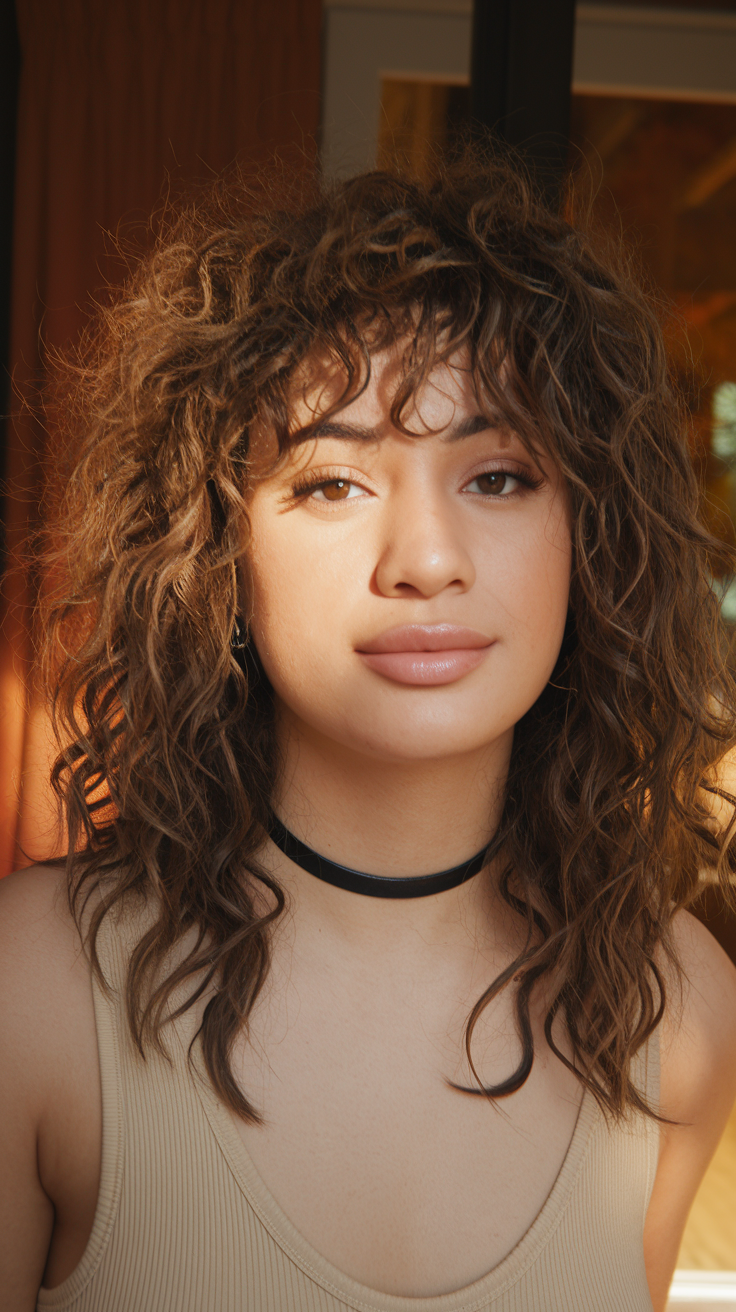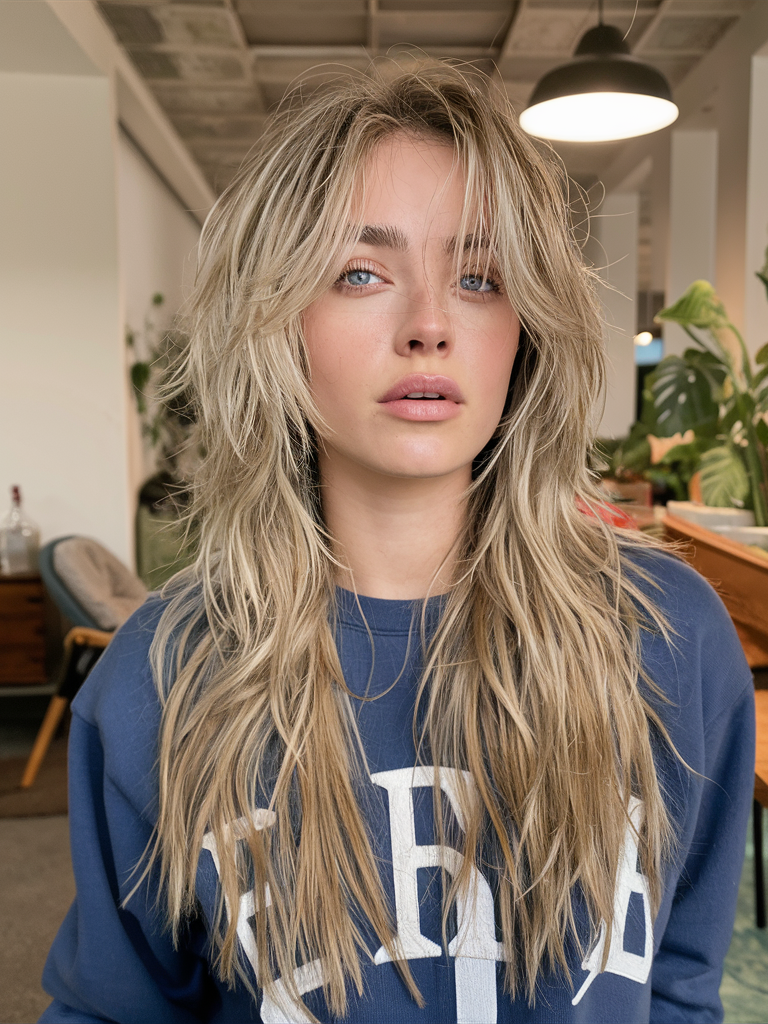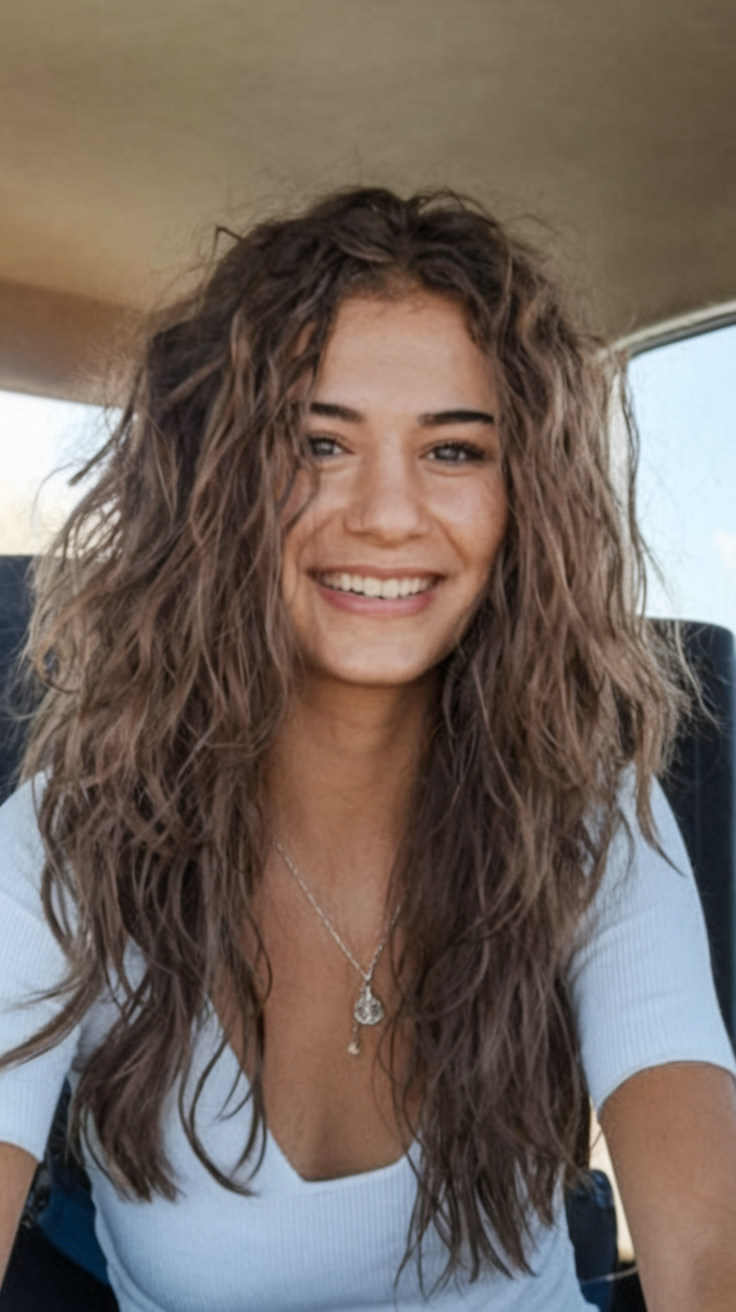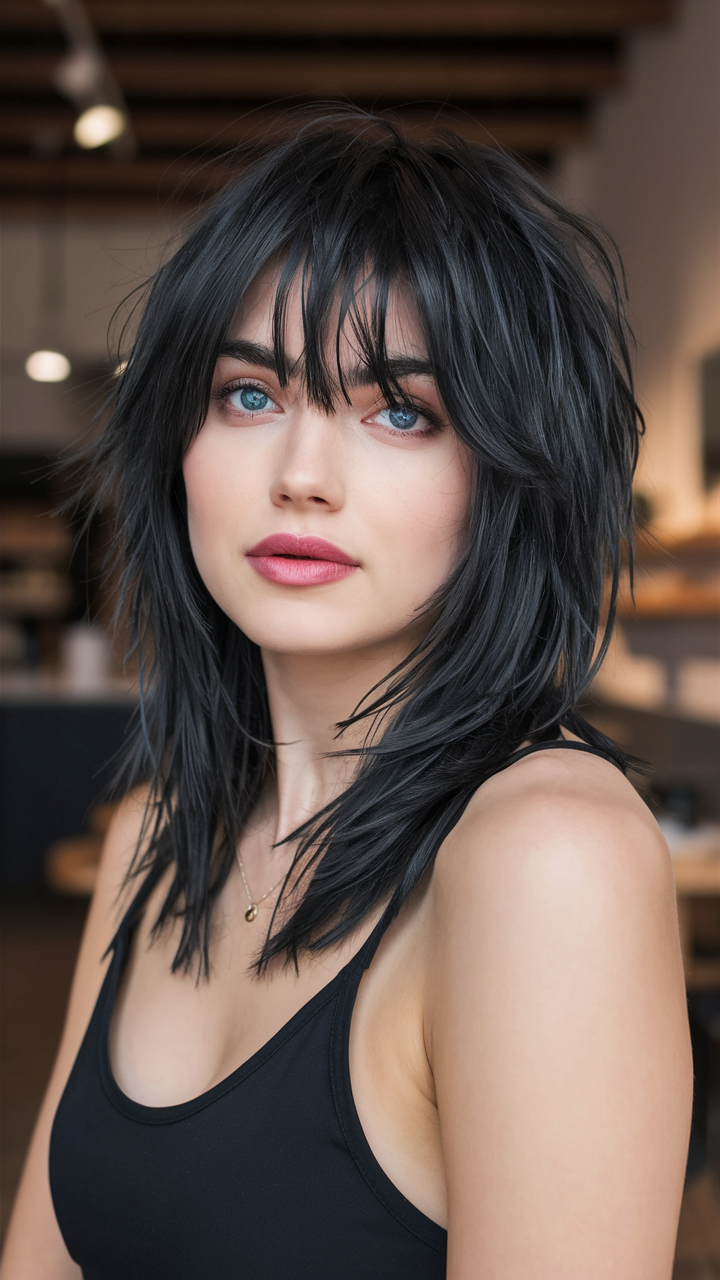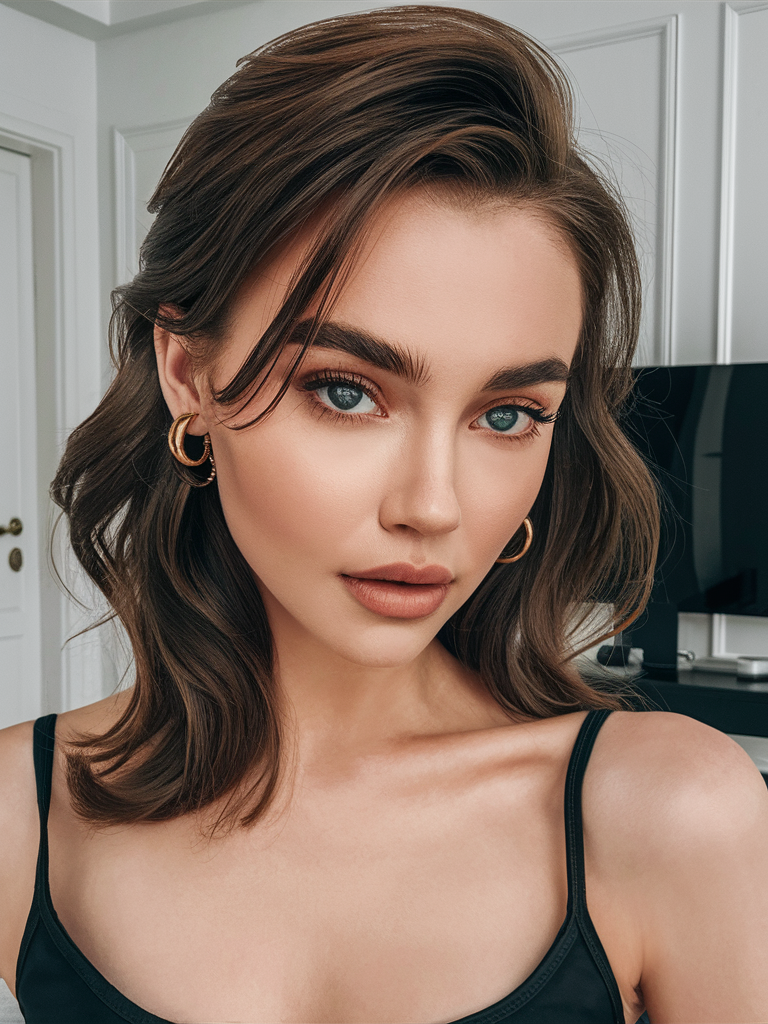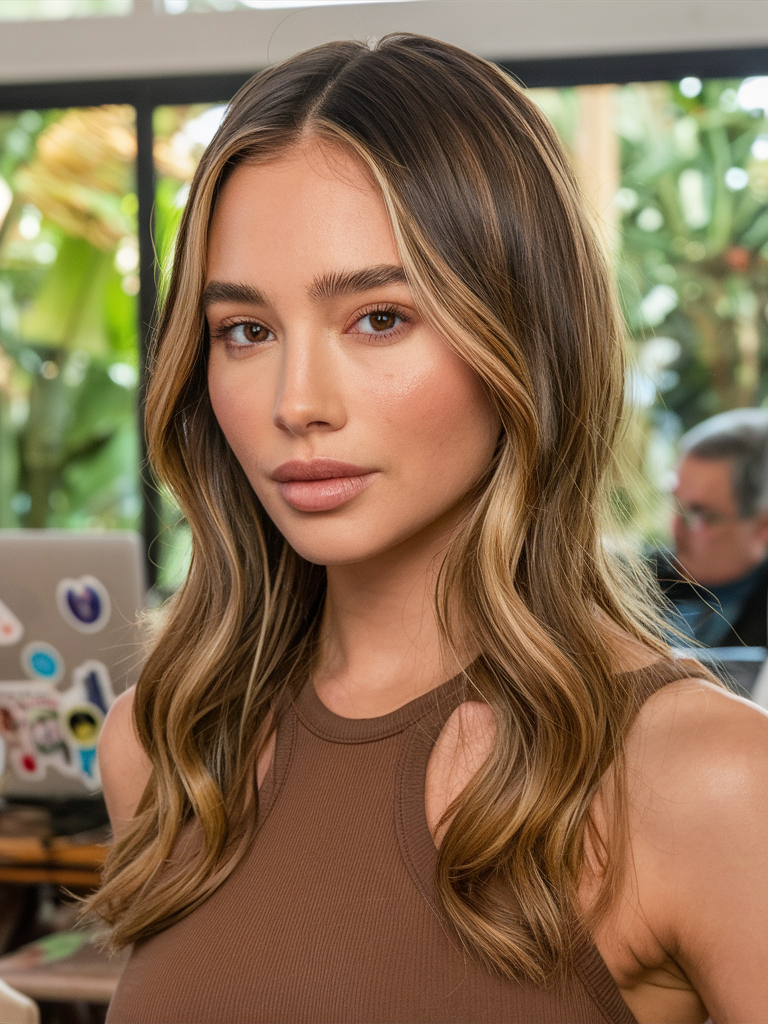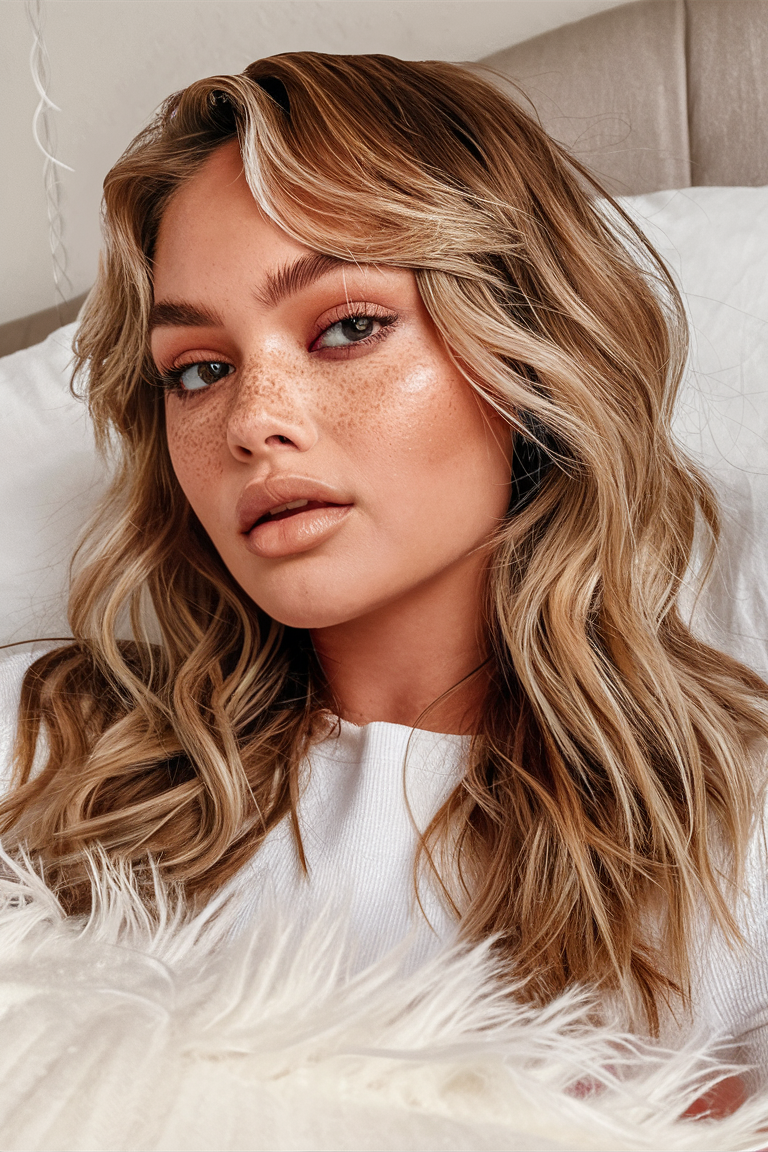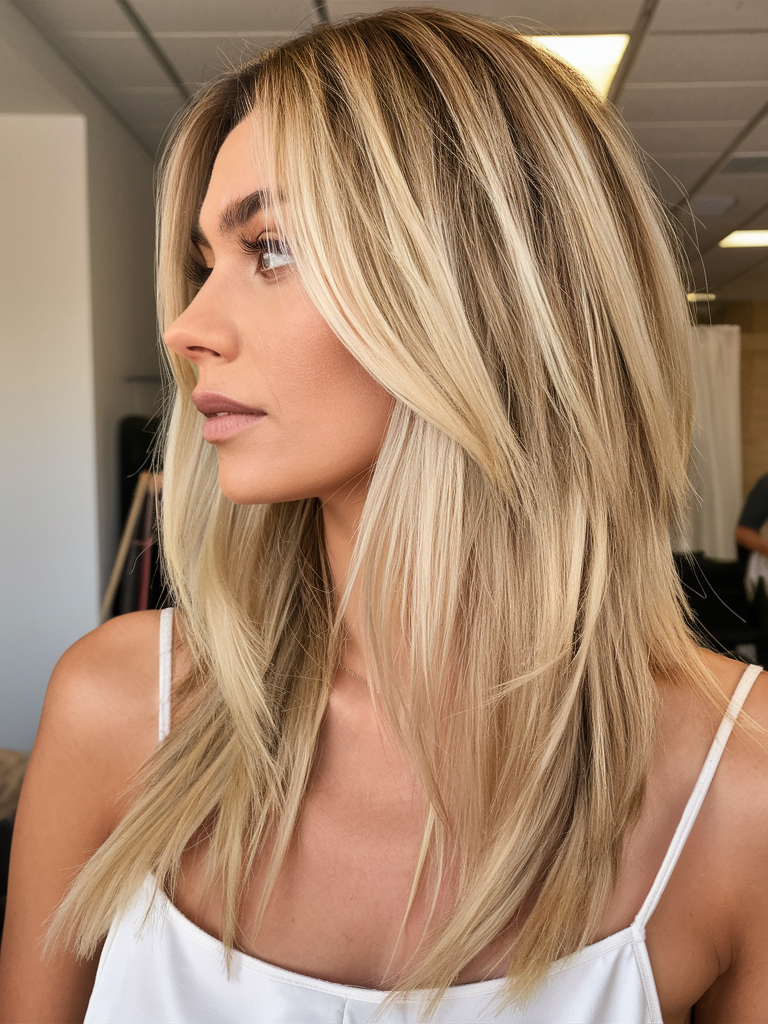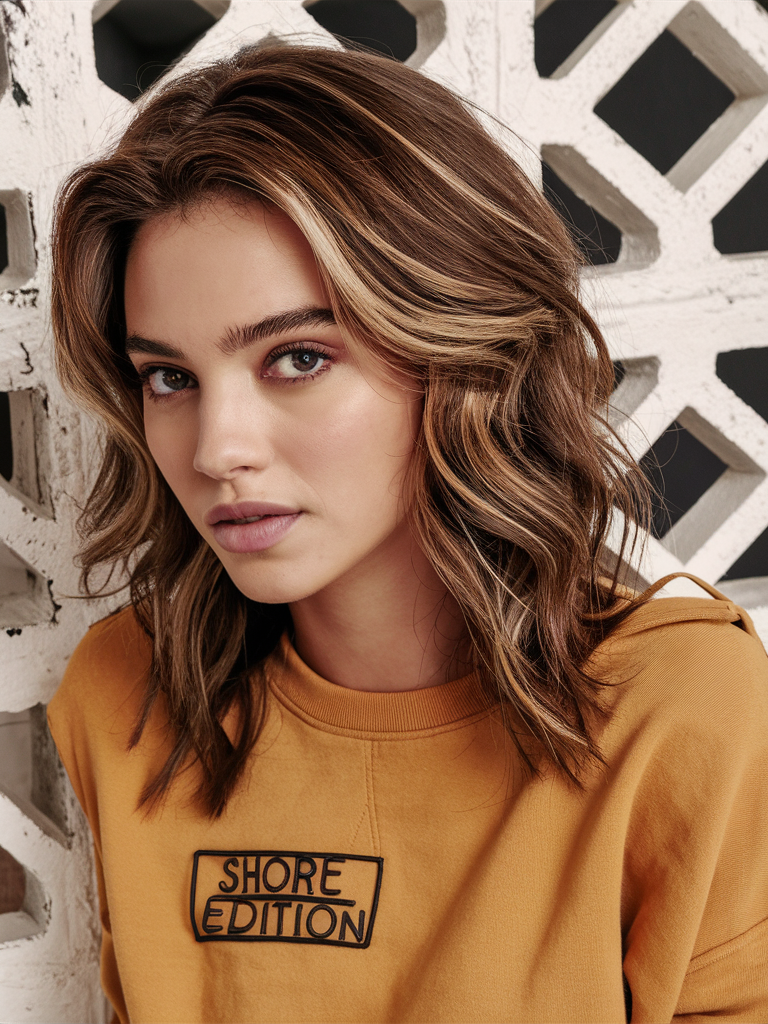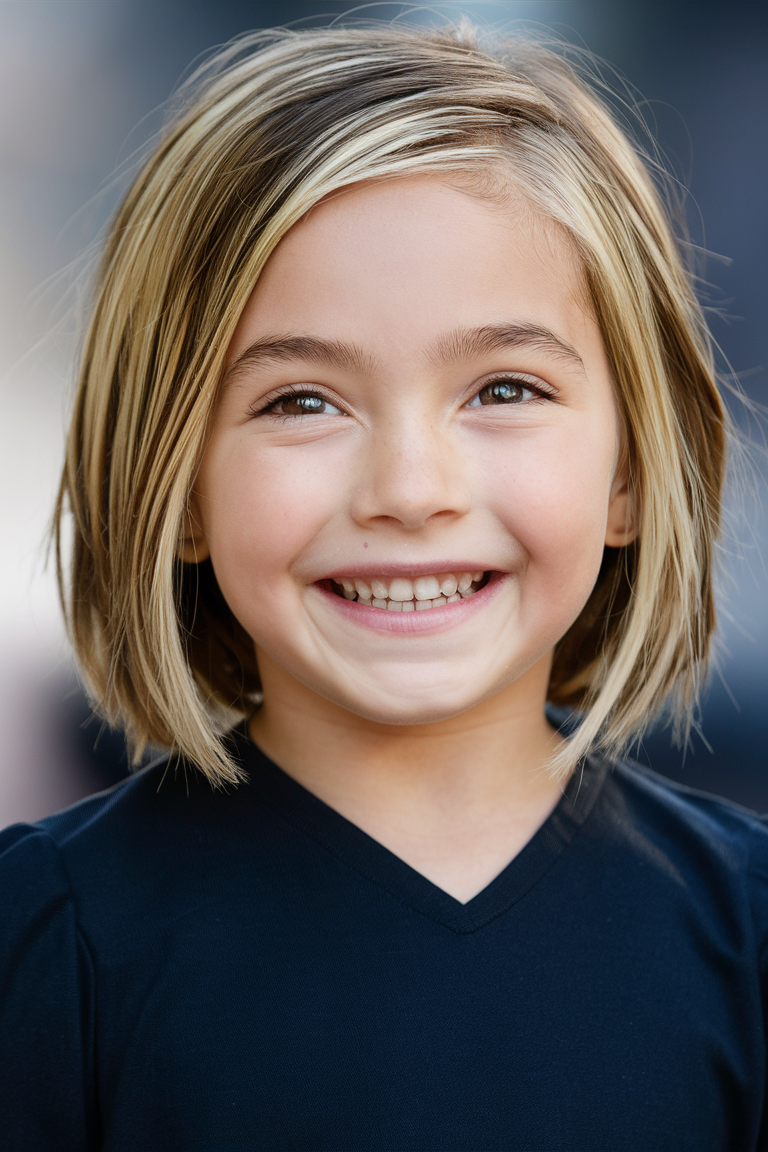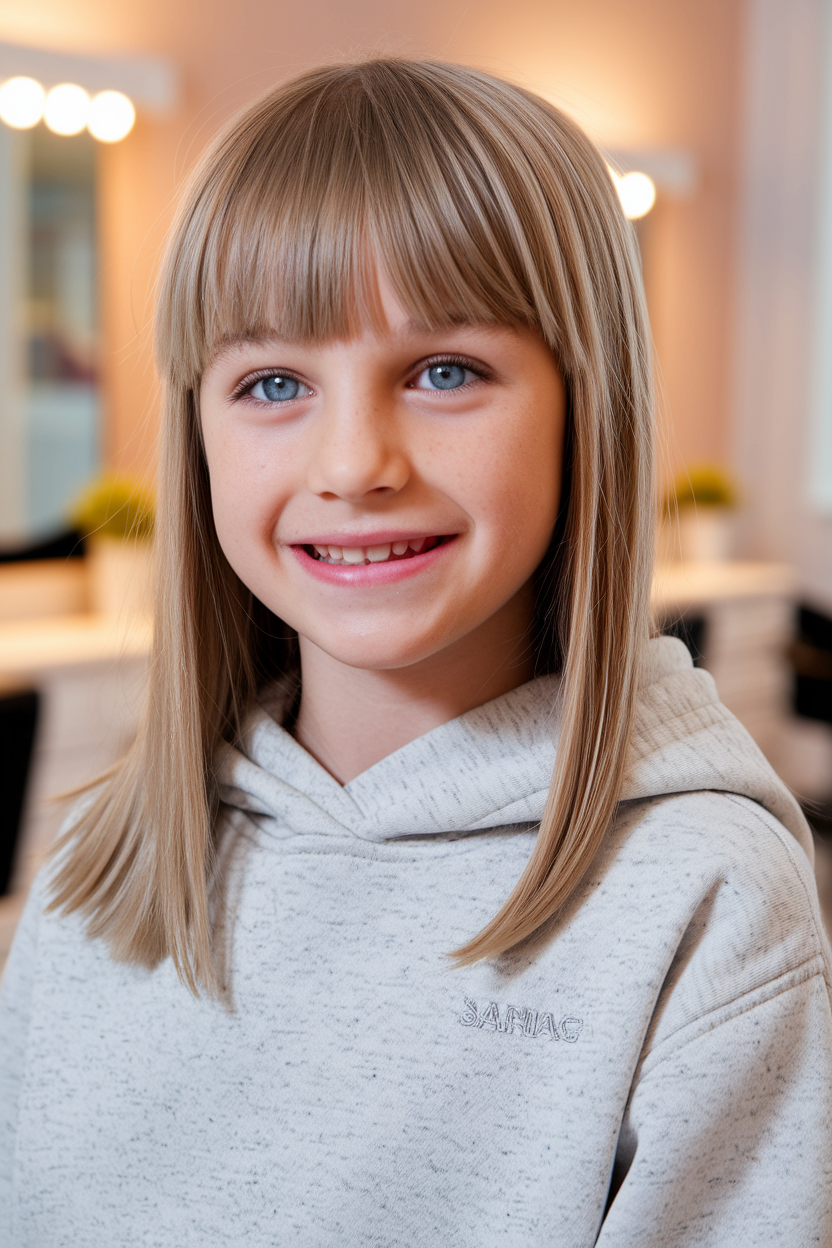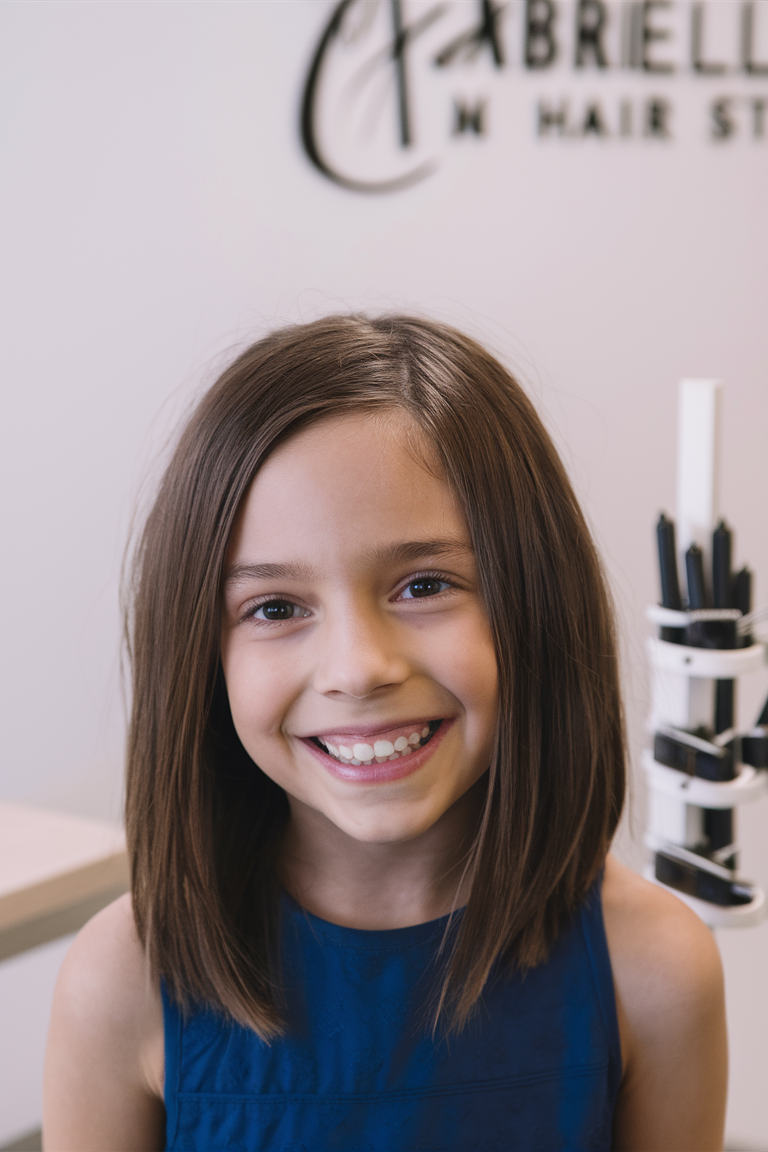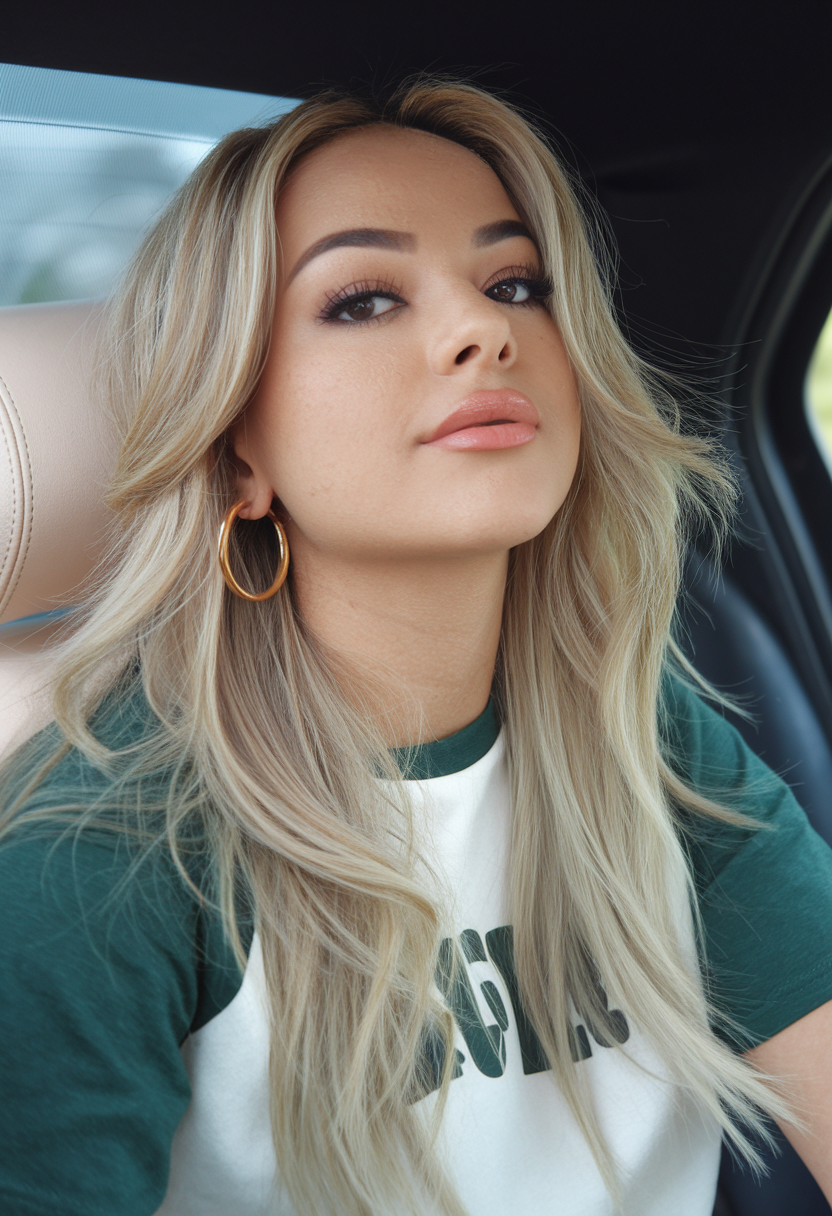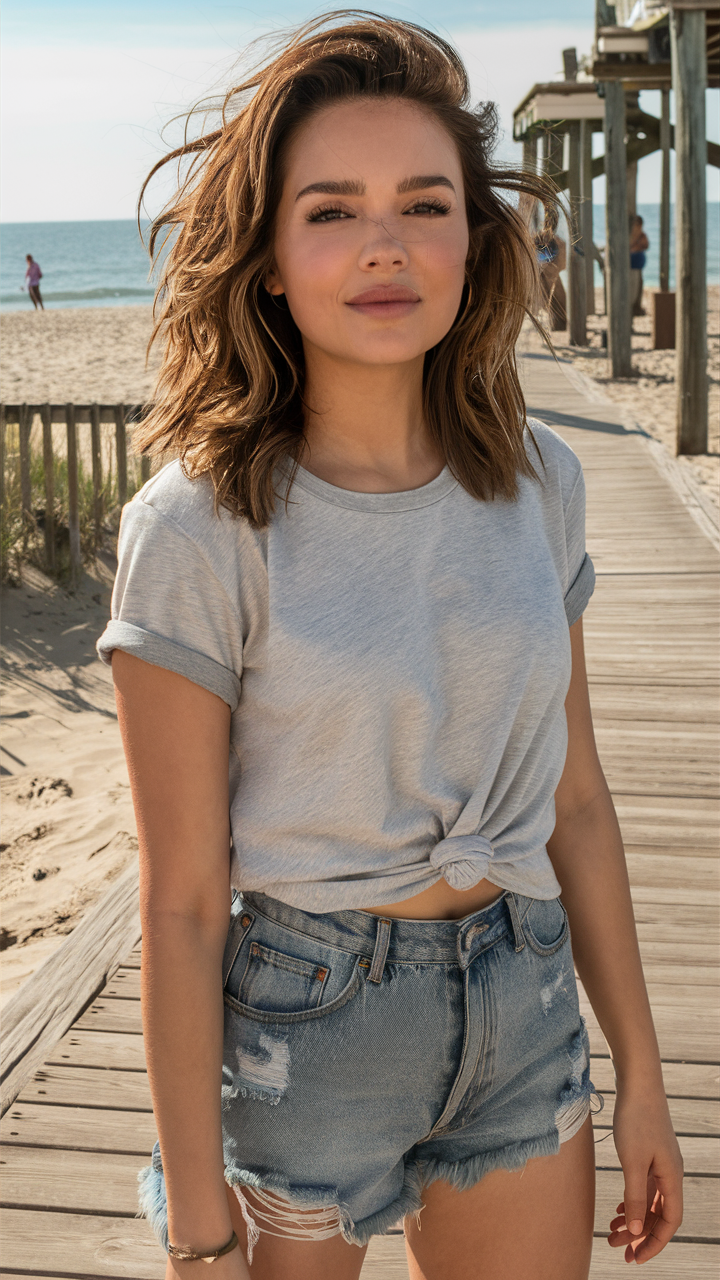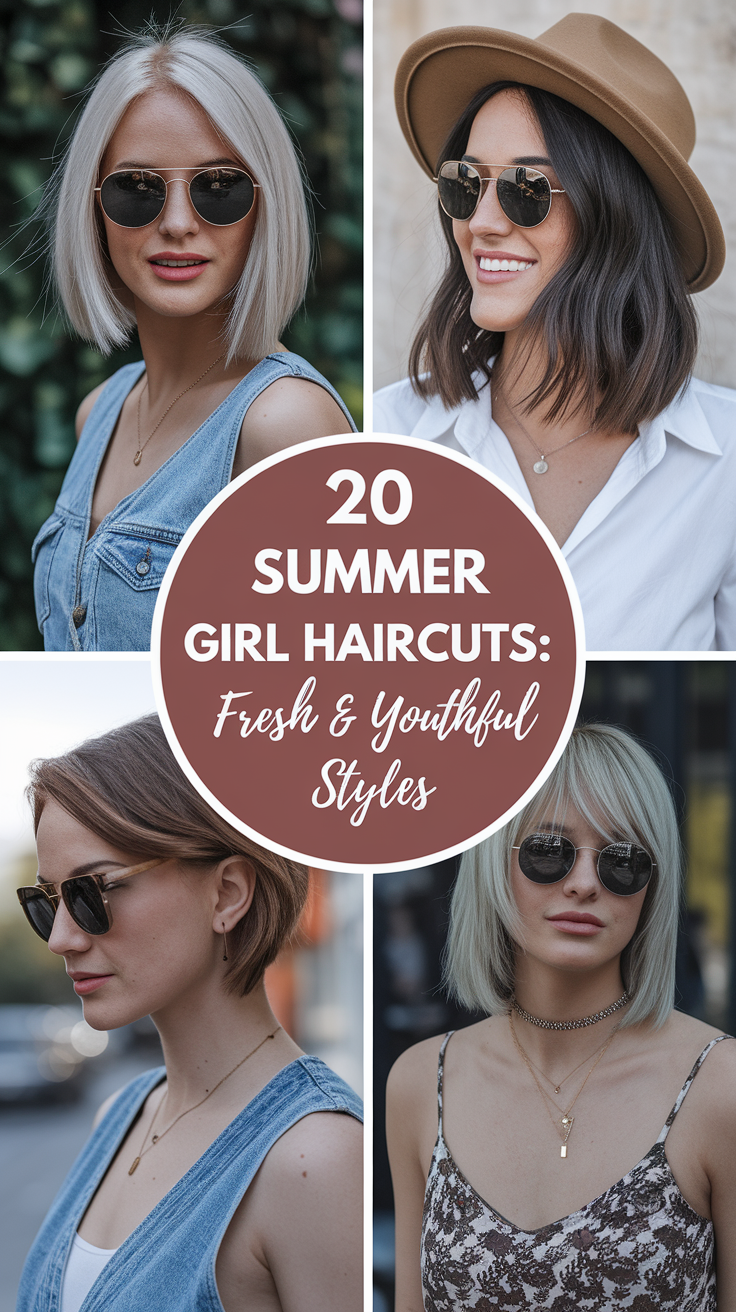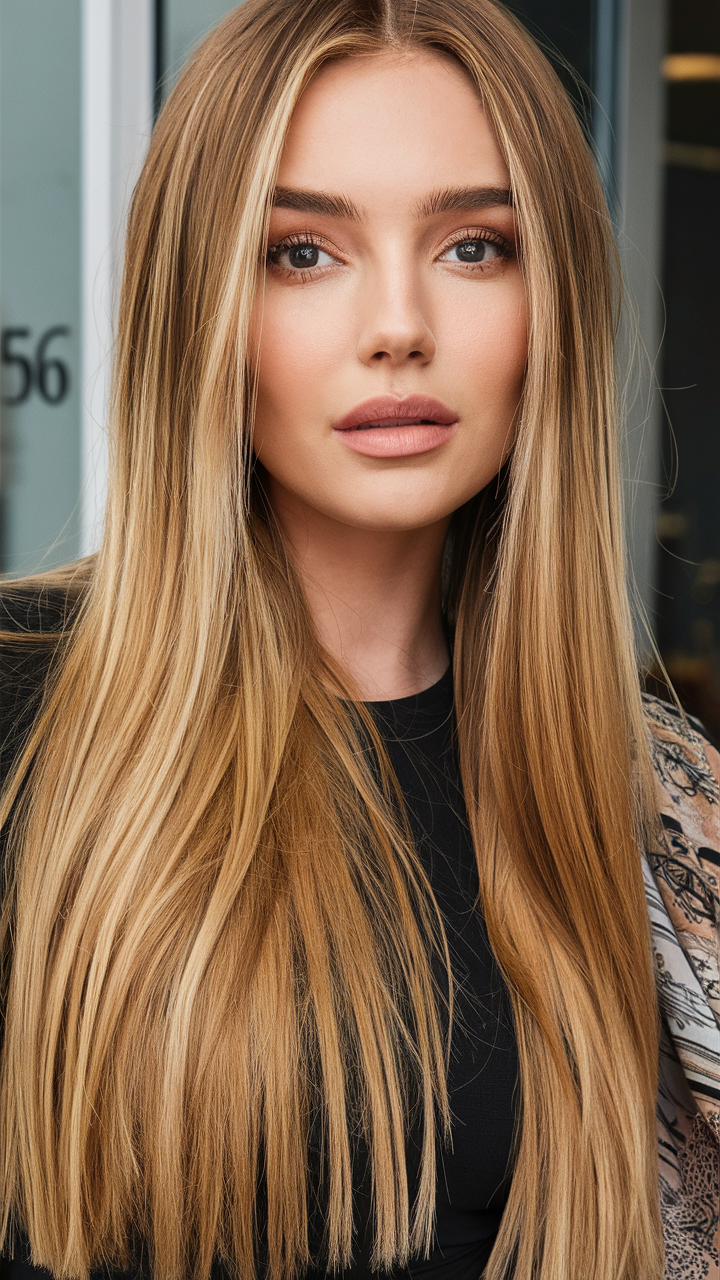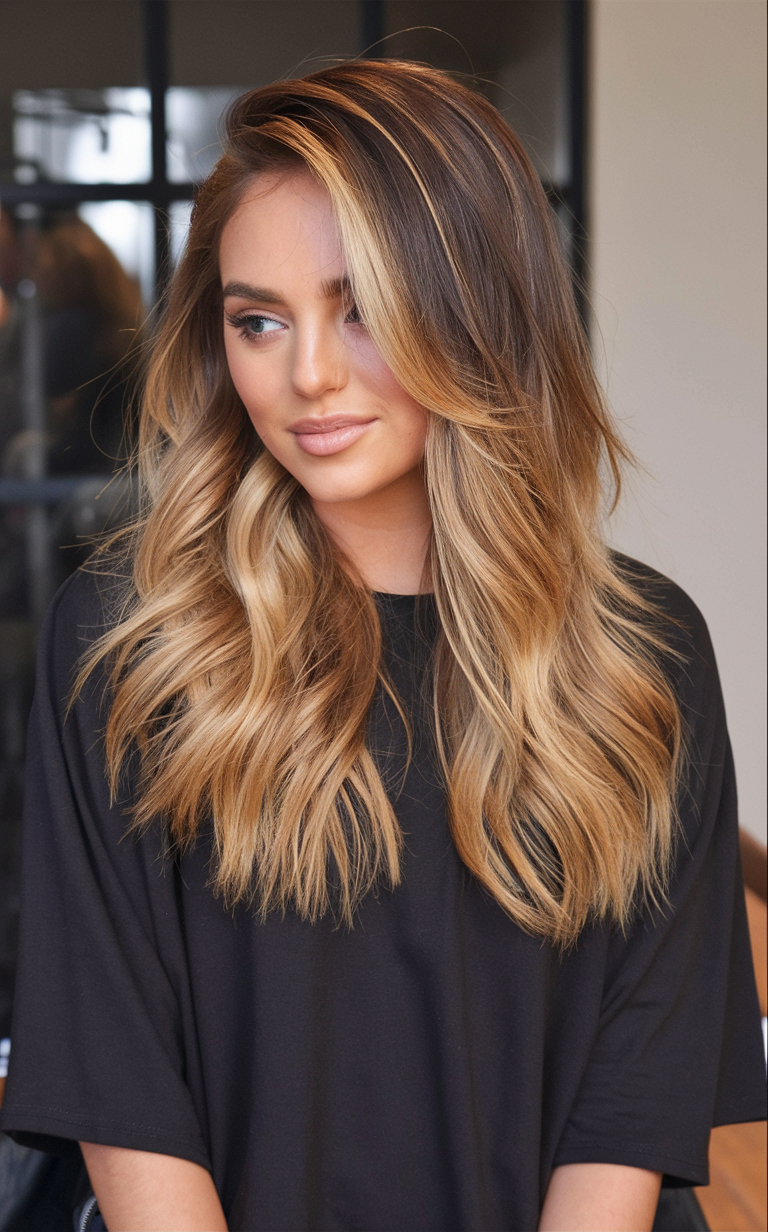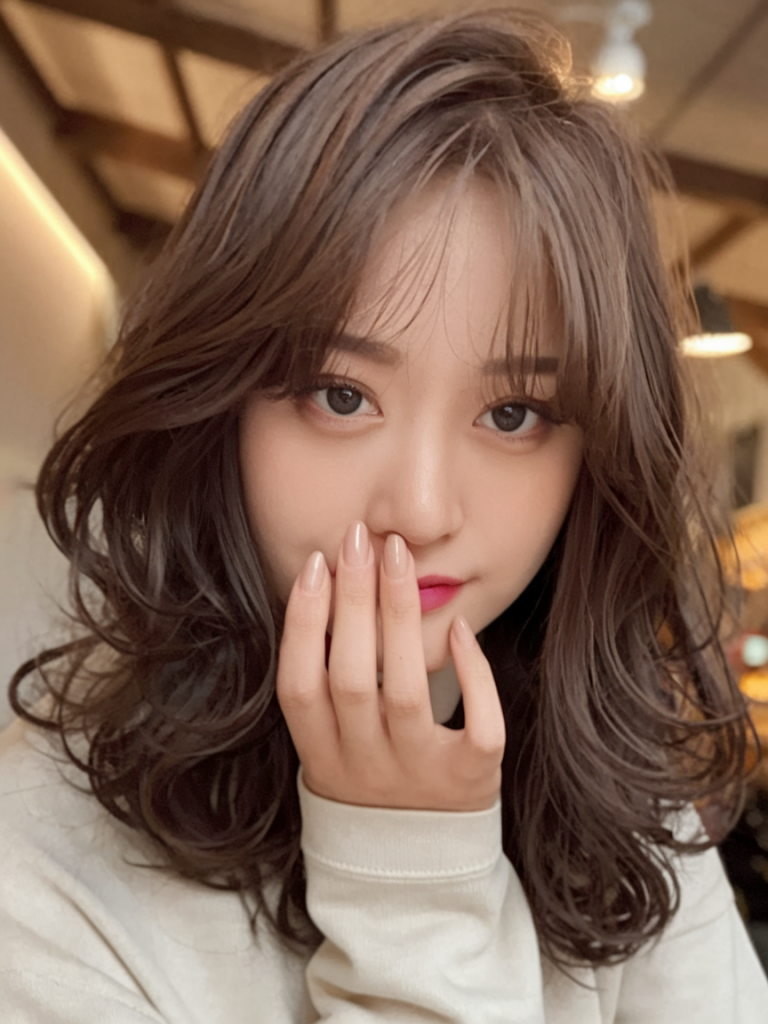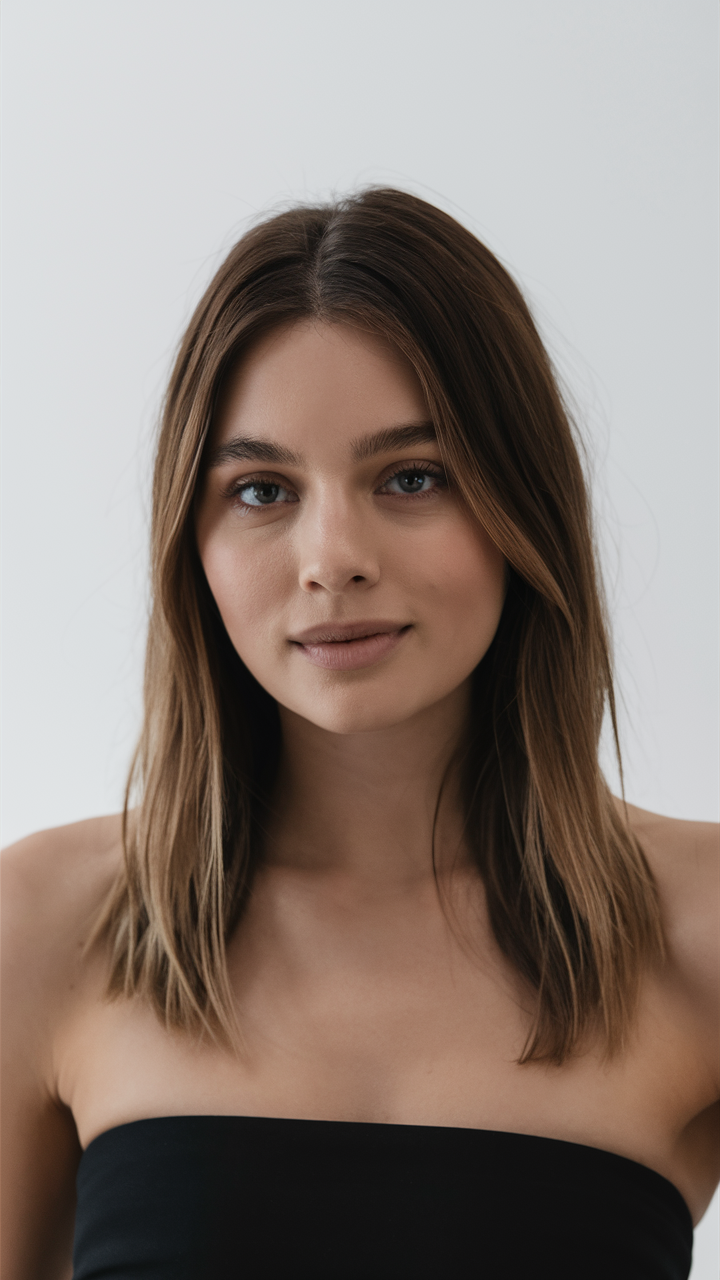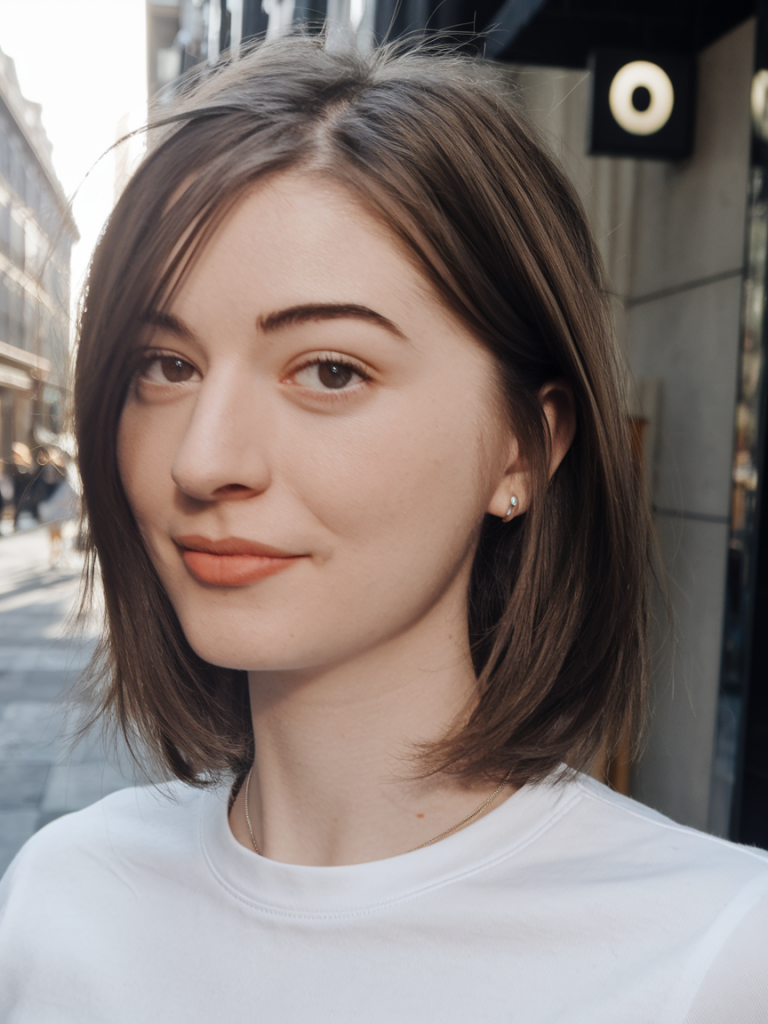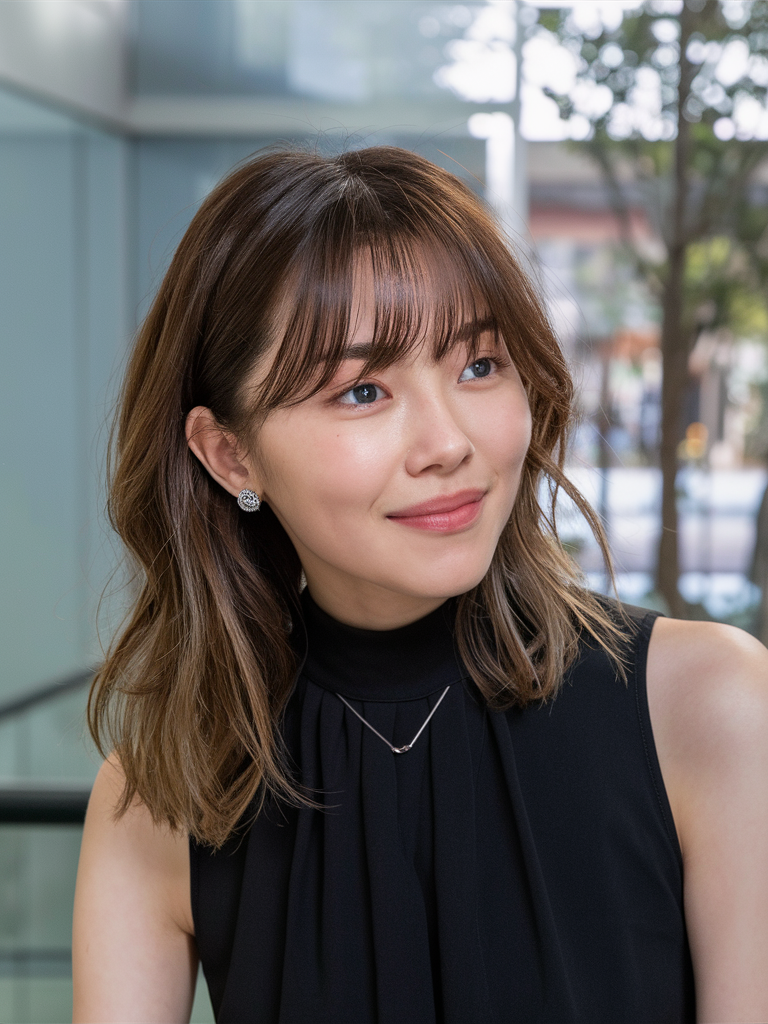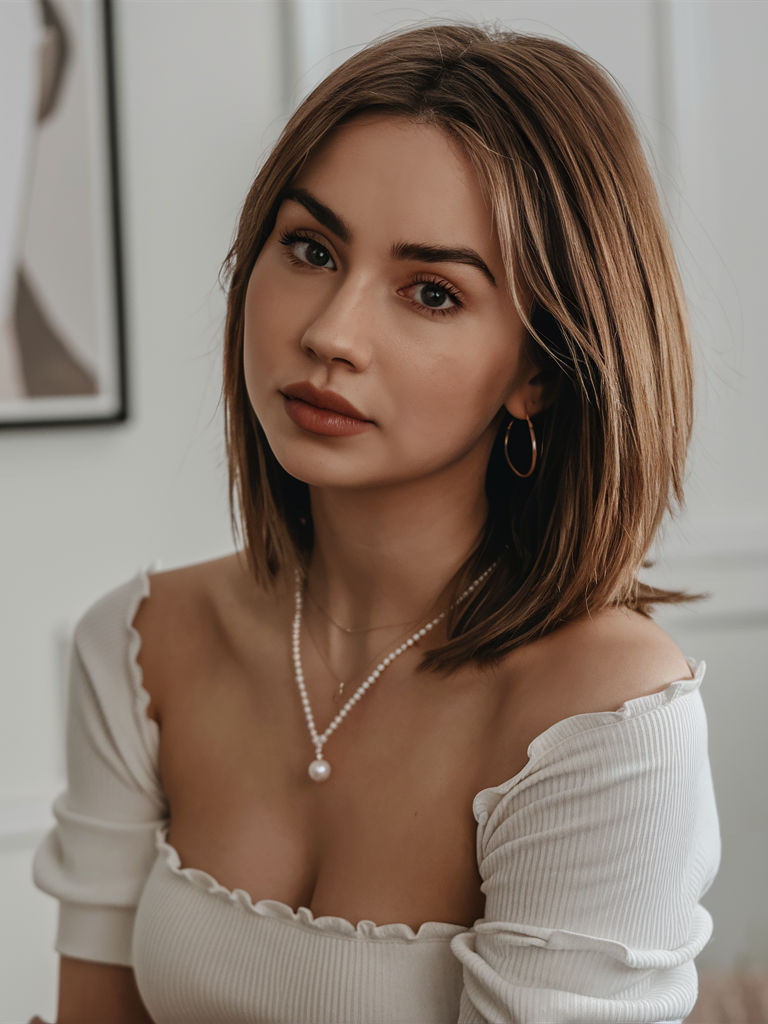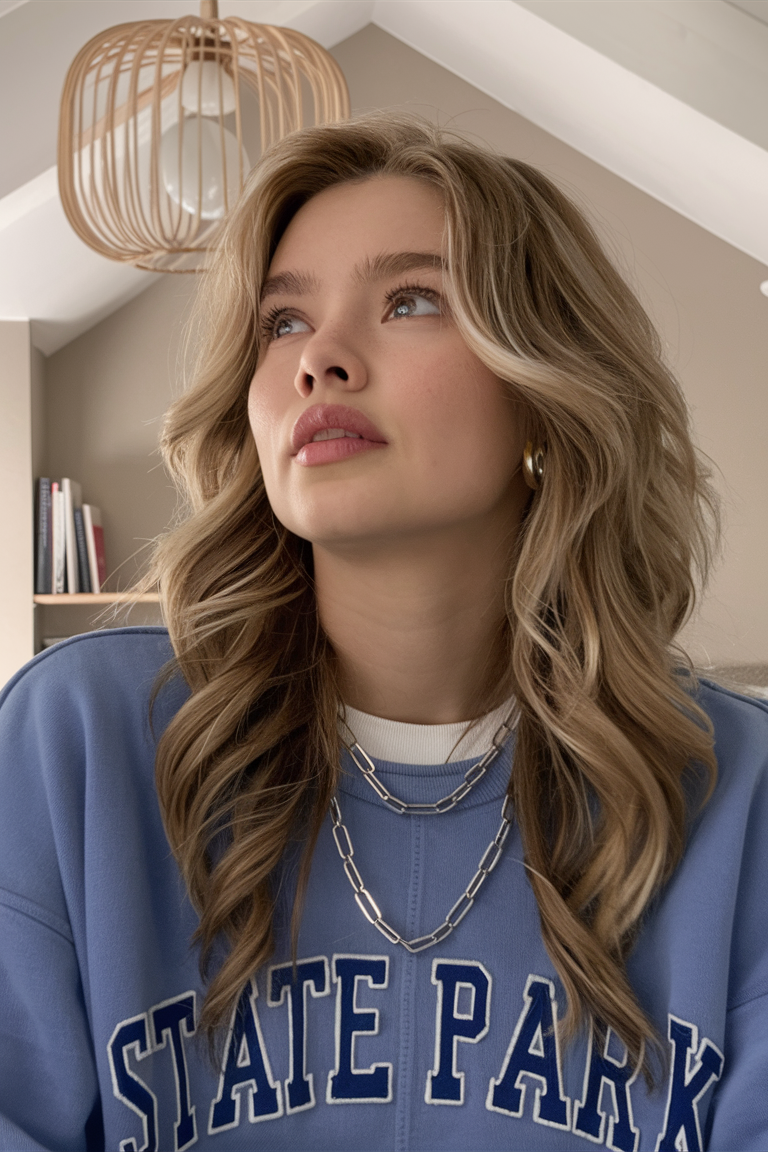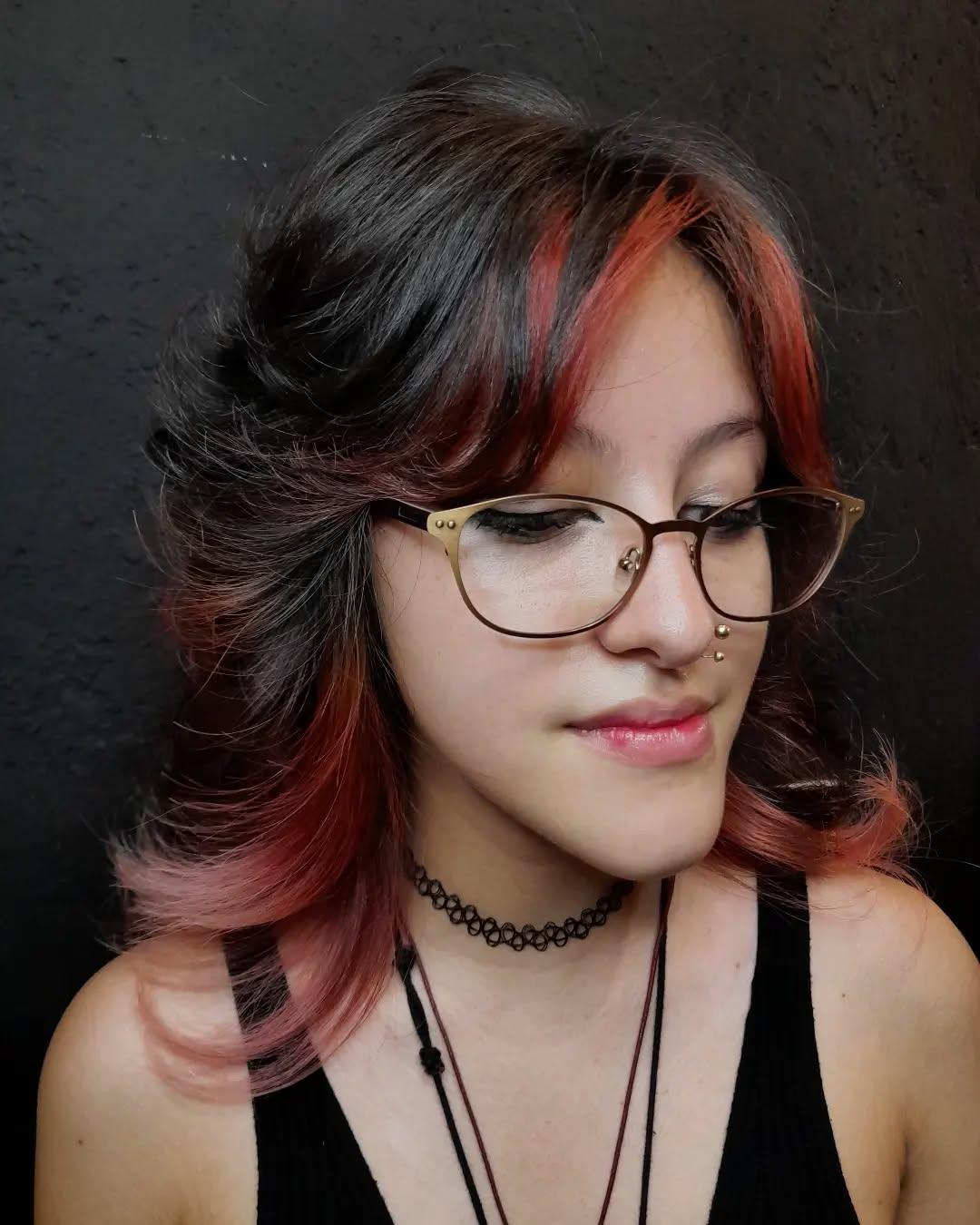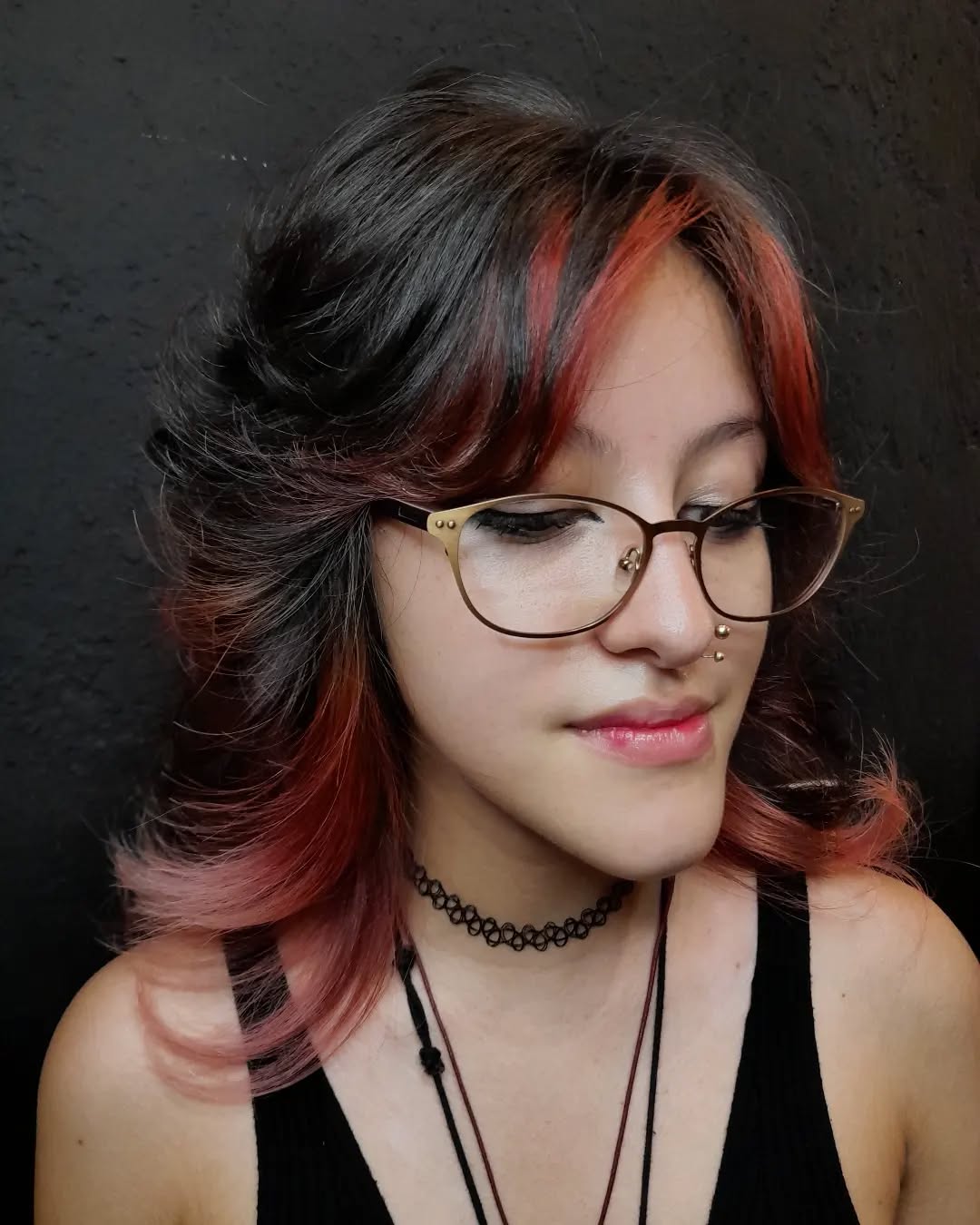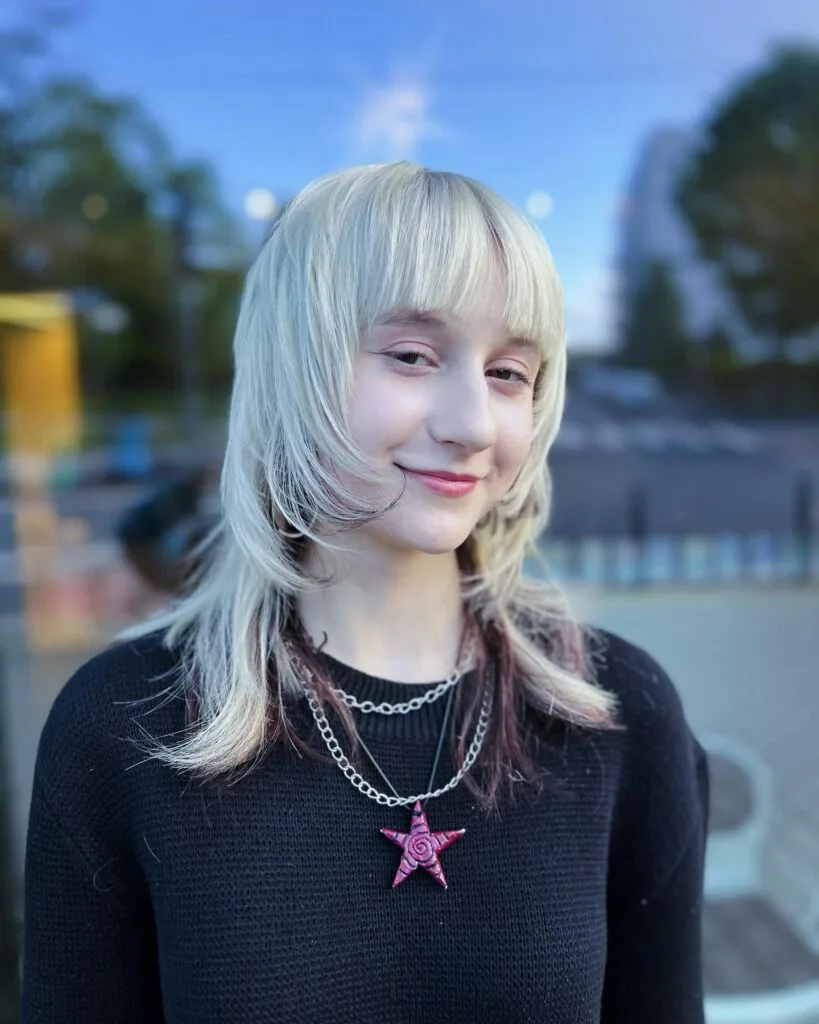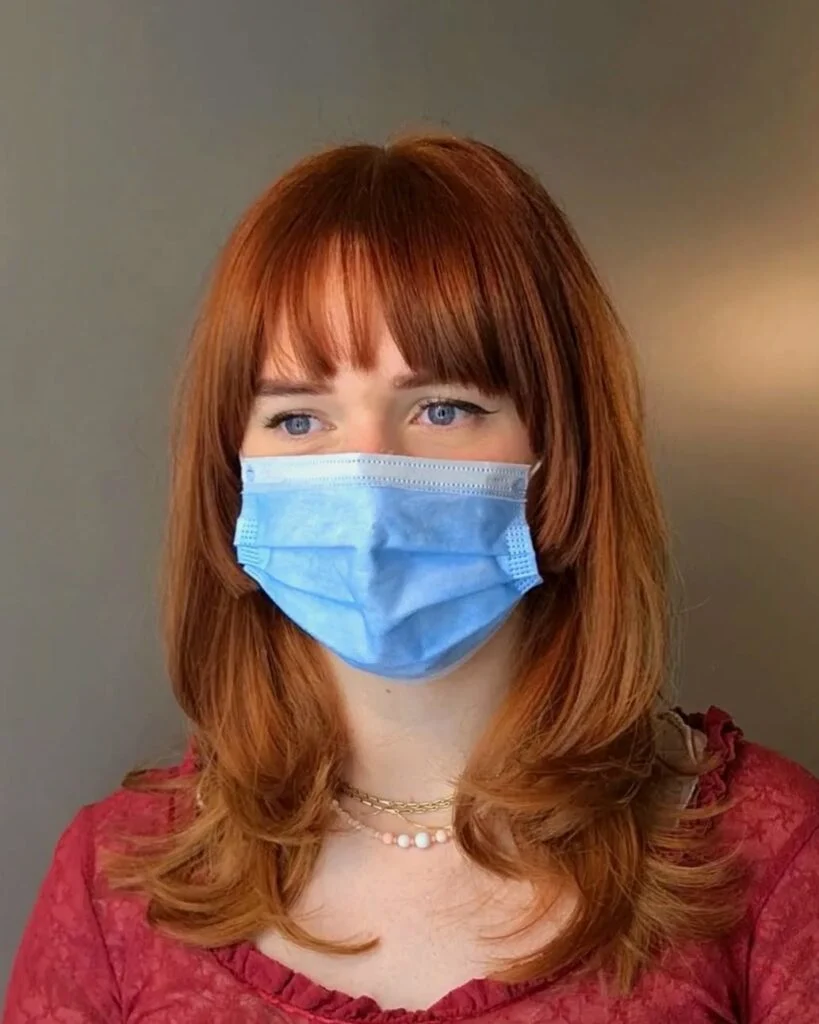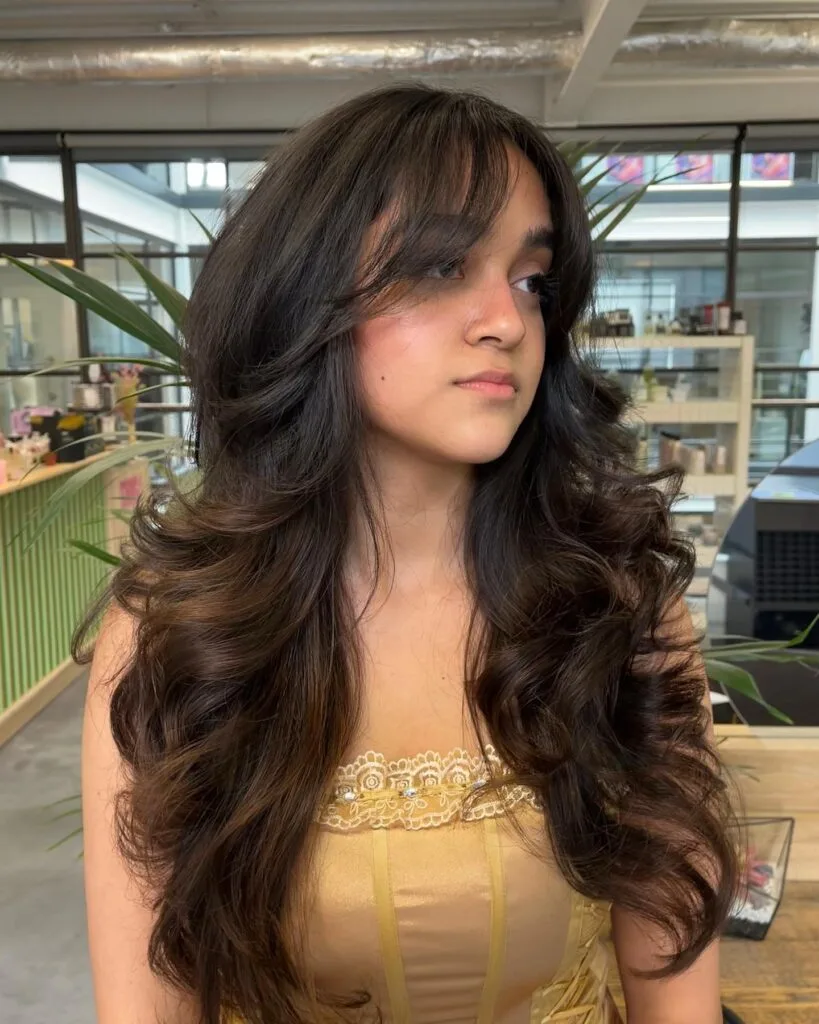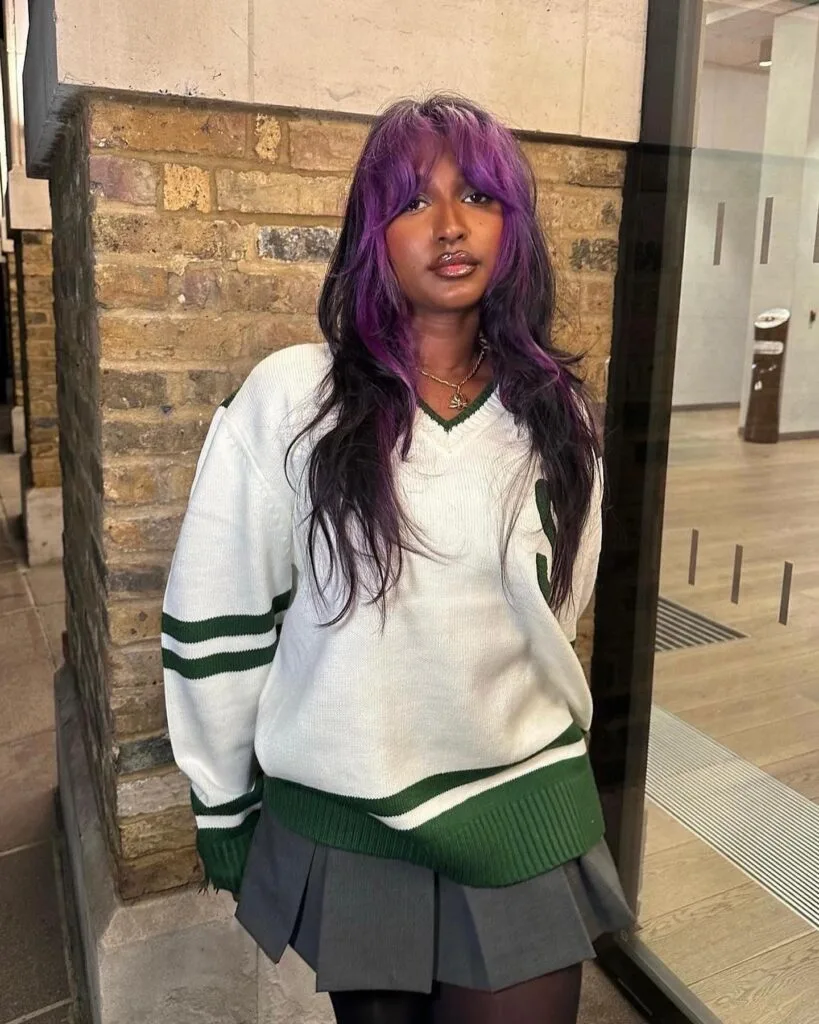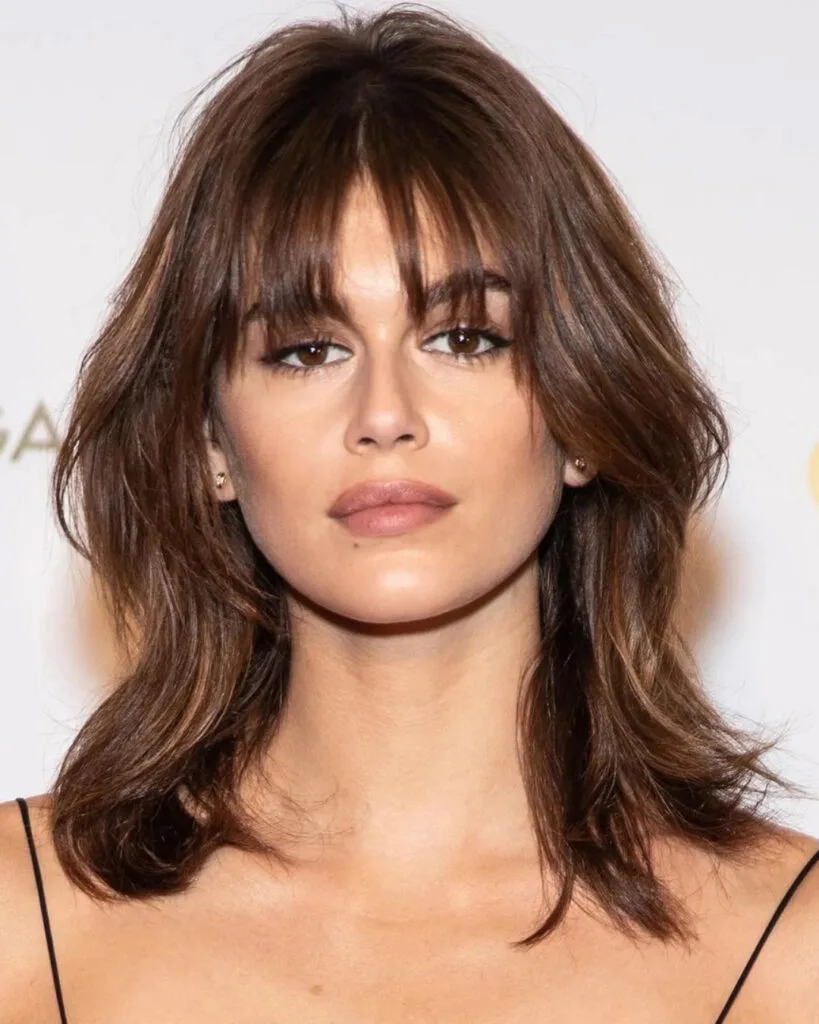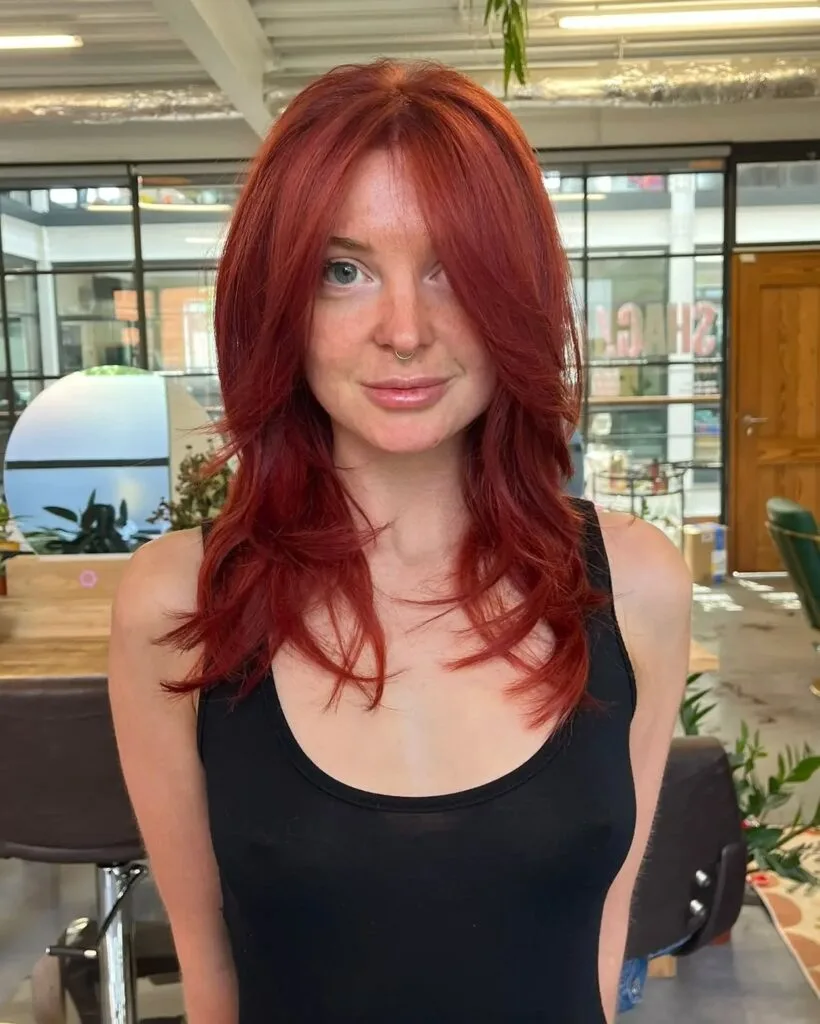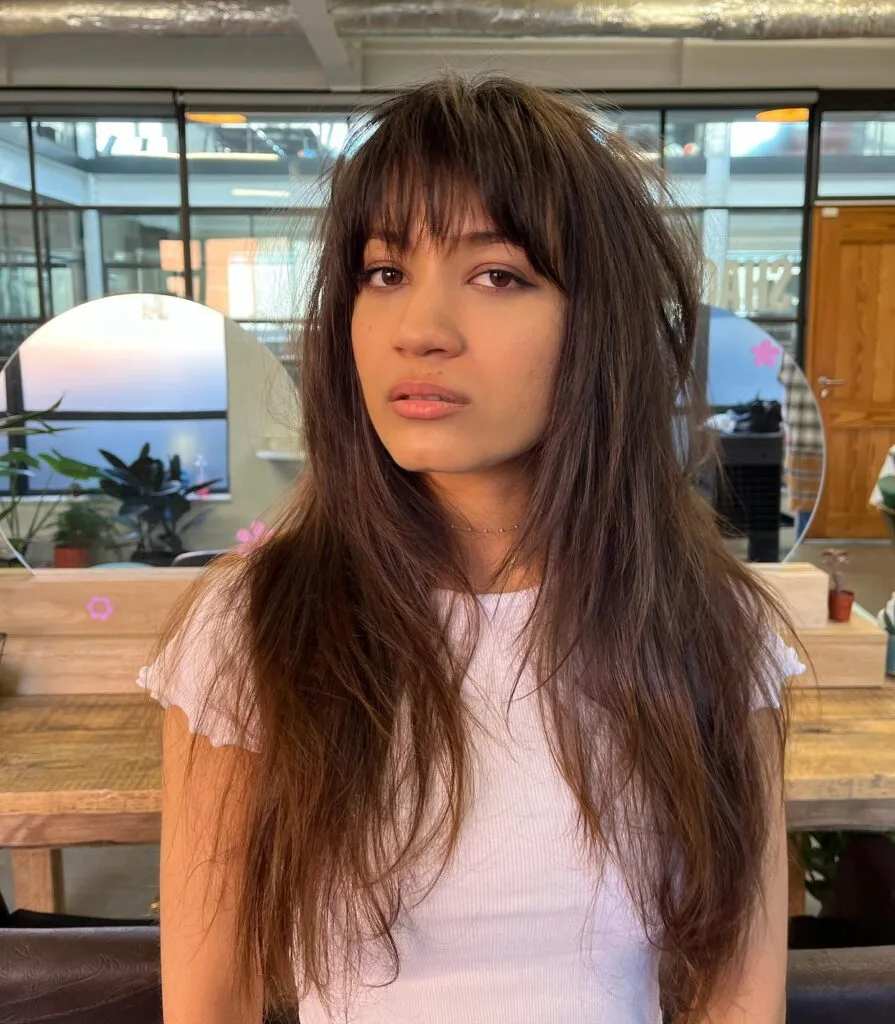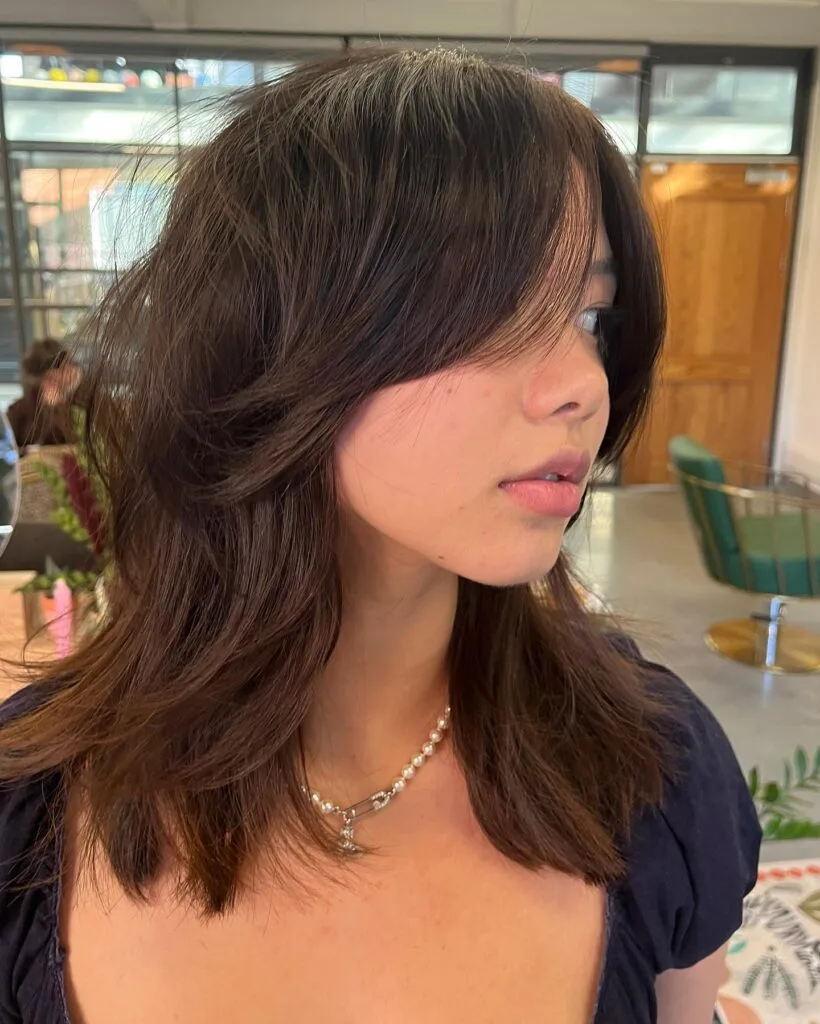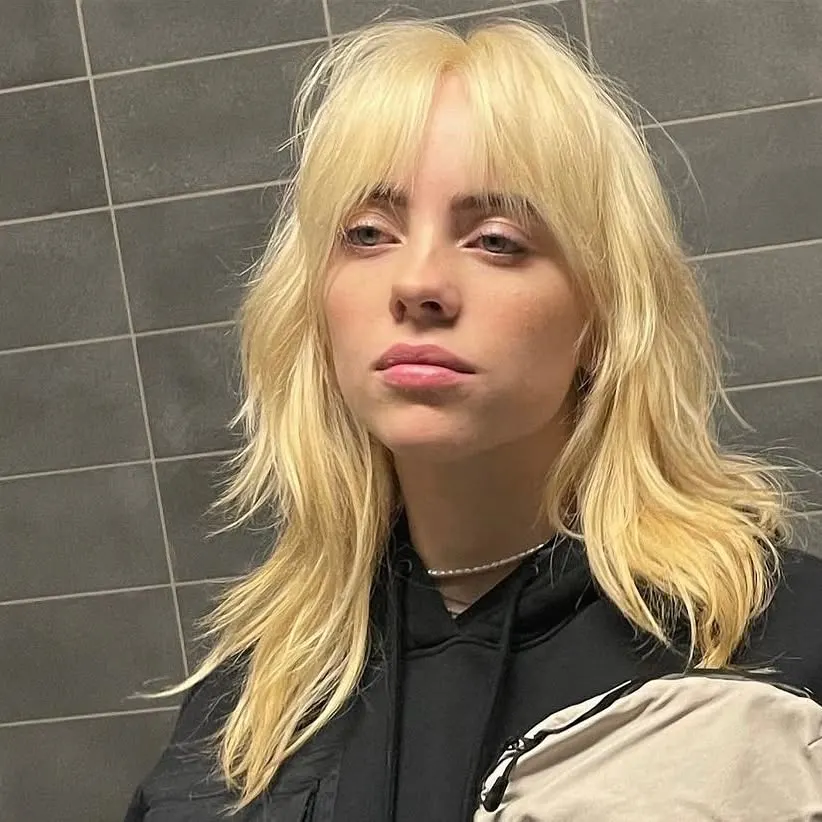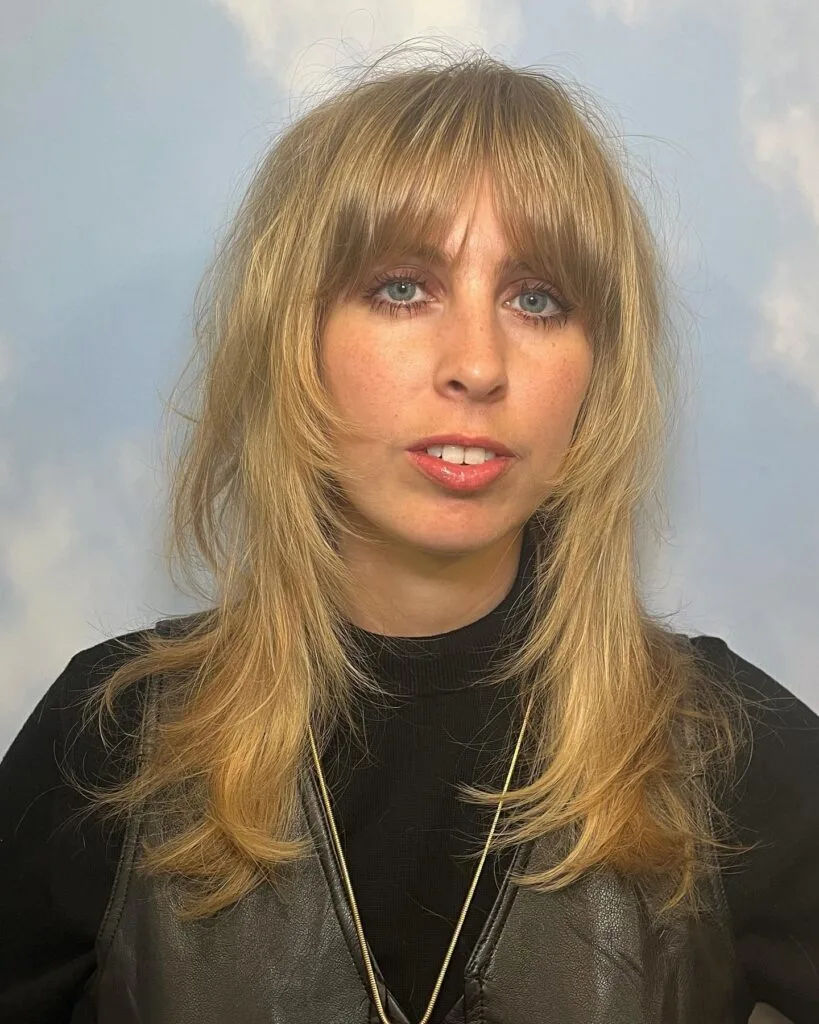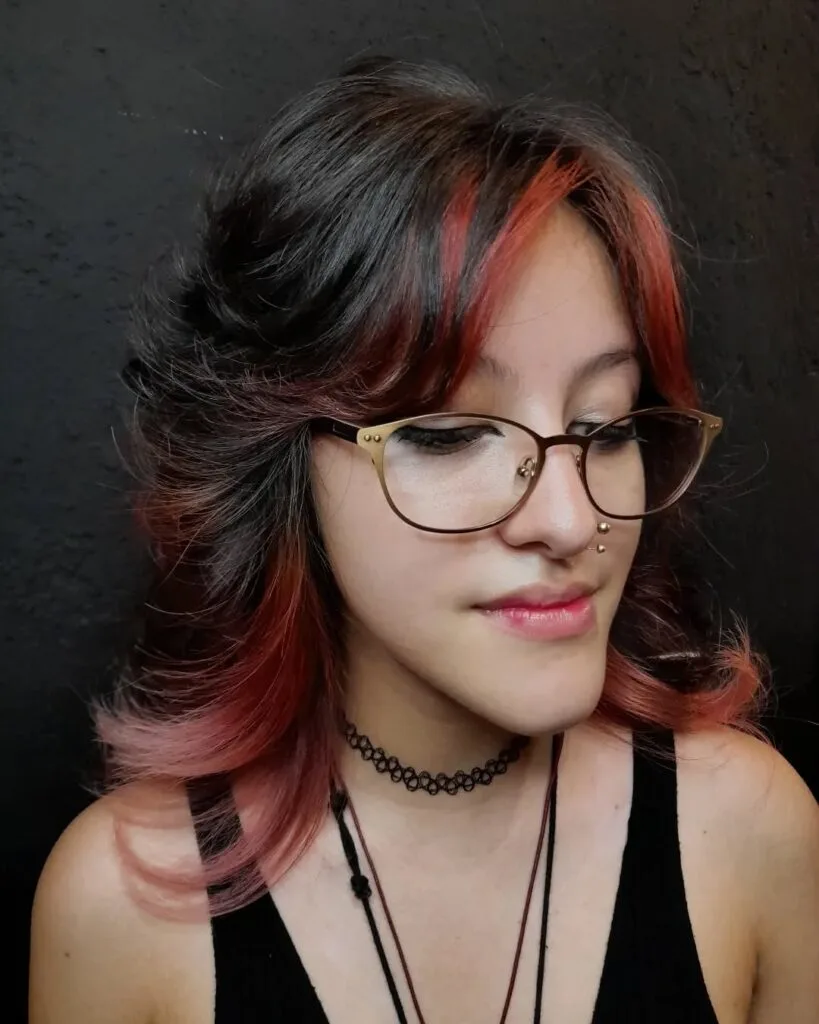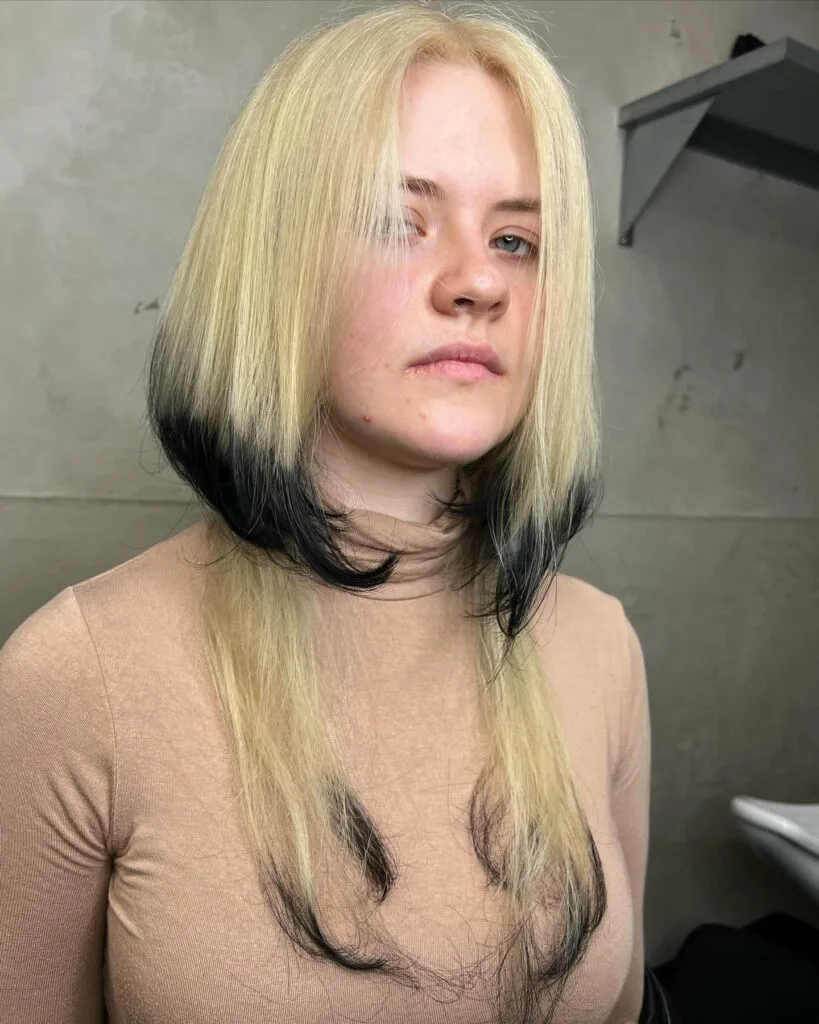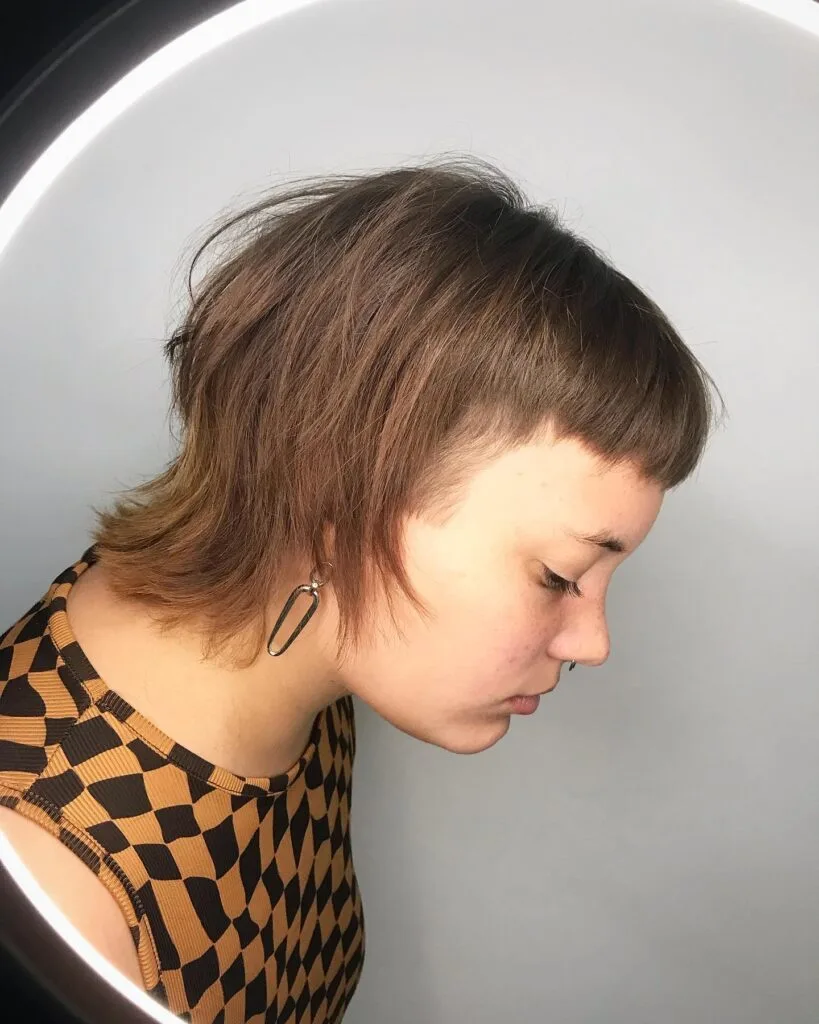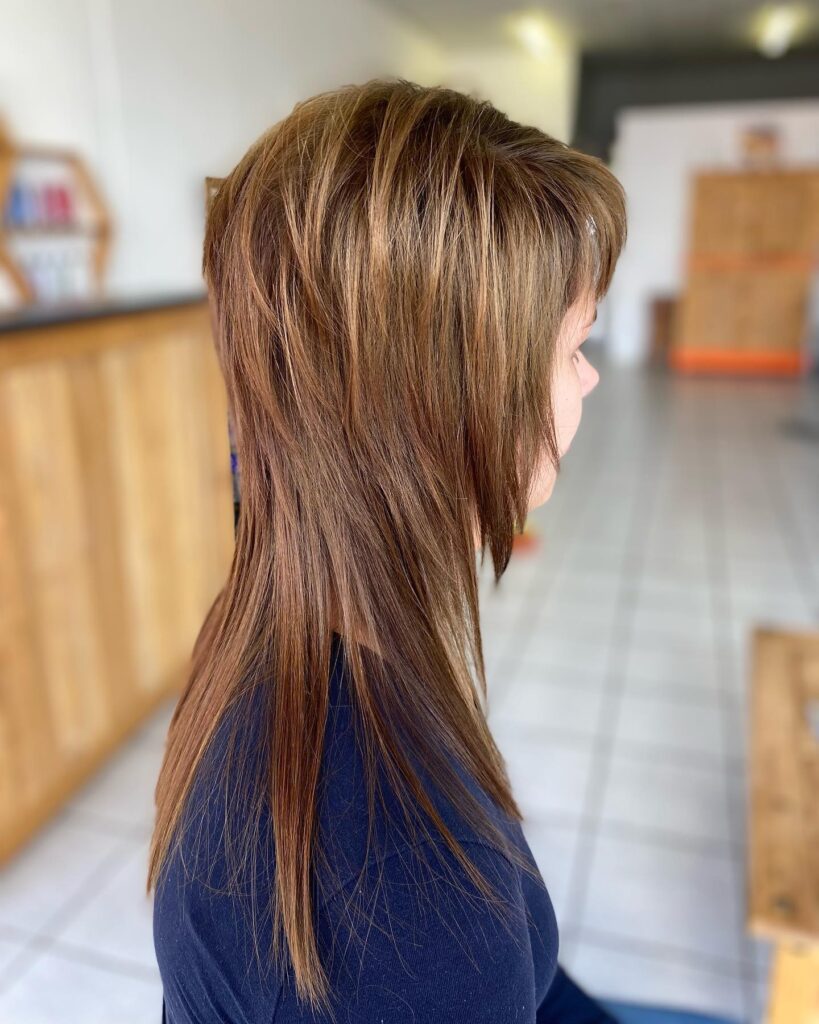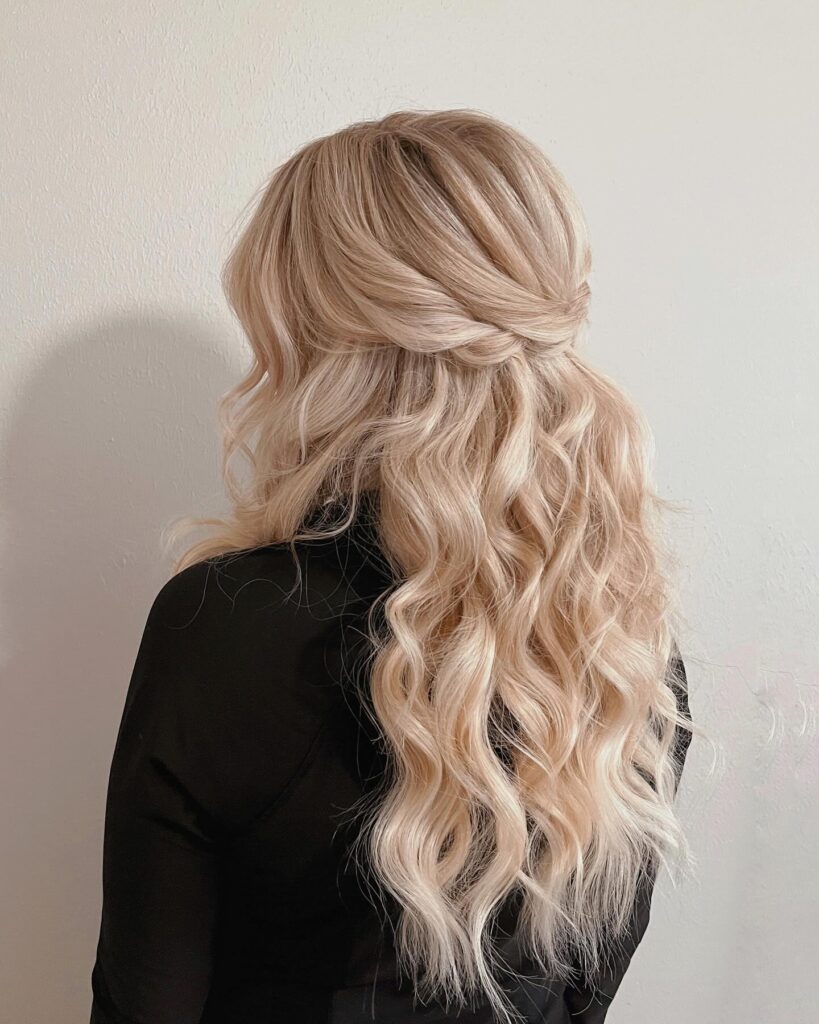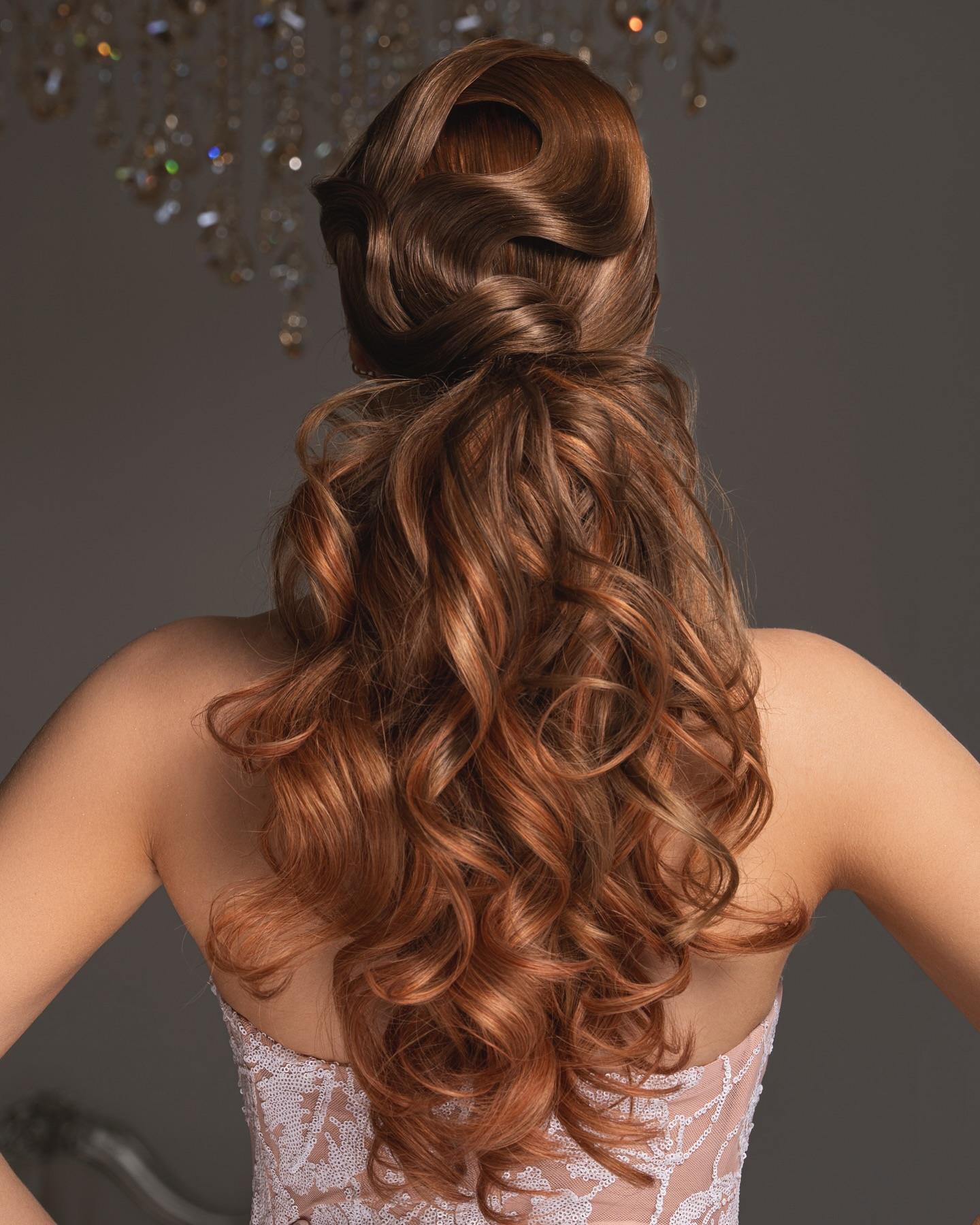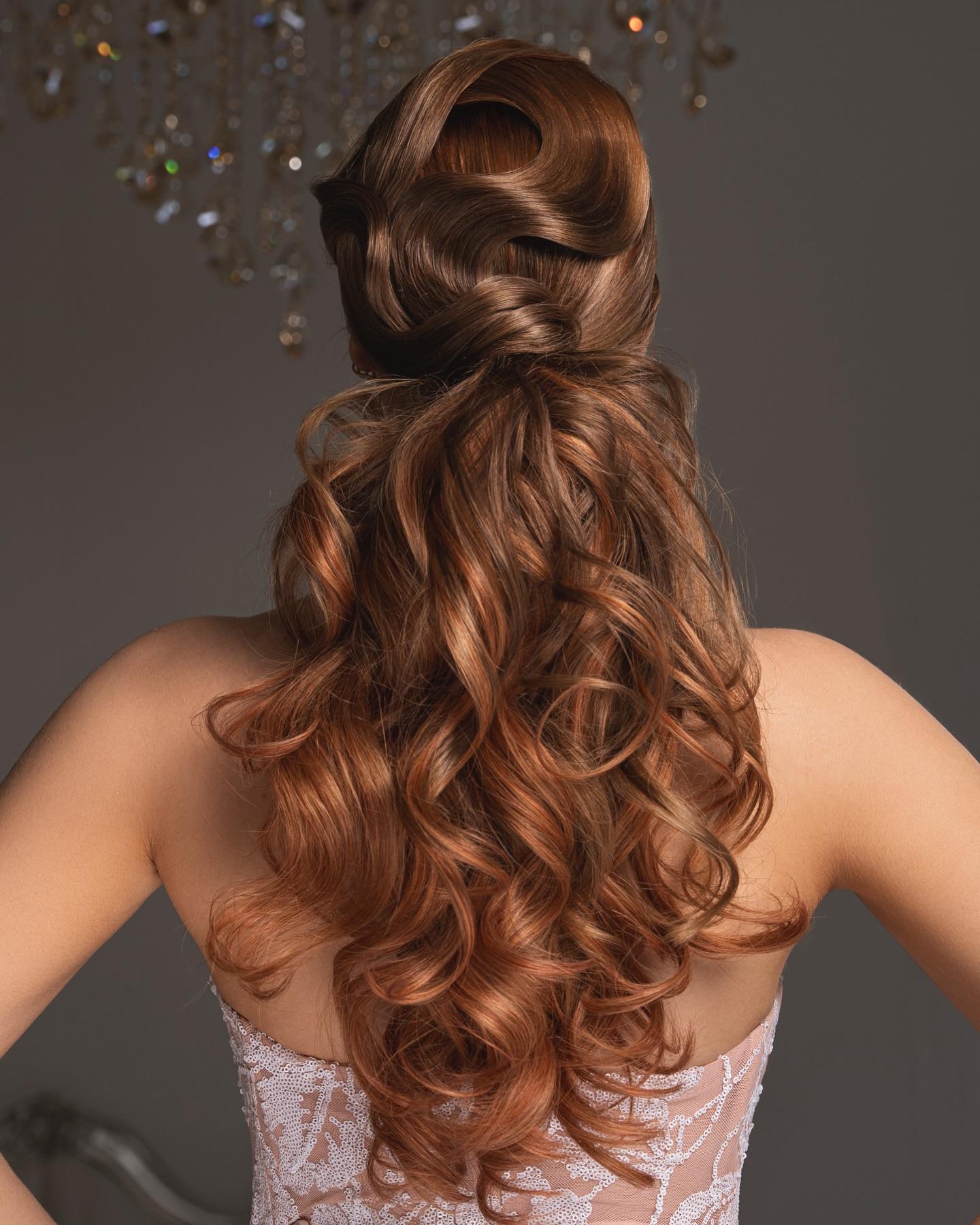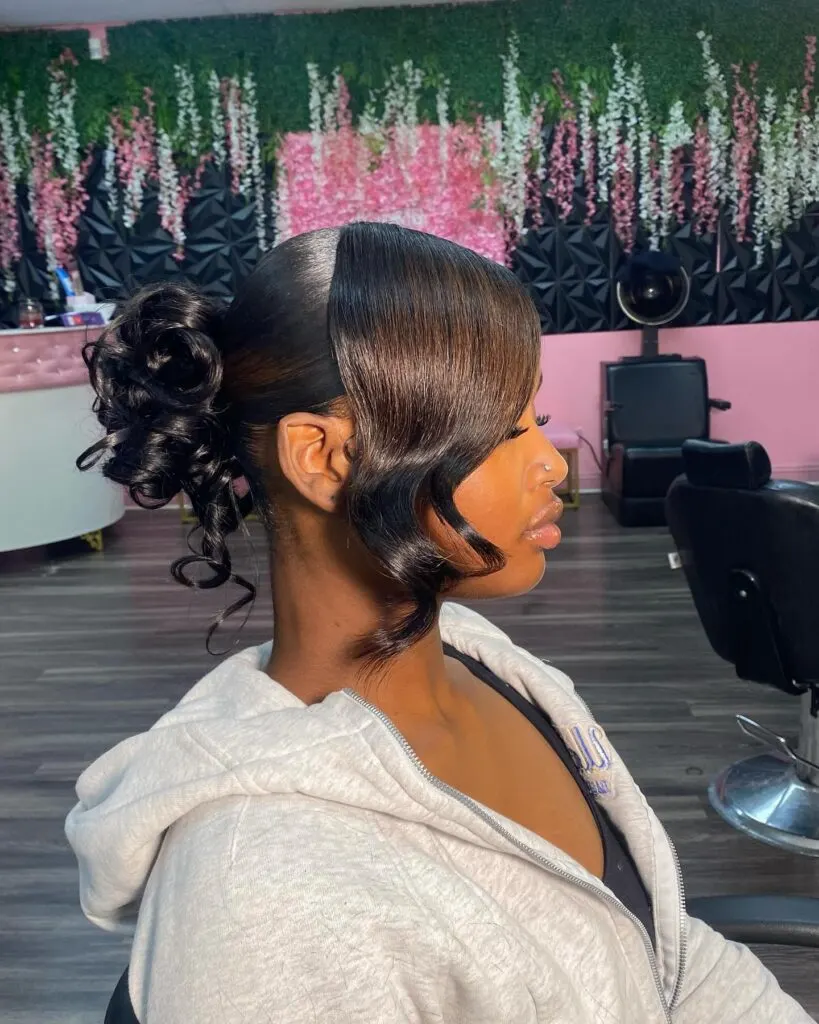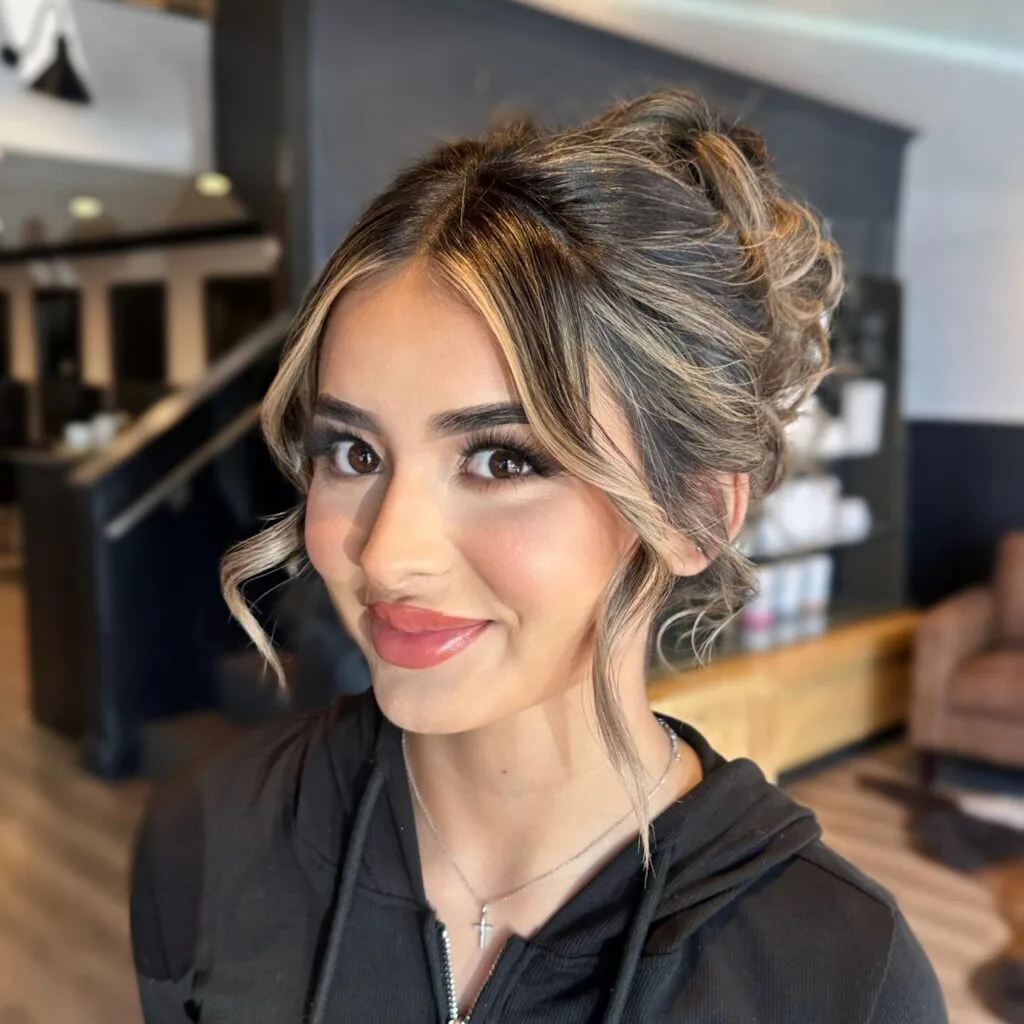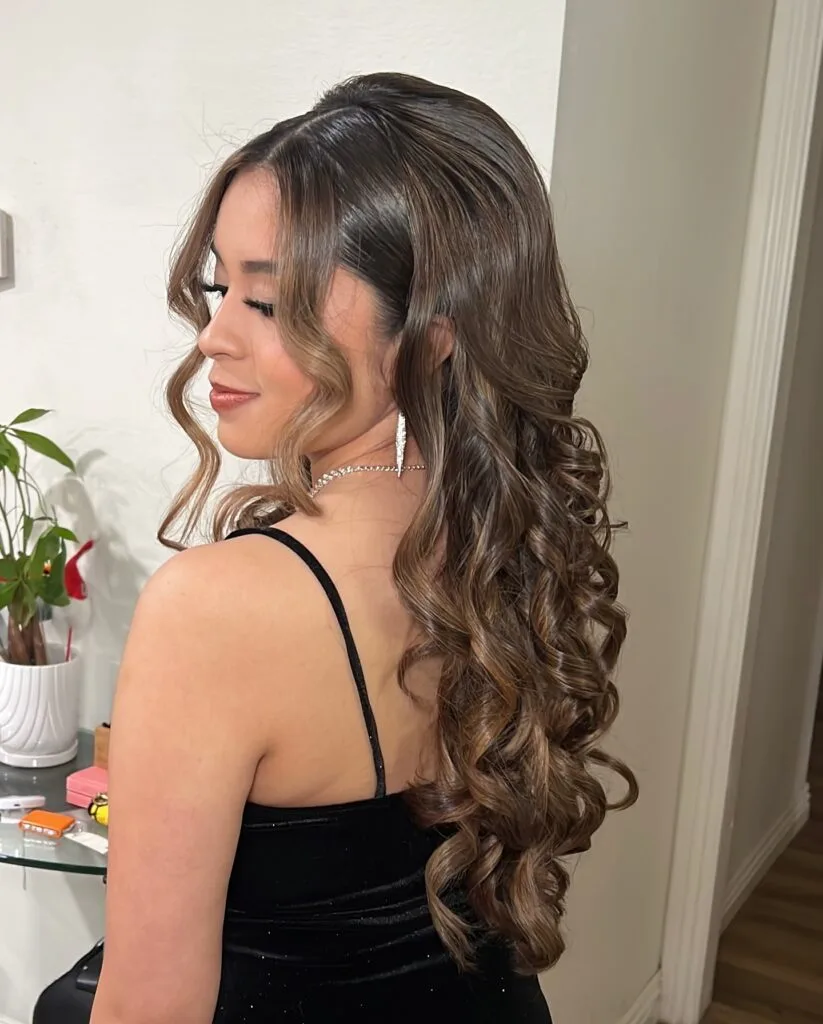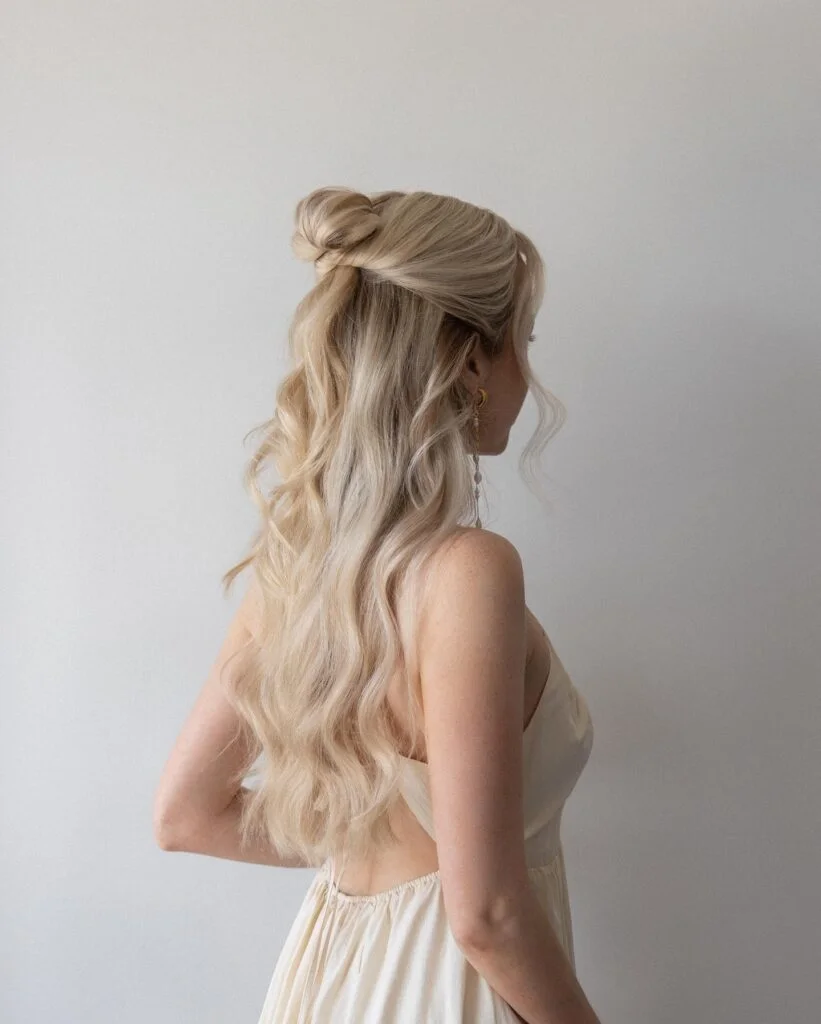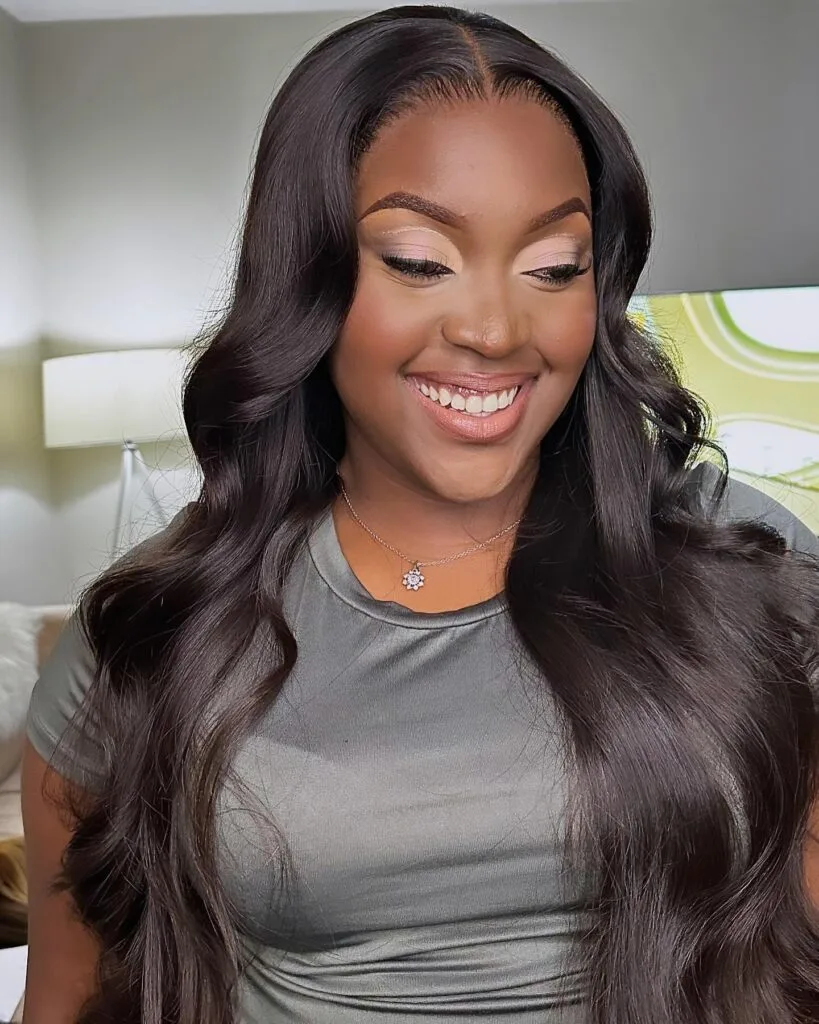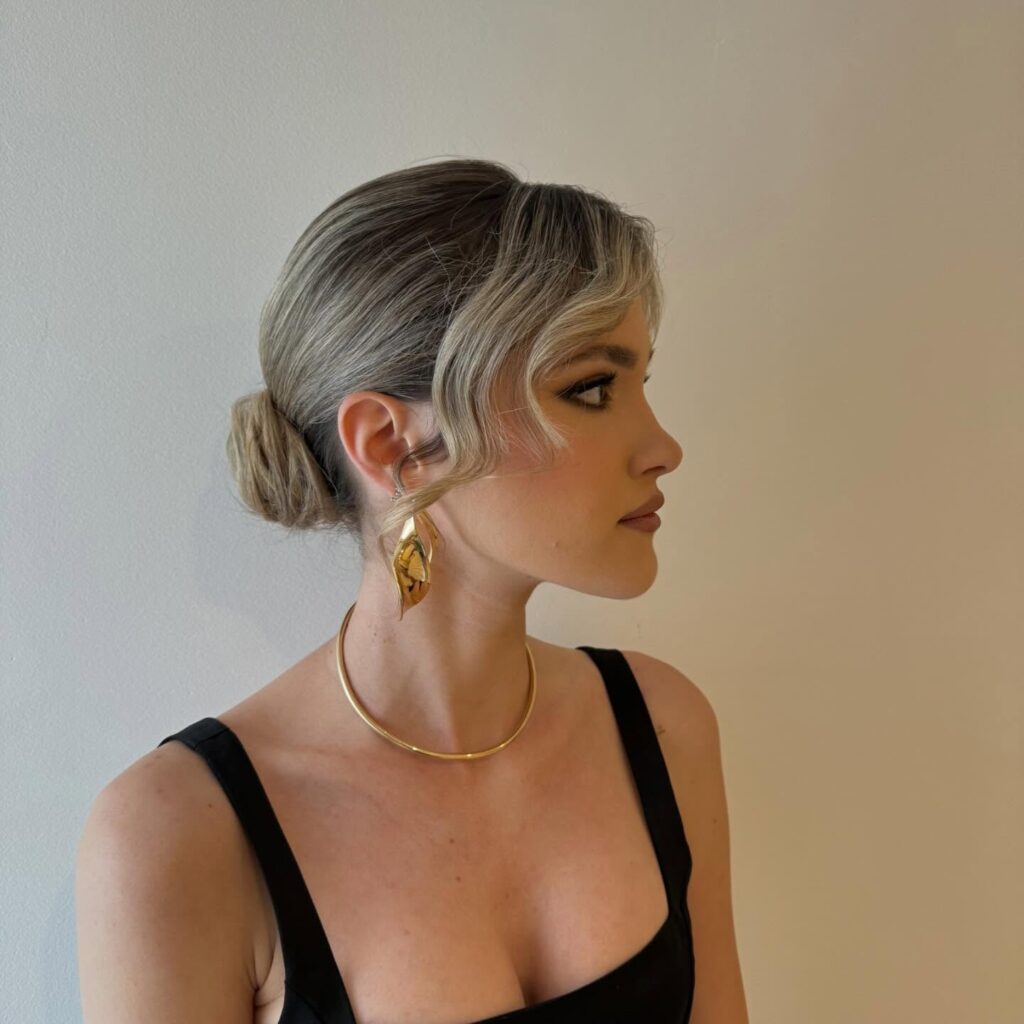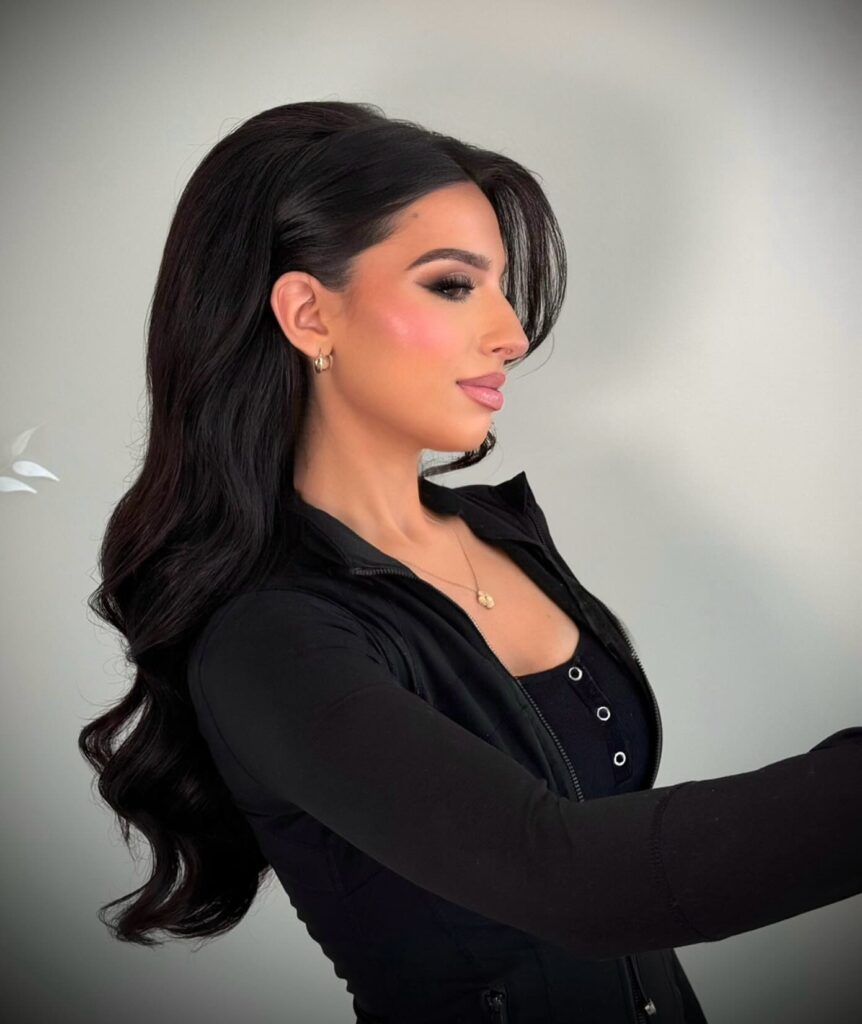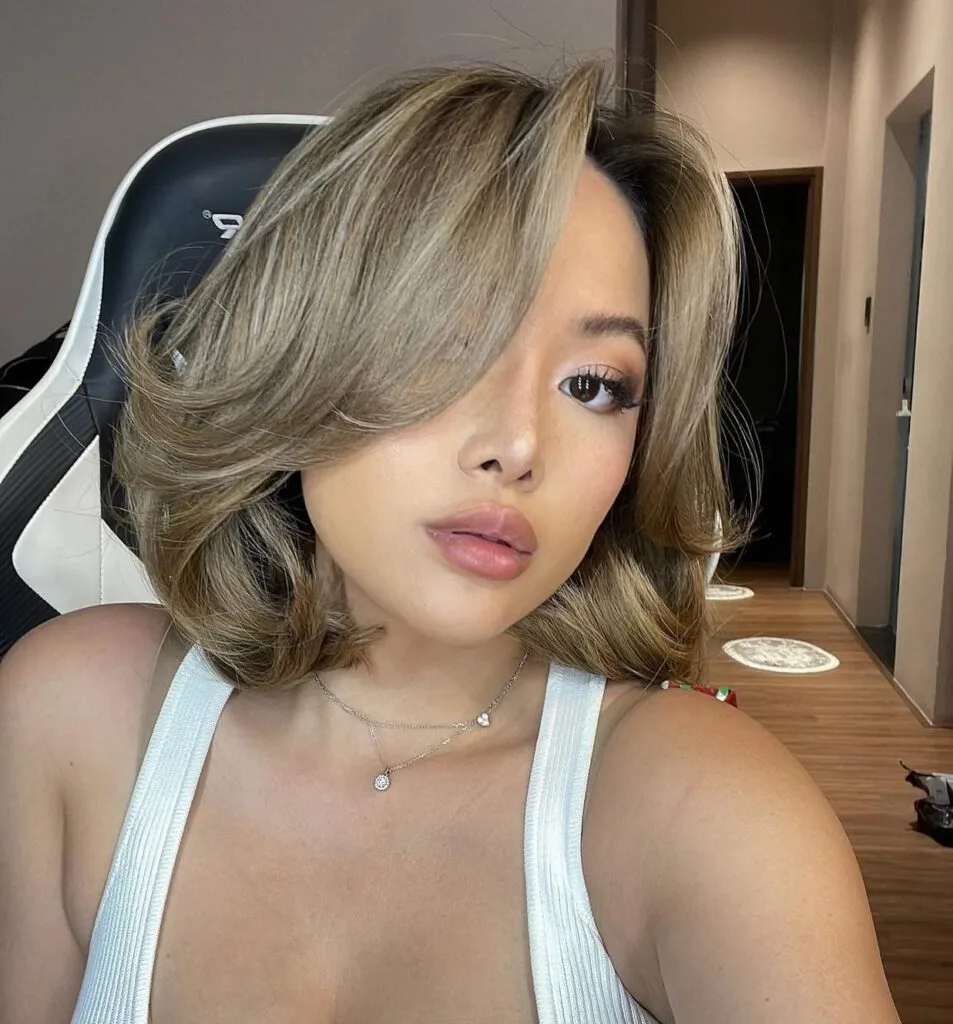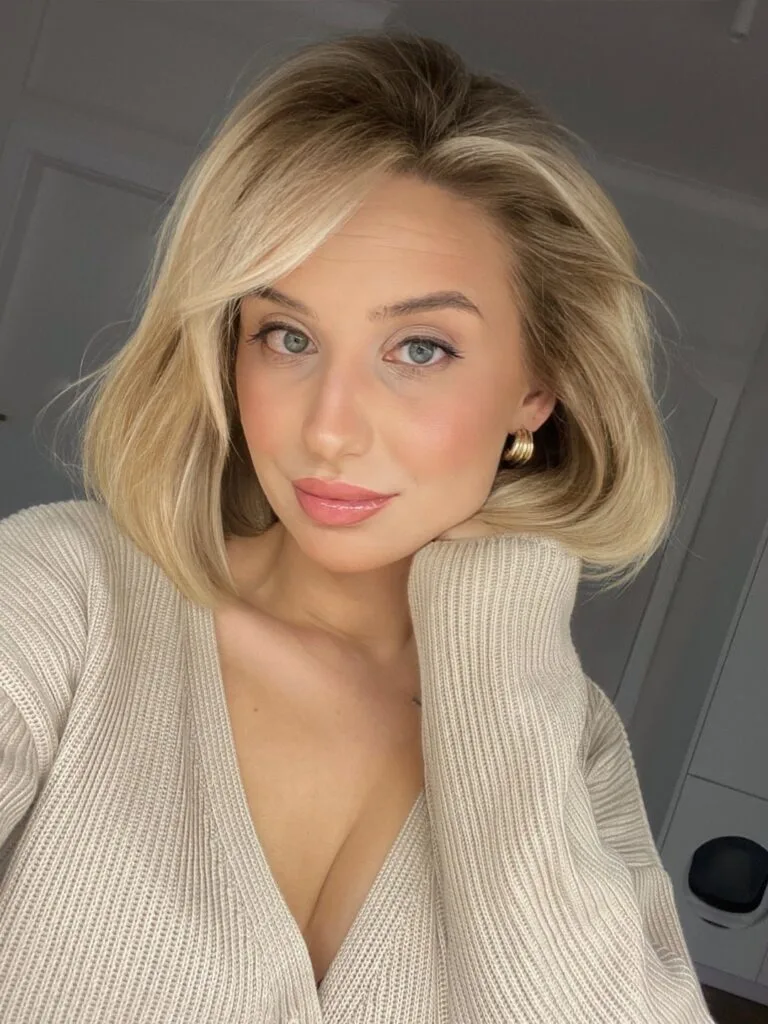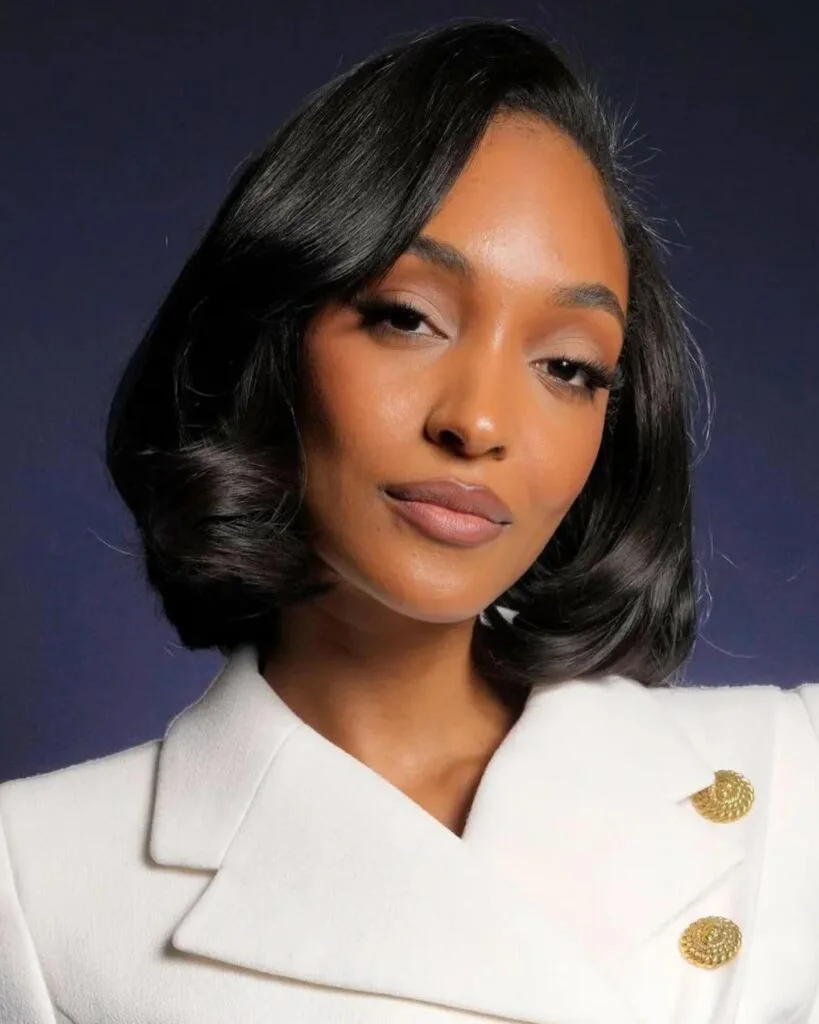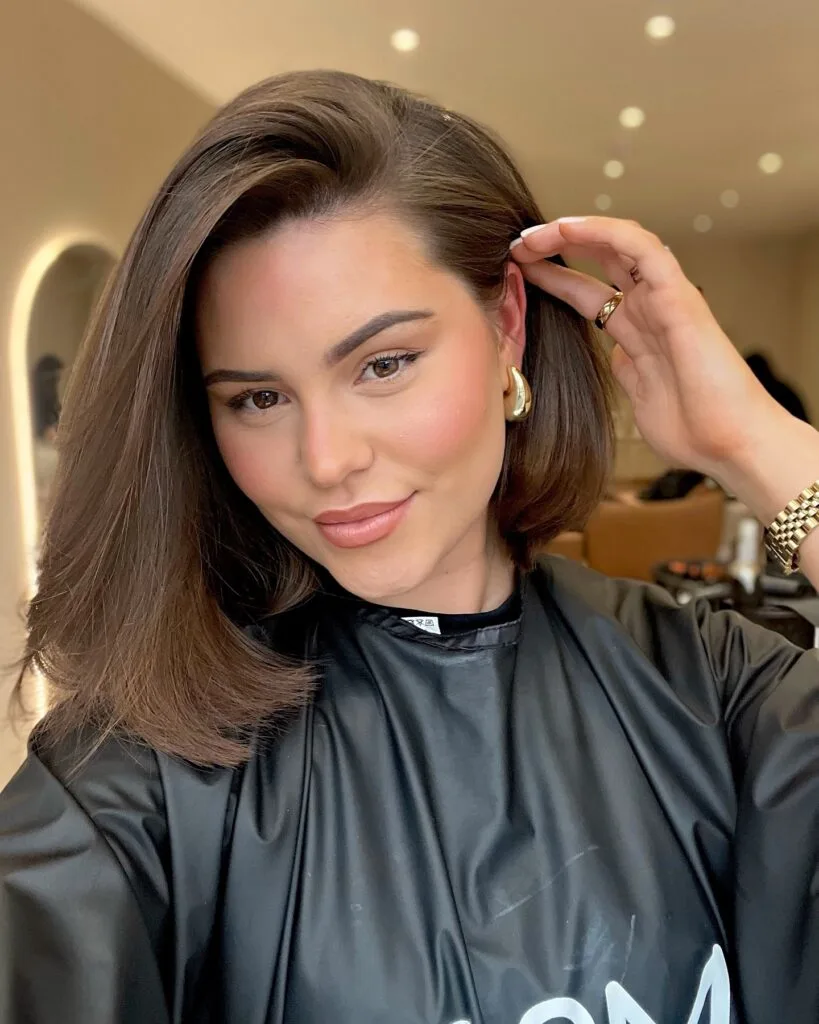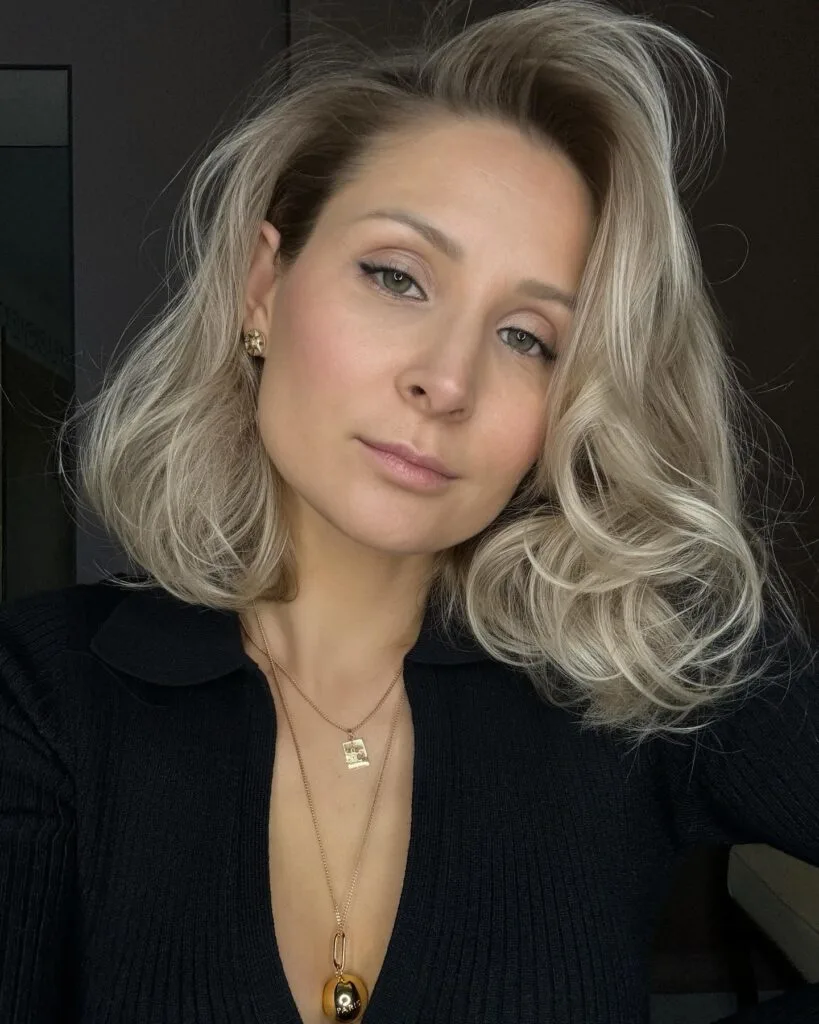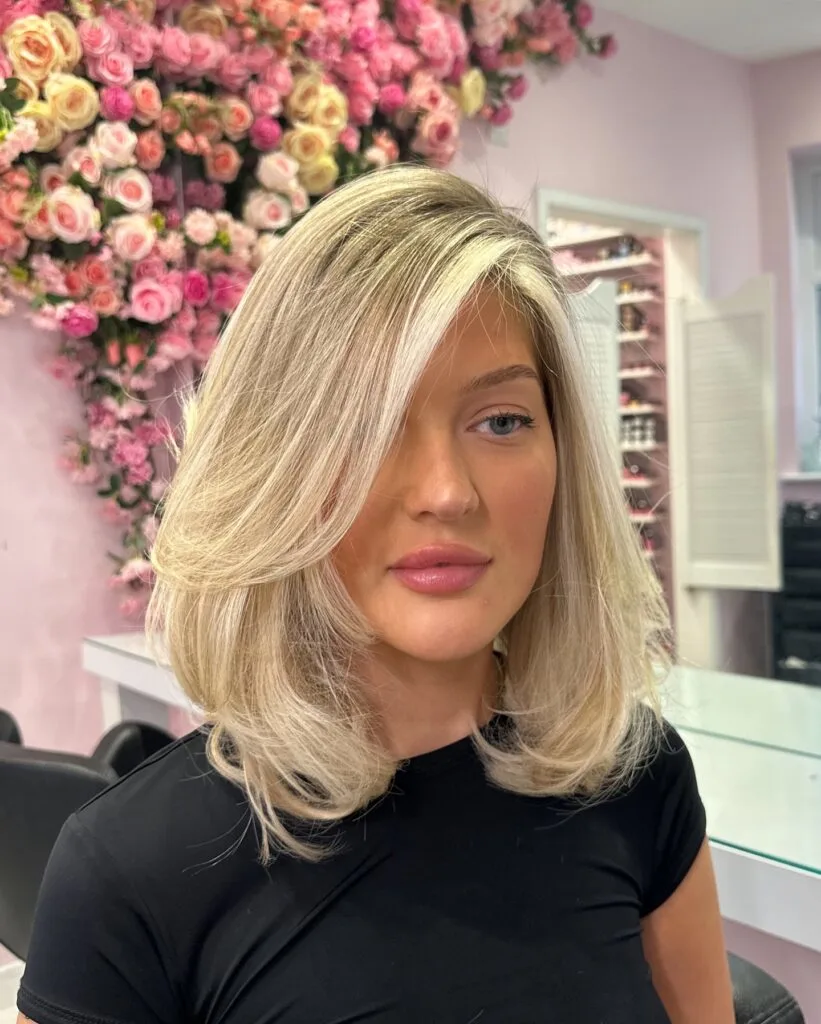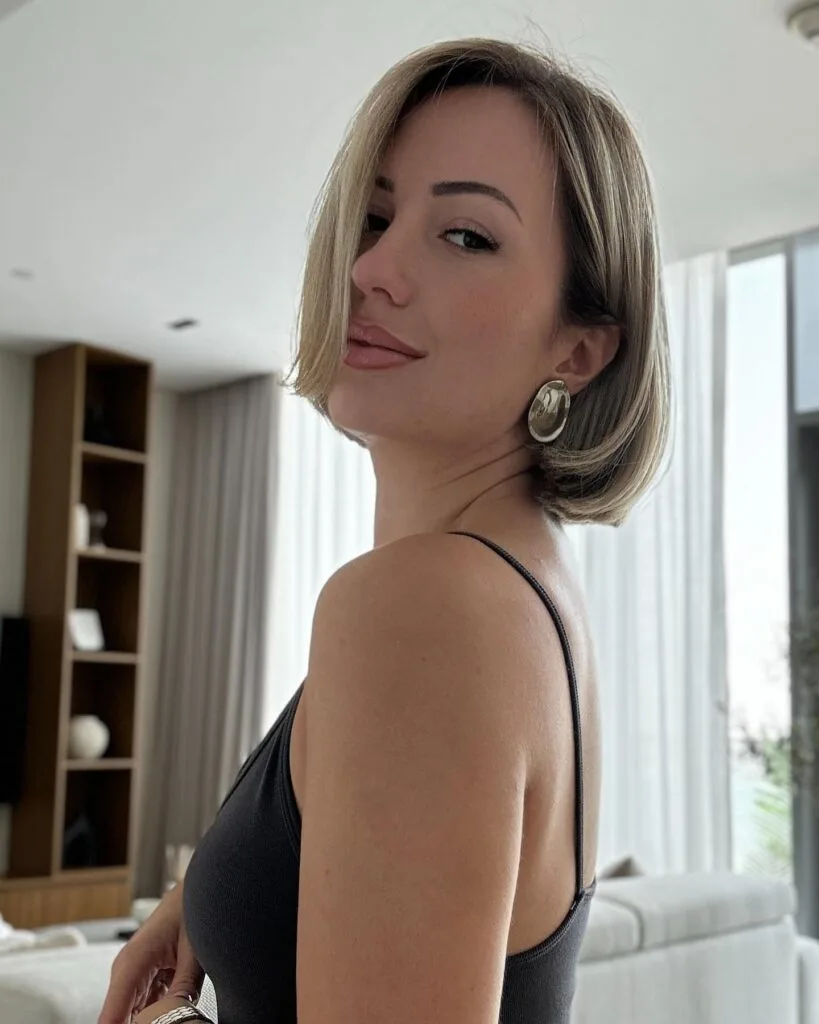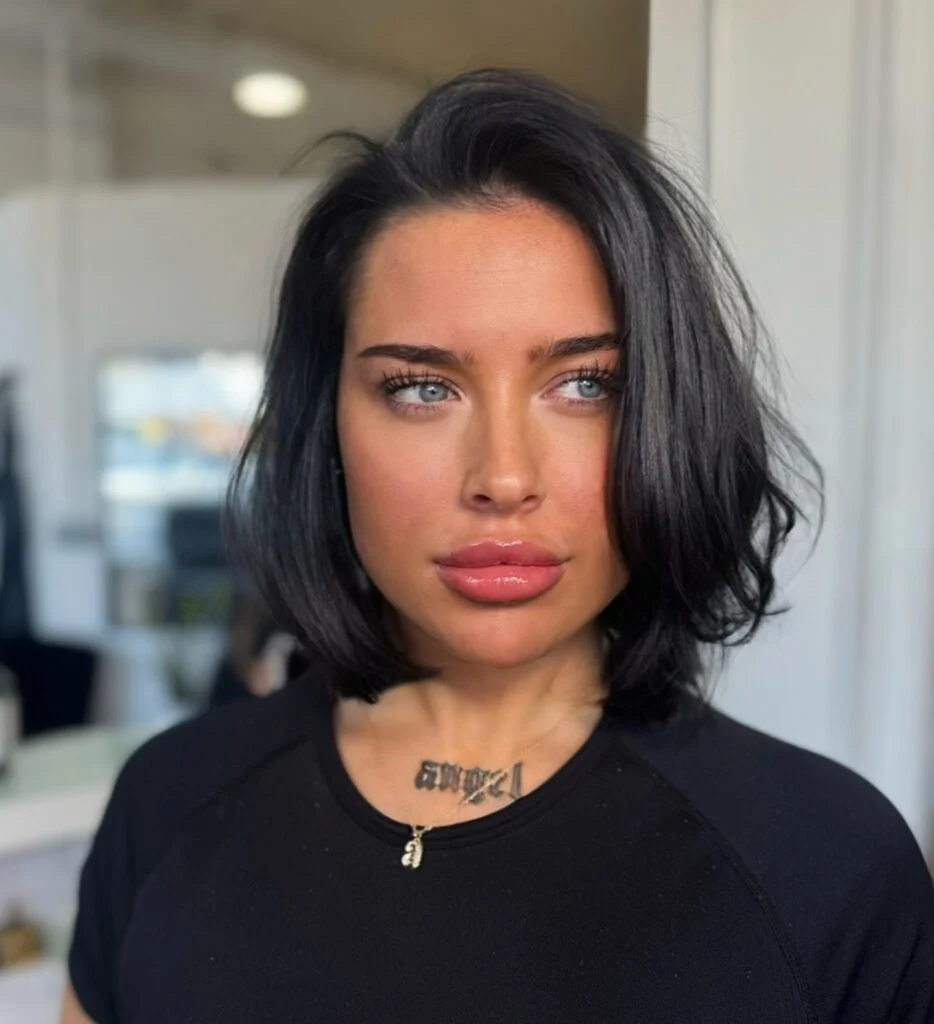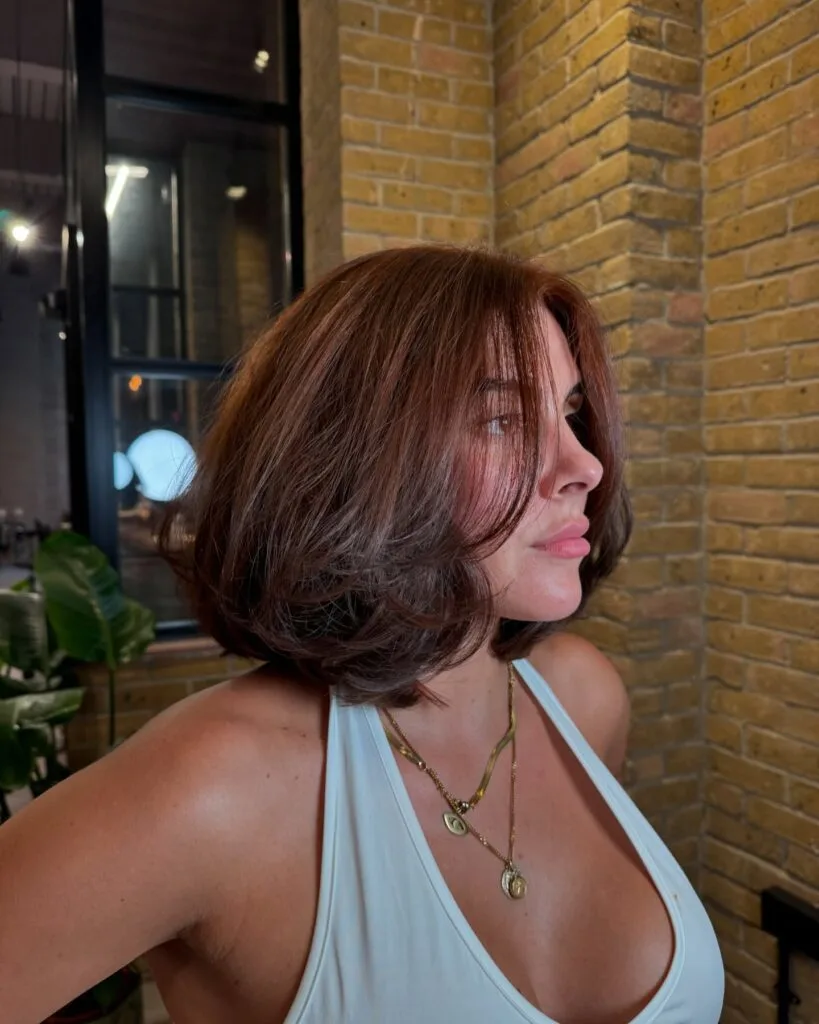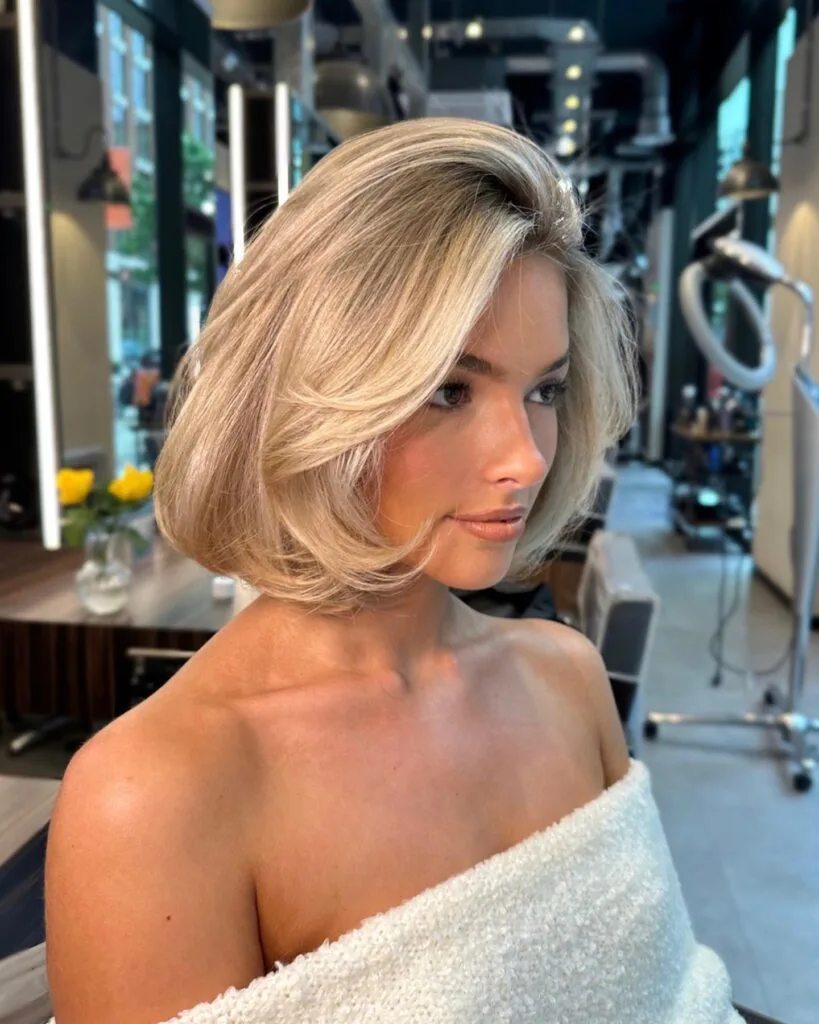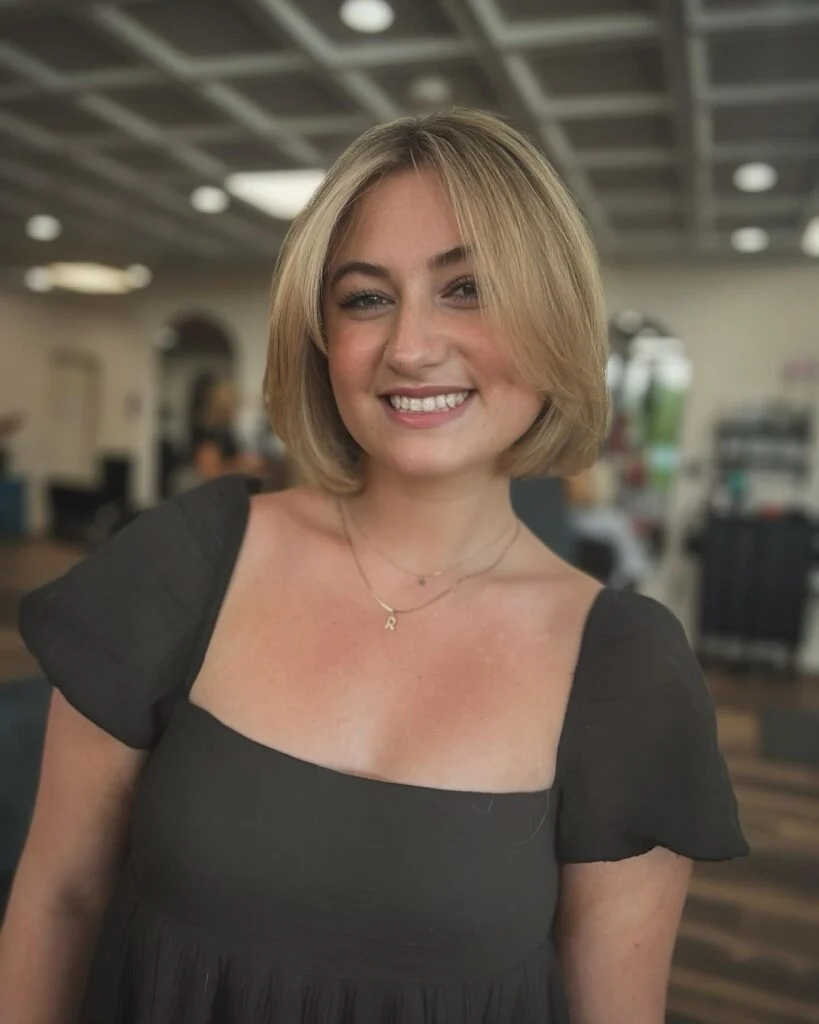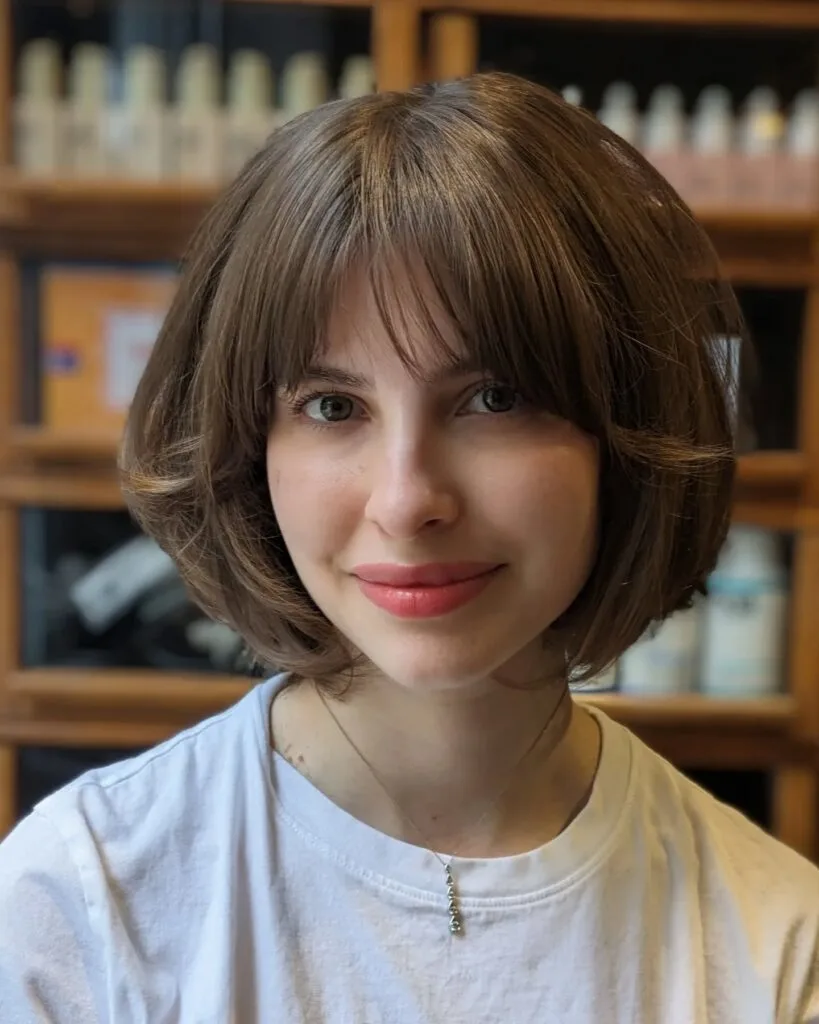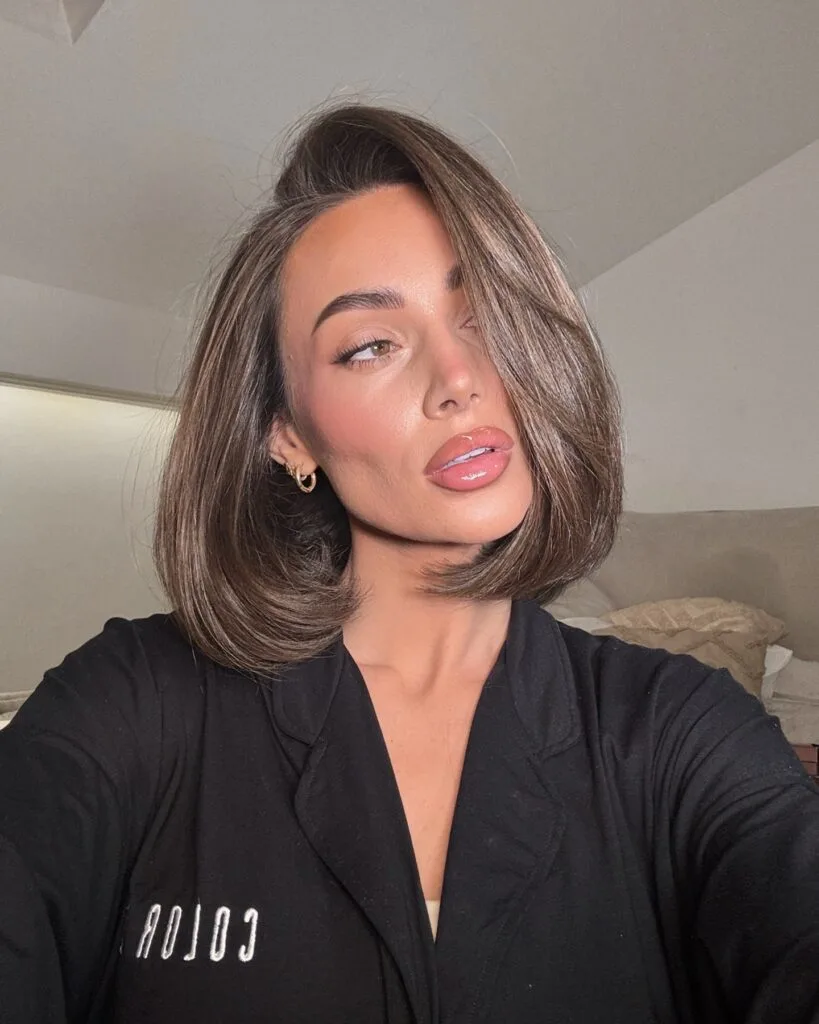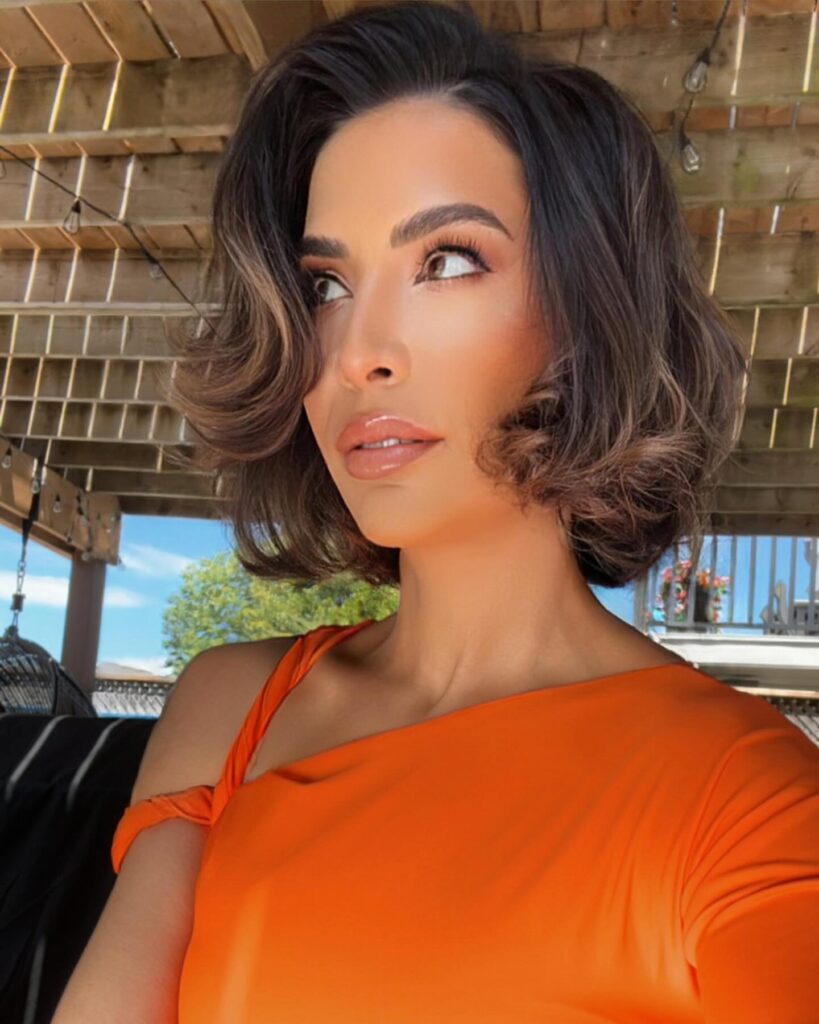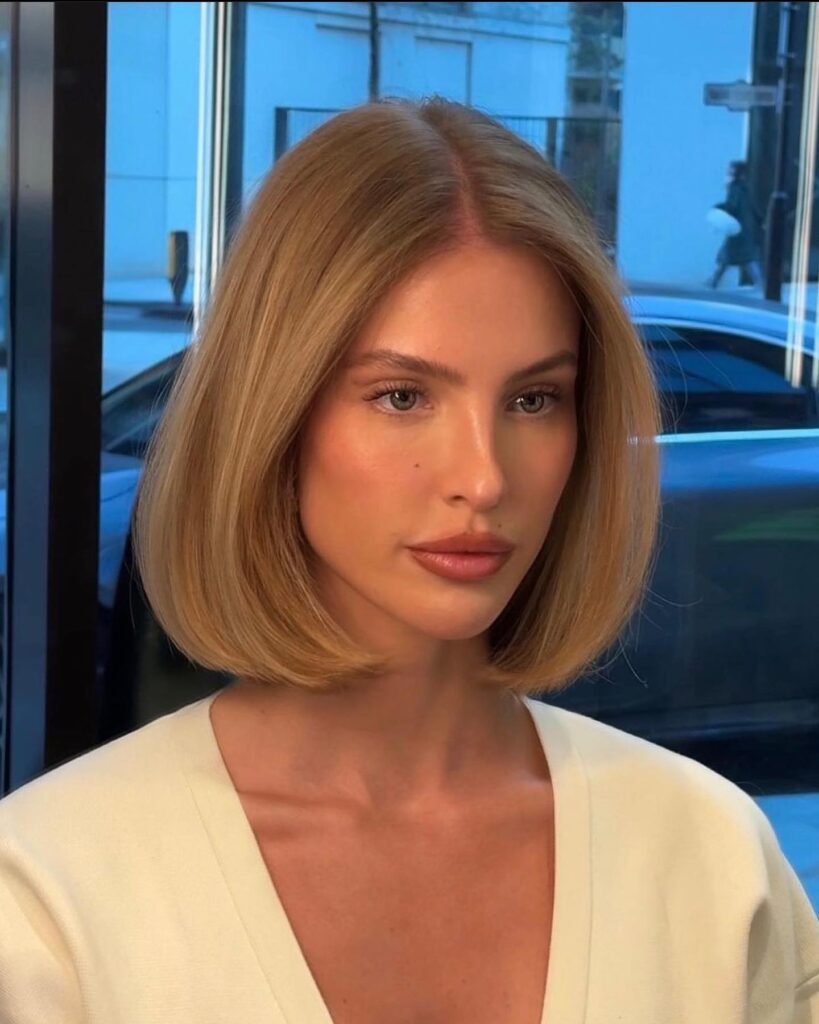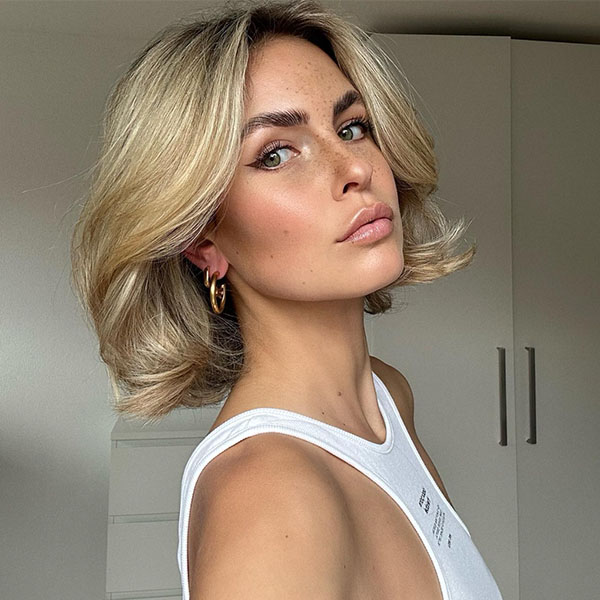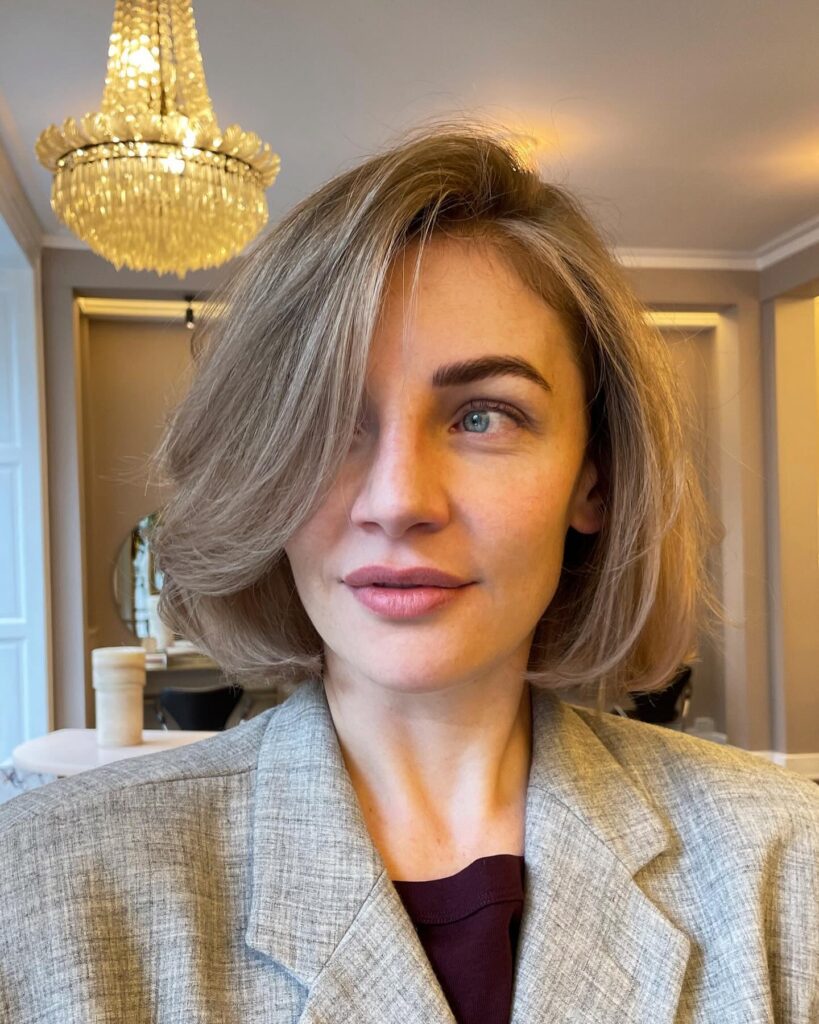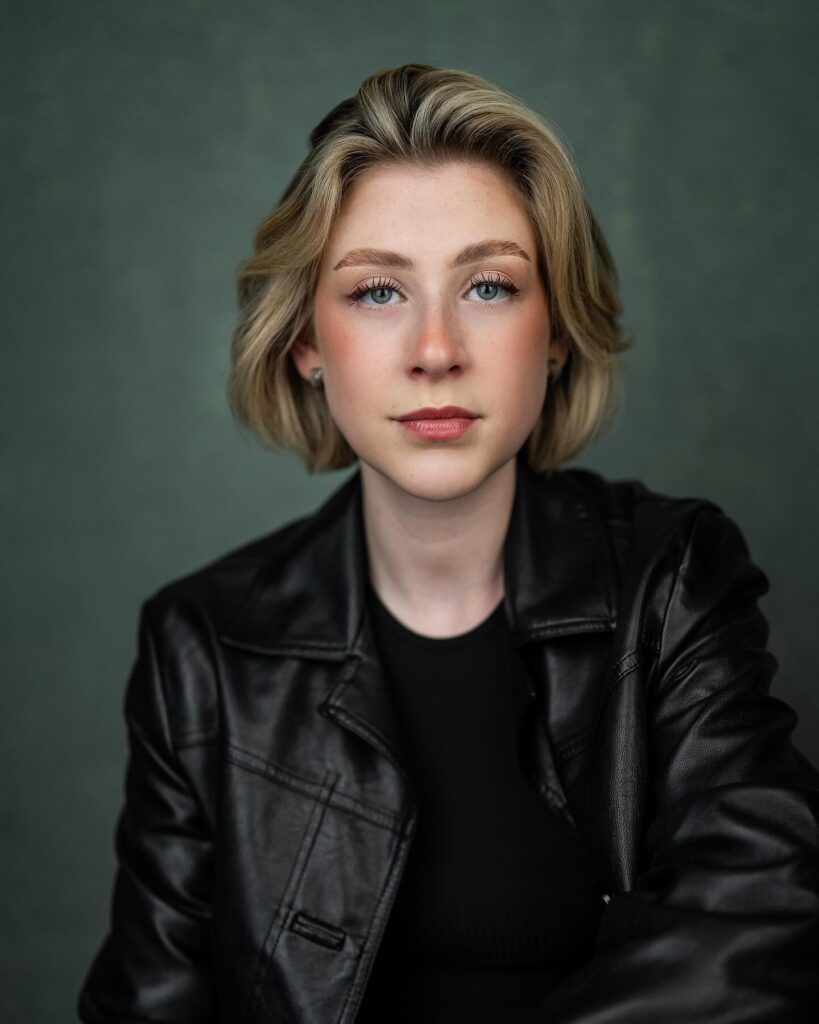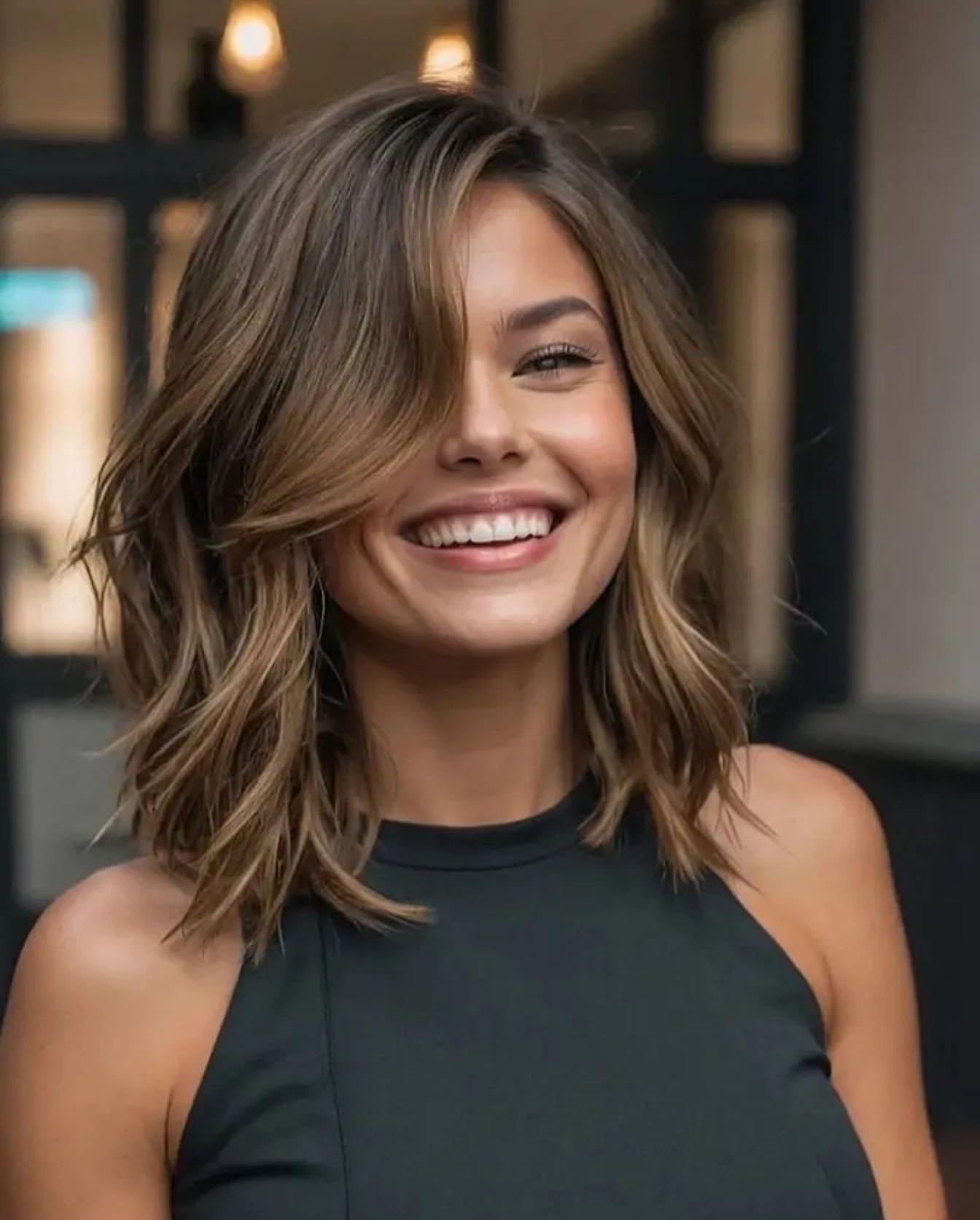
After Hailey Bieber’s collarbone-length lob hit Vogue covers in 2024, salon bookings for the cut spiked across the US. There is a reason it keeps coming back. The lob is the only haircut that lets you keep most of your length while still looking like you actively chose a haircut — it photographs well, it pulls into a ponytail when you need it to, and it suits almost every face shape with minor adjustments to where the line falls.
What separates a great lob from a mediocre one is rarely the length. It is whether the perimeter is doing the work, whether the right amount of weight has been removed from the interior, and whether the part flatters your face. The 23 cuts below are organized to show those variations clearly — blunt, layered, angled, wavy, with bangs, without — so you can identify which version actually fits your hair before you sit in the chair.
Before You Choose This Hairstyle
The lob flatters almost every face shape because the length sits between the chin and collarbone, where it can be adjusted to suit individual features. Oval and heart-shaped faces wear the lob effortlessly. Round faces benefit when the lob is cut slightly longer or angled forward at the front. Square faces look softer with a lob that reaches just past the jawline, which helps balance strong angles. Long or oblong faces should keep the length closer to the chin, since collarbone lengths can stretch the face further.
The lob works on most hair textures, which is part of why it has stayed popular. Straight, wavy, curly, fine, and thick hair can all be cut into a lob shape with adjustments to layering and weight. Fine hair benefits from a blunter perimeter, while thick or curly hair usually needs internal weight removal — point-cutting through the mid-lengths or razor work, depending on the texture — to keep the shape from feeling bulky.
Maintenance is more forgiving than shorter cuts since the length grows in gracefully. Trims every 8 to 12 weeks usually keep the shape clean. A more detailed style guide appears at the bottom of this article.
23 Long Bob Hairstyles
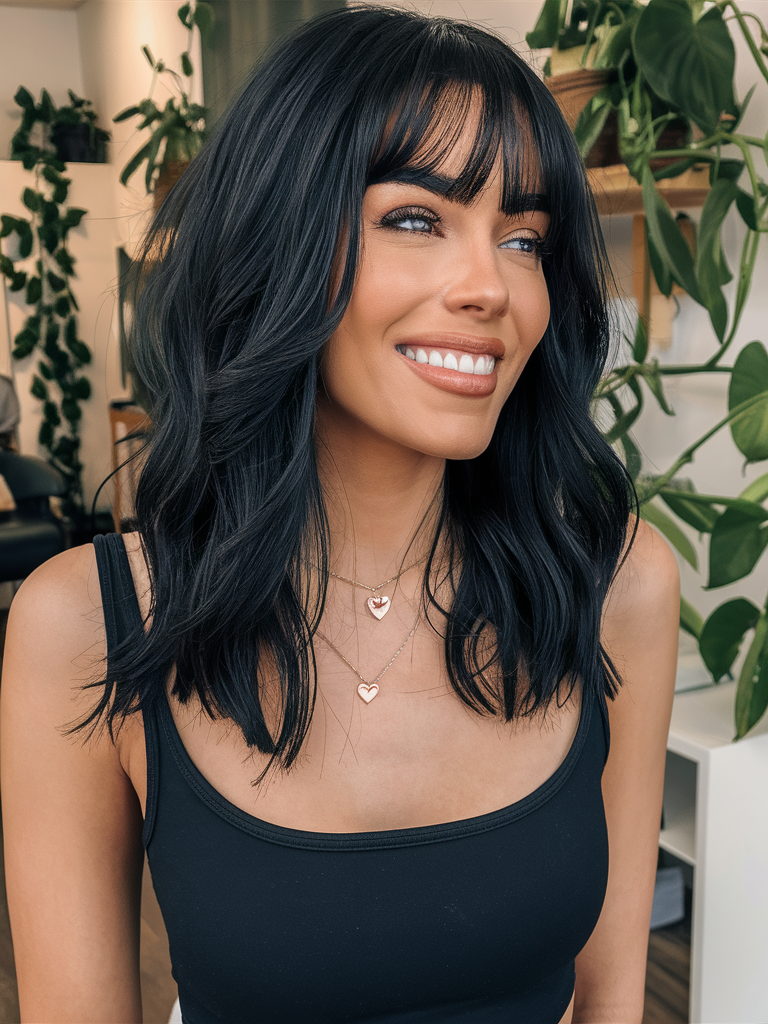
Glossy Jet Black Long Bob with Gentle Curve
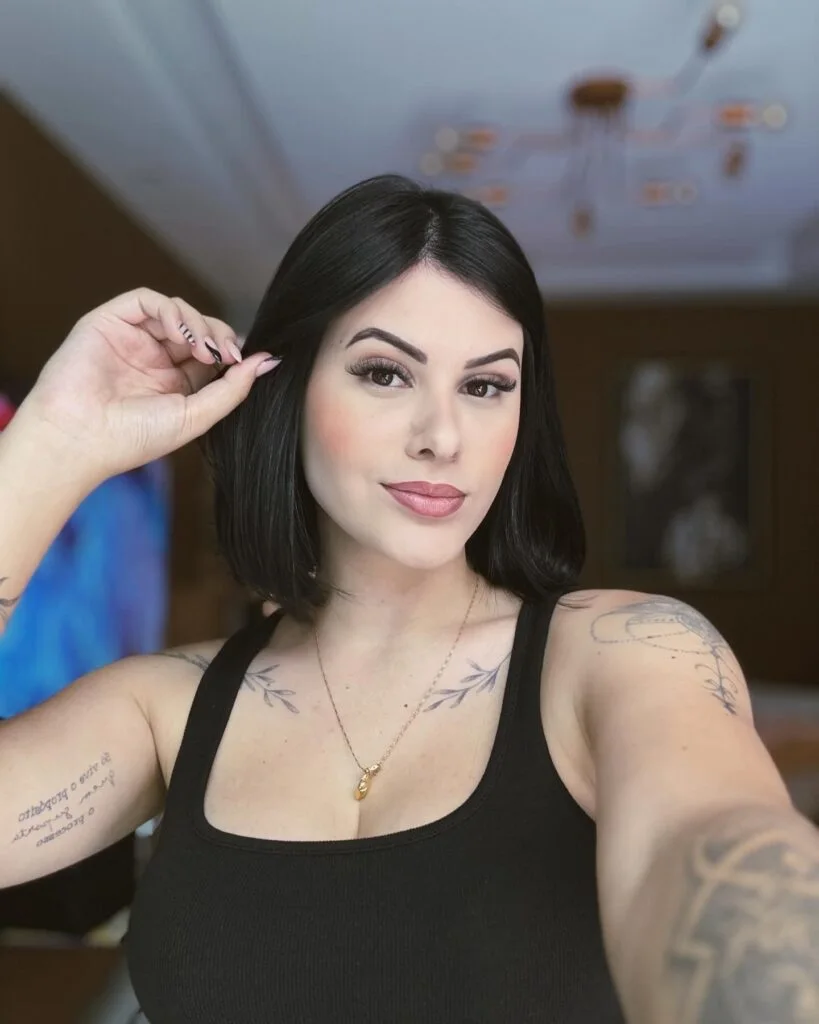
Ask your stylist for a one-length cut with the ends slightly bevelled inward — not stacked, just a gentle curve. The shape works because the perimeter stays solid, which keeps the cut looking dense even on medium hair, while the inward curve hugs the jawline rather than pushing out from it.
The center part is non-negotiable for this version. A side part flattens the curve and makes the shape look heavier on one side. Pair it with a dime of smoothing serum on damp hair and a flat iron pass through the mid-lengths to keep the surface glossy.
Blunt-Cut Classic Long Bob
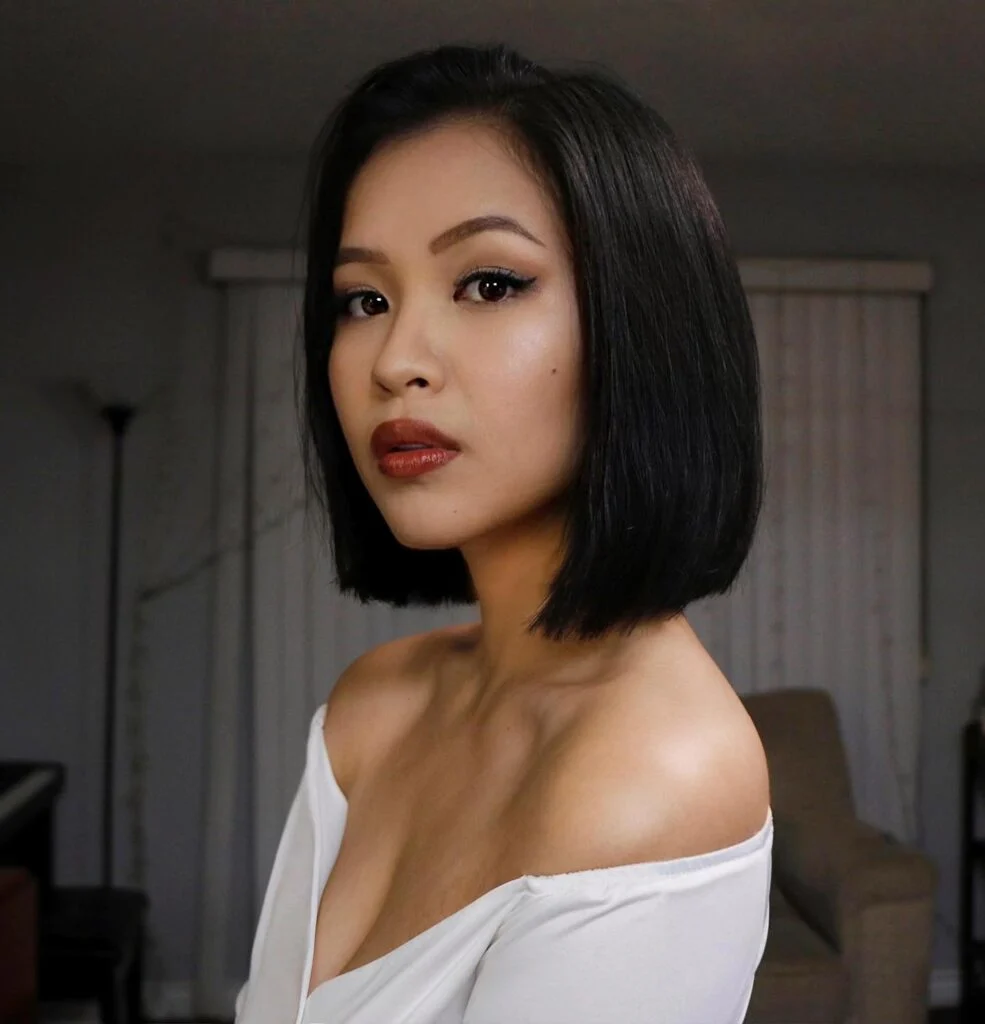
The blunt-cut lob is the strongest possible version of this haircut. The ends are cut straight across with no point-cutting, no razor softening, no internal layering. What you see is what you get: a hard line at the bottom and density all the way up.
This is my favorite recommendation for fine hair that has lost density at the ends, because the blunt perimeter creates the illusion of fullness even when the actual hair count is low. The trade-off is upkeep — the line gets fuzzy fast, so plan for trims every 6 to 8 weeks.
Sleek Side-Parted Long Bob
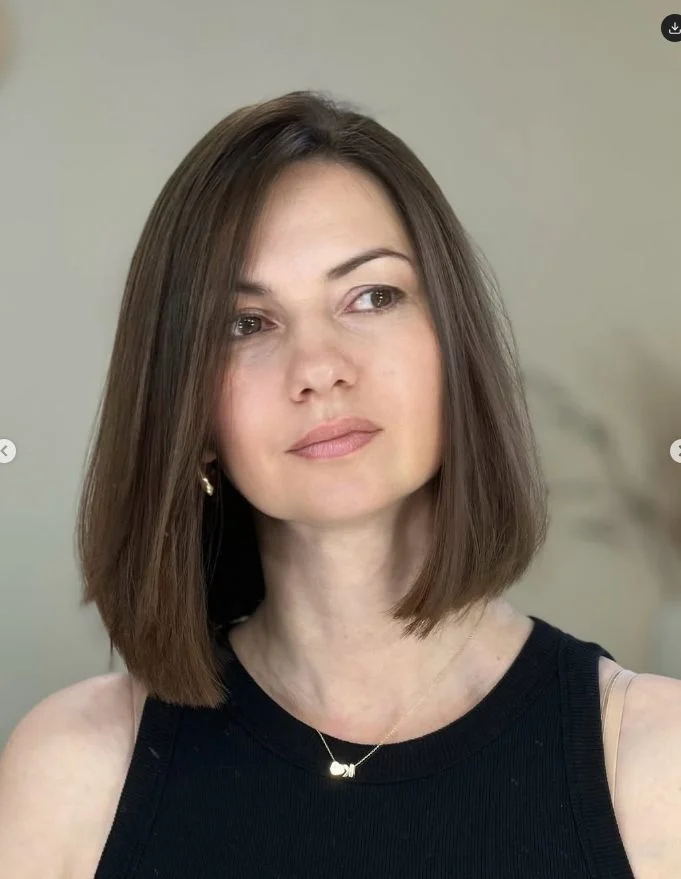
The side part does most of the styling on this cut. Switching from center to side parting on the same lob shape adds visible volume on the heavy side and breaks up the symmetry that can make a lob look heavy when worn straight. The deeper the part, the more dramatic the effect.
Best on straight to slightly wavy hair. If your hair has been parted in the same place for years, expect a few days of training before it sits naturally on the new side.
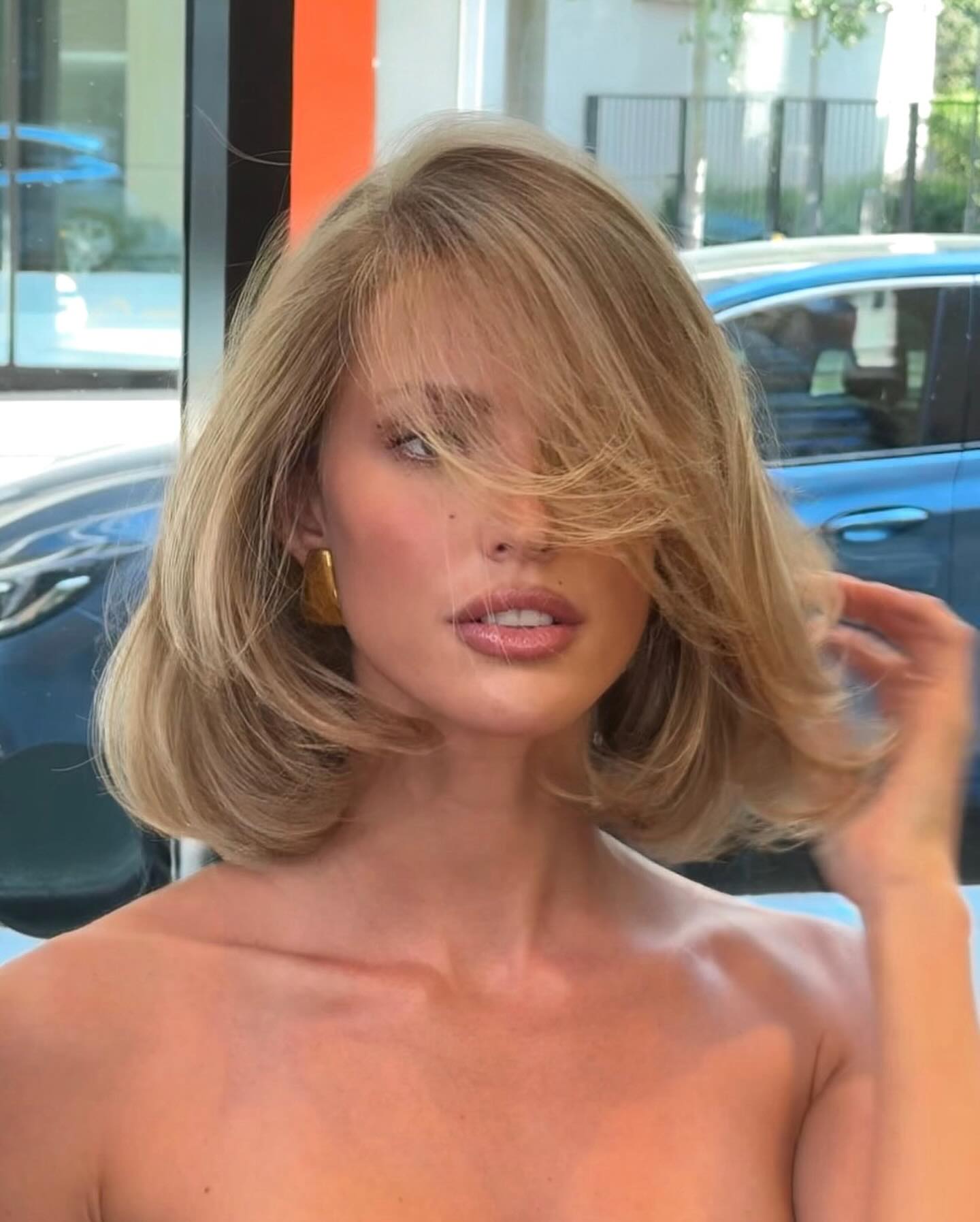
Soft Blonde Long Bob with Natural Volume
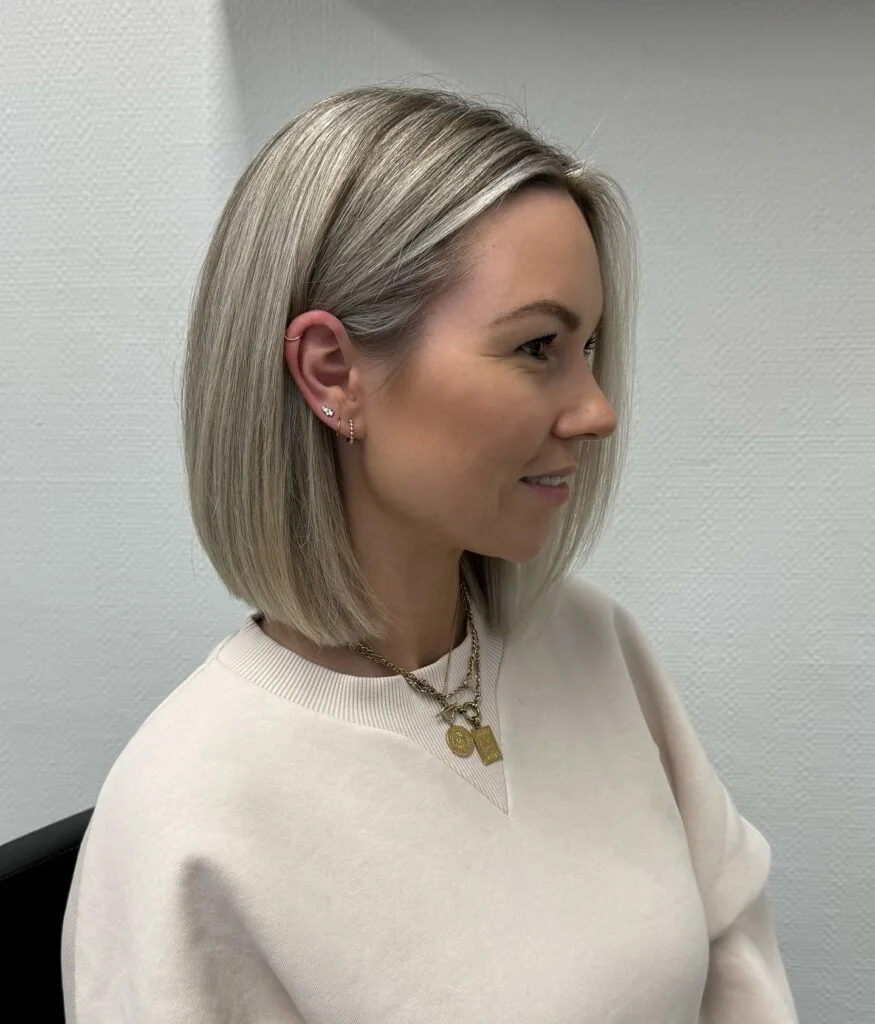
This shape uses very subtle internal layering — what stylists call “invisible layers” — to create lift without breaking the perimeter line. The cut still reads as one length when you look at the silhouette, but the interior has enough movement to keep it from sitting flat.
Pair this with the right tone and the cut takes care of itself. Cool blonde tones tend to wash out fine hair visually, so a few darker pieces underneath usually help create the depth that brings the shape forward.
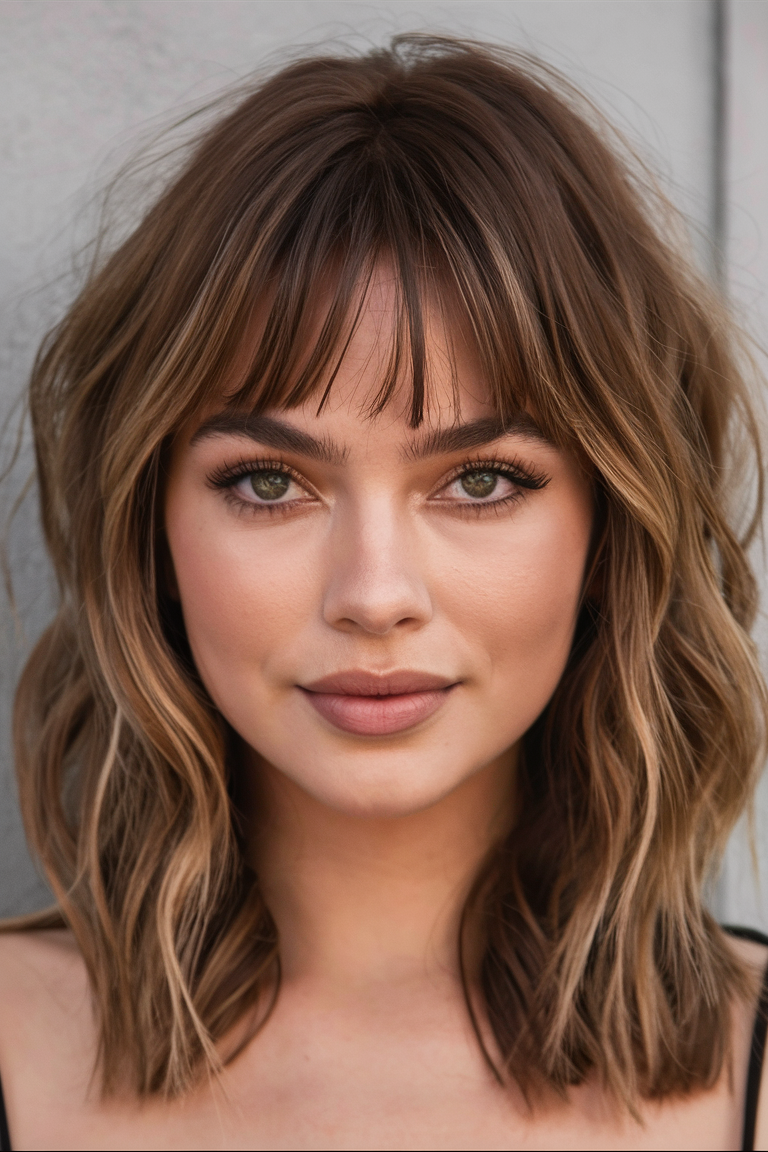
Long Bob with Wispy Curtain Bangs
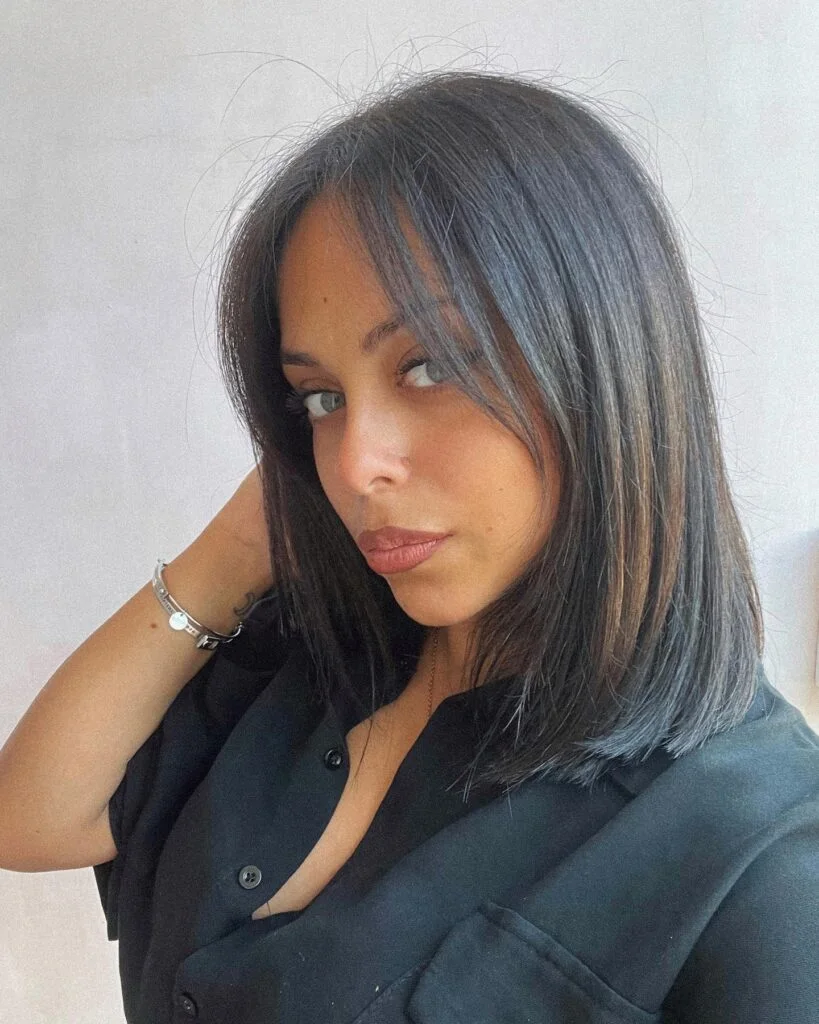
Curtain bangs are the most forgiving fringe option for a lob because they blend back into the longer length rather than sitting separately on the forehead. They grow out gracefully, the awkward in-between phase that haunts blunt bangs barely exists with this cut.
The trick is the parting. Curtain bangs need to be parted slightly off-center for them to fall correctly. A dead-center part makes them split rather than sweep.
Polished Long Bob with Center Part
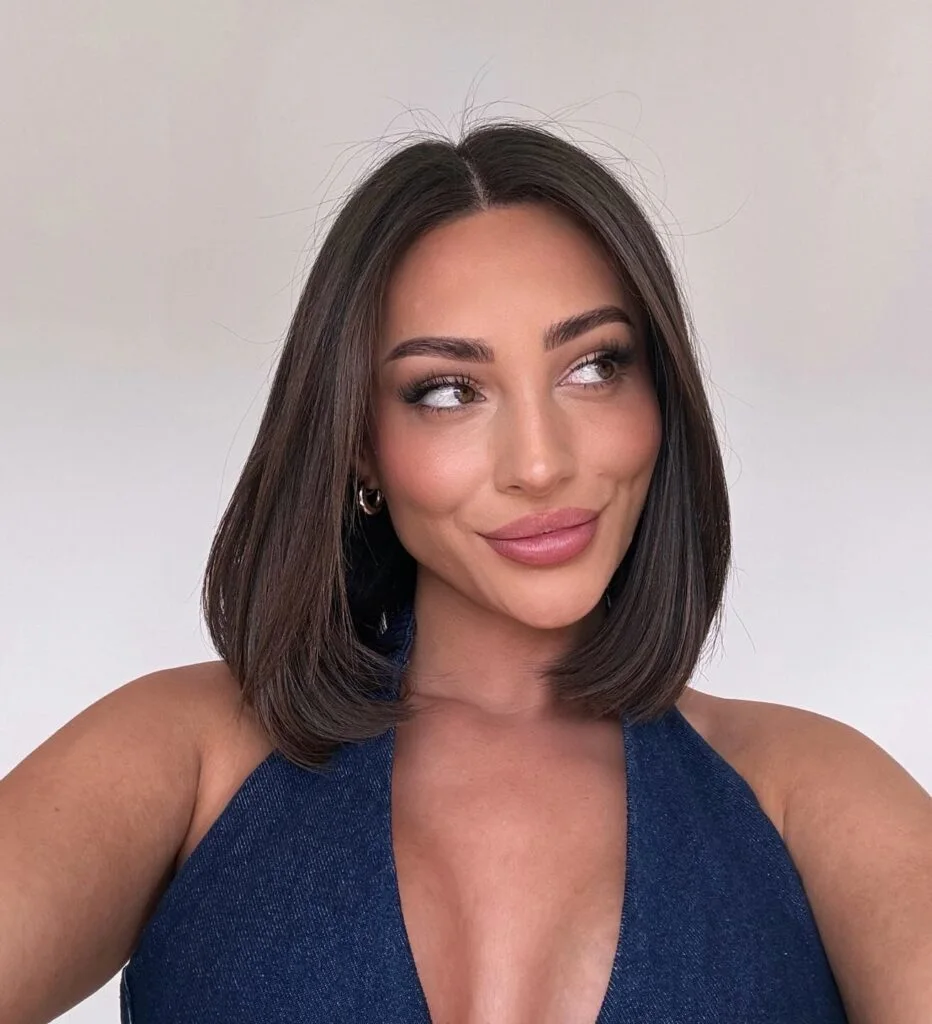
This is the lob most often referred to as the “executive lob” — clean center part, no visible layers, ends slightly bevelled under. It is the version that looks identical from the front and the back, which is why it photographs so well in professional settings.
Brunette tones suit this cut better than blonde because depth helps the shape hold its line. Glossy ends are essential and a small amount of hair oil concentrated on the bottom inch keeps the perimeter looking deliberate rather than dry.
Angled Long Bob with a Smooth Finish
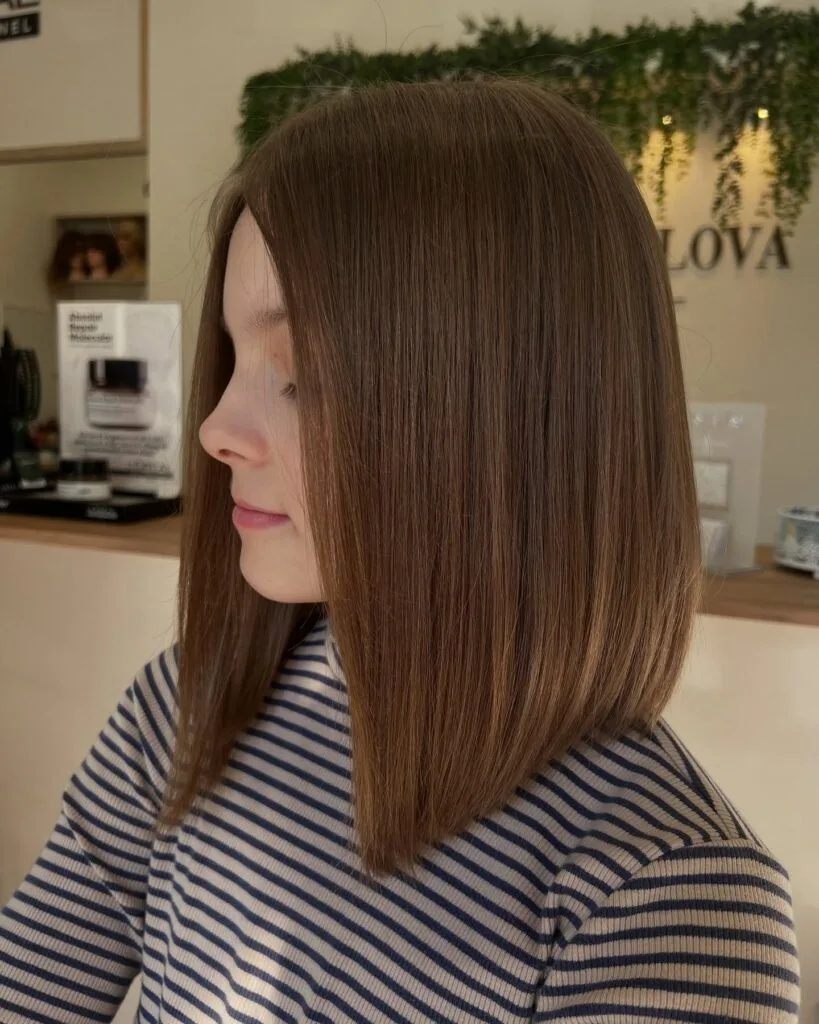
Angling means the back sits shorter than the front by an inch or two, so the cut visually pulls forward toward the face. This is one of the most flattering variations for round faces, since the longer front pieces add vertical length where the cheekbones fall.
Worth specifying when you book: ask for a “soft angle” rather than a dramatic one. Heavy angling can read as dated very quickly. A subtle angle ages much better.
Wavy Long Bob with Subtle Layers
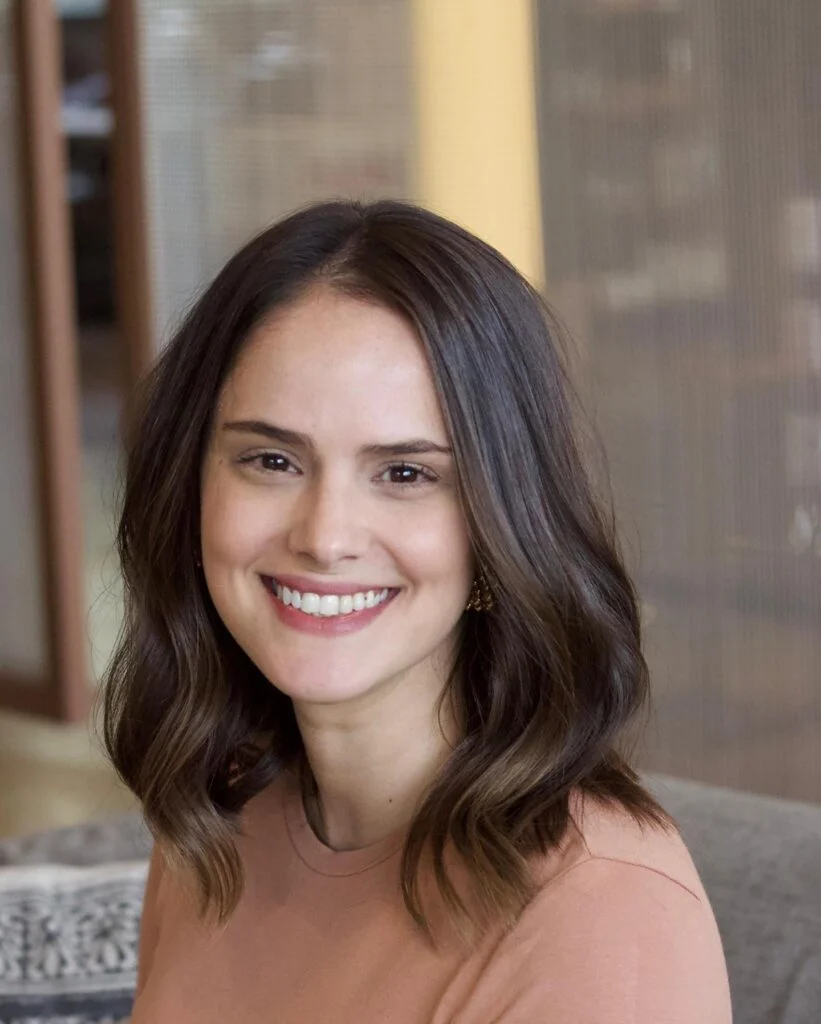
This version is built specifically for naturally wavy hair. The internal layers are placed to release the wave pattern without removing length at the perimeter, so the cut still reads as a structured lob even when it is air-drying.
Skip the round brush on this one. A diffuser or air-drying with a curl cream produces a better result than a smooth blow dry, which can flatten the natural texture the cut was built around.
Rounded Long Bob with Face-Framing Layers

Face-framing layers are the shorter pieces cut around the front of the face, usually starting at the cheekbone or jaw and tapering longer toward the back. They draw the eye toward the face rather than past it, which helps the lob feel intentional rather than just “shoulder-length hair.”
This version benefits from a small inward bevel at the ends. Without it, the face-framing pieces can look choppy where they hit the longer length.
Tousled Long Bob with Blonde Balayage
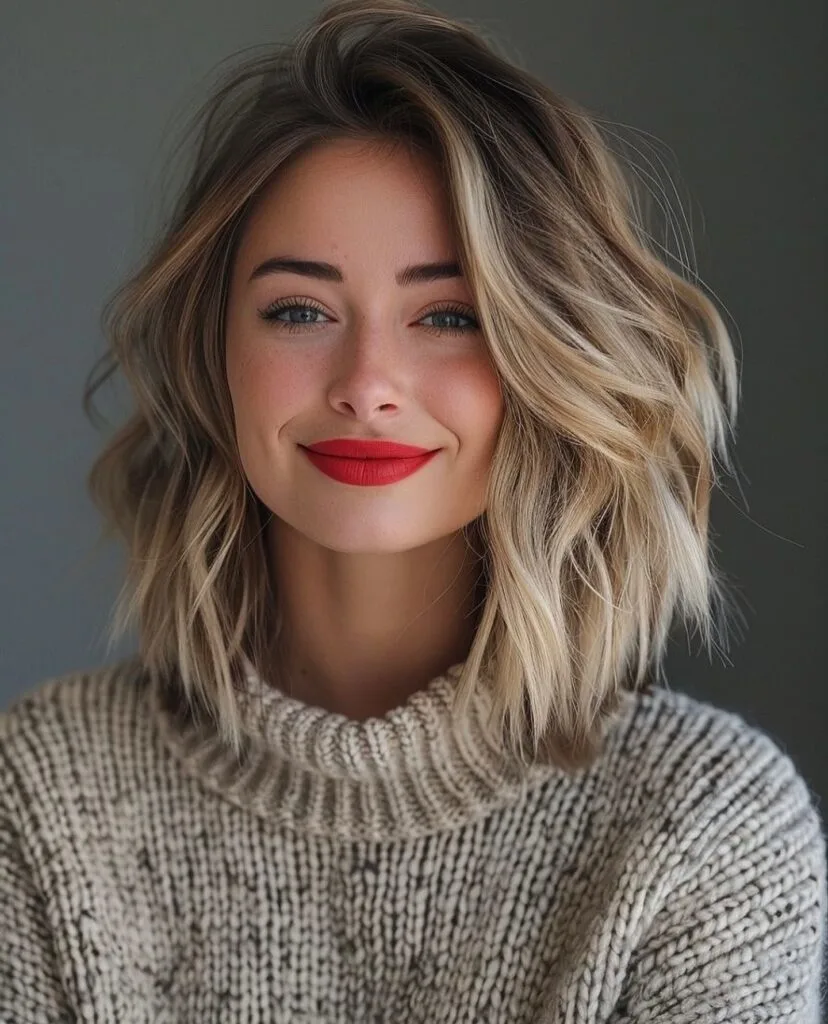
The balayage is doing as much work as the cut here. Hand-painted highlights placed mid-shaft and through the ends create dimension that makes the texture look more deliberate, even when the styling is genuinely casual. This is the lob version of “I woke up like this” that actually takes about ten minutes to create.
Best worn with a 1-inch curling wand alternating directions through random sections, then broken up with fingers. A beach spray finish keeps the texture from looking too polished.
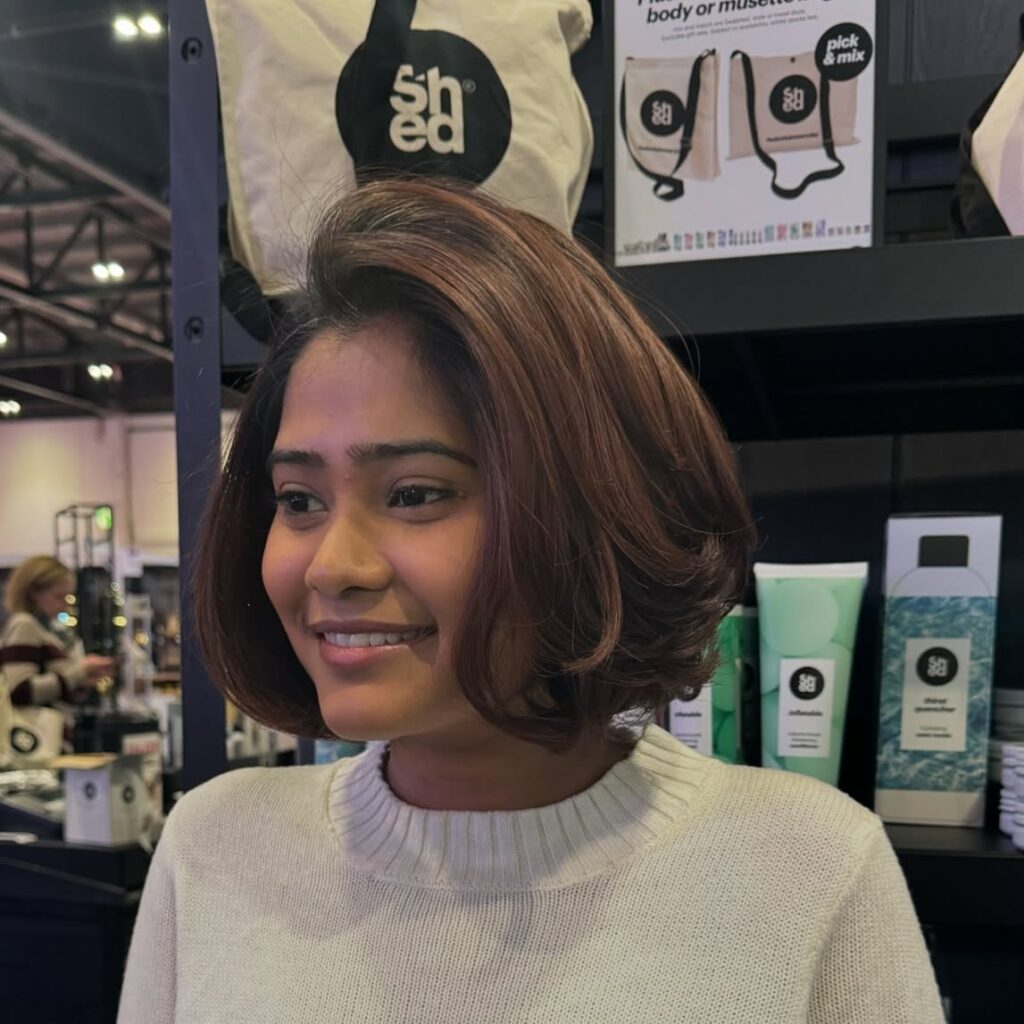
Effortless Long Bob with Warm Highlights
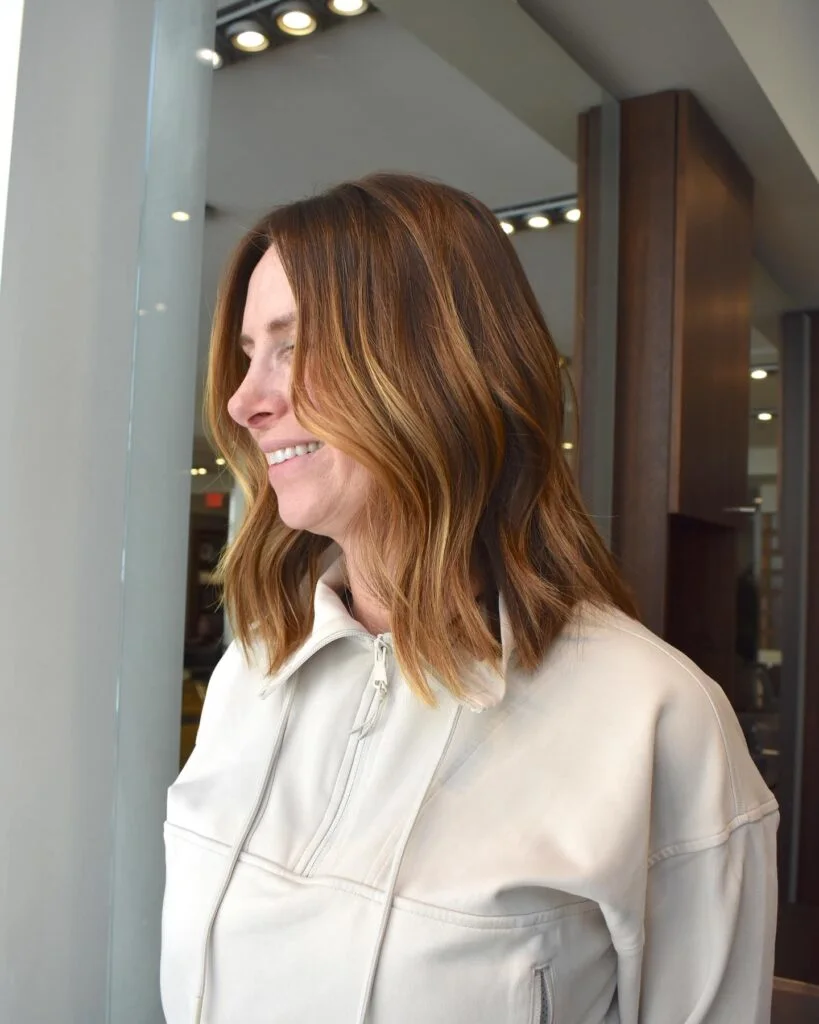
Warm highlights — caramel, honey, copper — work better than cool highlights on brown bases because they blend more gradually as they grow out. The grow-out phase is the unspoken weakness of every highlighted lob, and warm tones simply hide the regrowth line longer.
For brunette bases specifically, ask for “babylights” rather than chunky highlights. Babylights are placed thinner and closer to the scalp, which creates depth without the obvious blocky look that dates a cut.
Sleek Layered Long Bob with Side Part
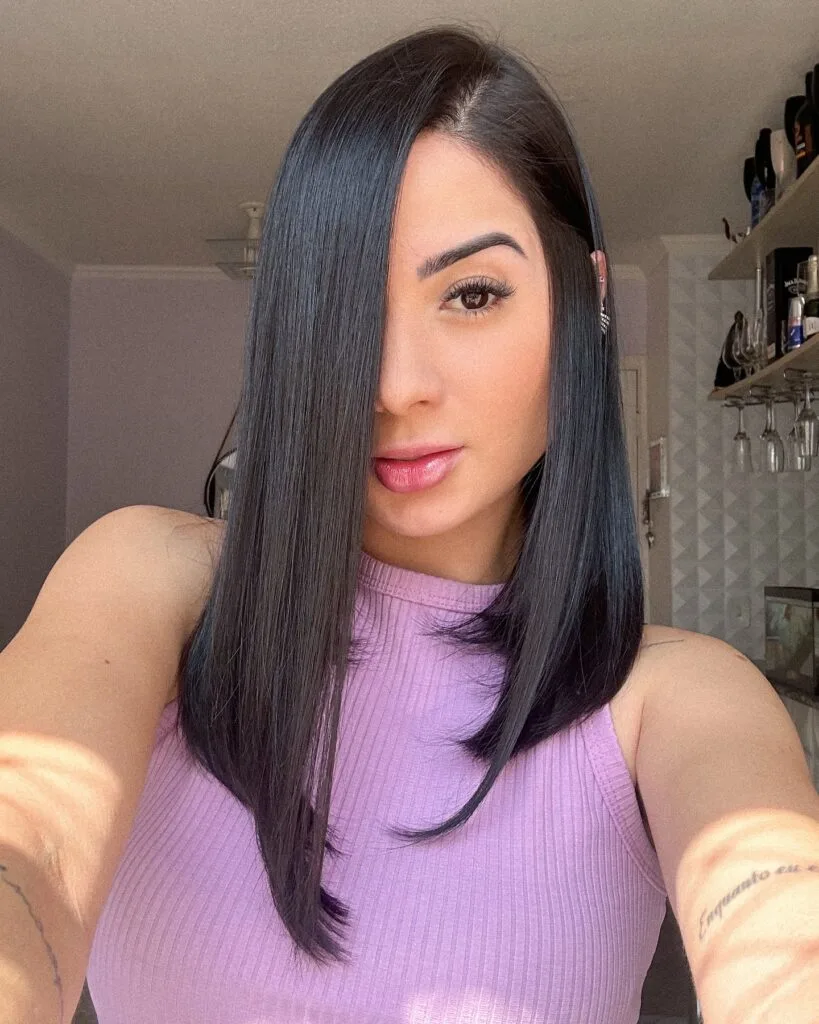
This is the closest a lob gets to looking dramatic without crossing into bob territory. The side part is deep — well past the natural part line — and the layers are angled forward across the face, creating a sweep that resembles a partial bang without actually being one.
Best on thick straight hair. On fine hair, the deep part exposes too much scalp and the look starts to read as flat rather than sleek.
Sleek Inverted Long Bob with a Center Part
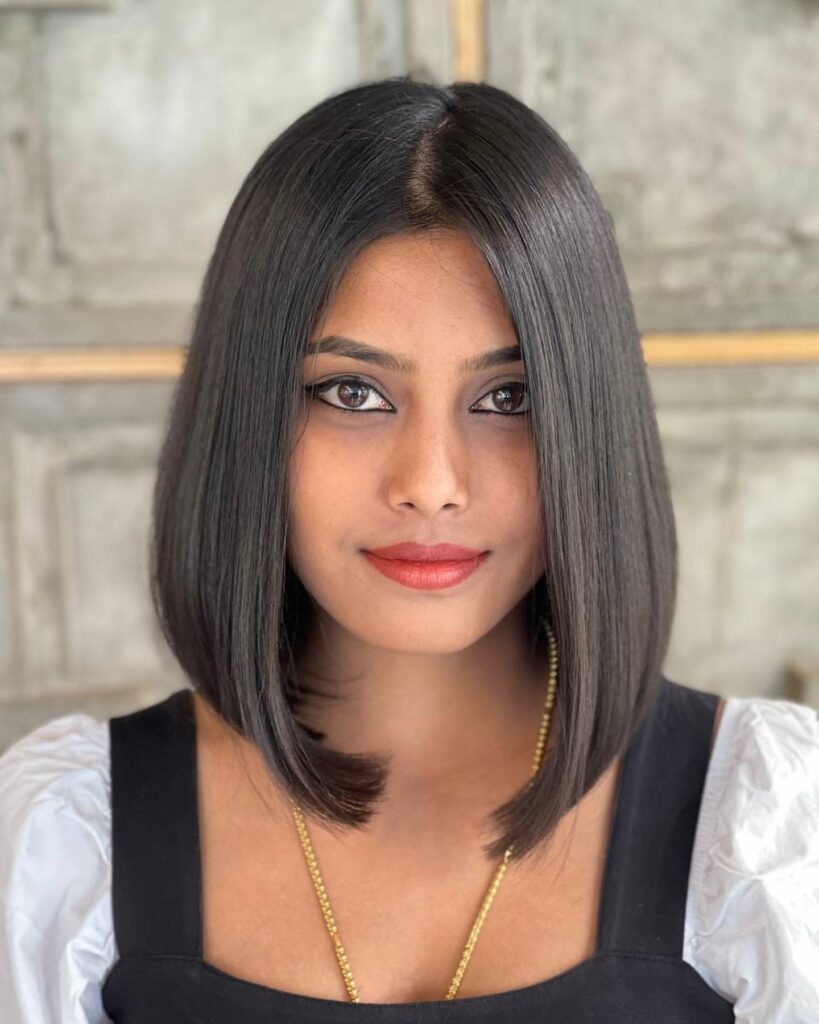
An inverted lob has graduation built into the back — the layers stack slightly so the back of the head reads as fuller, while the front pieces stay long. From the front it looks like a clean lob; from the side or back, the shape has visible structure.
This cut is particularly forgiving on hair that loses volume at the crown by mid-day. The graduation supports lift even when the styling has settled.
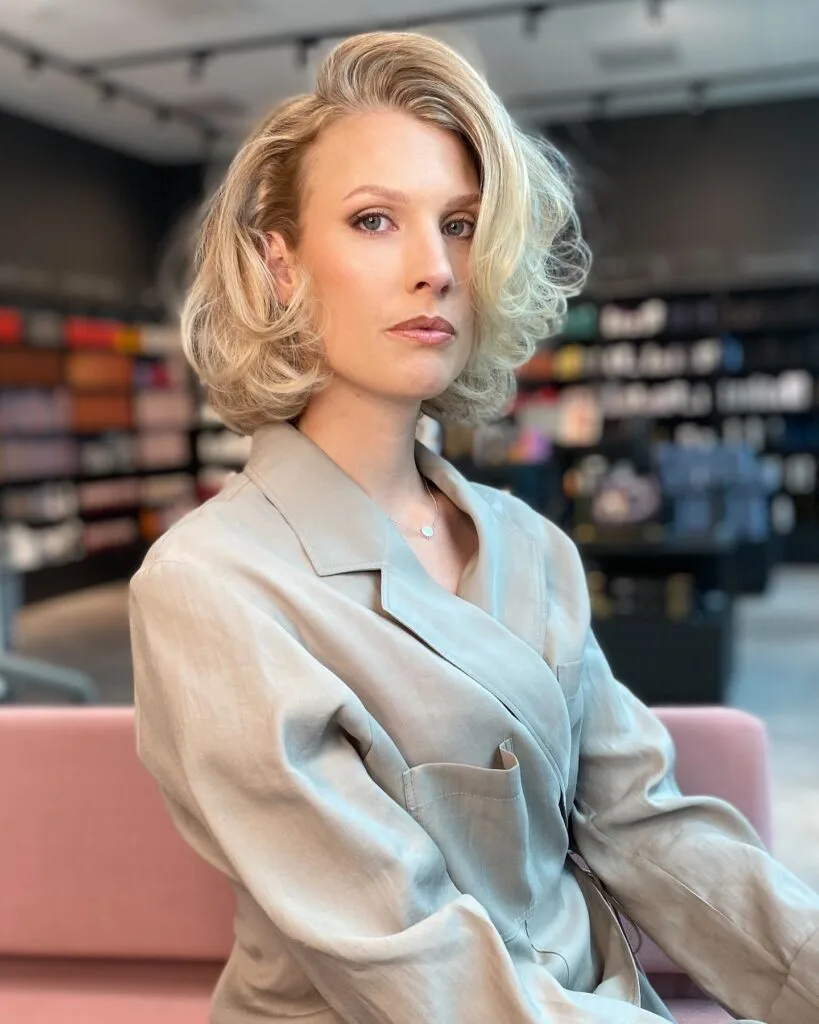
Voluminous Wavy Long Bob with Side Bangs
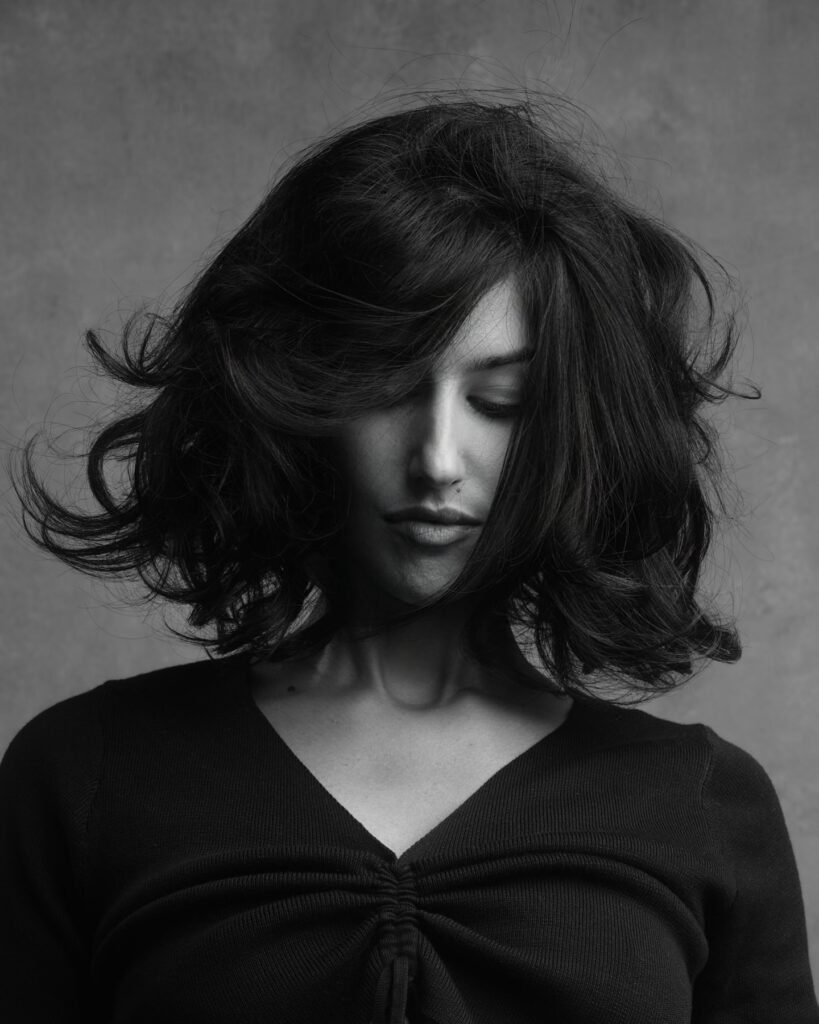
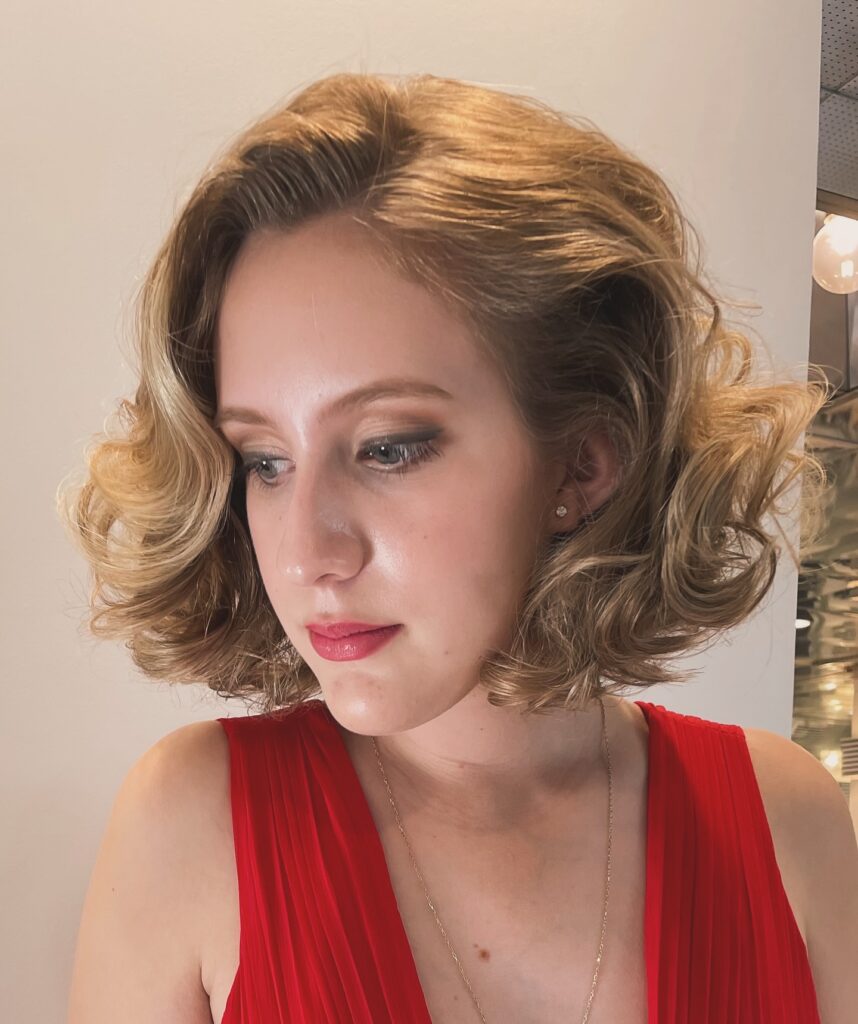
This is closer to a vintage shape than a modern lob — full waves, deep side bangs, retro silhouette. It works because the lob length keeps the volume from looking costume-y. On longer hair, this much volume reads as a wig. On a lob, it reads as styled.
Big-barrel curling iron territory. A 1.5-inch barrel sets a wave that holds without curling tightly enough to lose the lob shape.
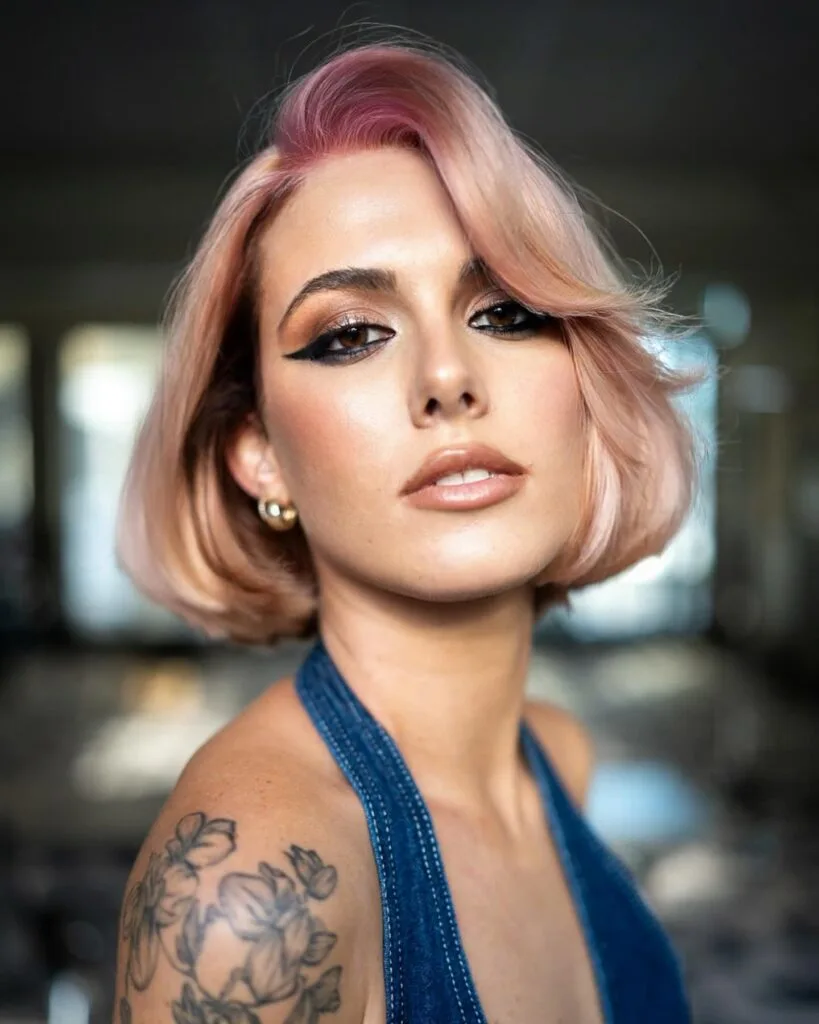
Dramatic A-Line Long Bob with Sleek Finish
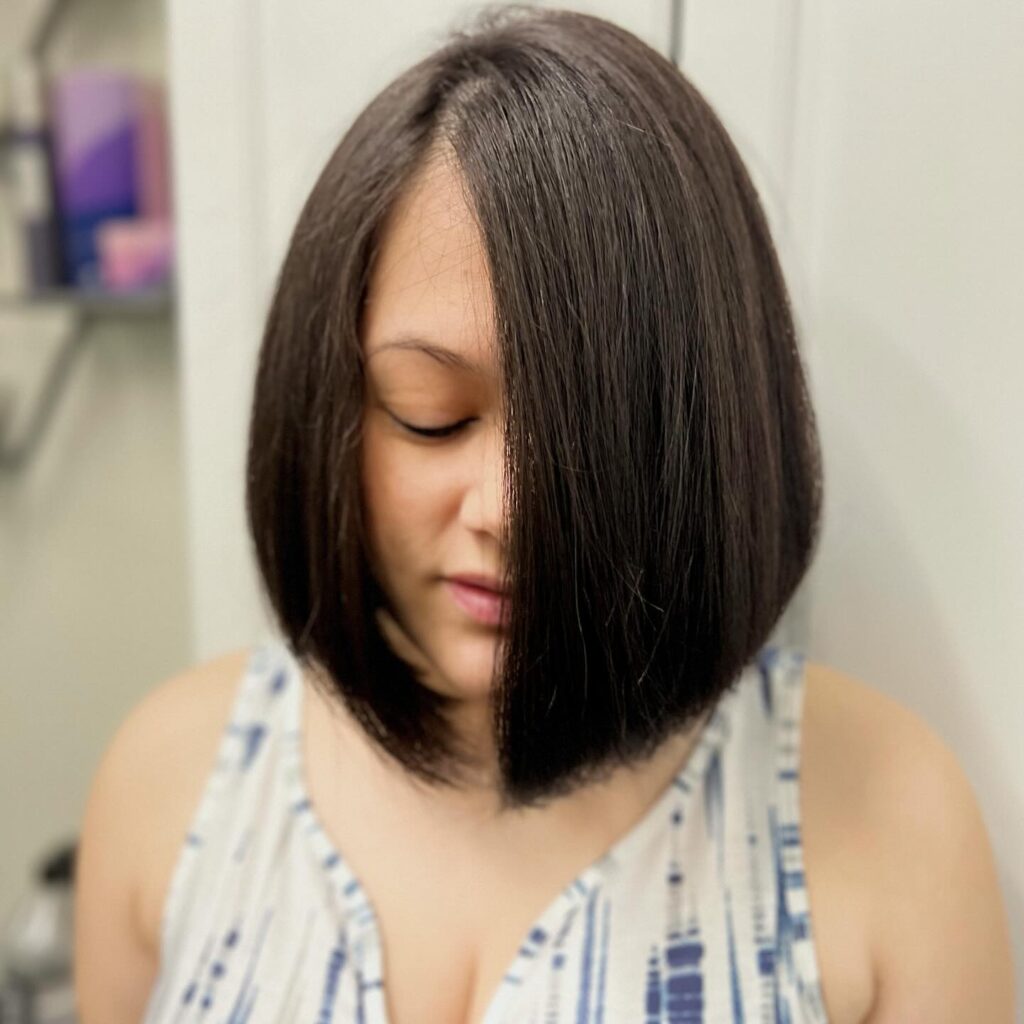
An A-line is a more dramatic version of an angled lob. The back sits noticeably shorter — sometimes by 3 or 4 inches — while the front extends past the collarbone. The diagonal line from back to front is the entire point of the haircut.
Worth knowing before you book: A-lines lock you into the shape until you are willing to cut the front to match the back. Growing it out evenly is harder than growing out a balanced lob.
Simple and Chic Center-Parted Long Bob
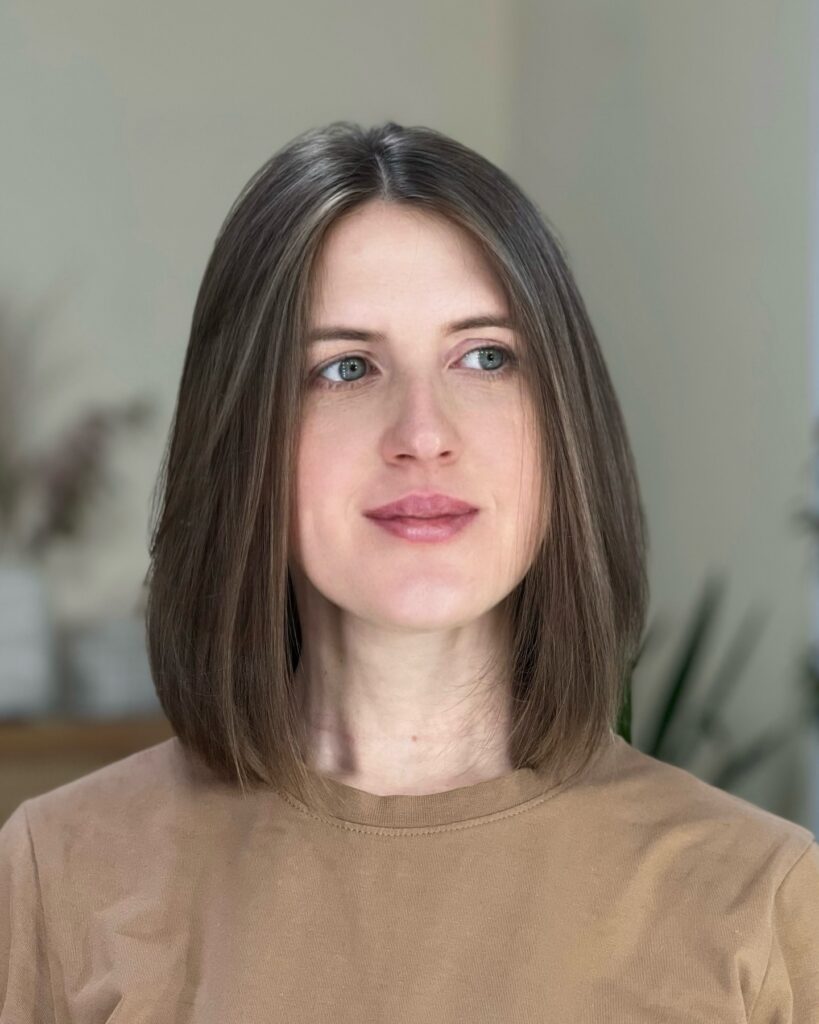
The “no-frills lob” — what most stylists default to when a client asks for a lob without specifying any details. Cut at the shoulders, parted in the center, ends softened with point-cutting but not actually layered.
This is my recommendation for first-time lob clients because the shape is forgiving across face shapes and hair types, and any of the more specific variations on this list can be evolved from this base over future trims.
Textured Long Bob with Deep Waves
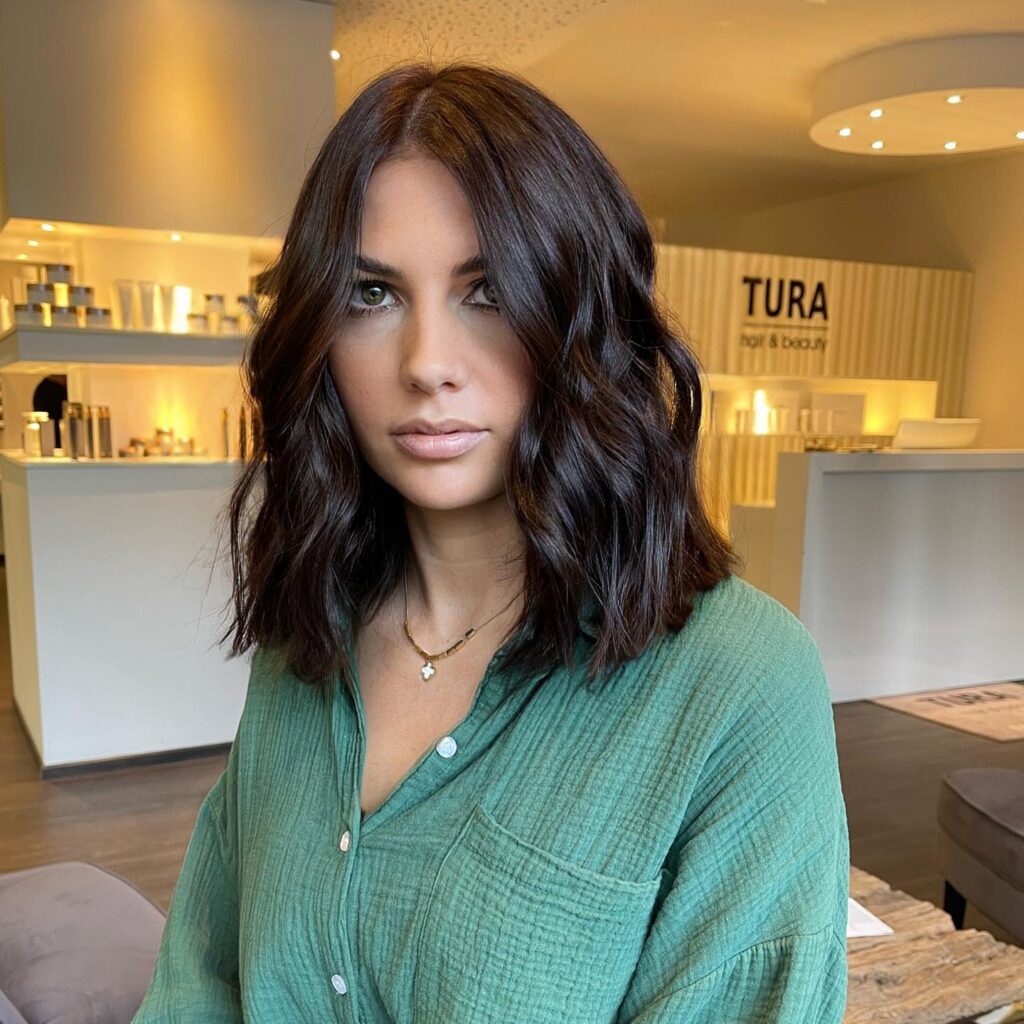
Deep waves are different from beachy waves. The bend is tighter, more uniform, and usually set rather than tousled. This styling works particularly well on a longer-than-average lob — closer to collarbone than chin — because the longer length supports the wave pattern without it looking too tightly compressed.
A 1-inch curling iron held vertically rather than horizontally produces this kind of wave. Hold each section for 8 to 10 seconds and let cool fully before brushing through.
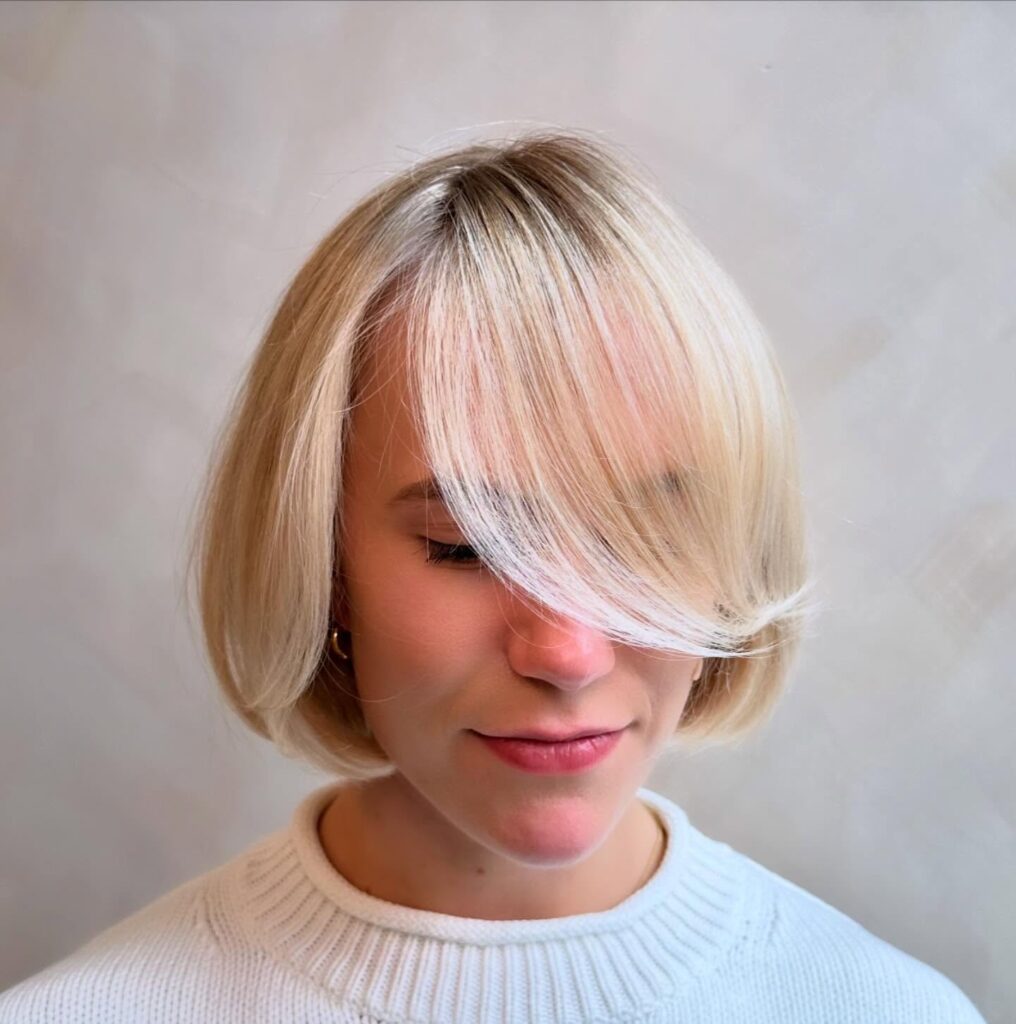
Sleek Platinum Long Bob with Center Part
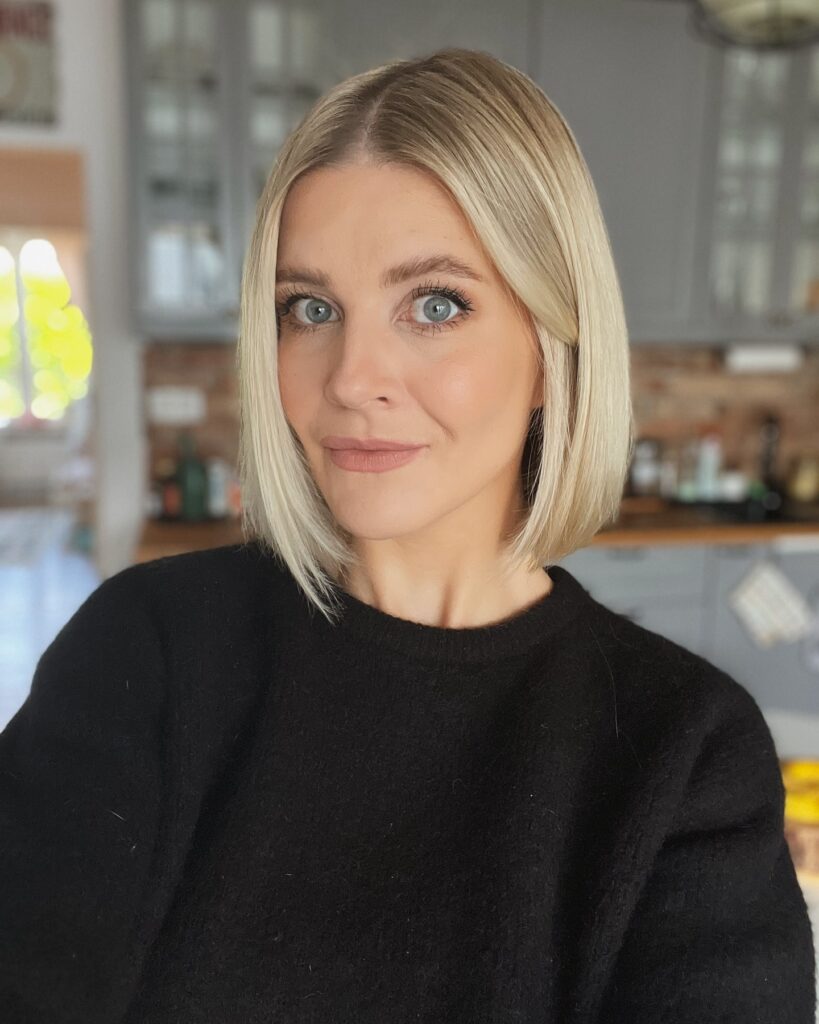
Platinum on a blunt lob is one of the strongest hair statements possible. The combination of a sharp perimeter and a single ultra-light tone removes any visual softness from the cut, which is exactly the point.
This level of platinum requires real maintenance — toning every 4 to 6 weeks at minimum, plus bond-building treatments to keep the integrity intact. Worth being honest about the upkeep before committing.
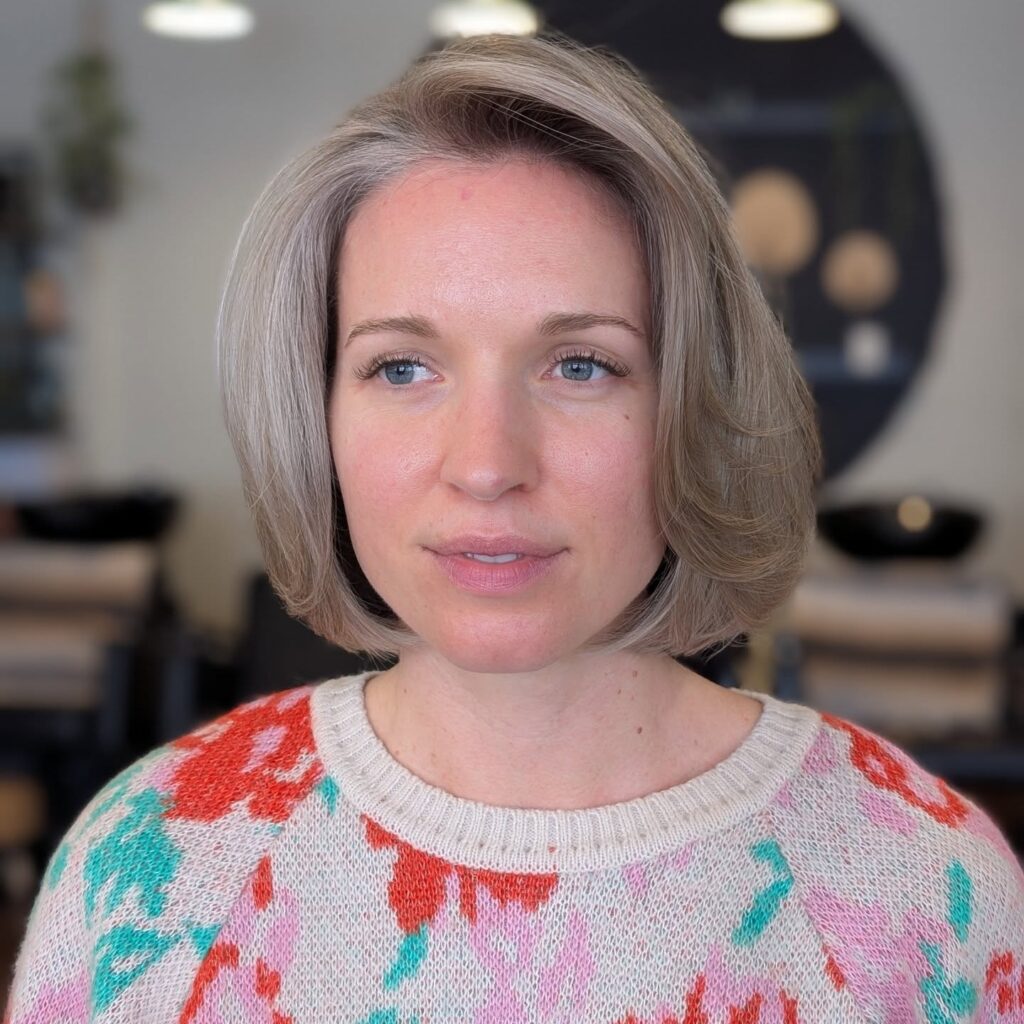
Natural Long Bob with Soft Layers and Gray Streak
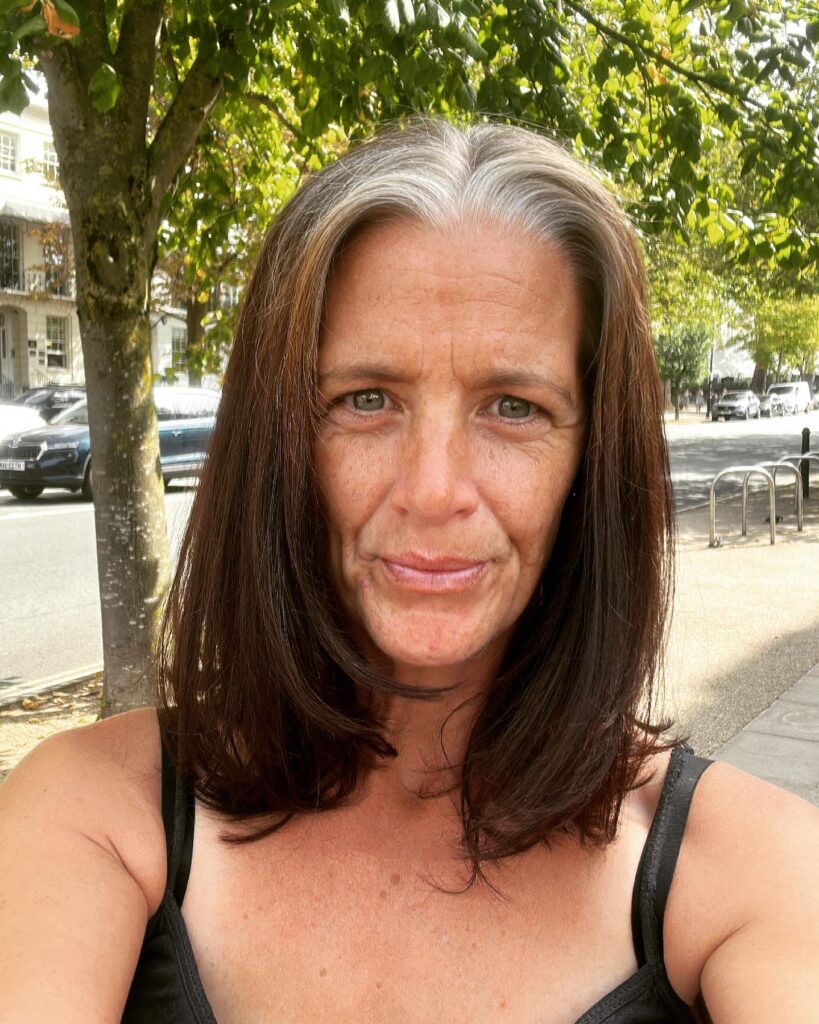
A natural gray streak at the part is one of the easiest ways to make a lob look distinctive without dyeing the whole head. If gray is coming in concentrated at the temples or part — which is common — leaving it visible rather than covering it can become a feature rather than a problem to solve.
This works best when the rest of the color is left close to natural. Heavy contrast between dyed lengths and natural gray usually reads as a missed touch-up rather than an intentional choice.
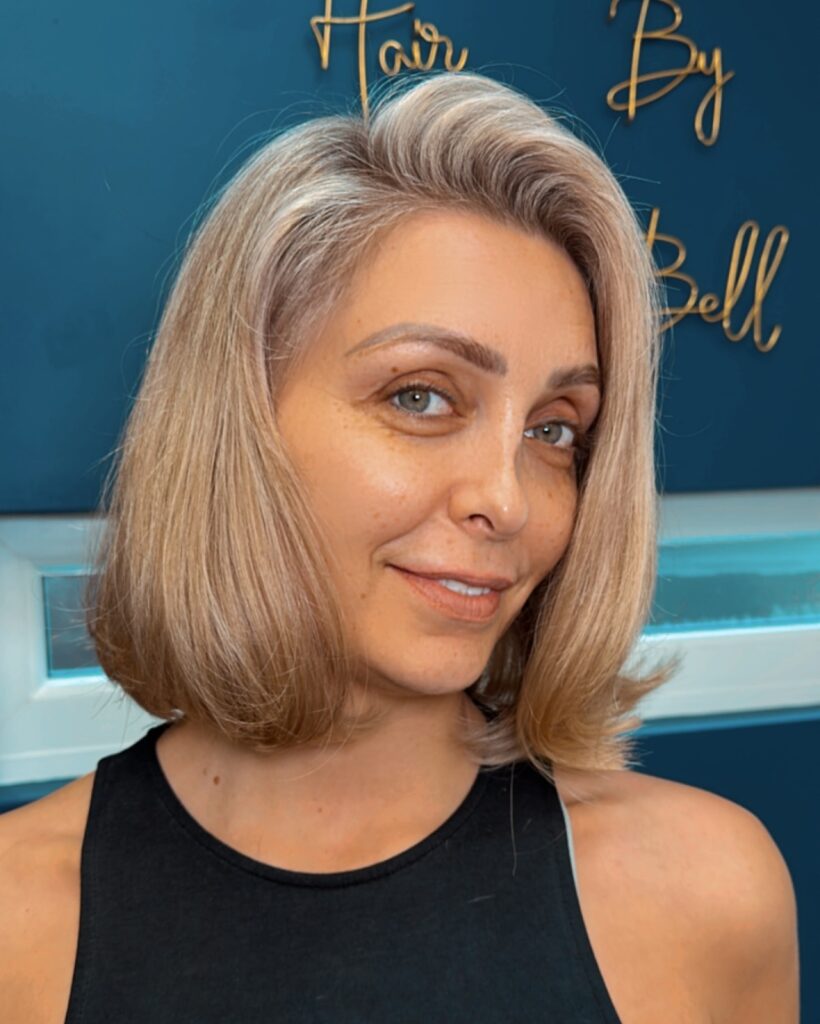
Elegant Long Bob with Soft Side Part and Waves
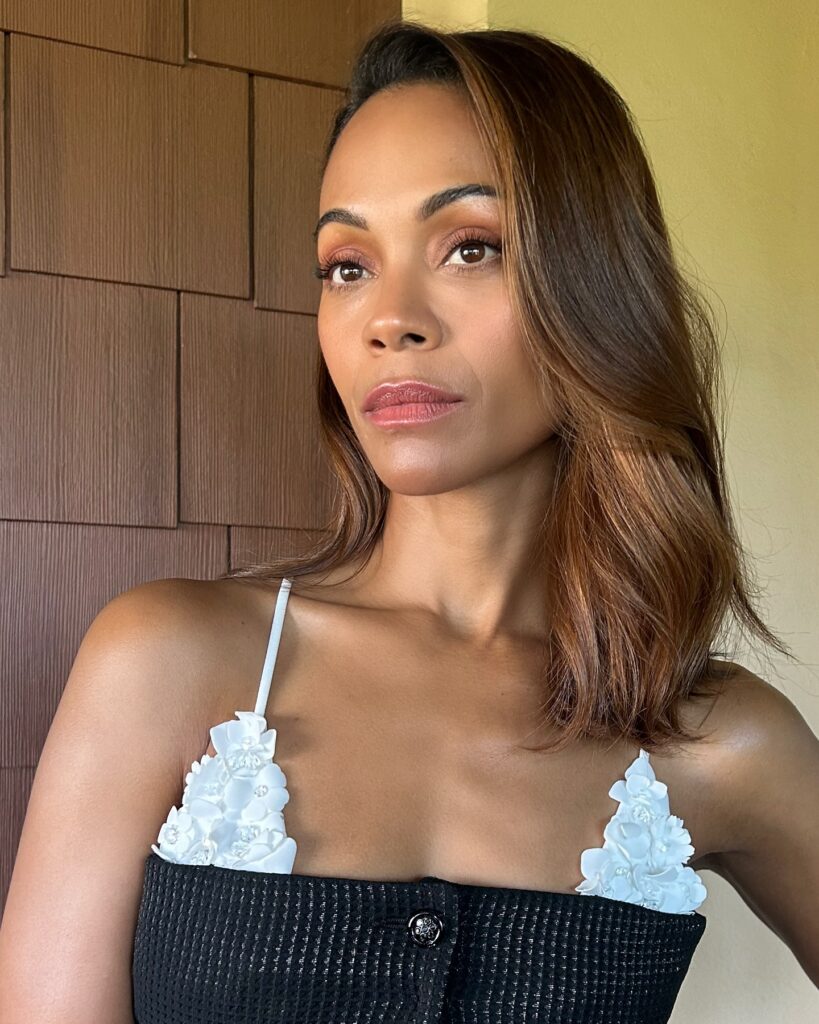
Loose waves on a side-parted lob is one of the most universally flattering combinations on this list. The side part softens the symmetry, the waves add volume without commitment, and the lob length keeps the whole thing from feeling overdone.
For the most natural-looking wave, alternate the curling iron direction with each section — one toward the face, the next away. Uniform-direction curls always read as more “set” and less “natural.”
Ultra Sleek Long Bob with Blunt Edges
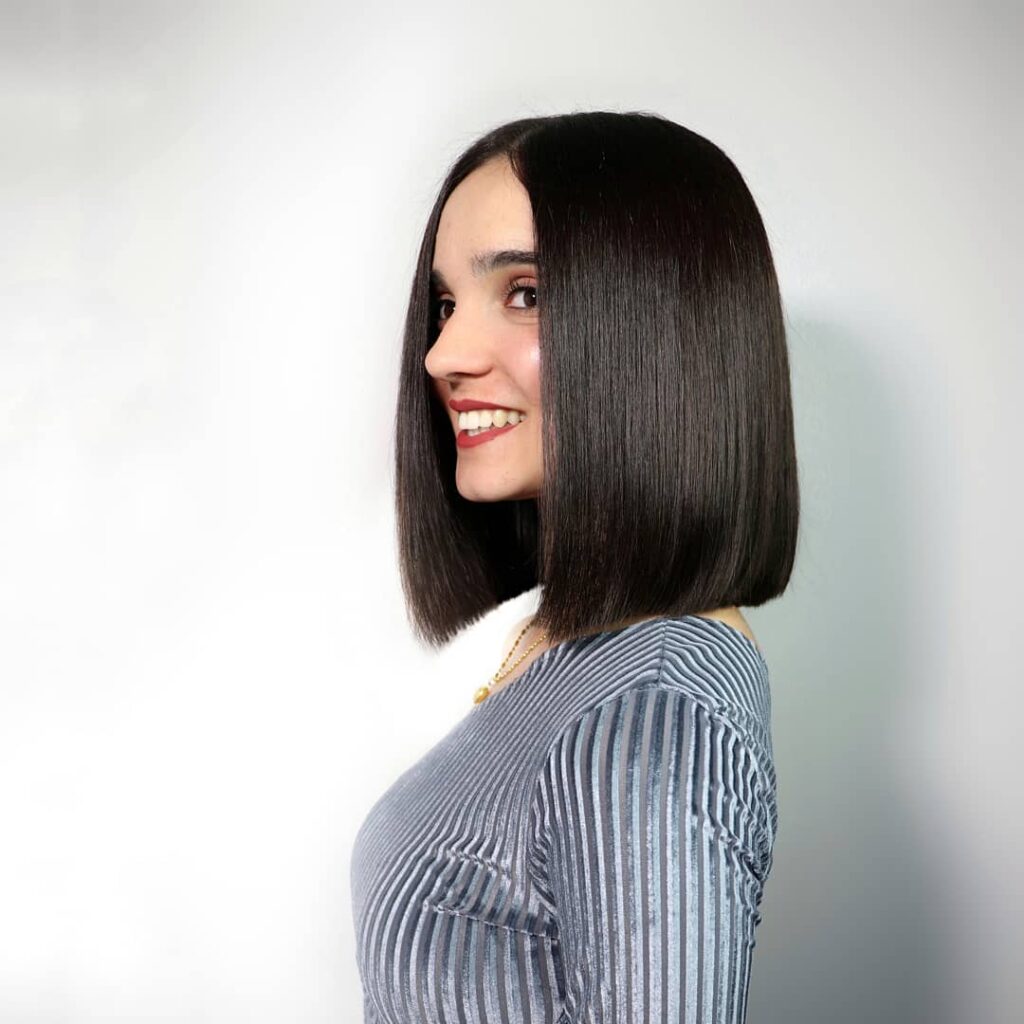
The “mirror finish” lob requires hair that takes a flat iron well — coarse curly hair fights this look, fine straight hair excels at it. The shine is almost the entire point. Without it, the cut just reads as flat.
A finishing oil applied after styling, focused on the mid-lengths and ends, makes the difference between matte and reflective. Skip the roots entirely; oils there read as greasy rather than shiny.
Flowy Long Bob with Face-Framing Layers and Highlights
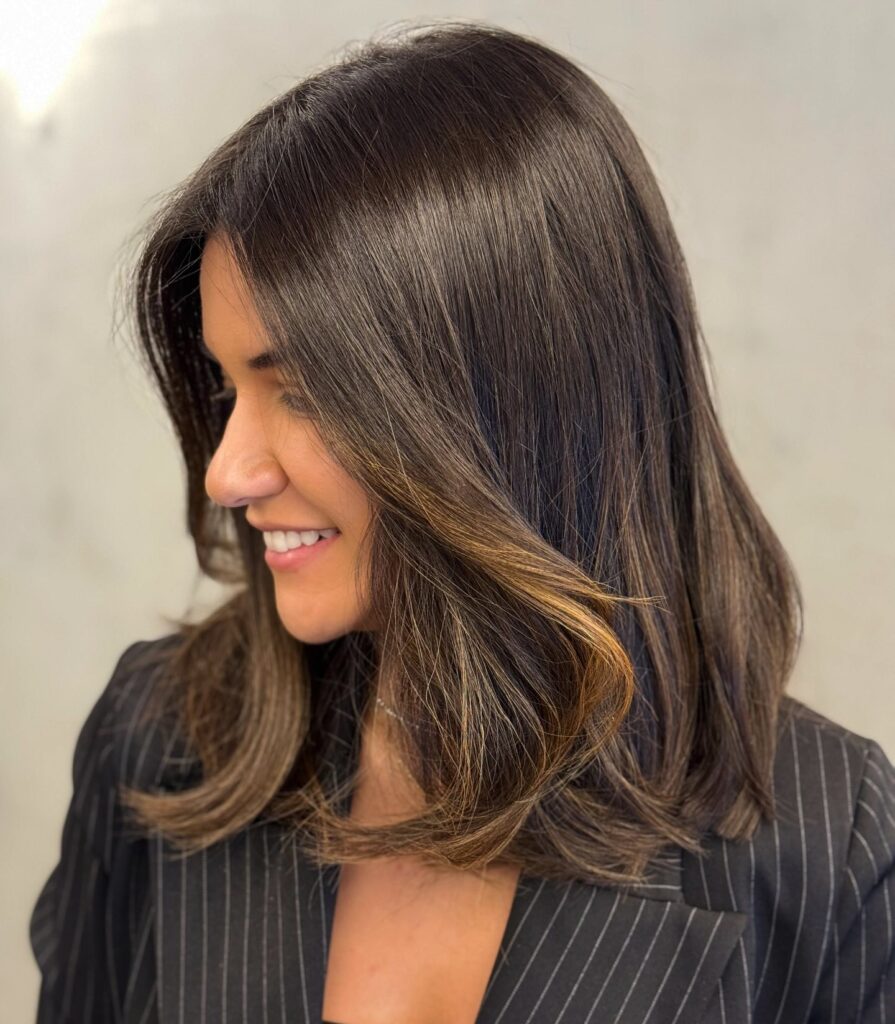
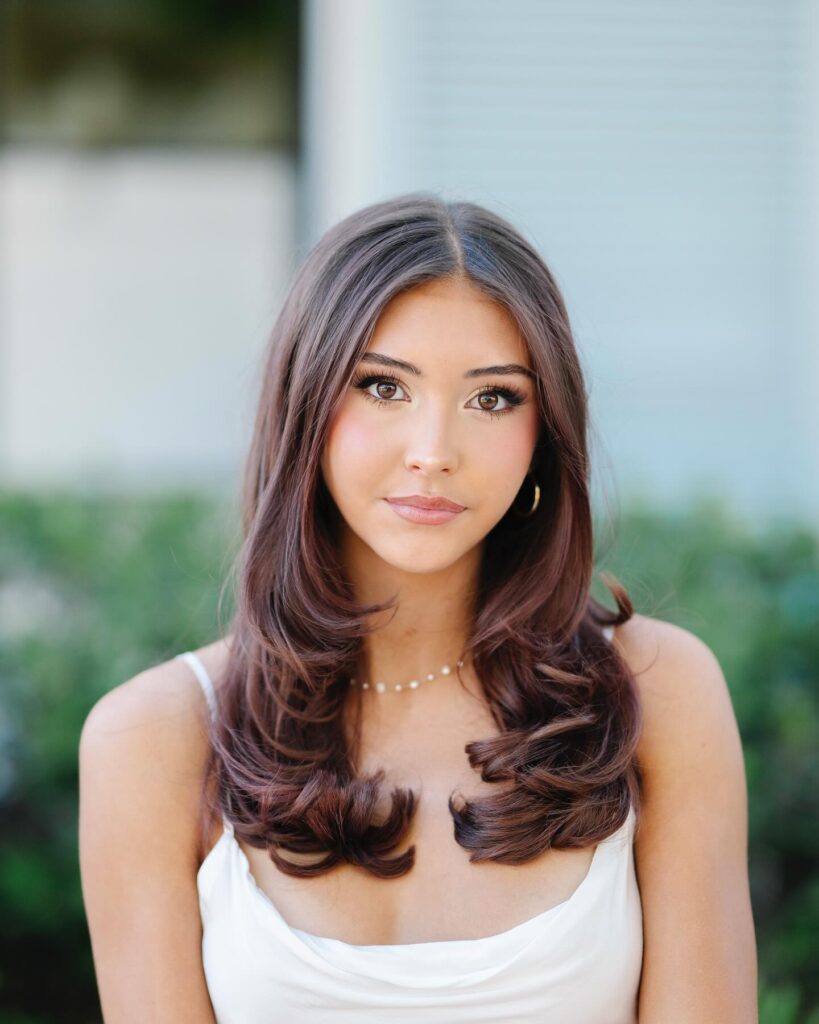
Face-framing highlights — strategically placed lighter pieces around the front — brighten the face without dramatically changing the rest of the color. They are the lowest-commitment way to add dimension to a lob, since they grow out softly and require less maintenance than a full highlight.
Ask your colorist for “money pieces” if you want this look. The term comes from celebrity colorists who placed brighter pieces specifically where they would catch light on camera. The technique has filtered down to most salons now.
Airy Textured Long Bob with a Blunt Cut
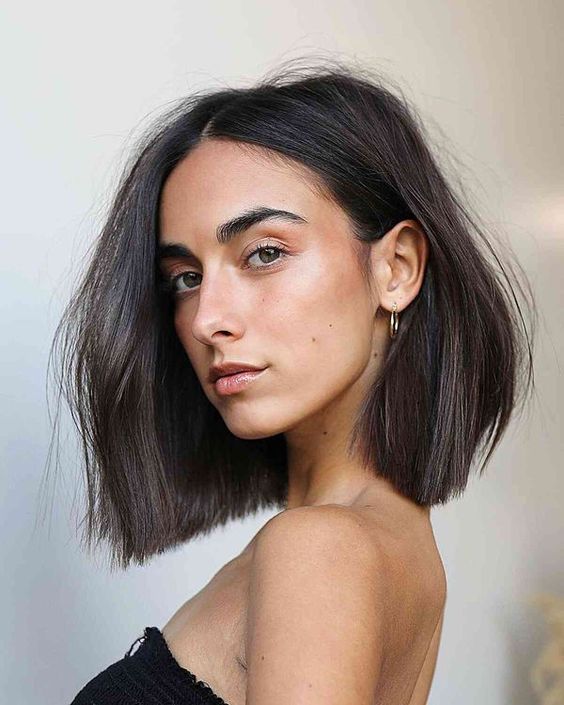
This last cut is the modern compromise — a blunt perimeter with subtle internal texture. The exterior reads as structured, the interior moves naturally. It sits at the intersection of every other lob on this list, which is why it photographs well across so many style contexts.
If you cannot decide which version to ask for, this is the safest starting point. From here you can move toward more layering, more bluntness, more angling, or more length on the next visit, depending on how the cut wears in your daily routine.
Style Guide for Long Bob Hairstyles
Choosing the right long bob comes down to where the length falls, how the perimeter is cut, and how much movement you want in the shape. This guide walks through each decision so you can land on a version that suits your hair and lifestyle.
What Is a Long Bob
A long bob is a one-length or lightly layered haircut that falls between the chin and the collarbone. It sits longer than a classic bob but shorter than mid-length hair, which gives it structured shape without the commitment of a true short cut.
The defining feature is that the perimeter is the focal point. Whether the ends are blunt, softly textured, or angled, the line of the cut is what makes the lob recognizable.
Lob vs Classic Bob
A classic bob usually sits at or above the jawline, which creates a sharper, more defined frame around the face. A lob sits longer and feels more relaxed, with a softer relationship to the face.
The lob is generally easier to grow out, easier to style in multiple ways, and more forgiving when you want to put your hair up. The classic bob makes a stronger style statement but locks you into a more specific shape.
Blunt Lob vs Layered Lob
A blunt lob keeps the ends weighty and straight across, which makes the hair look denser and more polished. This version flatters fine hair particularly well because the weight at the perimeter creates the illusion of fullness.
A layered lob removes some of that weight to add movement and softness through the ends. Layering suits thick, wavy, or curly hair where the goal is to release some volume rather than build it.
Hair Texture Considerations
Straight hair shows the lob shape clearly and benefits from either a blunt or softly textured perimeter.
Wavy hair looks beautiful in a lob with light layering that lets the wave pattern emerge naturally.
Curly hair works in a lob too, but the length should be measured with the curl pattern in mind — shrinkage will pull the cut shorter once it dries, so most stylists add 1 to 2 inches when measuring damp.
Thick hair almost always needs internal weight removal so the lob does not turn into a triangular shape.
Face Shape and Length Choices
Where exactly your lob falls makes a big difference. A chin-grazing lob feels close to a classic bob and adds emphasis around the jaw. A collarbone lob feels softer and more flexible.
Round faces look balanced with a lob that falls below the chin and angles slightly forward. Square faces benefit from soft layers around the jaw to break up angles. Long faces look better with a shorter lob that sits closer to the chin to avoid extending the face further.
Center Part vs Side Part
Parting changes how the lob frames your face. A center part feels modern and open, suiting oval and heart-shaped faces particularly well. A side part adds asymmetry and softness, which can flatter round and square faces by breaking up symmetry.
Switching parts is one of the easiest ways to change how a lob looks day to day without restyling the whole shape.
Bangs and the Lob
Bangs give the lob a different personality. Curtain bangs are the most popular pairing because they blend into the longer length and frame the face without looking heavy.
Blunt bangs make the lob feel more polished and graphic. Side-swept or wispy bangs add softness without commitment. Skipping bangs keeps the lob simple and lets the perimeter line do the work.
Styling and Maintenance
Lobs are flexible to style. Air-drying with a light cream gives a relaxed, lived-in finish. A blow-dry with a round brush creates a smooth polished look. Curling with a wand or flat iron adds bend and movement.
Trims every 8 to 12 weeks keep the shape from looking heavy or shapeless. Color-treated lobs may need slightly more care to keep the ends from looking dry.
Growing It Out
Lobs grow out into mid-length hair fairly easily, which makes them a low-pressure choice if you are not sure about commitment.
The shape softens as it lengthens, and you can always reshape with light layering to keep things from looking flat during the grow-out phase.