
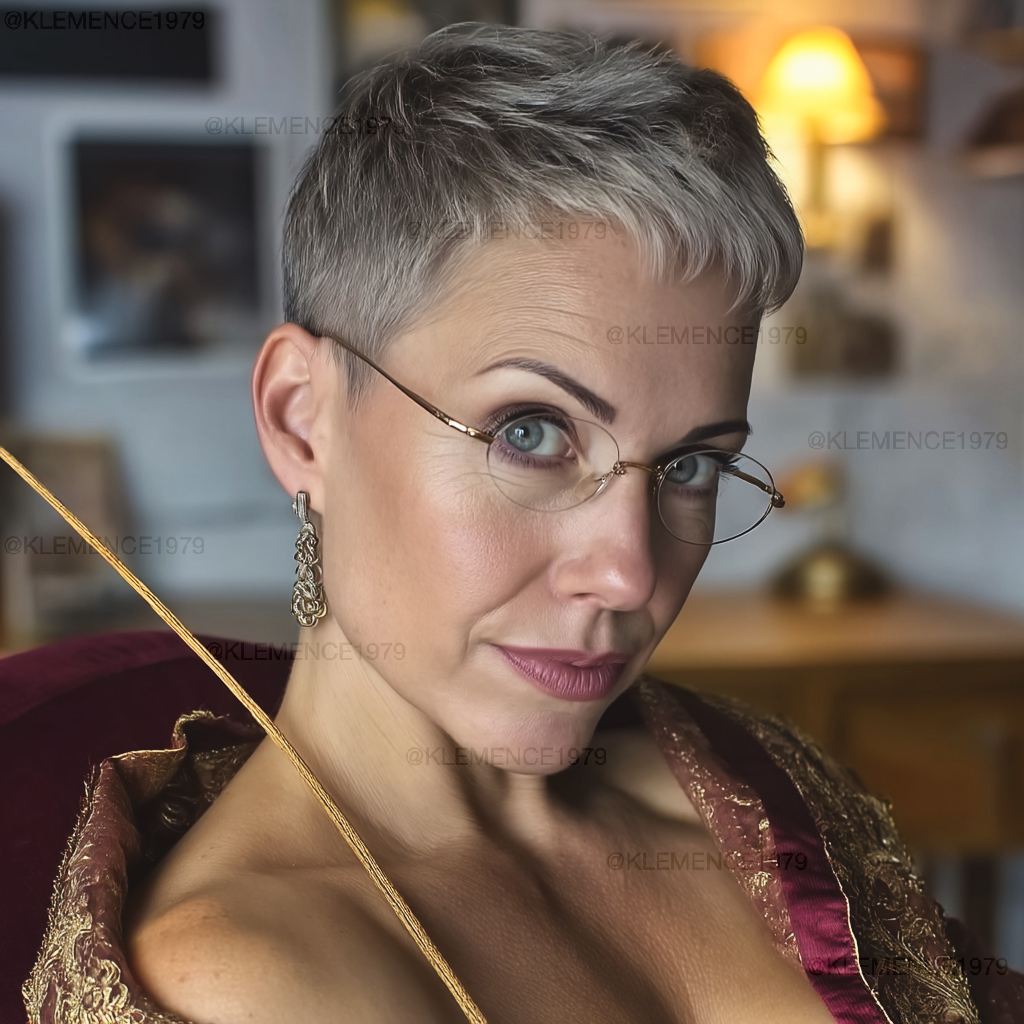
The pixie used to be the haircut women got when they were “ready to start over.” Demi Moore’s Ghost crop, Mia Farrow’s Rosemary’s Baby buzz, Halle Berry’s bold post divorce era. The shared thread was always the same: someone deciding to stop hiding behind their hair. The cut still does that today, but with one update worth flagging. Pixies on women over 50 are no longer a statement of giving up on length. They are increasingly a statement of confidence in bone structure.
The 20 cuts below show what that looks like in 2026. Some are sharply tapered, some are softly feathered, some embrace silver and grey, some commit to platinum. None of them are trying to look younger by adding length. They work because they remove weight that finer aging hair cannot support, and replace it with structure that lifts the face.
Before You Choose This Hairstyle
Pixies often flatter older women with oval, heart, and softly square face shapes by adding lift through the crown and opening up the features around the eyes and cheekbones. Round faces can wear pixies well when the top is kept slightly longer or styled with height to add vertical balance. Long faces look better with softer crown height and more side fullness, since too much vertical lift can stretch the face further.
Pixies work on most hair types, but the cutting approach changes depending on what you have. Fine hair benefits from soft layering that creates lift without thinning the ends. Thick hair usually needs internal weight removal so the cut sits close to the head rather than pushing outward. Curly hair can look beautiful in a pixie when the cut respects the curl pattern and accounts for shrinkage.
Maintenance is higher than for longer cuts because the shape relies on a precise outline and crown layering. Trims every 4 to 6 weeks help maintain the silhouette. A more detailed style guide appears at the bottom of this article.
20 Short Pixie Haircuts for Older Women
Soft Feathered Pixie Cut
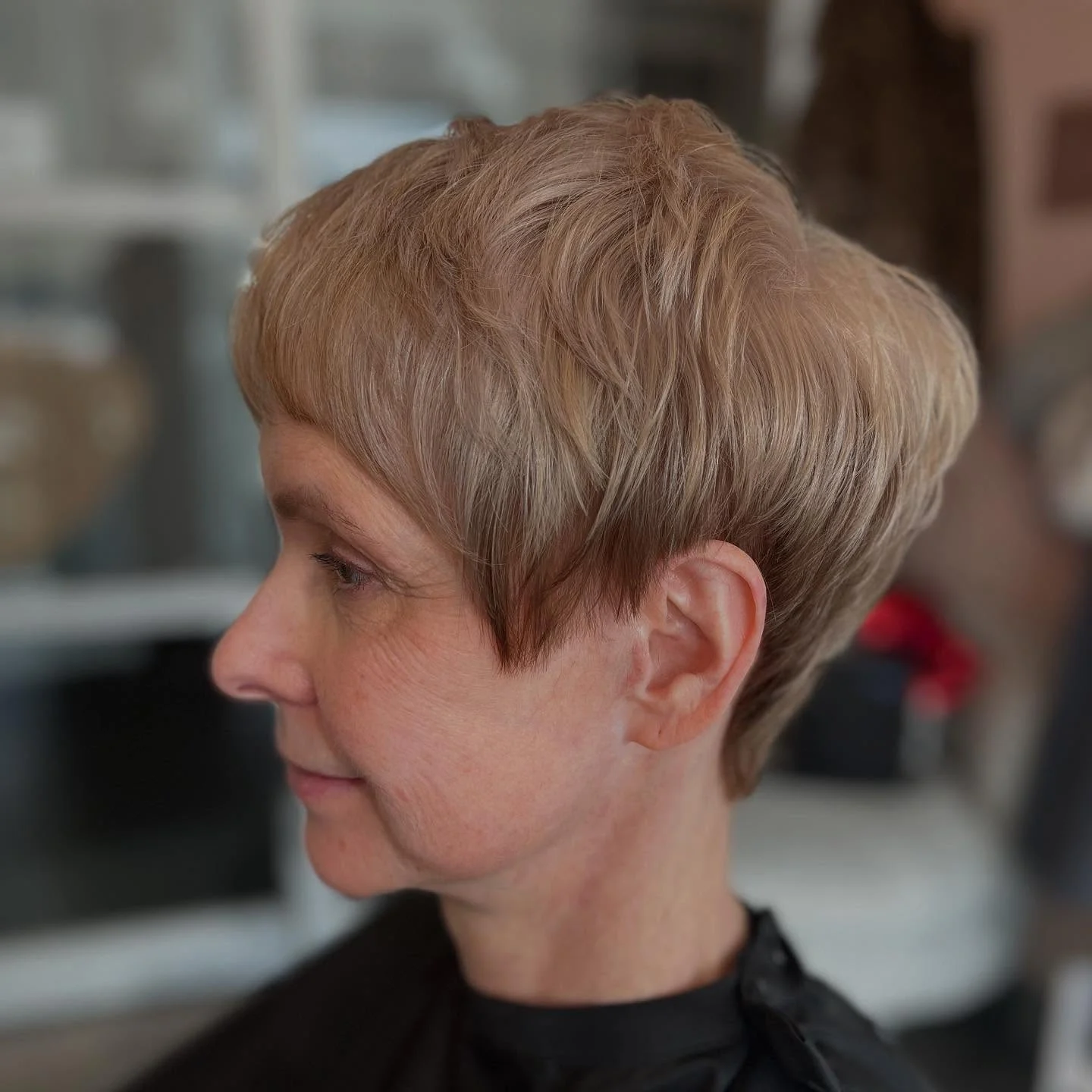
Feathering is what separates a pixie that looks “lived in” from one that looks “just clipped.” The technique uses point cutting to soften the ends of each layer, so individual pieces blend into one another rather than sitting in stacked rows.
This is my recommendation for first time pixie clients with fine hair. The feathering creates the illusion of fullness without adding obvious volume that requires daily styling to maintain. A pea sized amount of light cream worked through damp hair is usually all the styling this cut needs.
Bleach and Tone Textured Pixie

The biggest practical advantage of going lighter at this length is regrowth management. Cool blonde tones blend almost invisibly with silver and grey roots, which means the line where colored hair meets natural growth never becomes a noticeable problem. Brunettes who go lighter usually fight a visible regrowth line every 4 weeks. Cool blondes do not.
The choppy layers on top are what keep this cut from looking too clinical. Without the texture, an icy short cut can feel cold. With it, the cut reads as deliberately styled.
Sleek Tapered Pixie Cut

“Tapered” means the length gradually decreases from top to nape, with no sharp transitions. The technique is used when you want a pixie to look polished rather than choppy. It works best on straight hair that takes a smooth blow dry, since any wave or curl will fight the close fitting silhouette.
The tradeoff is upkeep. Tapered cuts grow out less gracefully than feathered ones, since any new growth at the perimeter immediately disrupts the smooth outline. Plan for trims every 4 weeks if you want to maintain this exact shape.
Short Textured Pixie with Side Swept Fringe

The side swept fringe is one of the most flattering bang options for women over 50, because it covers part of the forehead without committing to a full blunt fringe. This matters when fine lines settle into horizontal forehead creases, since the diagonal line of a side fringe visually breaks them up rather than emphasizing them.
Salt and pepper coloring on this cut is a feature, not a problem to solve. The natural contrast does what highlights would otherwise do at the salon, for free.
Textured Silver Pixie with Faded Sides

A “fade” is a barbering technique borrowed from men’s cuts, where the side length tapers gradually to nearly nothing at the perimeter. Stylists who trained on men’s cutting tend to be the most comfortable with this technique, so it can be worth specifically asking whether your stylist does fades regularly when booking.
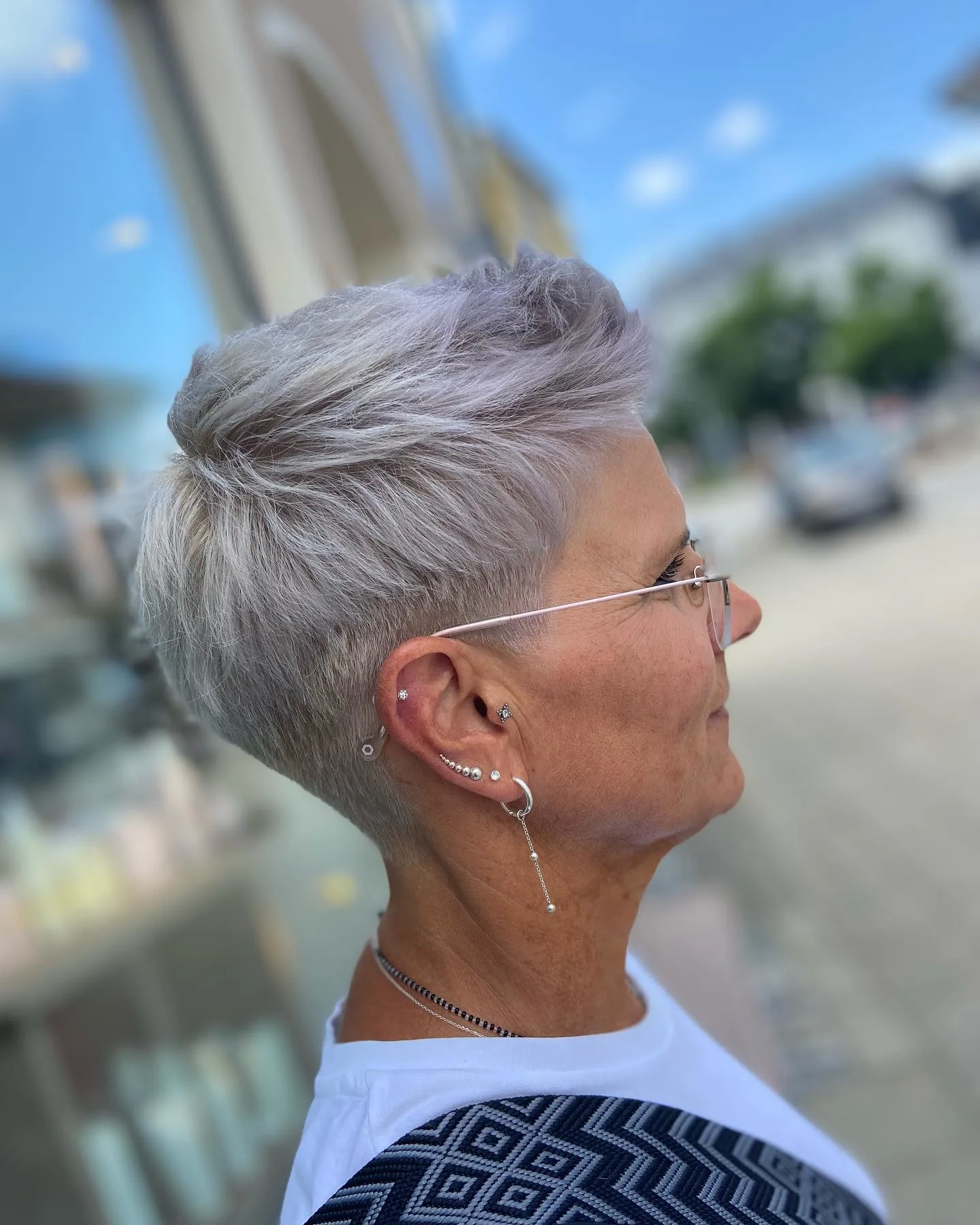
The advantage of the fade on a pixie is that it makes the longer top section look intentionally fuller by contrast. The same length of hair on top reads as more voluminous when the sides are faded short than when they are simply tapered.
Layered Bowl Pixie with Soft Fringe
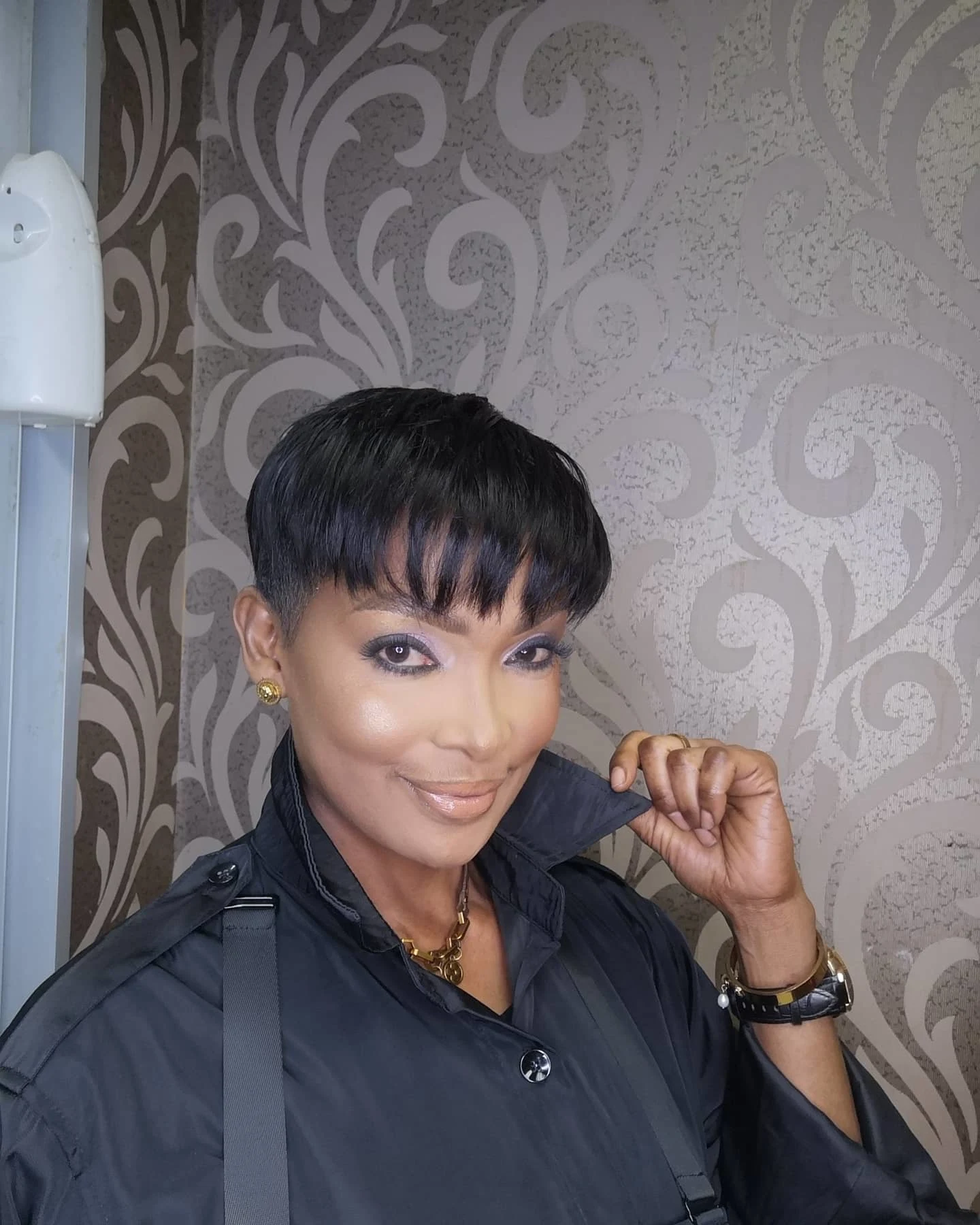
The bowl shape of the 1990s came back in 2023 as the “modern bowl” or “mushroom cut.” This pixie length variation is the most flattering version of that revival, since it keeps the rounded silhouette without the harsh blunt edges that made the original feel dated.
The key is the separated fringe. Where the original bowl cut had a heavy straight across fringe, this version uses softly point cut bangs that move independently of one another. That single update is what makes the difference between “retro” and “current.”
Tousled Layered Pixie with Soft Fringe
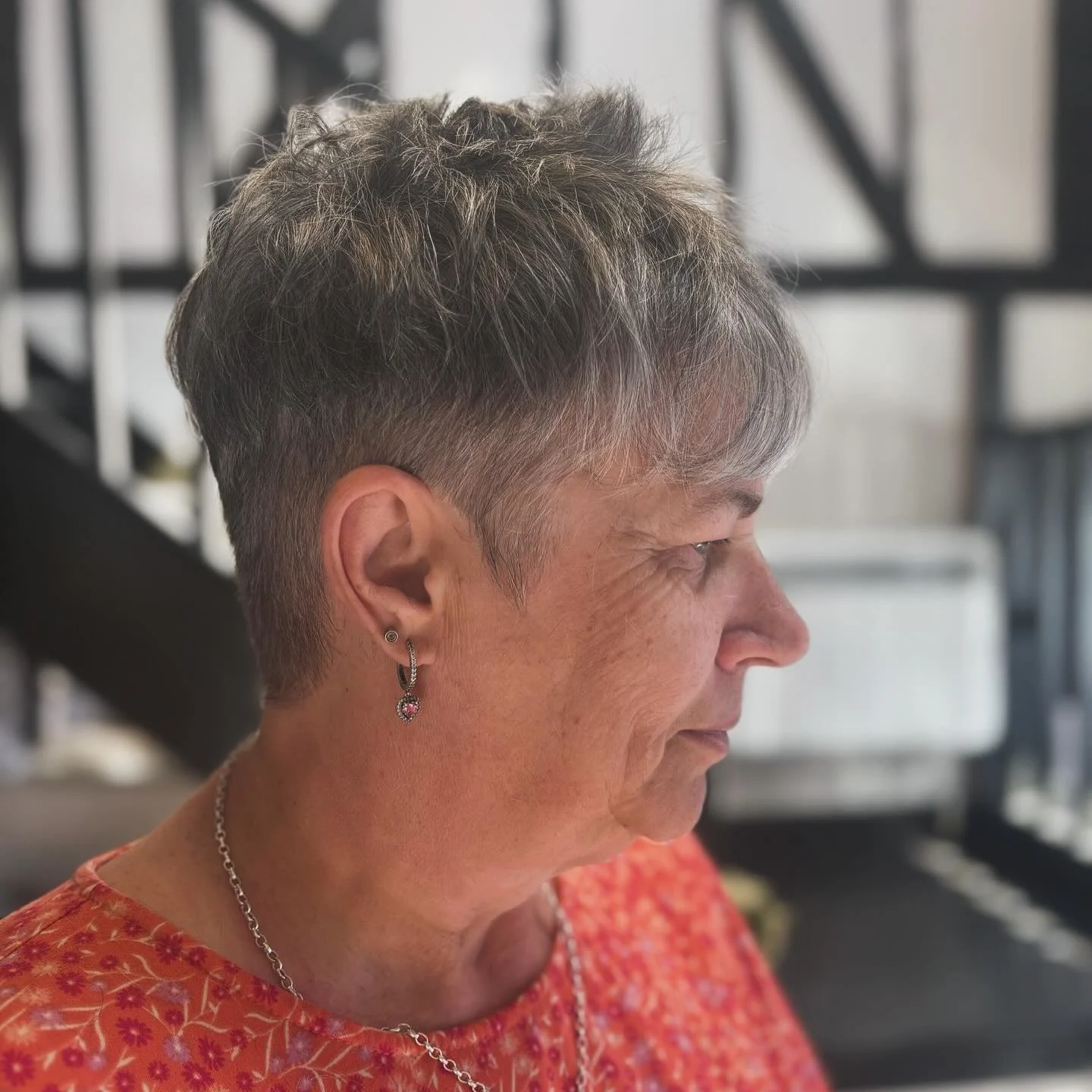
“Tousled” describes a styling finish, not a cutting technique. The same pixie can be smoothed for a polished look or tousled for a casual one, simply by changing what you do after the wash. A small amount of texture cream worked through damp hair with the fingers, then air dried, gives this finish without any heat.
The mix of grey tones in this cut is doing real work. Two tones of grey create more visual depth than a single uniform grey, which is why salons charge for “dimensional grey” treatments to mimic this effect on women whose grey came in flat.
Soft Textured Buzz Pixie
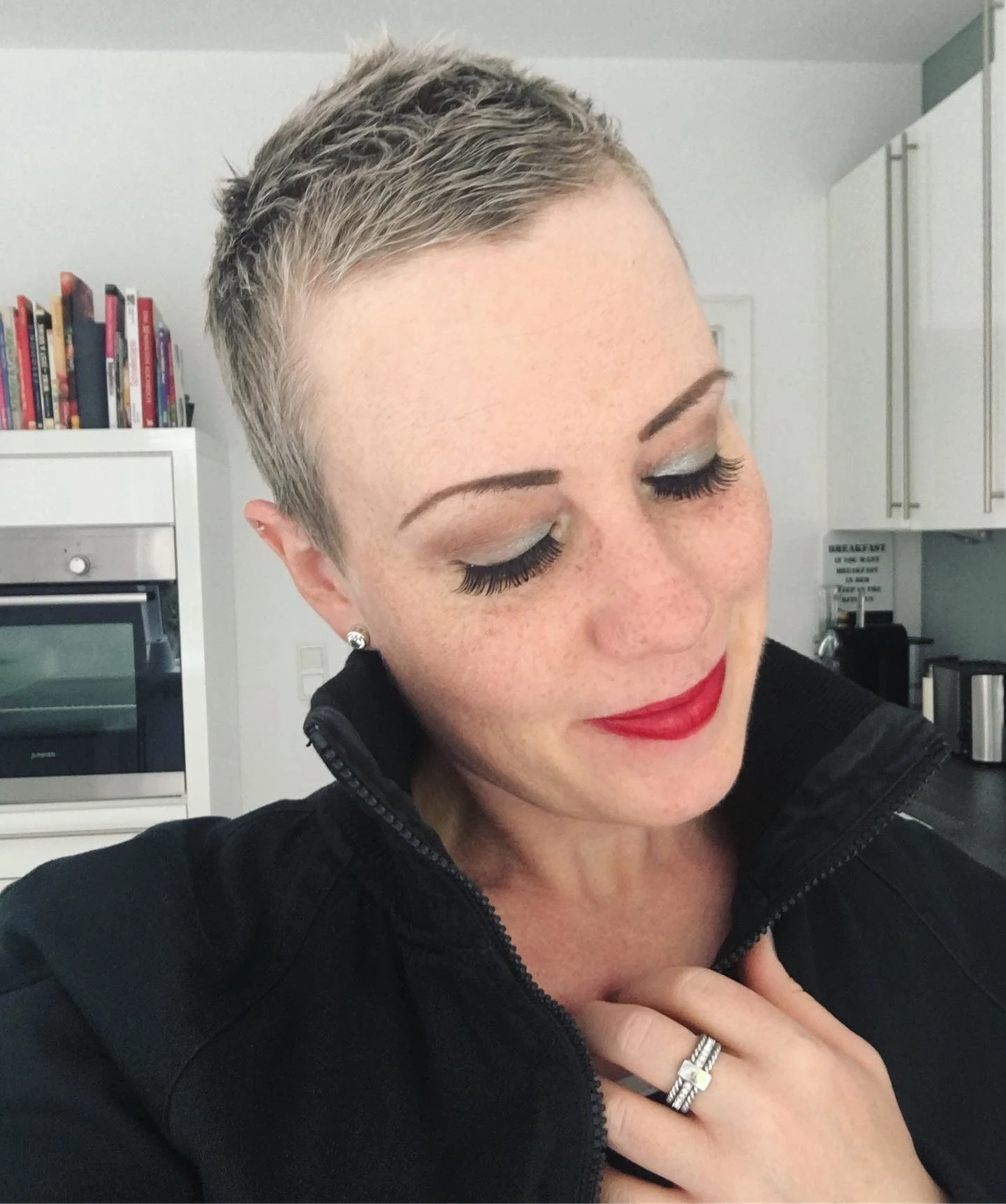
This sits at the boundary between a pixie and a buzz cut. The top has just enough length to show texture, while the sides are clipped close enough that the term “haircut” feels almost too generous. It is the most low maintenance option on this list, and arguably the most confident.
Worth knowing before you commit: this length grows out unevenly. The crown grows fastest, the nape grows slowest, and the difference becomes visible within 3 weeks. Trims every 3 to 4 weeks are realistic if you want to maintain this exact shape.
V Shaped Crown Lifted Stunner
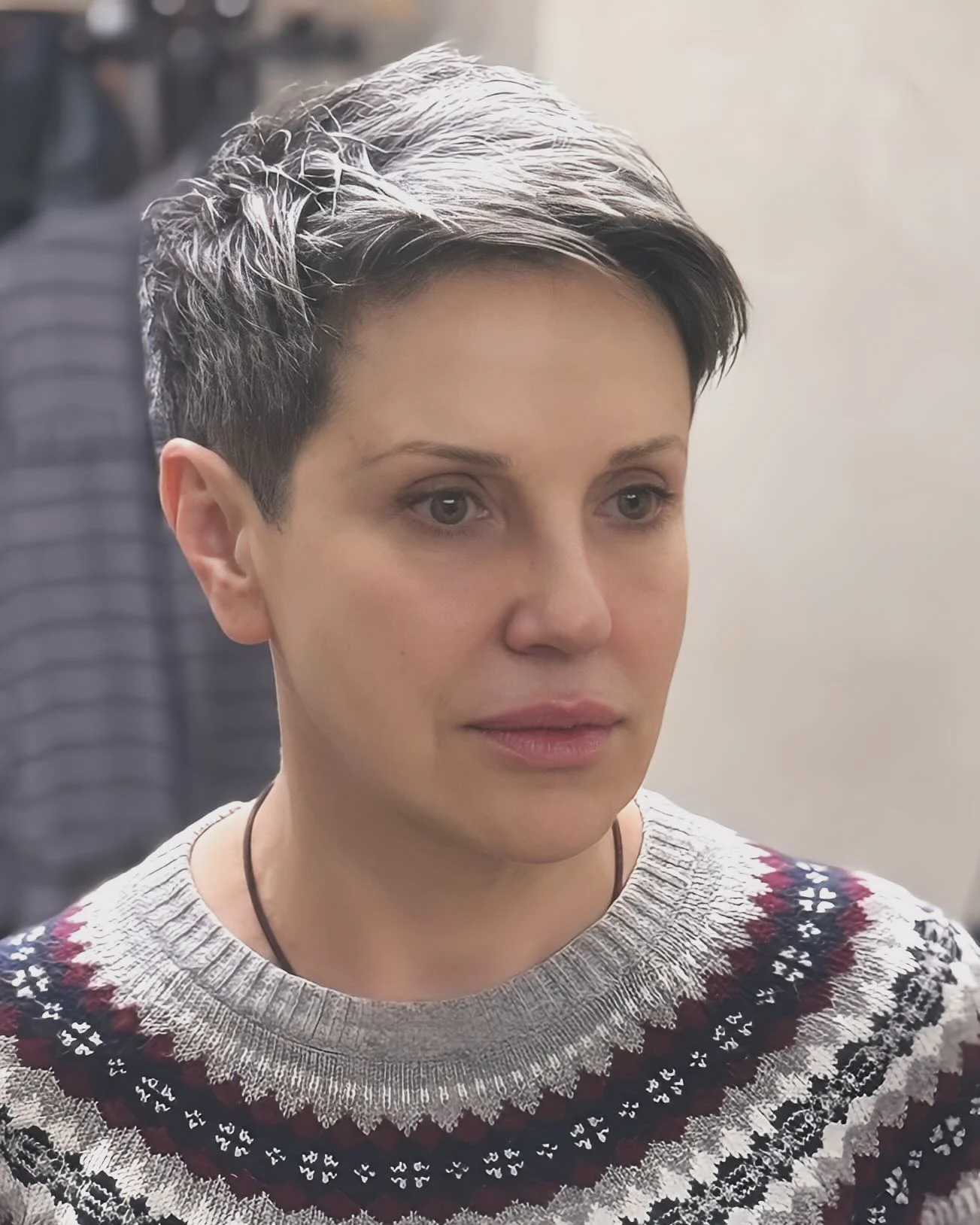
The “V shape” refers to the back of the cut. Rather than tapering evenly into the nape, the perimeter cuts at a slight downward angle that meets at a center point. This creates a small visual elongation at the back of the head, which can balance out a round face shape from the side profile.
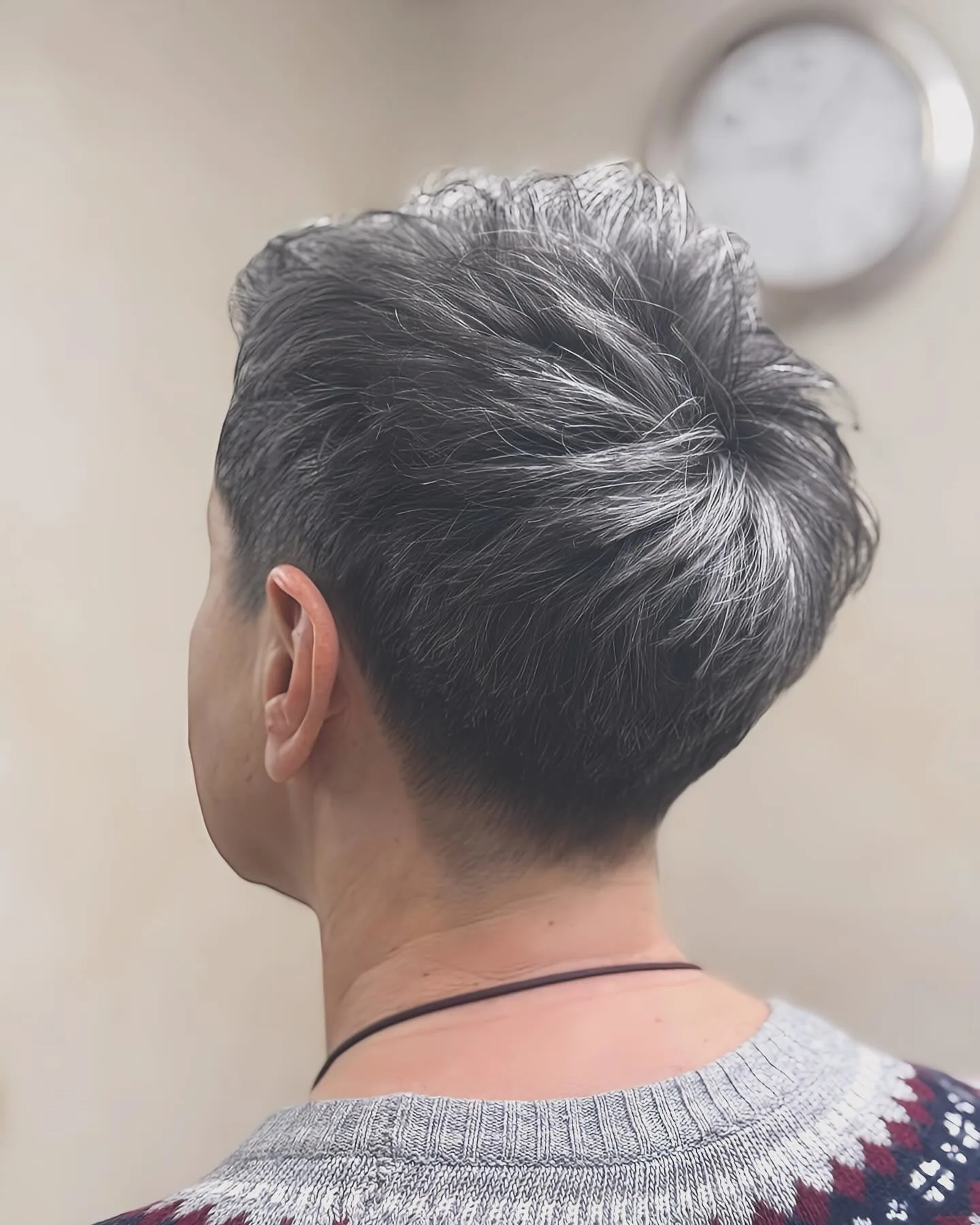
The lifted crown comes from a technique called “weight removal at the occipital bone.” Removing weight at the back of the crown allows the hair to stand up on its own, without daily backcombing or product. It is one of the cleverest cutting moves for women whose hair has lost natural body.
Choppy Bleach Blonde Pixie
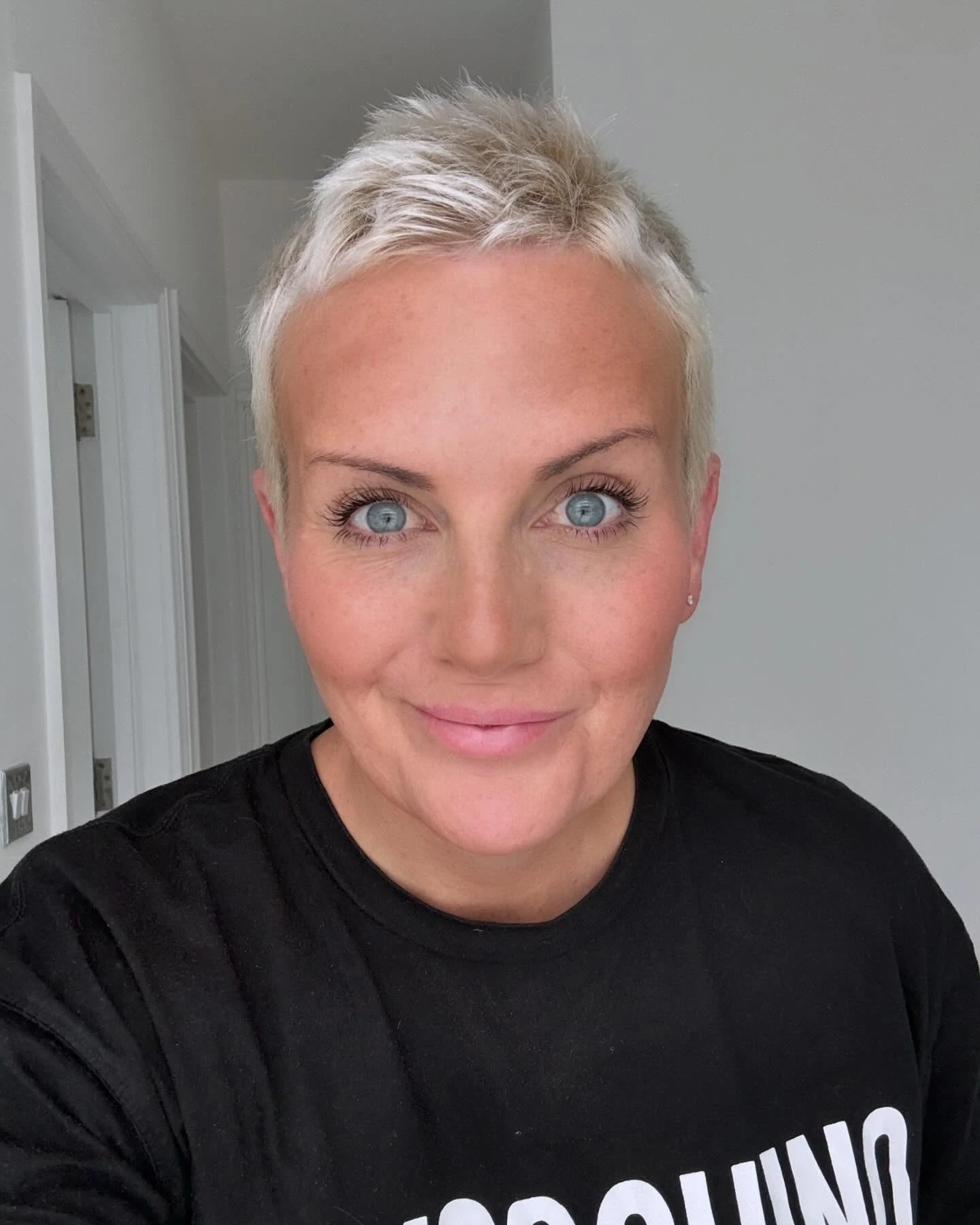
“Choppy” is a styling term that means “deliberately uneven.” The piecey definition you see in this cut comes from working a small amount of matte paste through dry hair with the fingertips, separating individual strands rather than smoothing them together.
One thing to know about bleach blonde at this length: the maintenance is more demanding than it looks. Toner needs refreshing every 4 to 6 weeks to keep brassy yellow tones from creeping back in. Worth budgeting for before you commit to going this light.
Short Layered Silver Pixie
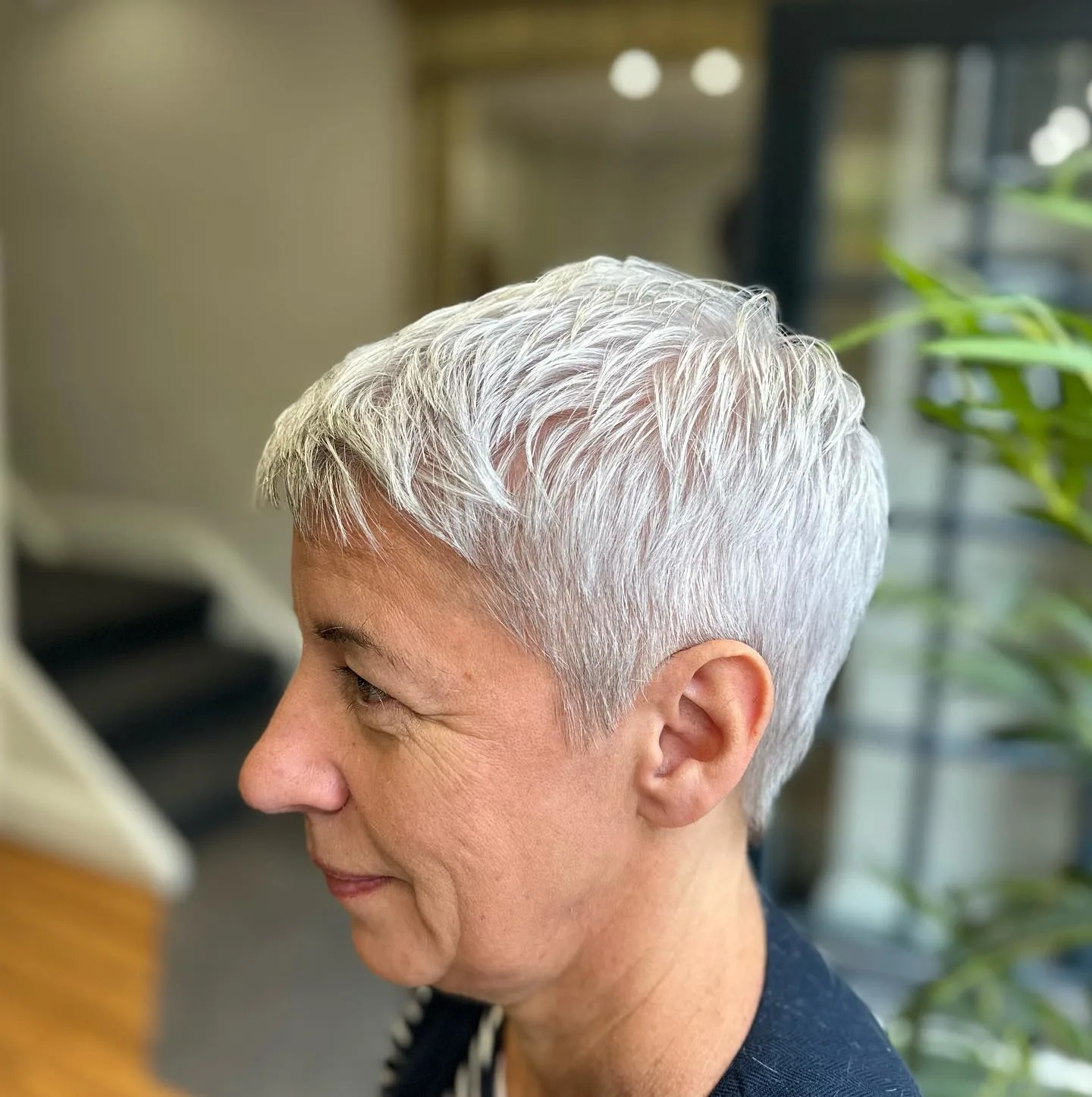
True silver, the cool toned platinum that some women over 60 have naturally, is the easiest grey color to work with. It reflects light efficiently, which makes the hair look fuller than it actually is. A shorter cut emphasizes this property, since less length means more of the hair is positioned where light can hit it.
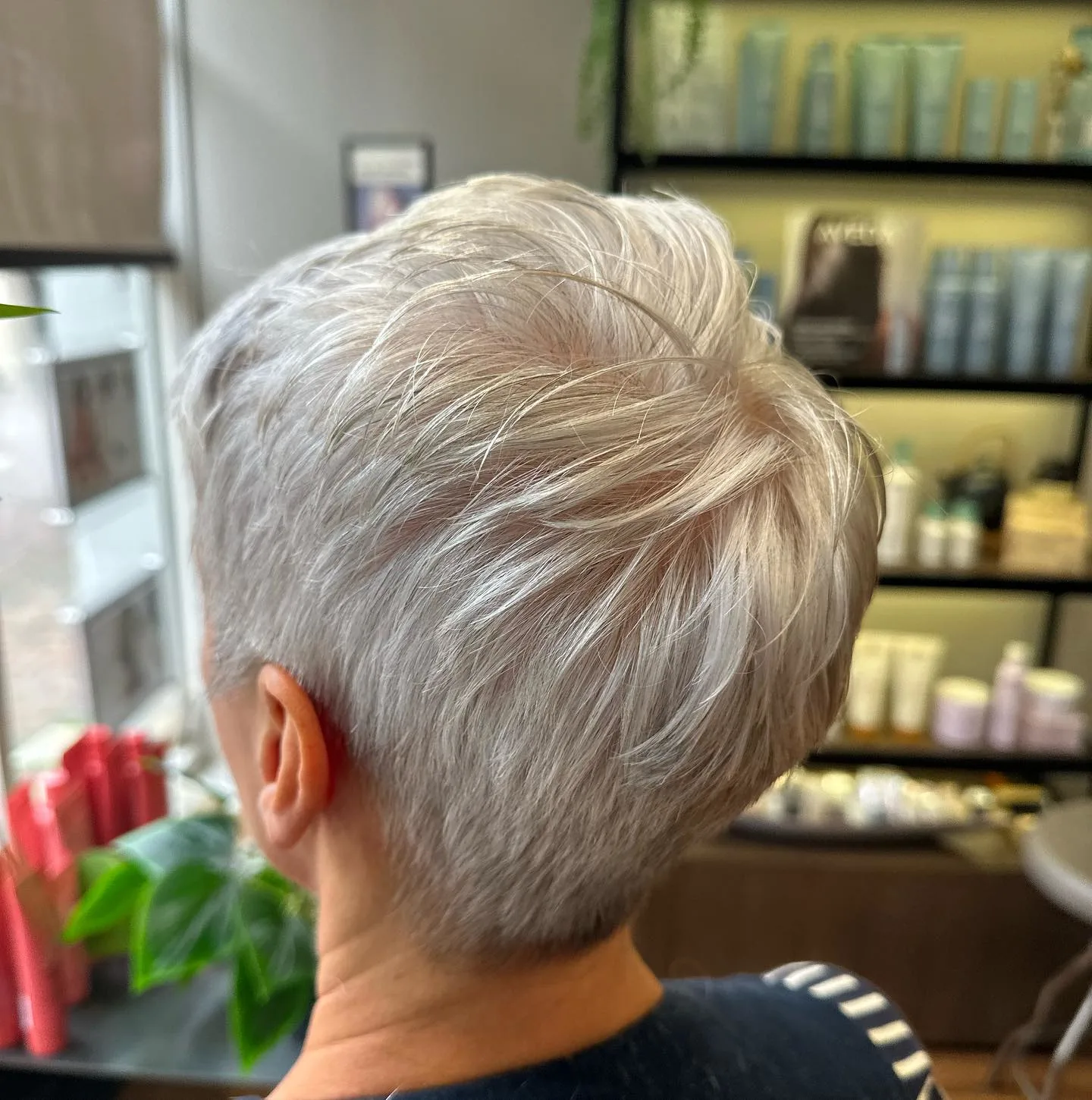
For women whose grey came in patchy or yellow toned, a purple shampoo used once a week is the lowest cost intervention to push the tone toward true silver. More frequent use can over correct and leave hair lavender, so once a week is the sweet spot.
Two Tone Tapered Pixie with Textured Top
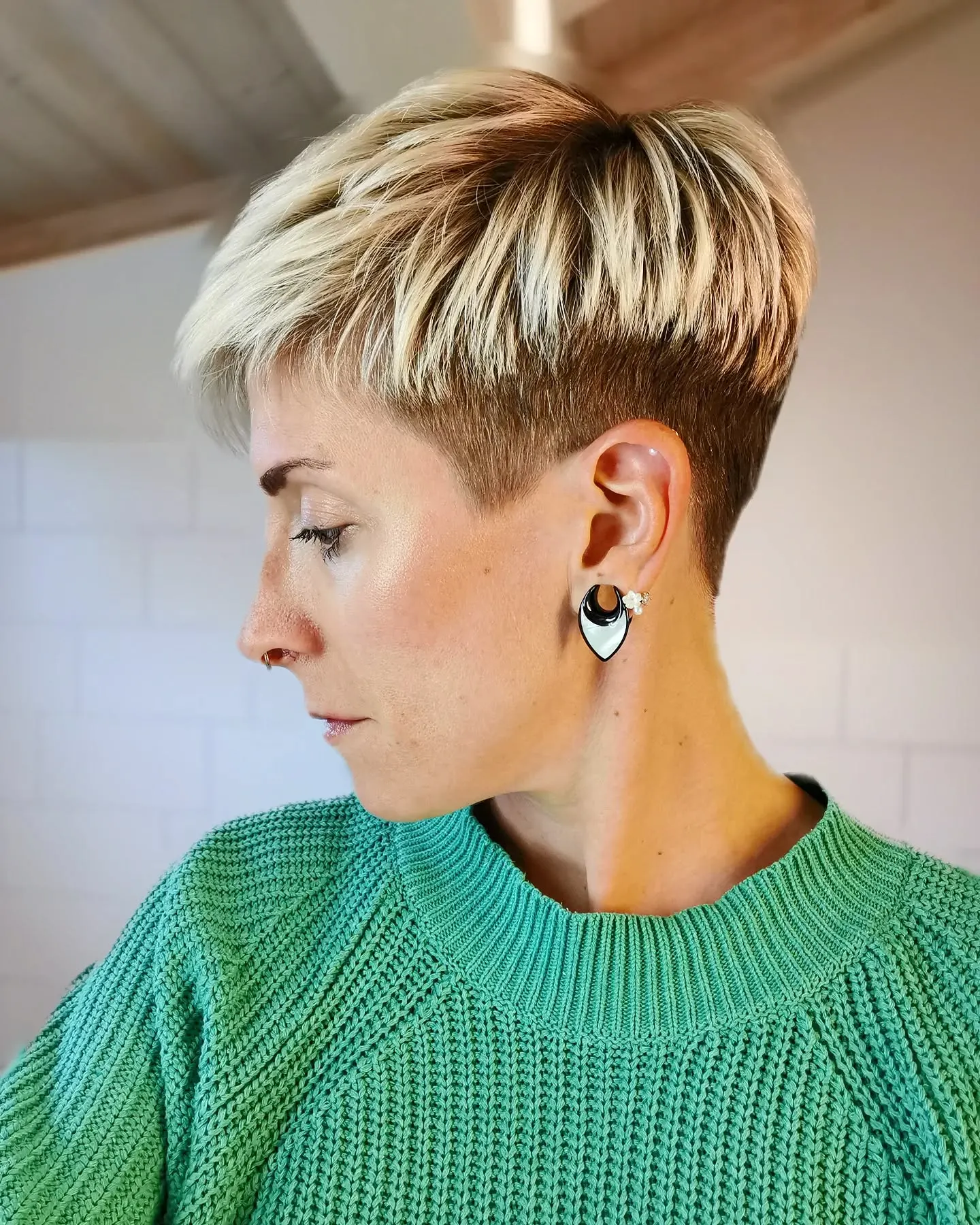
Two tone color is sometimes called a “shadow root” when the contrast is subtle, or a “blocking” technique when the contrast is sharper. Either way, the principle is the same: dark roots with lighter mids and ends create depth that flat color cannot achieve, especially on shorter cuts.
The micro fringe is a strong commitment. It works on this cut because the contrast color does the visual heavy lifting, but on a single tone version of the same haircut, it would feel too severe. Pair micro fringe with dimensional color, not solid tone.
Short Curly Pixie with Natural Texture
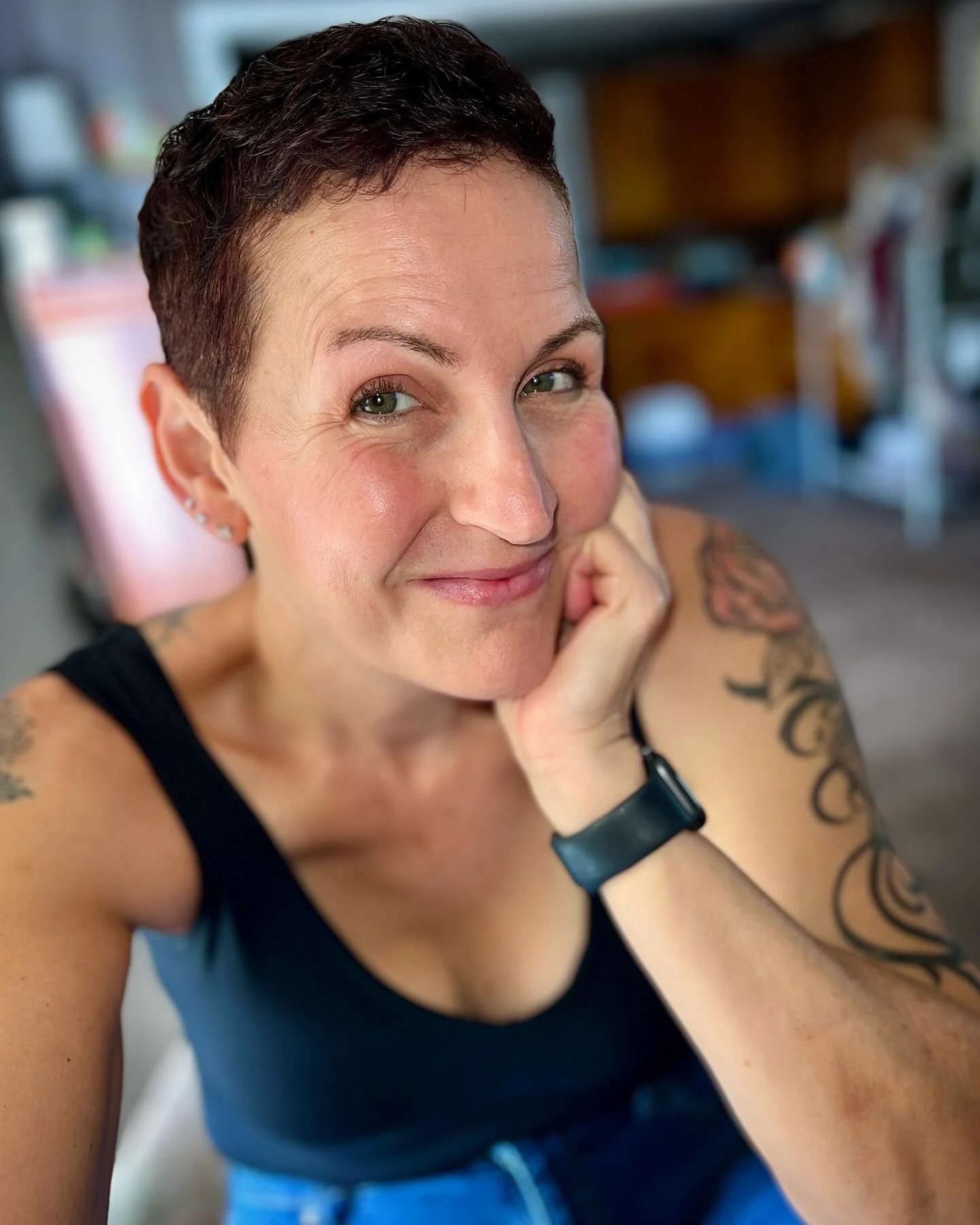
Cutting curly hair short requires very different skills than cutting straight hair short. The biggest difference is shrinkage. A curl pattern that looks like 6 inches when wet can dry to 3 inches, which means the cut needs to be measured with full understanding of how the curl behaves once it air dries.
Look for stylists who advertise specifically as “curly hair specialists” or who cut hair dry rather than wet for curly clients. Dry cutting on curly hair is the safest way to get a pixie that lands at the intended length once it dries.
Ultra Short Buzzed Pixie
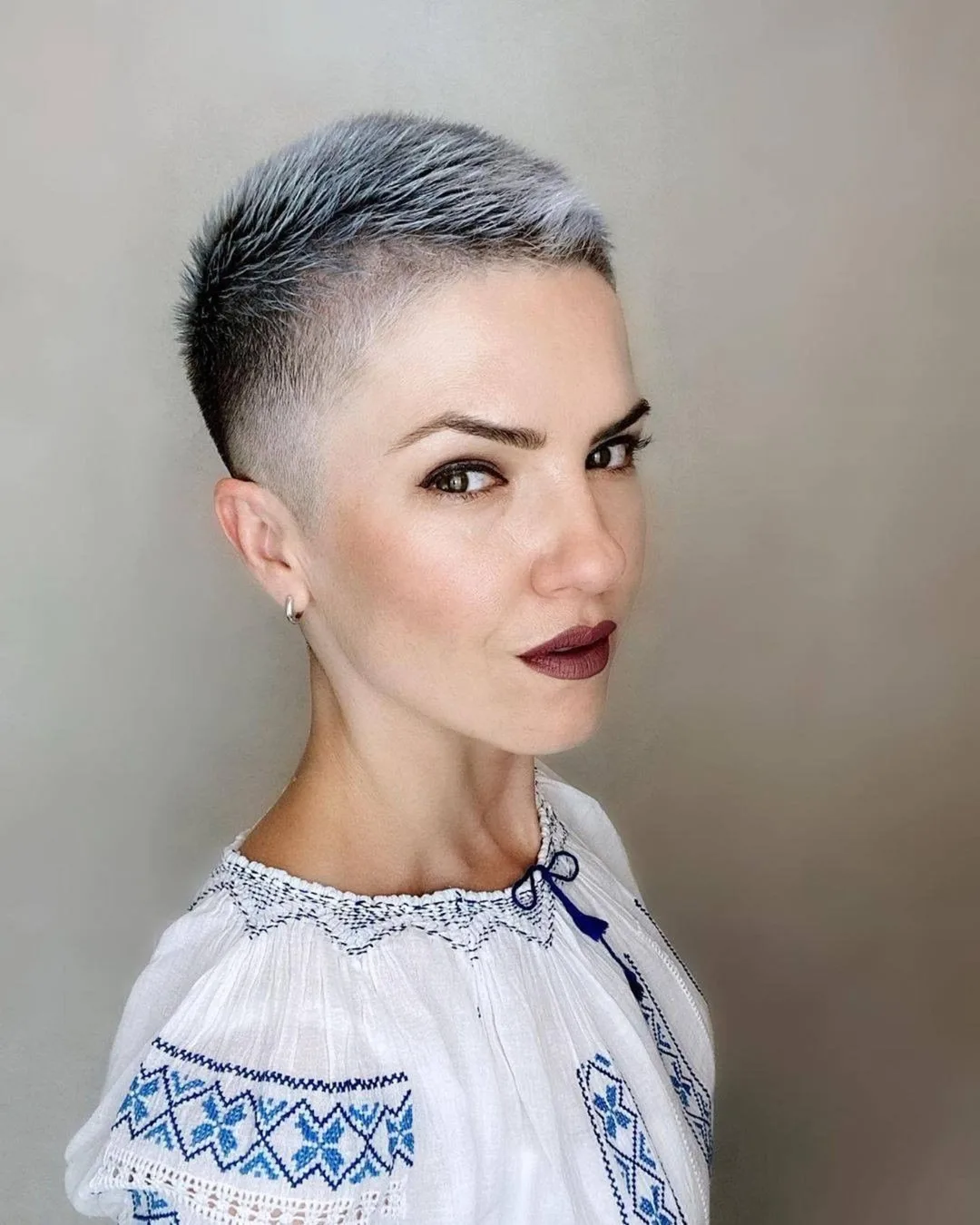
This is the most committed cut on the list. The ultra short buzz exposes the entire shape of the head, which means the cut works only when the head shape is suited to it. A consultation that includes the stylist running their hands over the scalp to feel for any irregular bone structure is a sign you are working with someone who understands this length.
The reward for committing is the lowest possible styling time of any haircut available. Wash, towel dry, done. Some women find they only style their hair on days they remember they have hair, which is the actual point.
Soft Close Cropped Pixie with Micro Fringe
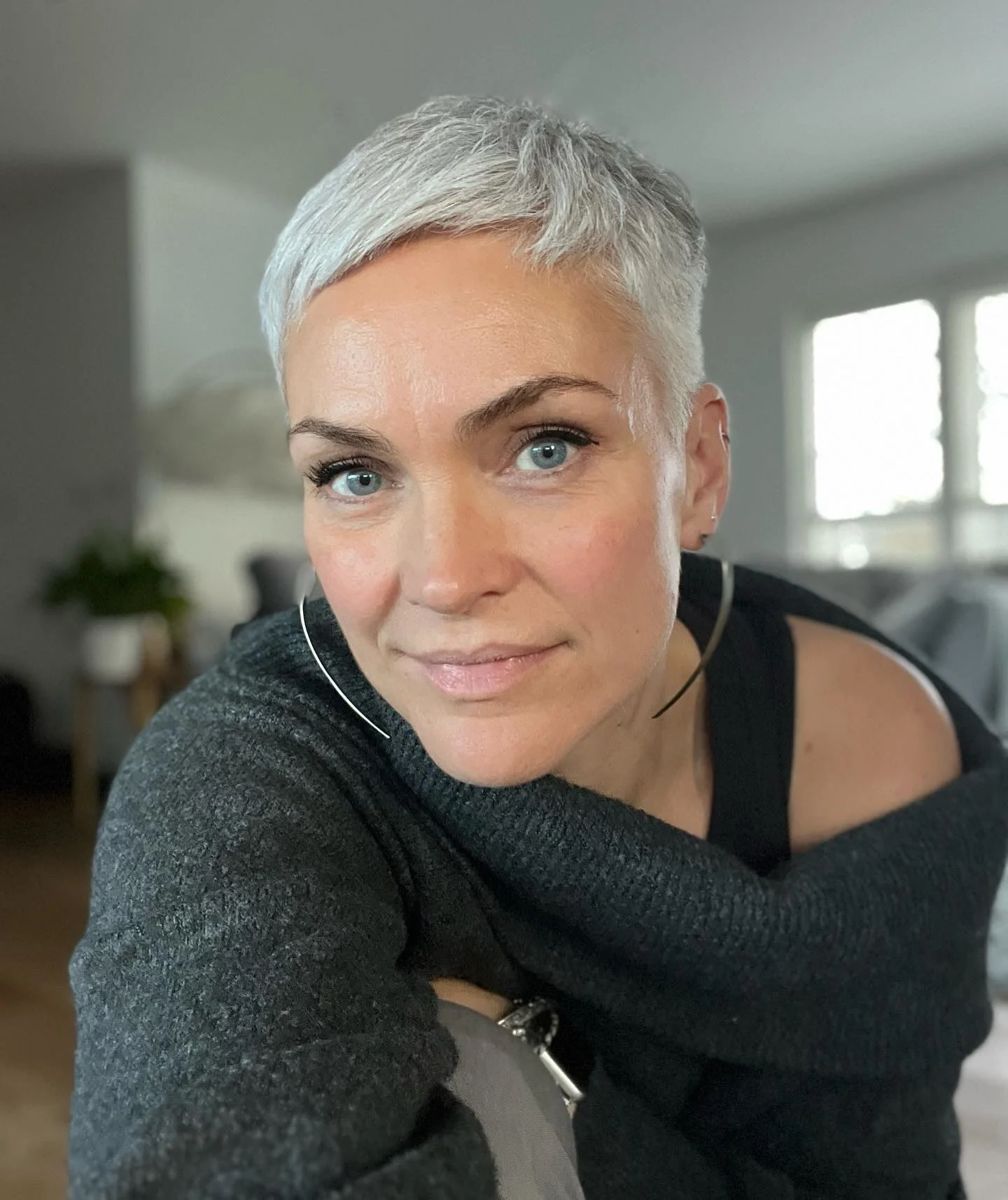
The micro fringe sits about an inch above where a standard fringe would land, somewhere on the upper forehead rather than just above the brows. This length was popular in 1960s mod cuts and came back as part of the Prada inspired runway looks of 2023.
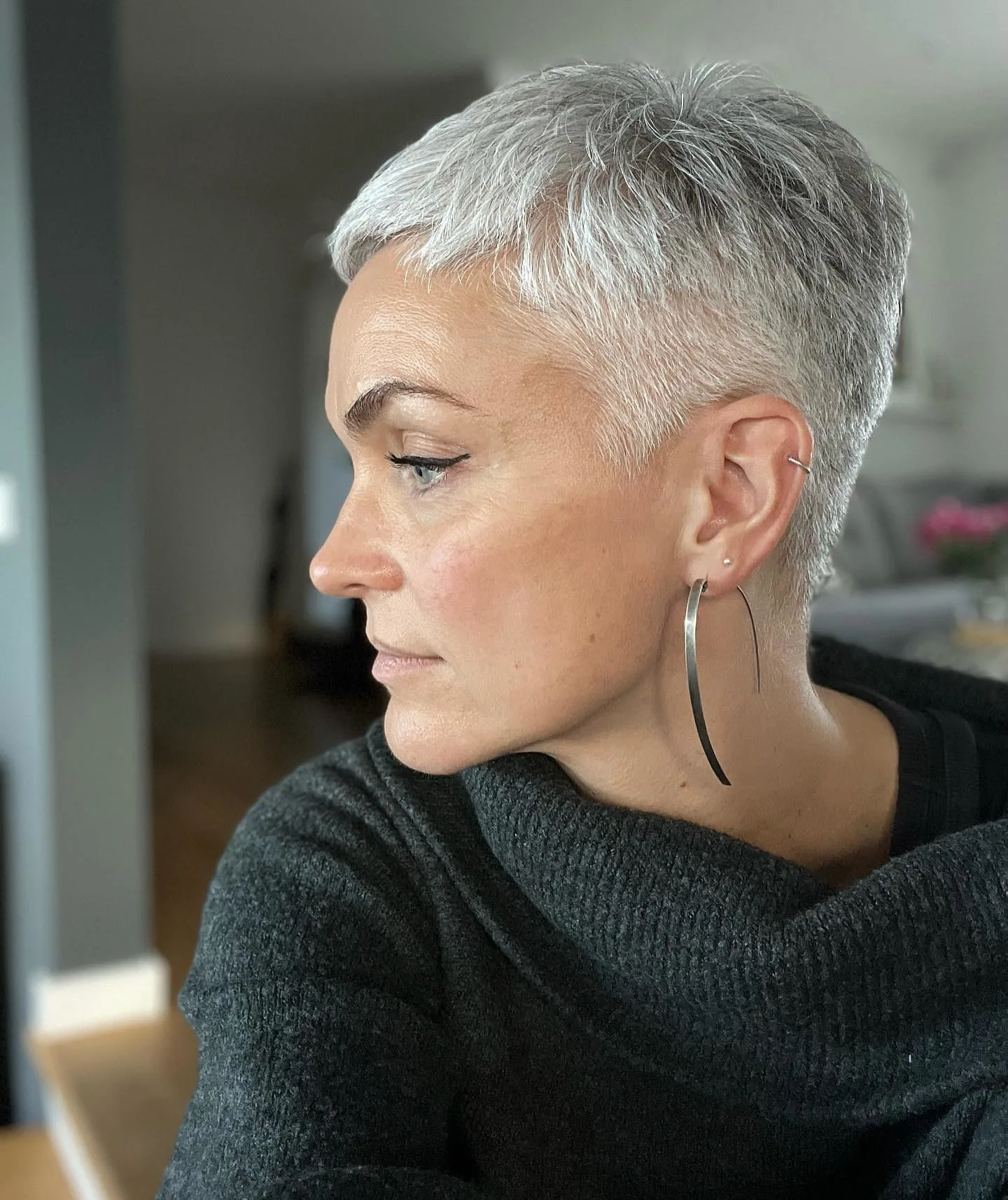
Worth knowing before you book: micro fringe works best on women with a high forehead. On a shorter forehead, the fringe can read as accidentally cut too short rather than deliberately styled. If you have always parted your hair off center to balance forehead proportions, this is probably not your fringe.
Bleach Blonde Cropped Pixie
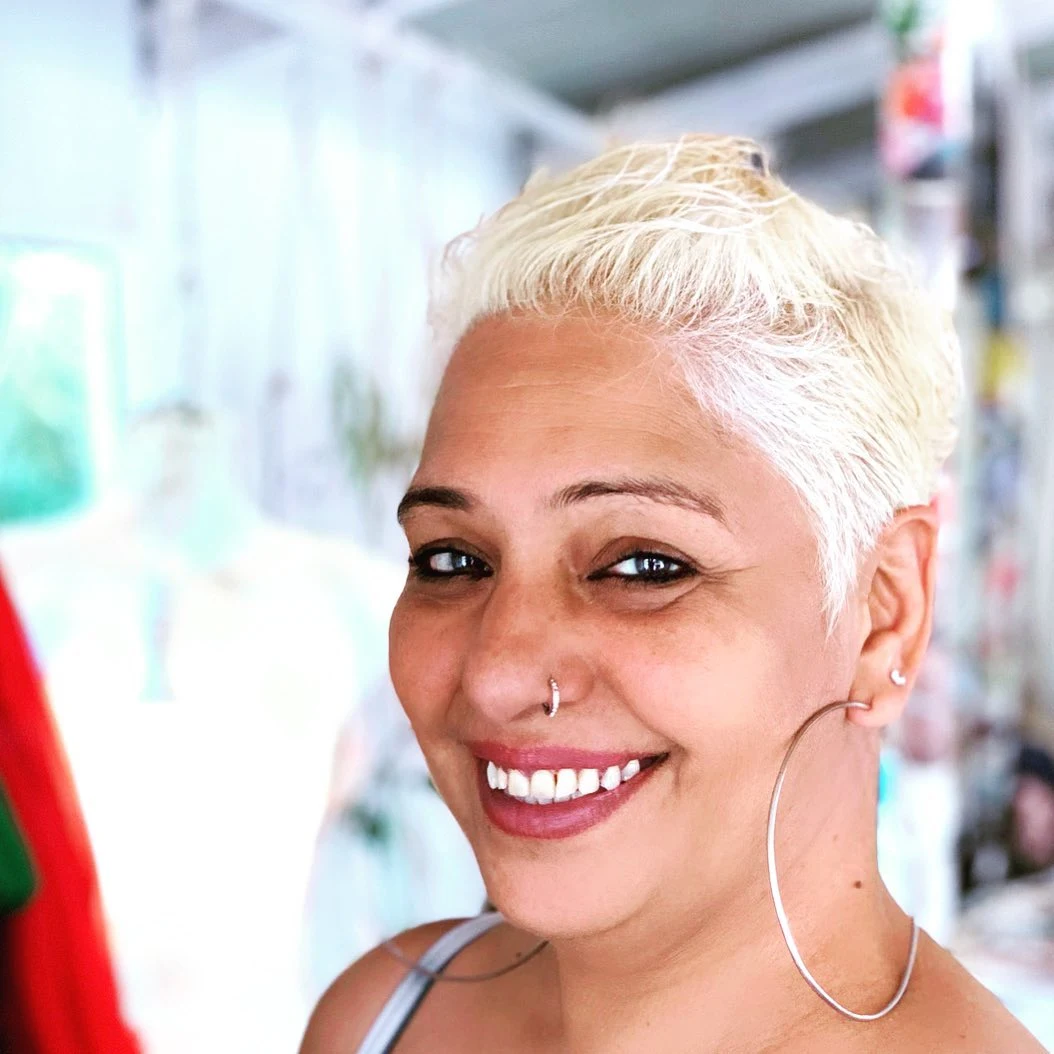
This version is shorter and more uniform than the choppy blonde pixie above. Where the choppy version uses piecey texture for visual interest, this version relies entirely on the brightness of the blonde tone to do the work.
The cut also pairs unusually well with statement jewelry, which is part of why it photographs so often with bold hoops or visible piercings. Less hair around the face leaves more visual room for accessories to register.
Blonde Textured Pixie with Tapered Sides
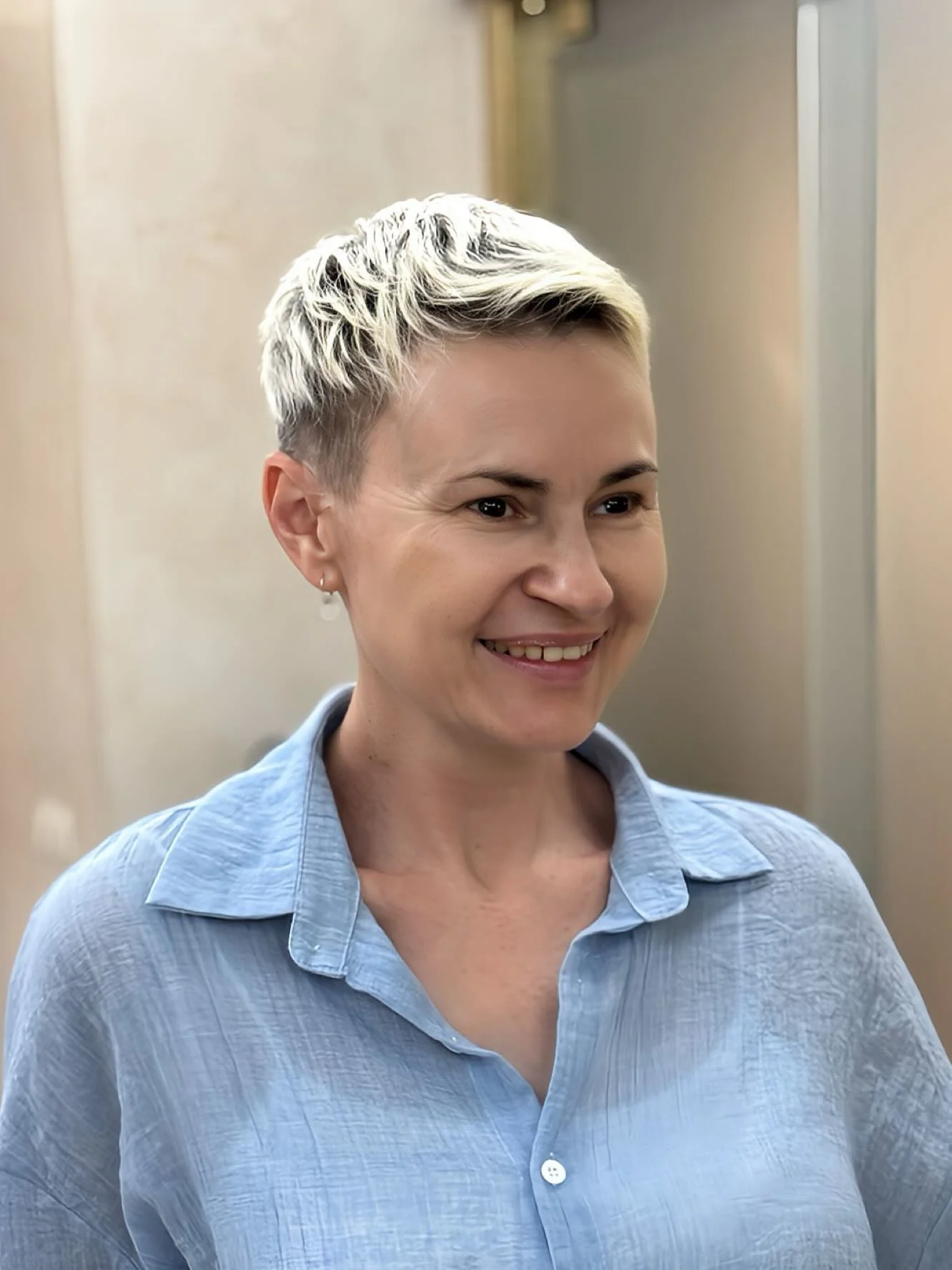
This is the version of the bleach blonde pixie that handles regrowth more gracefully. The intentionally darker roots are part of the look, not a maintenance failure, which means trips to the salon for color can be spaced 8 to 10 weeks apart rather than 4 to 6.

For women who want the bleach blonde look but have hesitated due to maintenance, this rooted version is the practical compromise. You get most of the visual impact of platinum with about half the salon visits.
Salt and Pepper Spiky Pixie

“Spiky” came back into the conversation around 2024 as part of the broader 1990s and 2000s style revival. The modern version is softer than the original, where stiff gel was used to create exaggerated points. Today’s spiky finish uses matte paste worked through dry hair with the fingers to lift small sections without making them stiff.
This finish works best on hair with some natural body. On very fine straight hair, the spikes will collapse within an hour. A texturizing spray applied at the roots before styling can help, but the cut itself needs to support the look.
Soft Layered Pixie with Side Swept Fringe

This last cut is the safest, most universally flattering option on the list. Soft layered, side swept fringe, subtle highlights, slightly tapered back. None of the elements are extreme, but together they form a pixie that suits almost every face shape and hair type.
This is my recommendation for women who have been growing out a previous haircut and are ready to commit to a pixie shape but unsure which version. Starting here gives you a foundation that can be evolved toward more texture, more length on top, more color, or more dramatic shape on subsequent visits.
Style Guide for Short Pixie Haircuts for Older Women
Choosing the right pixie after a certain age comes down to face shape, hair texture, and how much daily styling you want to do. This guide walks through each consideration so you can land on a pixie that suits your hair and feels like you.
Why Pixies Suit Older Women
A well cut pixie removes weight that can drag aging hair down and replaces it with structure that lifts the face. Hair often becomes finer with age, and shorter lengths naturally read as fuller because there is no weight pulling the strands flat.
A pixie also requires very little daily styling, which suits women who would rather spend their time on other things. Wash, towel dry, fingertip product, done. The total morning hair routine can be under 5 minutes once you have the cut you like.
Classic Pixie vs Modern Pixie
A classic pixie keeps the sides and back close with most of the length on top, often styled smooth or to the side. A modern pixie usually involves more texture, choppier layering, or a slightly longer top that can be styled in different ways.
The classic version feels more polished and suits formal preferences. The modern version feels more current and flexible, with options to wear it sleek, tousled, or piecey depending on the day.
Pixie vs Short Bob
A pixie crops the sides and back close to the head, while a short bob keeps a more even length around the perimeter. Pixies build more visible lift at the crown and feel more dramatic. Short bobs feel softer and offer slightly more coverage around the ears and neck.
If you want the most volume with the least styling, the pixie wins. If you prefer a touch more length and a less cropped feel, a short bob may suit you better.
Hair Texture and Density
Fine straight hair benefits from a pixie because the short length removes the weight that flattens the roots.
Wavy hair looks beautiful in a pixie with soft layering that lets the wave emerge. Thick hair needs careful weight removal so the cut does not push outward, especially around the ears. Curly hair can look stunning in a pixie when the cut accounts for shrinkage and the natural curl pattern.
Face Shape Considerations
Round faces look balanced with a pixie that has height through the crown and slightly longer side pieces. Long faces look better with softer crown height and more side fullness. Square faces benefit from soft layering around the jaw and a side swept fringe to reduce angles.
Heart shaped faces look great with a pixie that has a bit of fullness around the chin or longer pieces near the jaw.
Bangs or No Bangs
Bangs add softness and frame the eyes, which is often very flattering at any age. Side swept bangs are easy to wear and blend with the rest of the cut. Wispy or piecey bangs add softness without weight, which suits fine hair beautifully.
Blunt bangs create a stronger frame and pair well with a more structured pixie shape. No bangs keeps the forehead open and works well when the top length is styled with height.
Color Considerations
Color is one of the easiest ways to add interest to a short pixie. Highlights through the crown create dimension and visual fullness. Soft balayage adds lift without harsh contrast.
Silver and grey tones look stunning on pixies and require less upkeep than maintaining colored hair. Solid all over color can work but tends to look flat on pixies, so most stylists recommend at least subtle dimension.
Styling and Maintenance
Pixies are quick to style. A small amount of styling cream, wax, or paste worked through damp or dry hair gives texture and definition. A blow dry with fingers or a small round brush creates lift at the crown.
Trims every 4 to 6 weeks keep the shape clean, since the short length means small amounts of growth show quickly.
Growing It Out
Pixies do take time to grow out, and the awkward in between phase can last a few months. Reshaping trims help by keeping the proportions balanced as the length comes in.
A short pixie usually grows into a longer pixie first, then a short bob, then a chin length bob. Patience and small trims make the transition easier.
Leave a Reply