
The advice that ruined mid-length layered cuts for a decade was “more layers equals more movement.” It led to thousands of cuts where the shortest layer sat too high, the bottom went stringy, and the whole thing looked thinner than it actually was. The truth is that layered cuts at mid-length work when the layering has a clear purpose and a defined shape, not when it’s used as a generic add-on. Long layers, butterfly layers, internal layers, face-framing layers, and V-shapes all do different jobs. The 25 mid-length cuts below all sit between collarbone and a few inches past the shoulders. Each uses layers to solve a specific problem. Pick the version that fits your face shape, texture, and styling time.
Jump to:
Long Layered Mid-Length
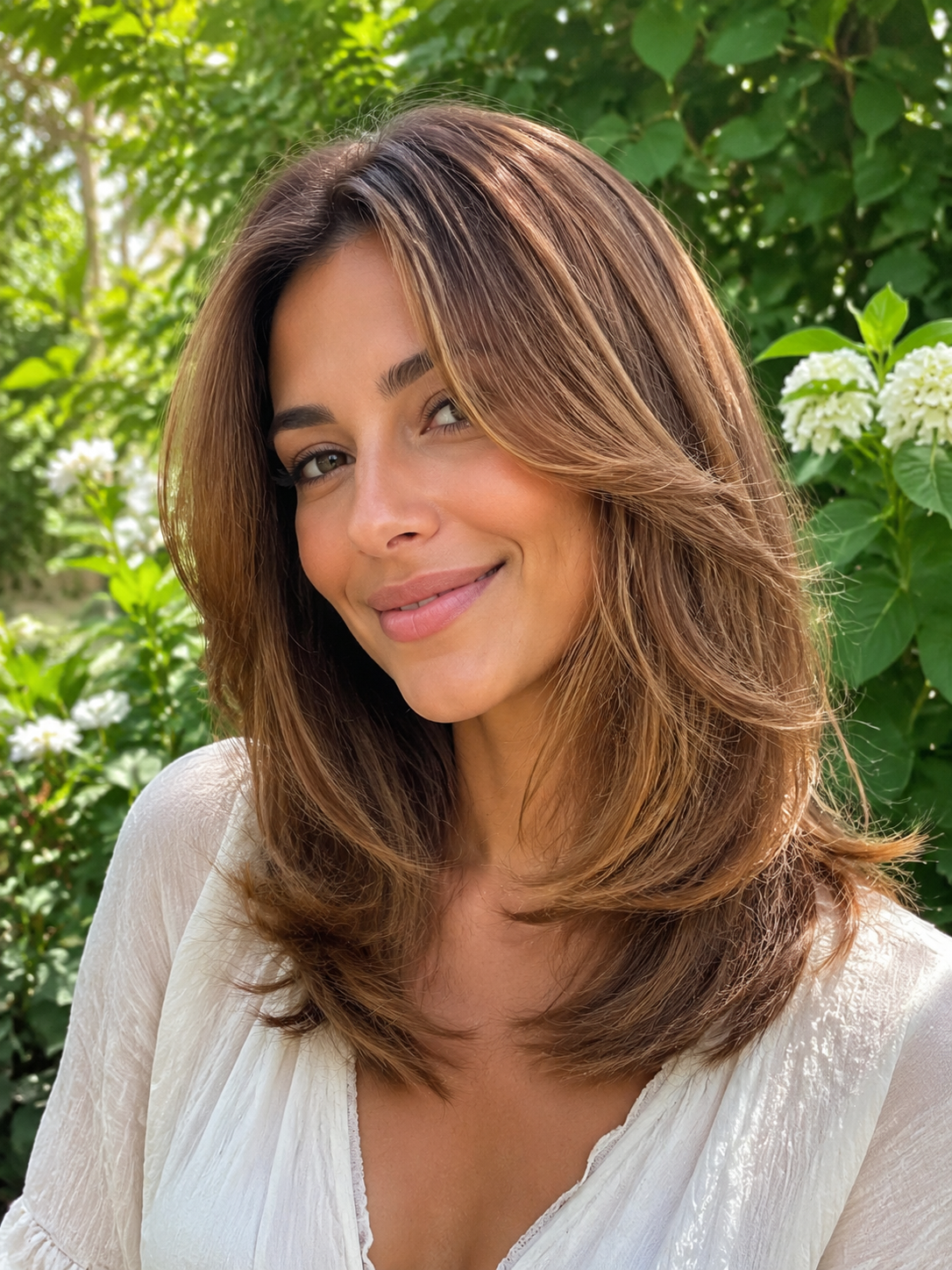
Long, connected layers starting below the collarbone remove just enough bulk to give movement without sacrificing the strong outline. The longest layer should still hit at or near the perimeter. Otherwise the shape stacks awkwardly at the bottom. This approach gives lift and dimension without exposing thinness. Best on medium to thick hair that needs internal weight removal. Air-dry with a curl cream or finish with a round brush for a polished look.
Heavy Layered Mid-Length
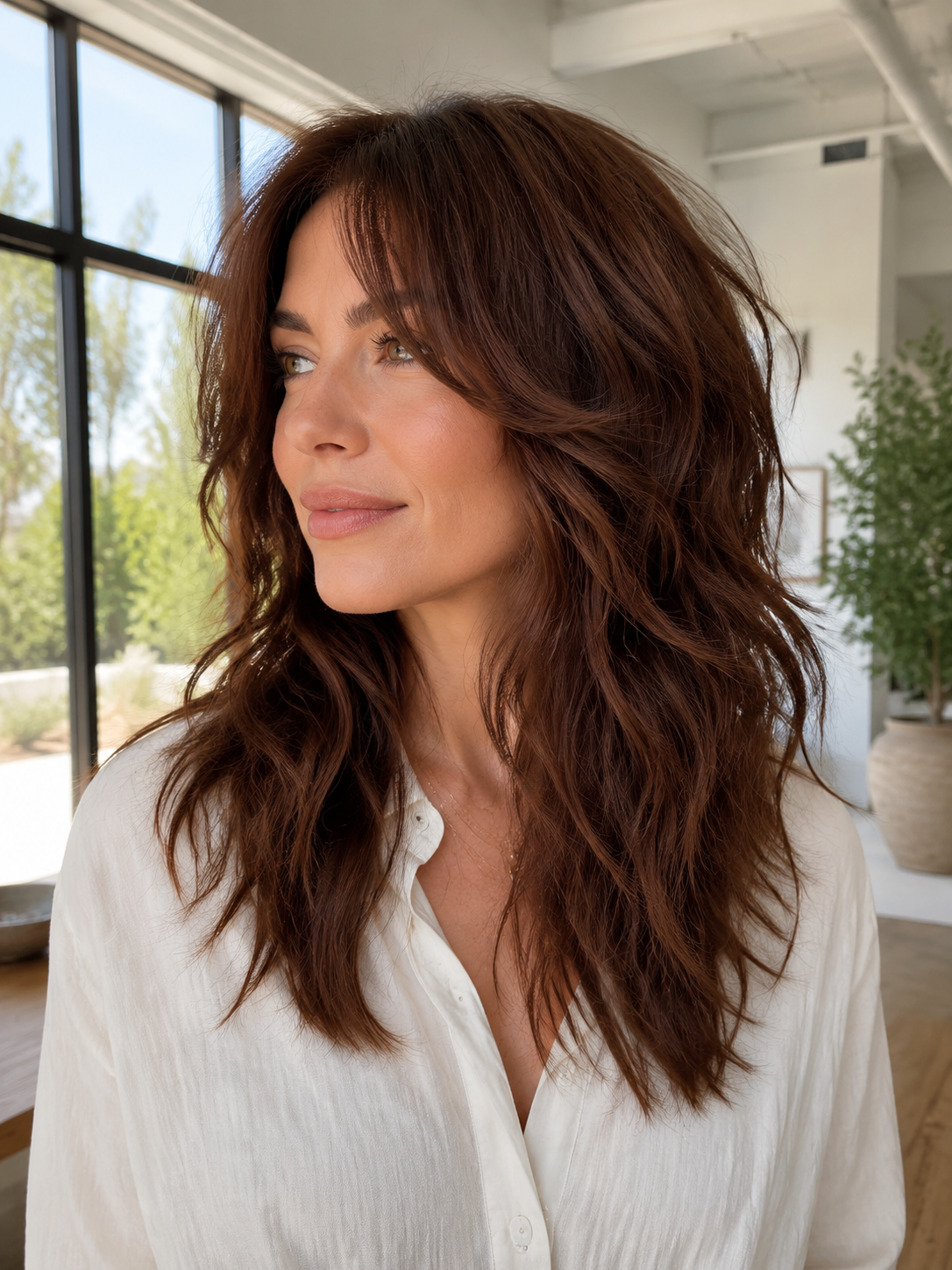
Shorter, more aggressive layering throughout the cut removes significant weight from thick or dense hair. The shortest layers can sit as high as the cheekbone for genuinely dense textures. The risk is going too short up top and creating a triangle silhouette. A skilled stylist will balance the layers against your face shape and density. Best on hair with natural wave or curl that disguises layer lines and softens the shape.
Butterfly Layered Mid-Length
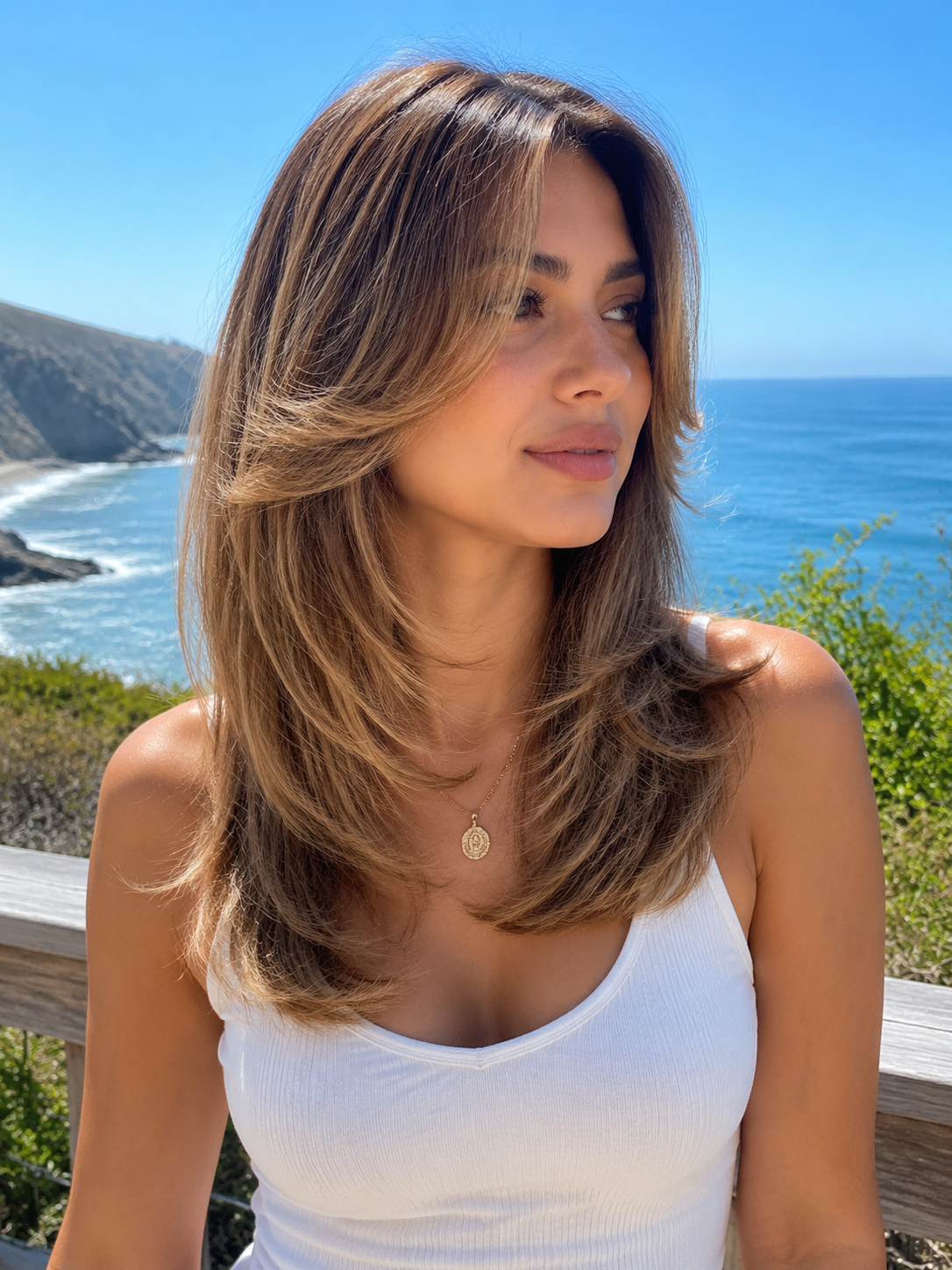
The butterfly cut, popularized through 2023 and continuing into 2026, features distinct shorter layers around the face that blend into longer length toward the back. The shortest layers sit at the cheekbone or jaw. Style with a round brush and a slight outward flip at the face-framing pieces. The cut creates lift and movement through the front while preserving length elsewhere. Pairs particularly well with curtain bangs.
Face-Framing Layered Mid-Length
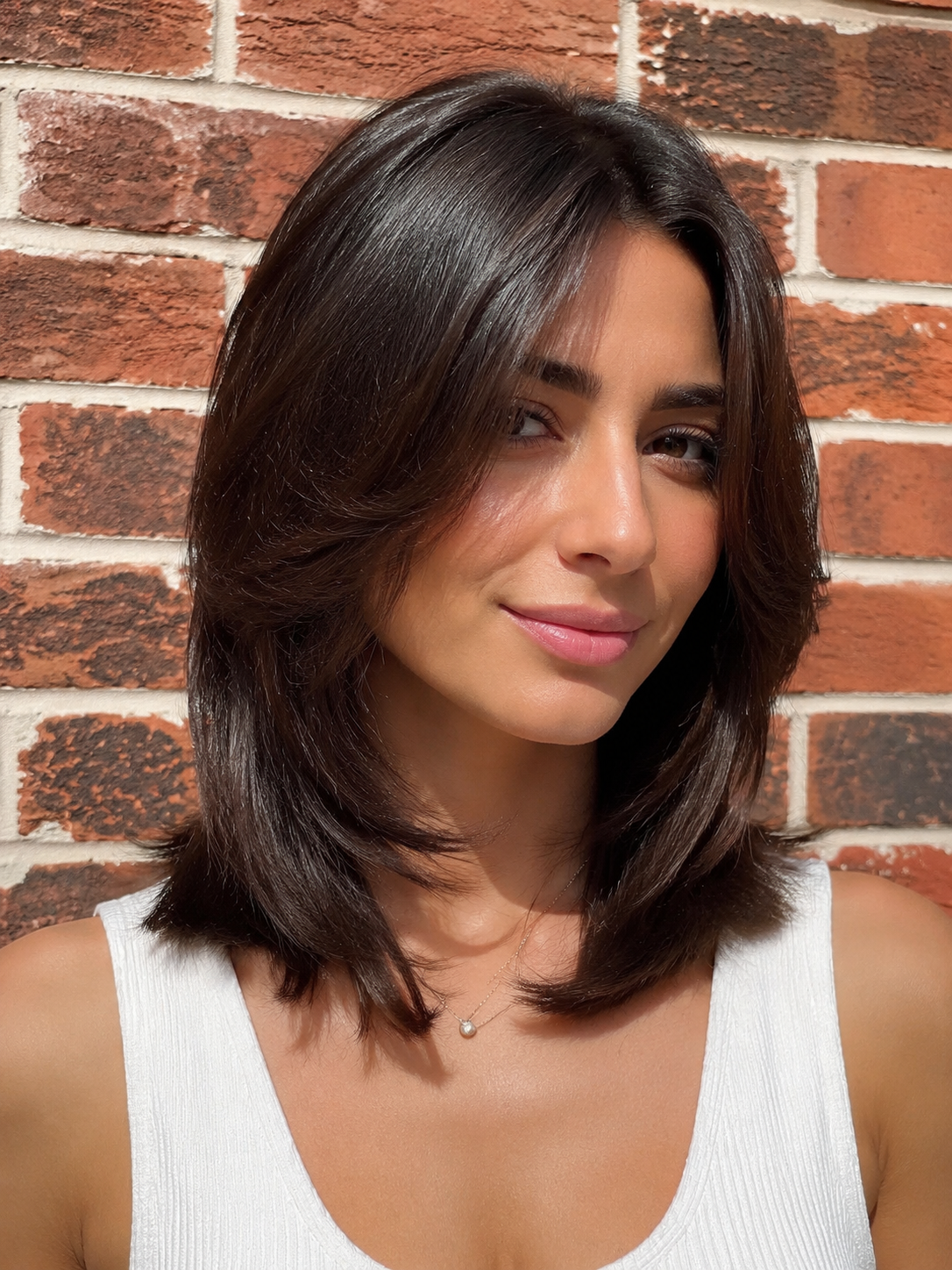
Layers that start around the cheekbone and progress longer through the rest of the cut focus all the visible layering on the front of the face. The shortest face-framing pieces should hit at the jaw or below, never higher. The rest of the cut stays largely one length. The approach gives the front the movement of a layered cut while keeping the perimeter strong. Style with a round brush for outward flip on the face-framing pieces.
V-Shape Layered Mid-Length
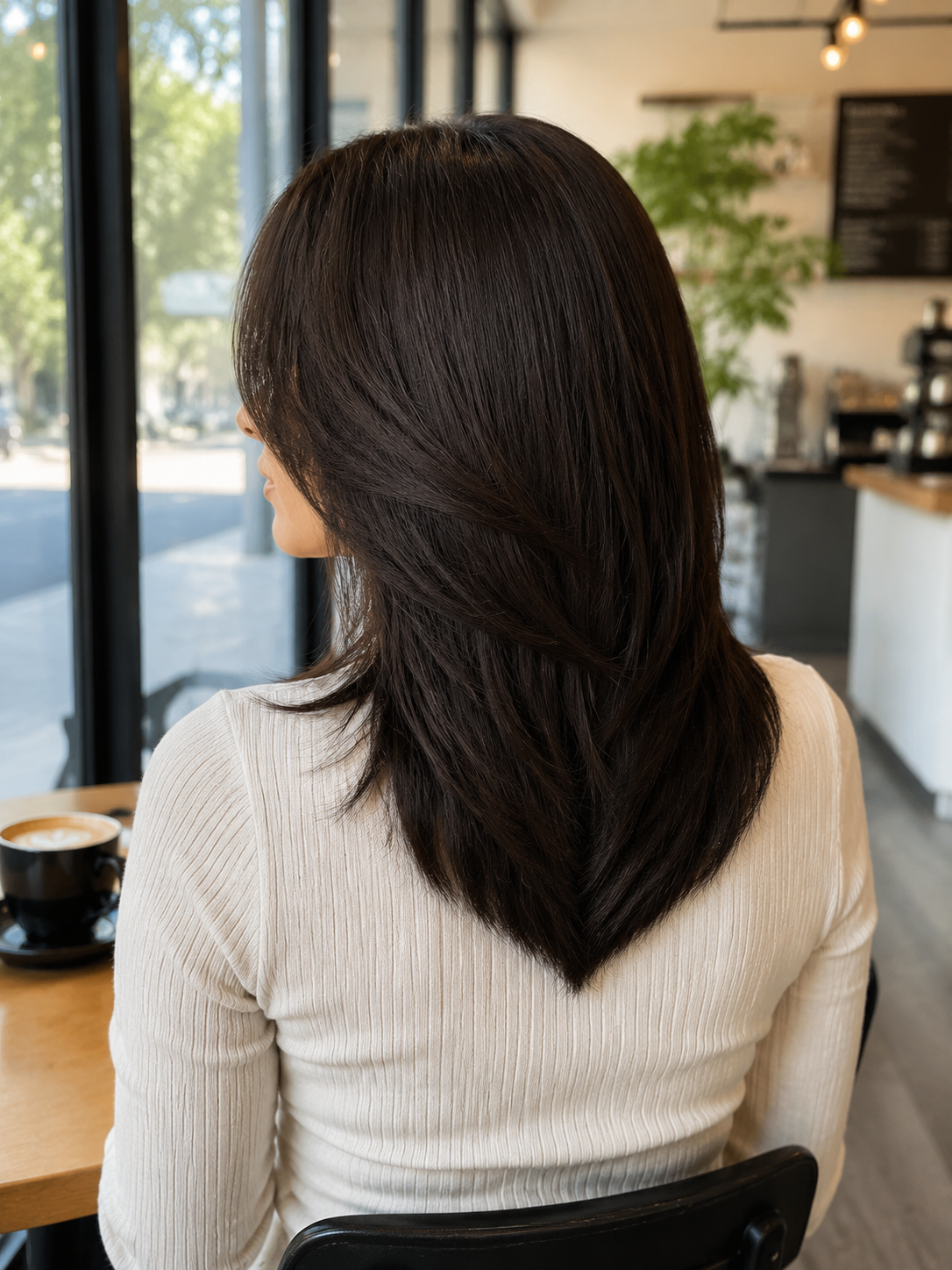
The V-shape, where layers progress to a point at the center back, creates an angled silhouette that draws the eye downward and elongates the back of the cut. Best on straight to wavy hair, since strong curl muddies the V outline. The longest point sits a few inches past the shoulders. Style straight for crisp lines or with soft waves for softer interpretation. Maintenance every eight weeks keeps the V defined.
U-Shape Layered Mid-Length
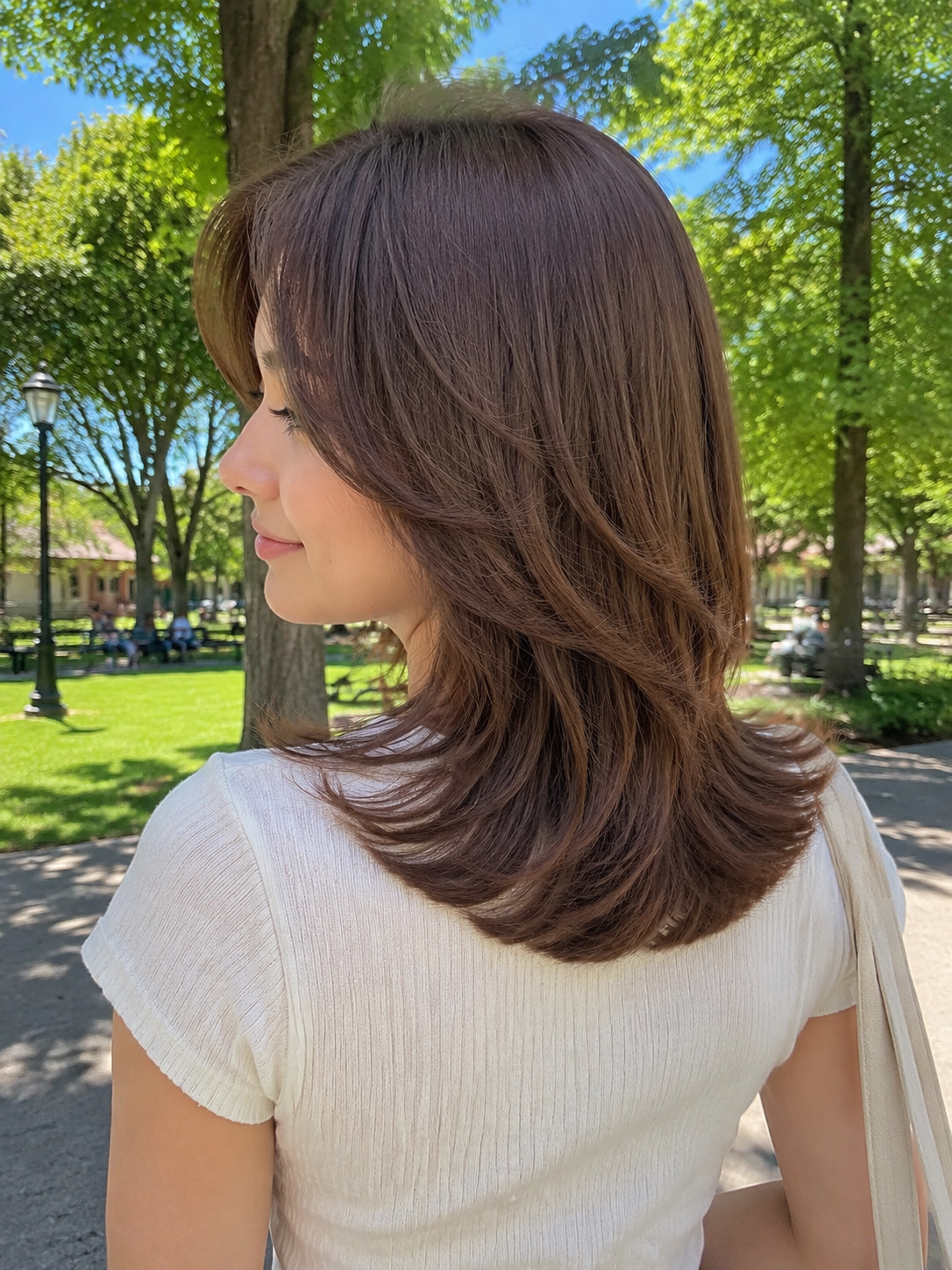
The U-shape, where layers progress to a curved center back rather than a point, creates a softer rounded silhouette. The U shape suits oval and heart-shaped face shapes by adding a gentle curve at the bottom. Best on hair that holds shape cleanly. The curve should be intentional rather than uneven, which requires a skilled stylist who understands the geometry. Style with a round brush at the perimeter to set the curve.
Internal Layered Mid-Length
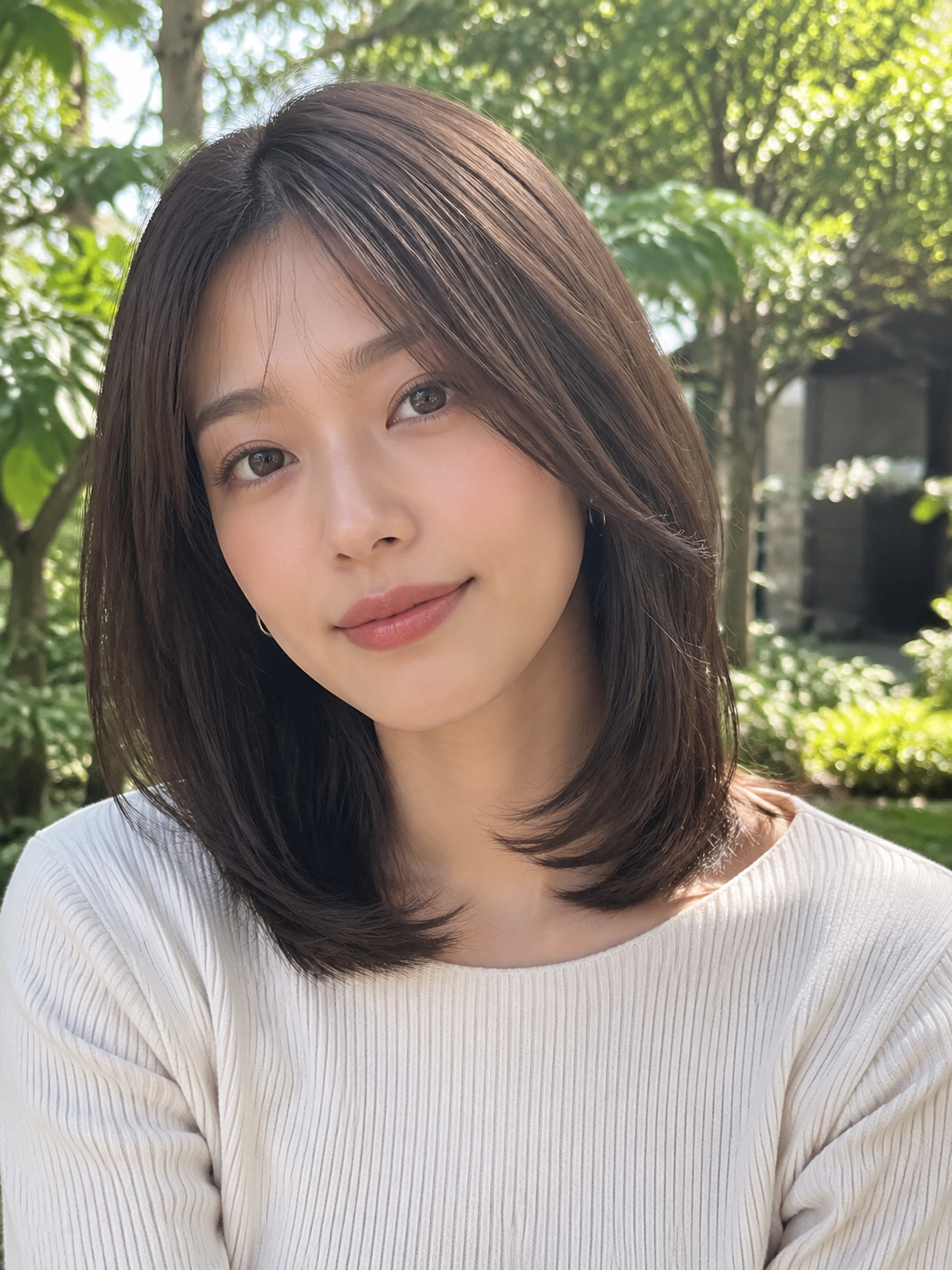
Layers built entirely inside the cut, invisible from the surface, work for hair that needs to keep its outline. The surface stays one-length while the interior gets significant weight removal. This is the most versatile layering option for medium to thick hair. The cut behaves better when styled and air-dries without going pyramidal. Best executed by stylists who specialize in cutting around natural density patterns.
Razored Layered Mid-Length
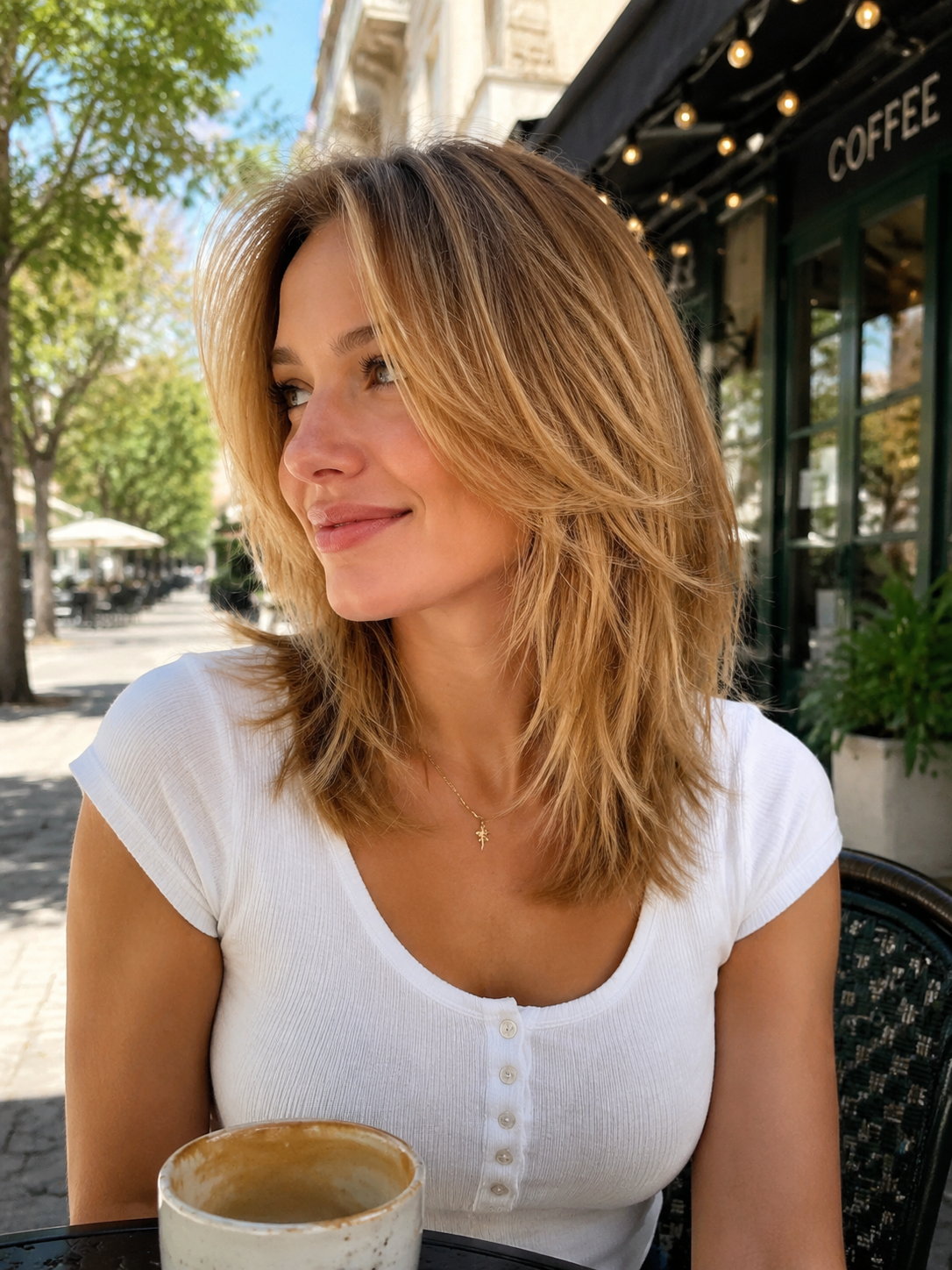
Razor cutting through the layers softens the ends and creates more natural-looking movement than scissor cutting. The technique works particularly well on coarse or thick hair, which can look helmet-like with blunt-cut layers. Ask specifically for a sharp razor and a stylist who razors regularly. Done with a dull blade, it creates split ends. The result moves better and air-dries with natural texture.
Choppy Layered Mid-Length
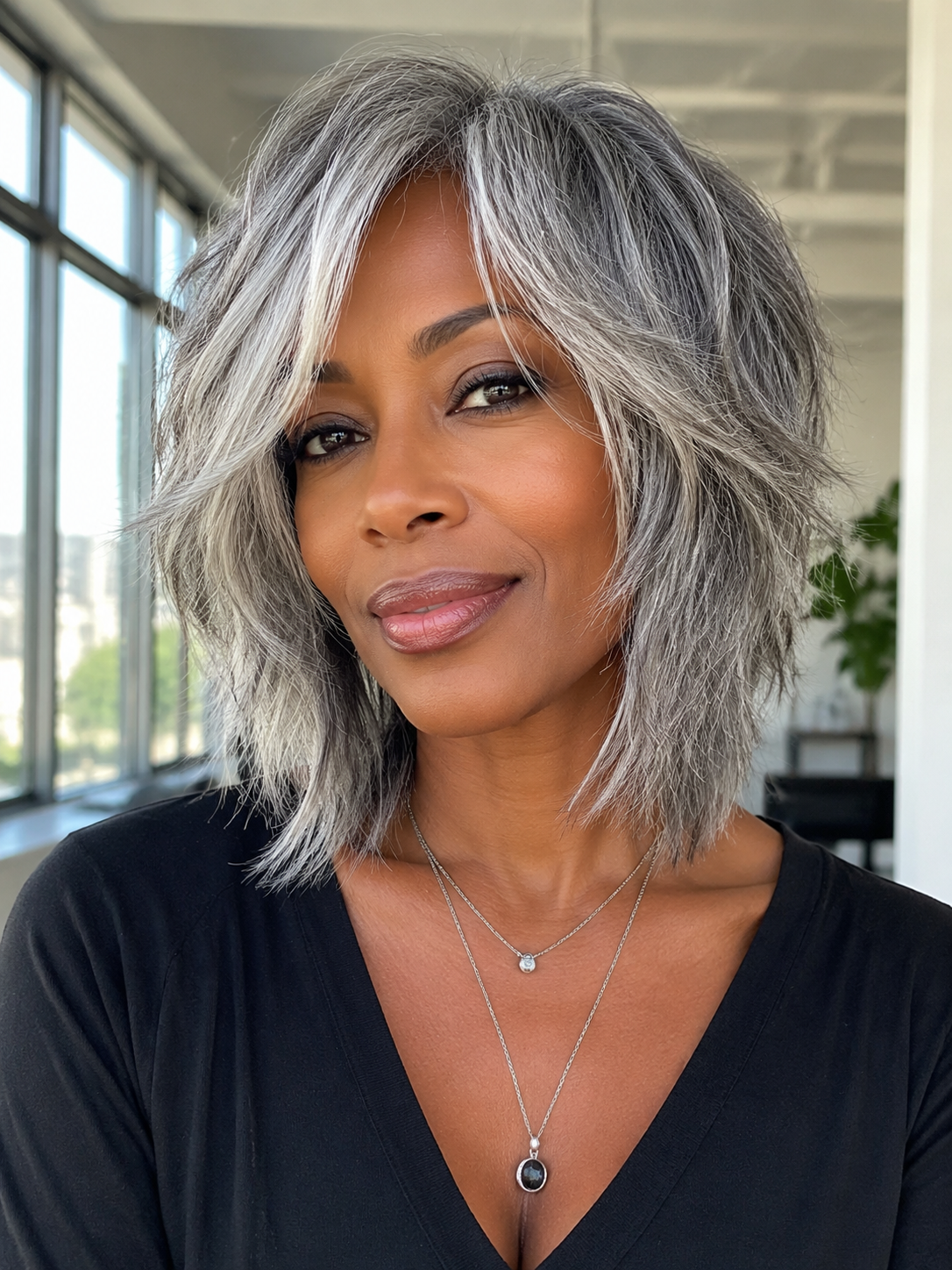
Choppy, visibly textured layers with slide-cut and point-cut technique throughout give the cut character and edge. Air-dried with a curl cream, the layers fall into pieces that look intentional rather than messy. The finish disguises any natural unevenness in growth pattern. Best executed by stylists experienced with textural cutting techniques. Pairs particularly well with gray or silver hair, since uneven texture catches light differently along the layers.
Wispy Layered Mid-Length
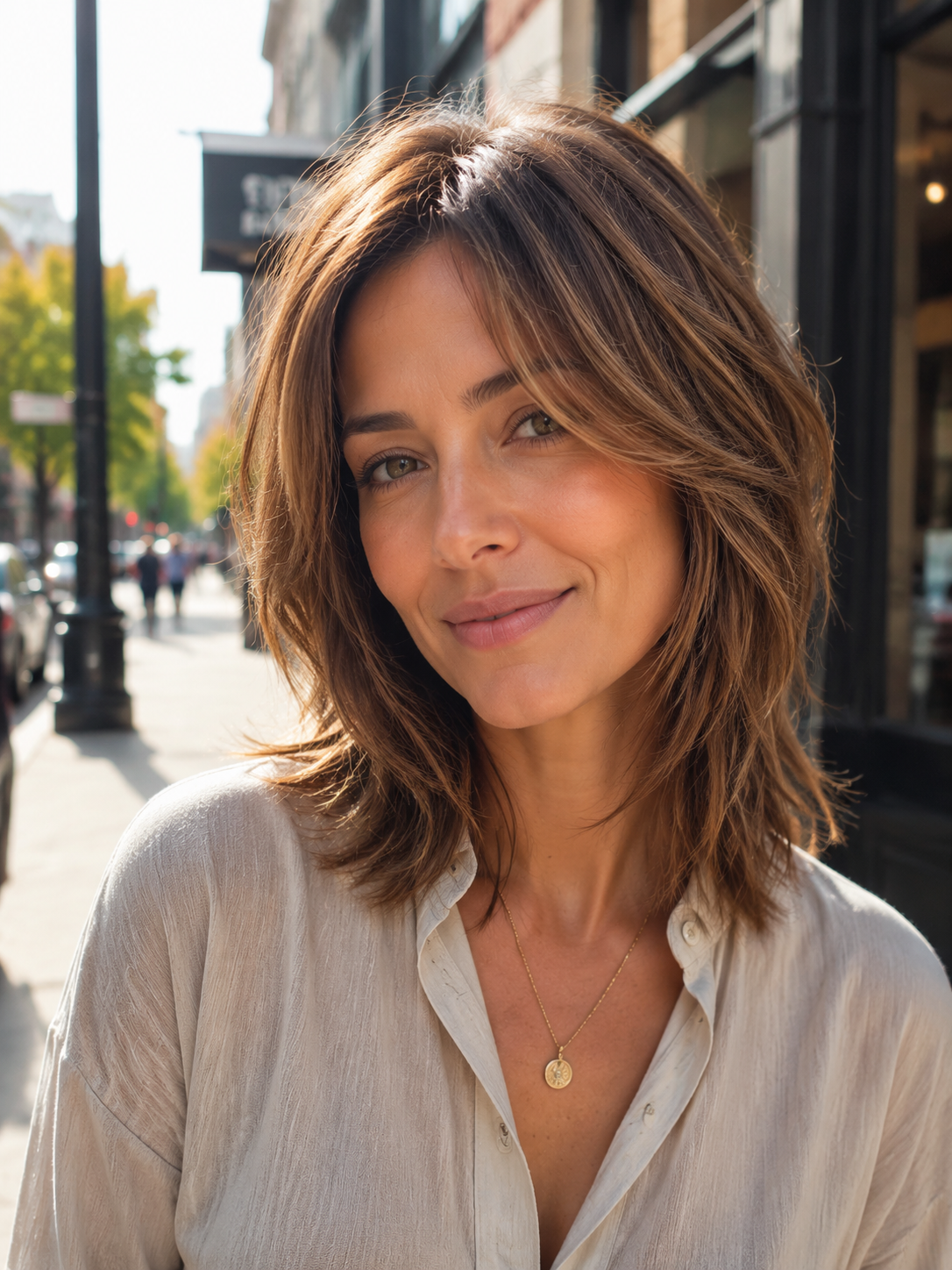
Light, feathered layers throughout the cut create soft movement without weight. The layers are point-cut to feather rather than blunt-cut, which gives them their wispy character. Style with a small amount of texture cream and air-dry for the most natural finish. Best on hair with some natural wave or movement to support the wispiness. Heavy or coarse hair can read flat with this technique, since wispiness needs lightness.
Curtain Layered Mid-Length
Soft layers cut to fall like curtains around the face, similar to curtain bangs but extending further down the cut. The longest curtain layers can hit at the collarbone or below. The technique blends face-framing layers with the rest of the cut more gradually than traditional face-framing. Style with a round brush, directing the front layers outward and back. Works particularly well with side or center parts.
Shaggy Mid-Length
A modern shag at mid-length features razored layers throughout, intentional roughness, and visible texture from crown to ends. Volume builds at the crown where layered cuts often flatten. Skip the curling iron entirely. Salt spray on damp hair, air-dry, scrunch. The cut looks intentional even three months past your last appointment. Pairs beautifully with curtain bangs for the full lived-in aesthetic.
Modern Wolf Cut
The wolf cut, a contemporary update on the shag and mullet hybrid, features shorter layers at the crown and around the face with longer length through the back. At mid-length, the longest layers hit just past the shoulders. The shorter crown layers create significant volume. Best on hair with some natural texture, since the cut depends on visible movement. Style air-dried with salt spray for the intended effect.
Soft Layered Mid-Length
Subtle layering, focused on the longest face-framing pieces only and minimal interior work, adds just enough movement to keep the cut from looking heavy. The longest layer should still hit at the collarbone. Best for women who want the benefits of layering without committing to significant weight removal. Style with a round brush for soft body or air-dry for natural finish. The minimal layering keeps maintenance simple.
Side-Parted Layered Mid-Length
A deep side part paired with face-framing layers creates asymmetry that flatters strong jaw lines and square face shapes. The heavier side falls in a soft sweep with the layered pieces underneath. Train the part with a comb on damp hair and set with a small amount of mousse at the root. The layers blend into the side sweep naturally. Pairs well with both polished and air-dried finishes.
Layered Cut with Curtain Bangs
Mid-length layers paired with curtain bangs falling from cheekbone to jaw create cohesive movement throughout the entire cut. The curtain fringe blends into the face-framing layers, which extends time between bang trims. Round-brush both the bangs and the face-framing layers outward and back. The combination remains one of the most-requested salon pairings. Works on almost any face shape and texture.
Layered Cut with Wispy Bangs
Mid-length layers paired with piecey separated bangs at the brow create movement throughout the front of the cut. Both elements share the same airy character. Air-dry the bangs and break them apart with texture cream. Style the layers with a round brush or air-dry depending on desired finish. Best on hair with some natural body to support the wispiness without weighing it down.
Layered A-Line Mid-Length
An A-line cut slightly shorter in the back and longer at the collarbone in front, paired with face-framing layers, combines the strong silhouette of A-line shaping with the softness of layering. The graduation pulls focus forward while the layers add movement to the face. Style with a flat iron for clean lines or a round brush for soft body. Pairs particularly well with rich brunette or chestnut tones.
Layered Cut with Soft Curls
A layered mid-length cut styled with soft curls throughout uses the layering to enhance the curl pattern. The curls fall in different lengths and create natural body. Use a one-and-a-half inch wand, alternating direction by section. Skip the section closest to the face for a modern finish. Brush out gently with fingers for softness. The curls hide layer lines and create the illusion of fullness.
Beachy Layered Mid-Length
Layers styled with loose undone waves and visible texture give the cut a relaxed beachy character. Salt spray on damp hair, scrunched and air-dried, gives the right texture. A wave wand can supplement air-dried texture for special occasions. Pairs particularly well with sun-warmed bronde or honey blonde shades. The casual finish suits anyone who values low-effort styling without sacrificing visible movement.
Layered Cut with Money Piece
Mid-length layers paired with money piece highlighting create dimension and brightness around the face. The lightened panels start at the part and end around the chin, drawing attention to the face. The contrast between the lighter pieces and the base color amplifies the visual effect of the layering. Best refreshed every twelve to sixteen weeks. The grow-out stays soft compared to traditional highlighting.
Layered Balayage Mid-Length
Hand-painted highlights through layered mid-length hair create dimensional movement that pure cut alone can’t achieve. The painted dimension shows off best on layered cuts because the highlights catch different angles as the layers move. Stylists tend to place the lightest pieces around the face and slightly heavier through the bottom half. Single-process base color keeps the foundation consistent. Refresh every twelve to sixteen weeks.
Tousled Layered Mid-Length
Layers worked through with salt spray and rough-dried for visible texture trades polish for character. The finish hides regrowth and any natural unevenness in growth pattern. Best left to air-dry the last twenty percent for natural shape. A small amount of dry shampoo at the roots between washes keeps volume up. The lived-in finish suits anyone who values quick styling over precision throughout the cut.
Layered Cut with Bottleneck Bangs
Mid-length layers paired with bottleneck bangs, shorter in the middle and longer at the outer edges, create a face-framing combination with built-in shape. The bottleneck bangs blend into the face-framing layers naturally. Style by directing the longer outer bang pieces back with a round brush, and use the same brush on the face-framing layers. Works particularly well with oval and round face shapes.
Bouncy Blowout Layered Mid-Length
Layers styled with a round-brush blowout creating volume at the roots and a soft curve at the ends maximizes the cut’s body. The layering supports the blowout shape, since layered cuts hold curl and curve better than blunt cuts. Roll the brush under at the ends and lift at the crown while drying. A flexible-hold spray locks the shape without stiffness. The blowout works on almost any face shape.
Layered Cut with Hidden Color
Mid-length layers paired with a hidden color panel underneath, sometimes called peekaboo color, creates visual interest that only reveals itself with movement. The hidden color sits below the surface layers, so it stays subtle when hair is styled down and shows when hair is moved or tucked. Pairs particularly well with bold colors like burgundy, copper, or deep teal under a brunette base. Refresh every ten to twelve weeks.