
The pixie cut among older women crossed from “brave choice” to “default expectation” sometime in the last decade. The shift wasn’t accidental. Stylists noticed that women who tried the cut in their 50s and 60s rarely went back, even after their hair regrew. The reasons compound: less daily styling time, no concealing of thinning hair, no fighting humidity, a face fully visible instead of hidden by length. The 25 pixie cuts below all stay short, between very cropped and ear-length. Each one suits a different texture, density level, and styling preference. Pick the version that aligns with how much time you actually want to spend on hair each morning.
Jump to:
Classic Cropped Pixie
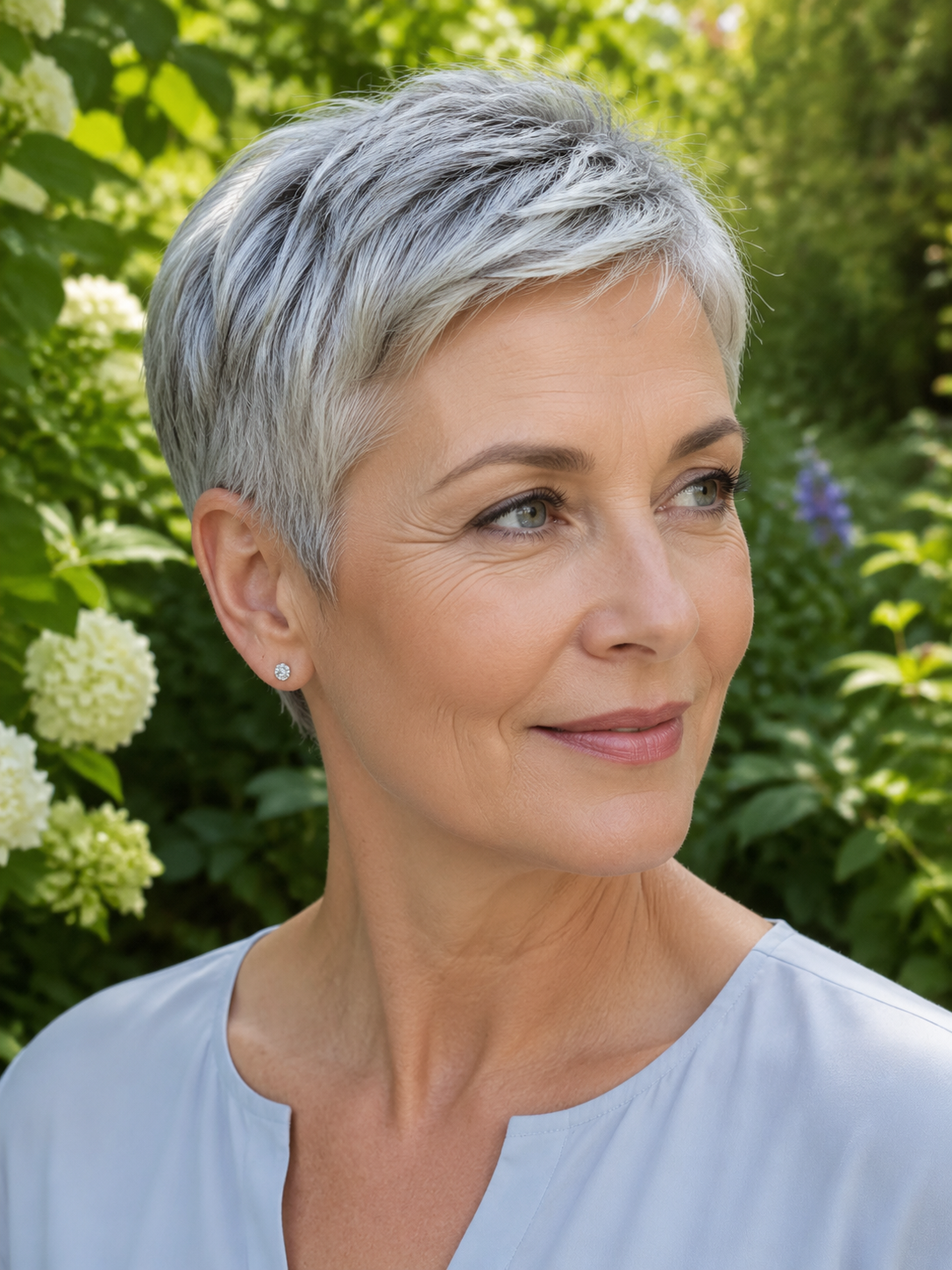
The traditional pixie shape, cut close to the head with slightly longer length on top, defines what most people picture when they think pixie. The cropped sides sit close to the ear. The top has enough length to style with fingers. This version works on almost any face shape and texture, which is why it remains the most-requested pixie in salons. Style with a small amount of styling cream worked through with fingers.
Tousled Pixie
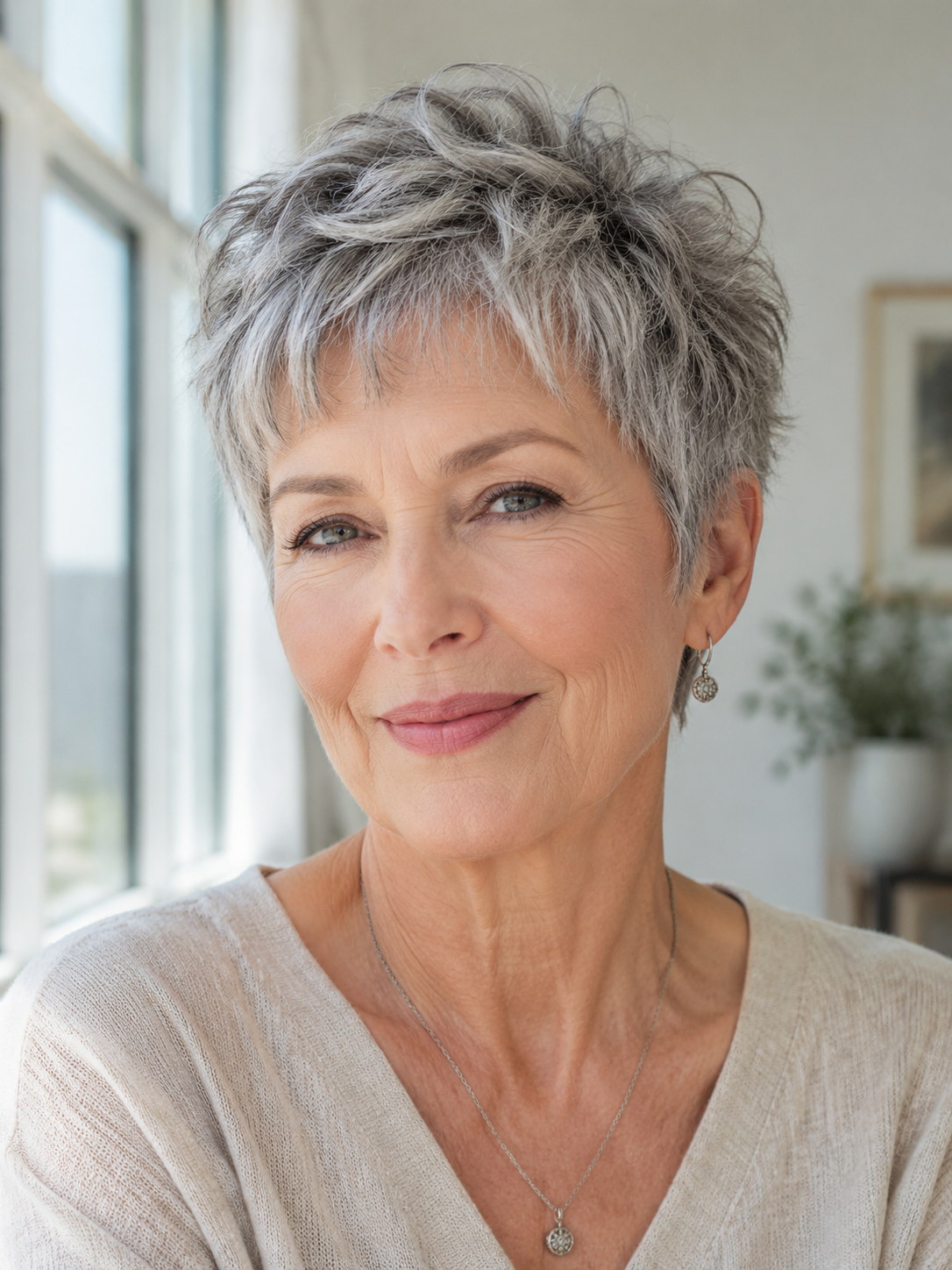
A short pixie styled with visible texture and intentional roughness reads modern rather than set. The tousled finish suits mature hair beautifully because it doesn’t fight natural texture changes that come with age. Style with a small amount of texture cream worked through with fingers and air-dry. Best on hair with some natural movement to support the tousled look. Maintenance runs every five to six weeks. The lived-in finish hides regrowth gracefully.
Long Layered Pixie
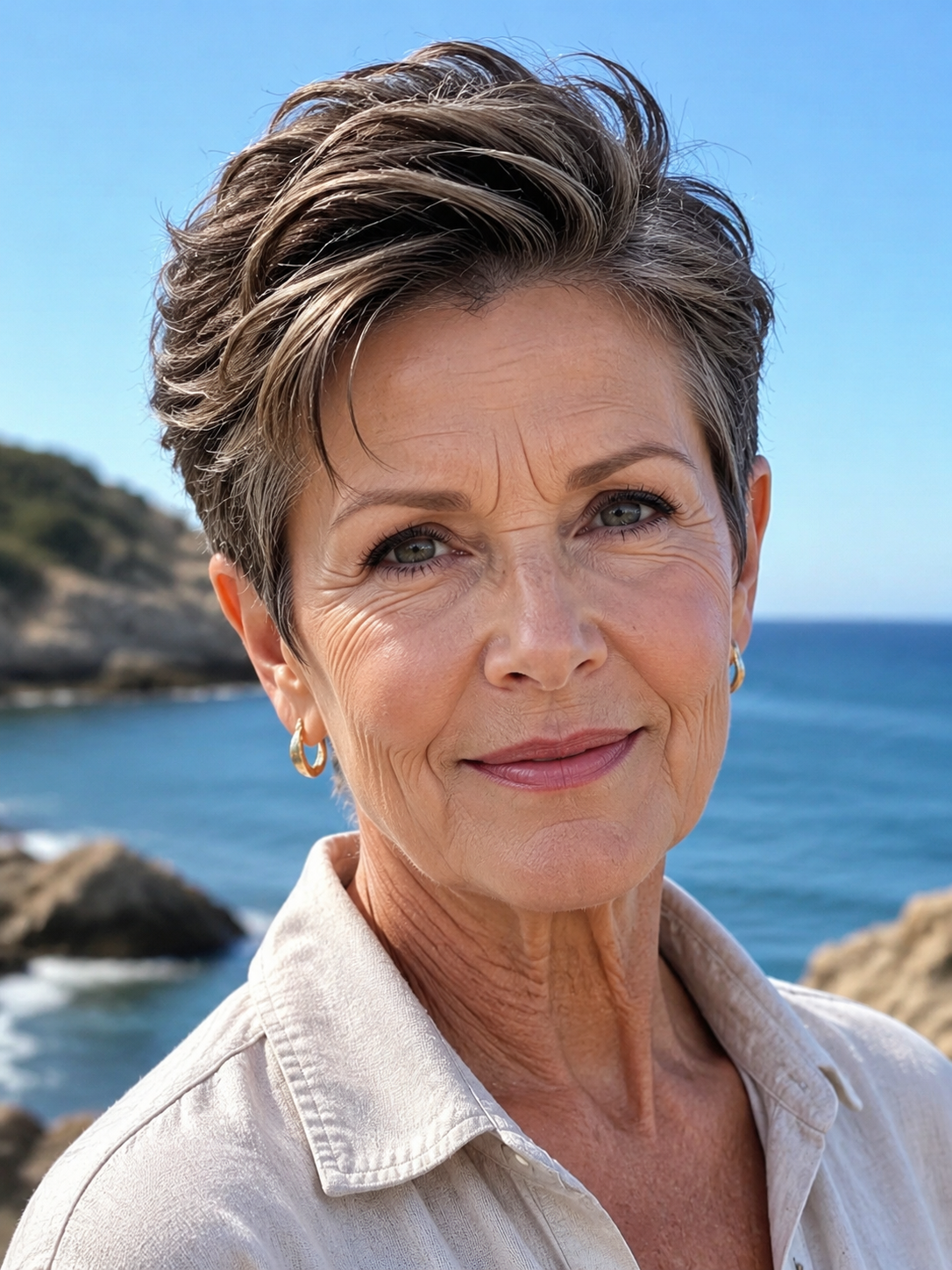
A pixie with slightly longer length on top and graduated layers through the sides creates more versatility than the classic crop. The top can be styled forward, back, or to the side depending on mood. The layers keep the cut from looking heavy. Style with a small amount of pomade worked through the top section. This version works particularly well for women transitioning from longer cuts to short for the first time after years of length.
Pixie with Side-Swept Fringe
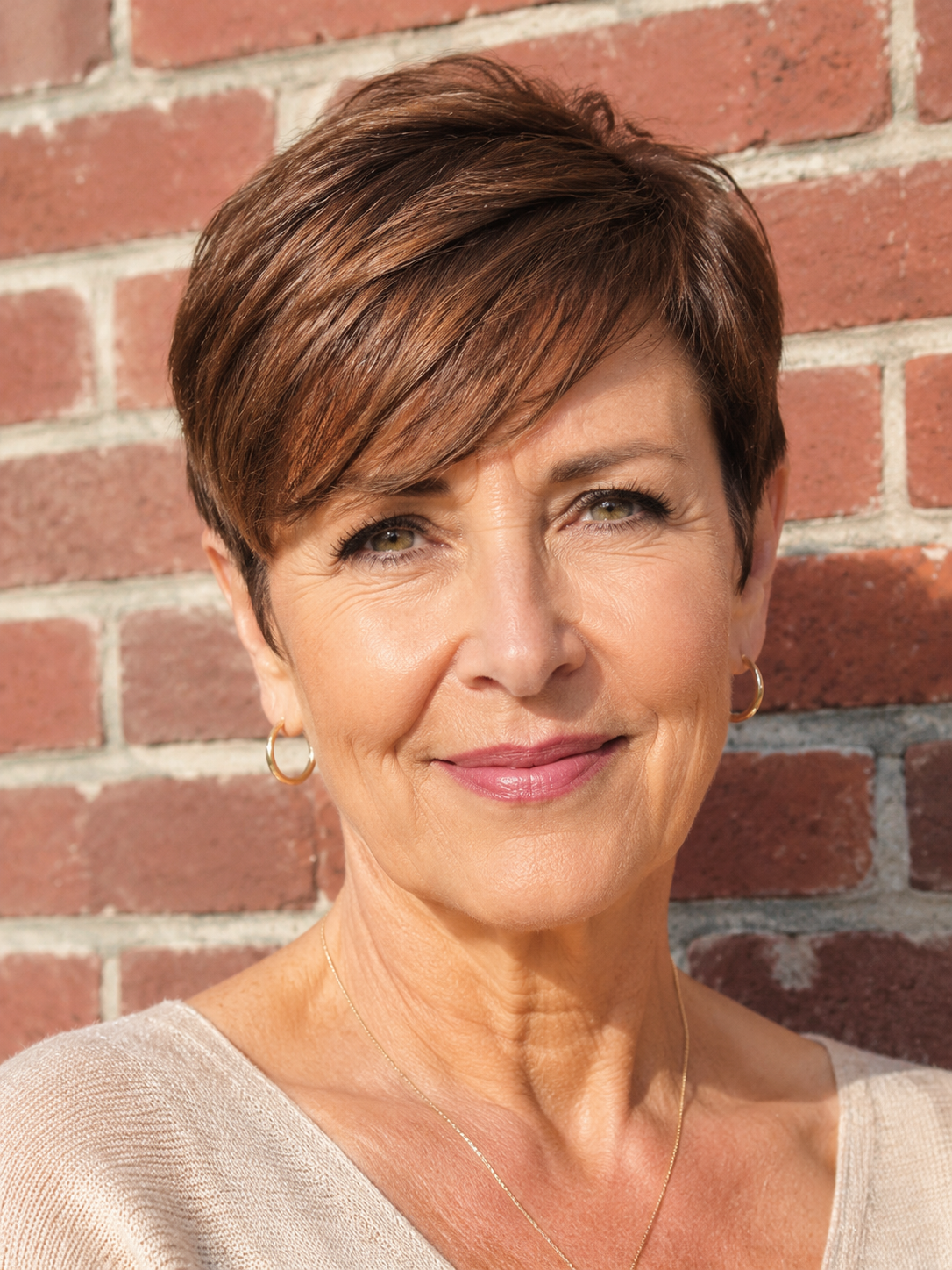
A pixie with a longer side-swept fringe falling diagonally across the forehead softens the cut and adds a flattering asymmetry. The fringe can be tucked behind one ear or left forward depending on styling preference. Best on hair with some weight to support the sweep. Style with a small amount of pomade and finger-styling. The sweep flatters square or strong jaw lines naturally by adding asymmetry to the face.
Pixie with Long Bangs
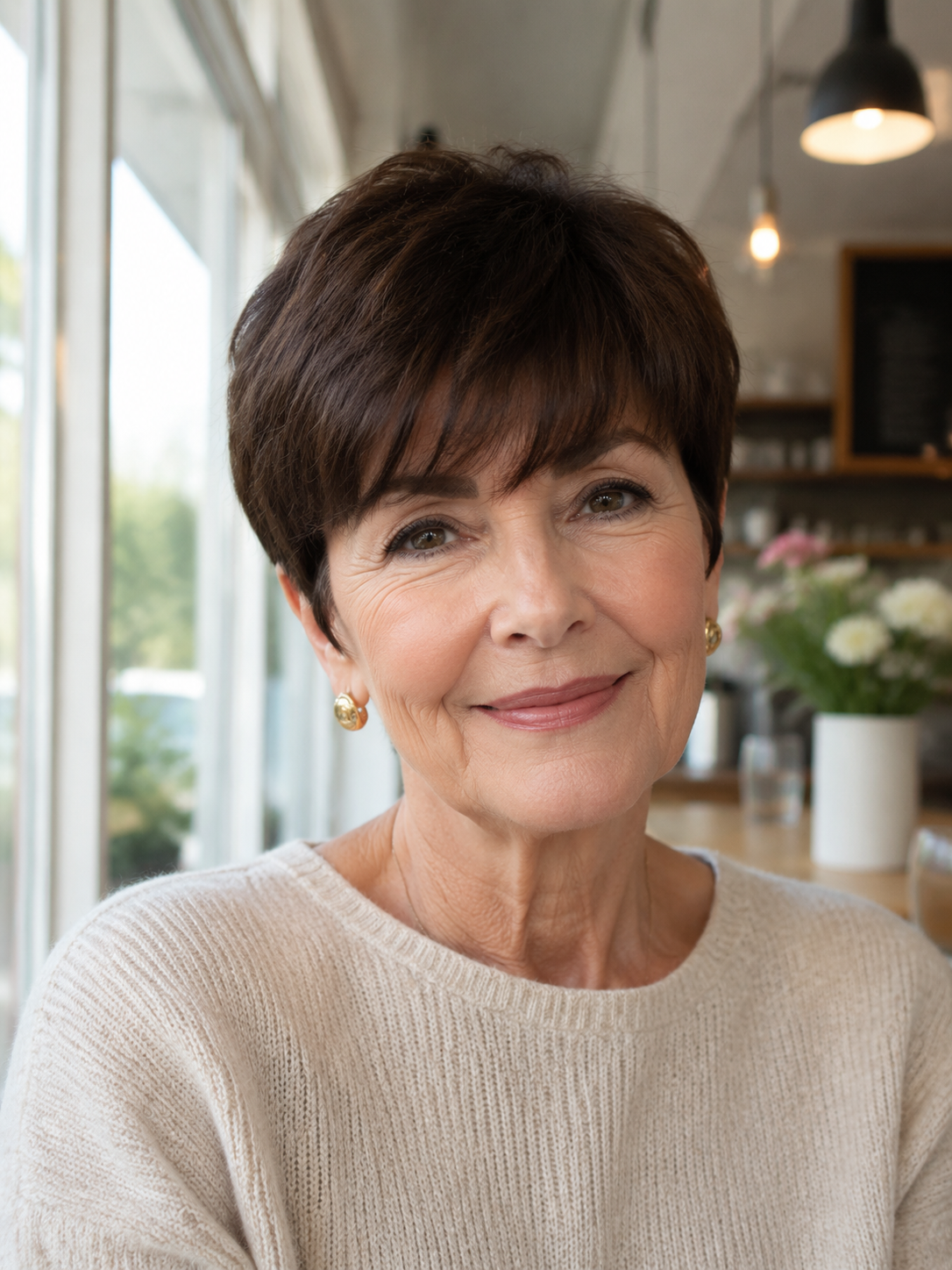
A pixie with bangs cut to fall at or past the eyebrow keeps the cut soft and feminine. The longer bangs frame the face and balance the cropped length on the sides and back. Style with a round brush, directing the bangs outward and slightly back. Best on hair with enough weight to keep the bangs sitting properly. Maintenance every four weeks keeps the bangs from growing into the eye, which becomes irritating fast.
Pixie with Wispy Bangs
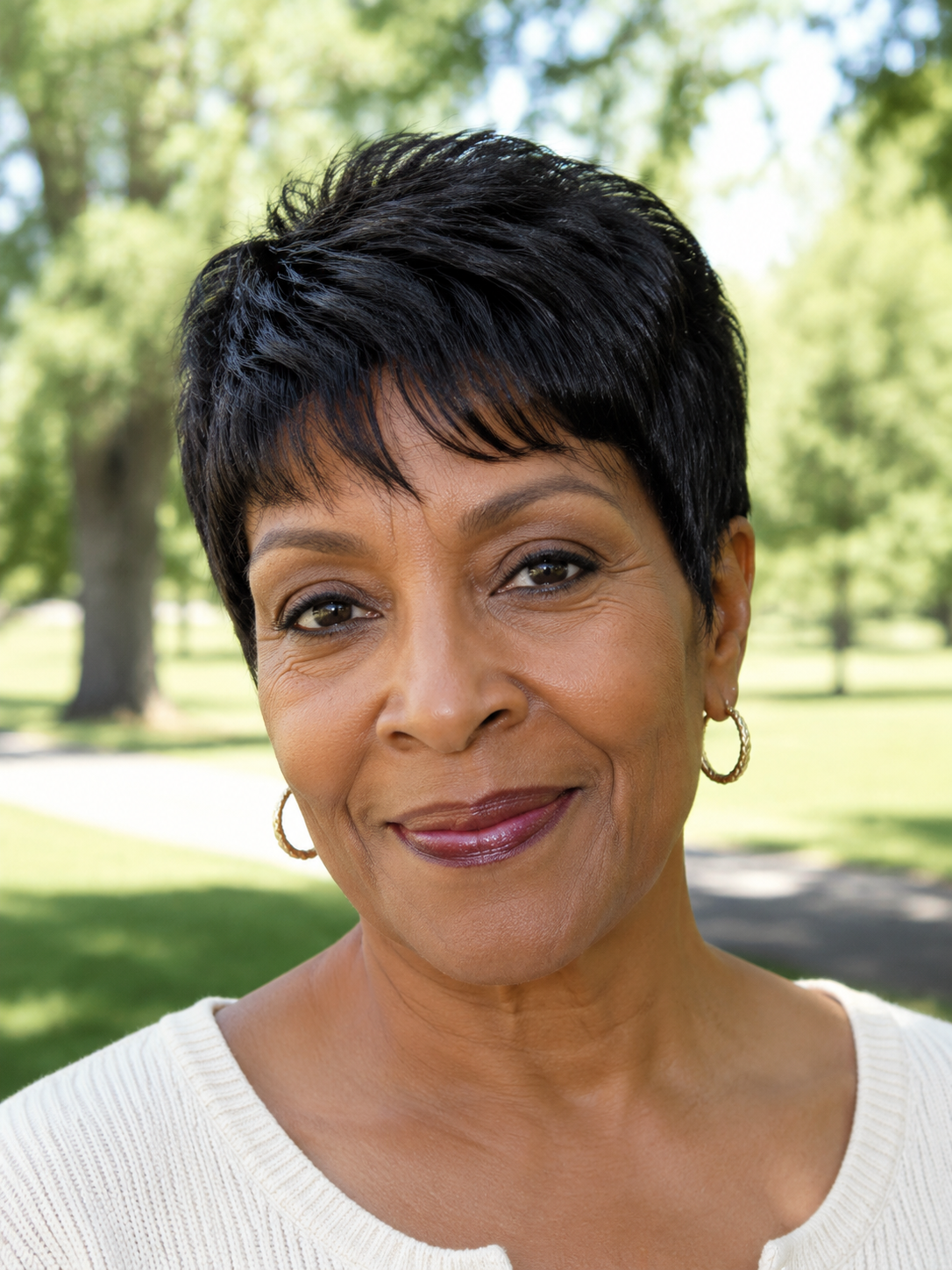
A pixie with piecey separated wispy bangs at the brow keeps the cut soft and approachable. The wispiness avoids the heaviness that blunt bangs can bring to a short cut. Blow-dry the bangs with fingers and break them apart with a small amount of texture cream. Best on hair with some natural movement. The combination flatters most face shapes and feels current rather than dated.
Pixie with Curtain Micro Bangs
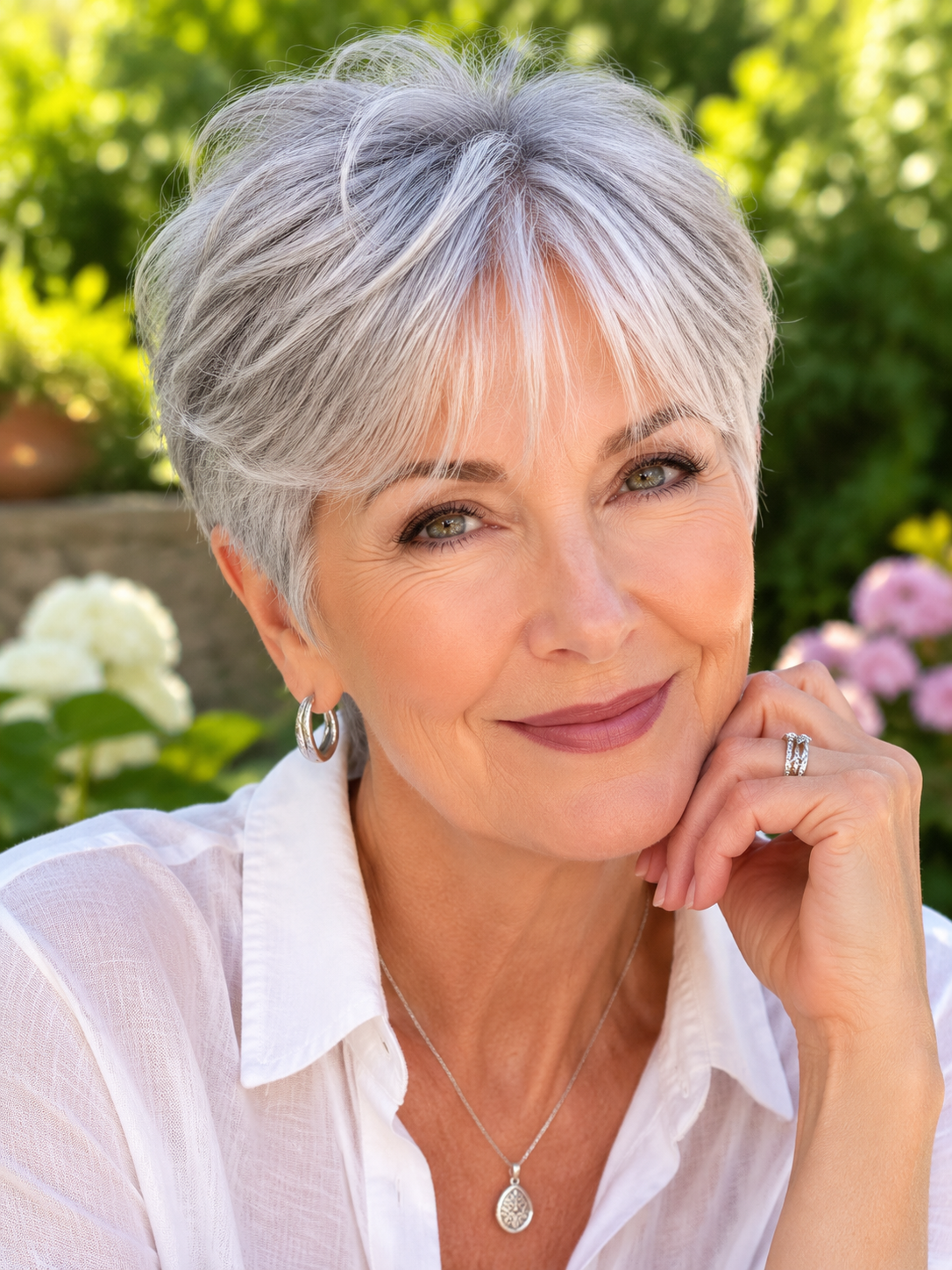
Curtain micro bangs, the short parted version of curtain bangs that fall from the part to just above the brow, give the pixie a soft modern frame. The micro length keeps the look modern while the curtain shape adds femininity. Style by directing the bangs outward from a soft center part. Refresh every three to four weeks. Pairs particularly well with cool silver or platinum gray tones.
Textured Pixie
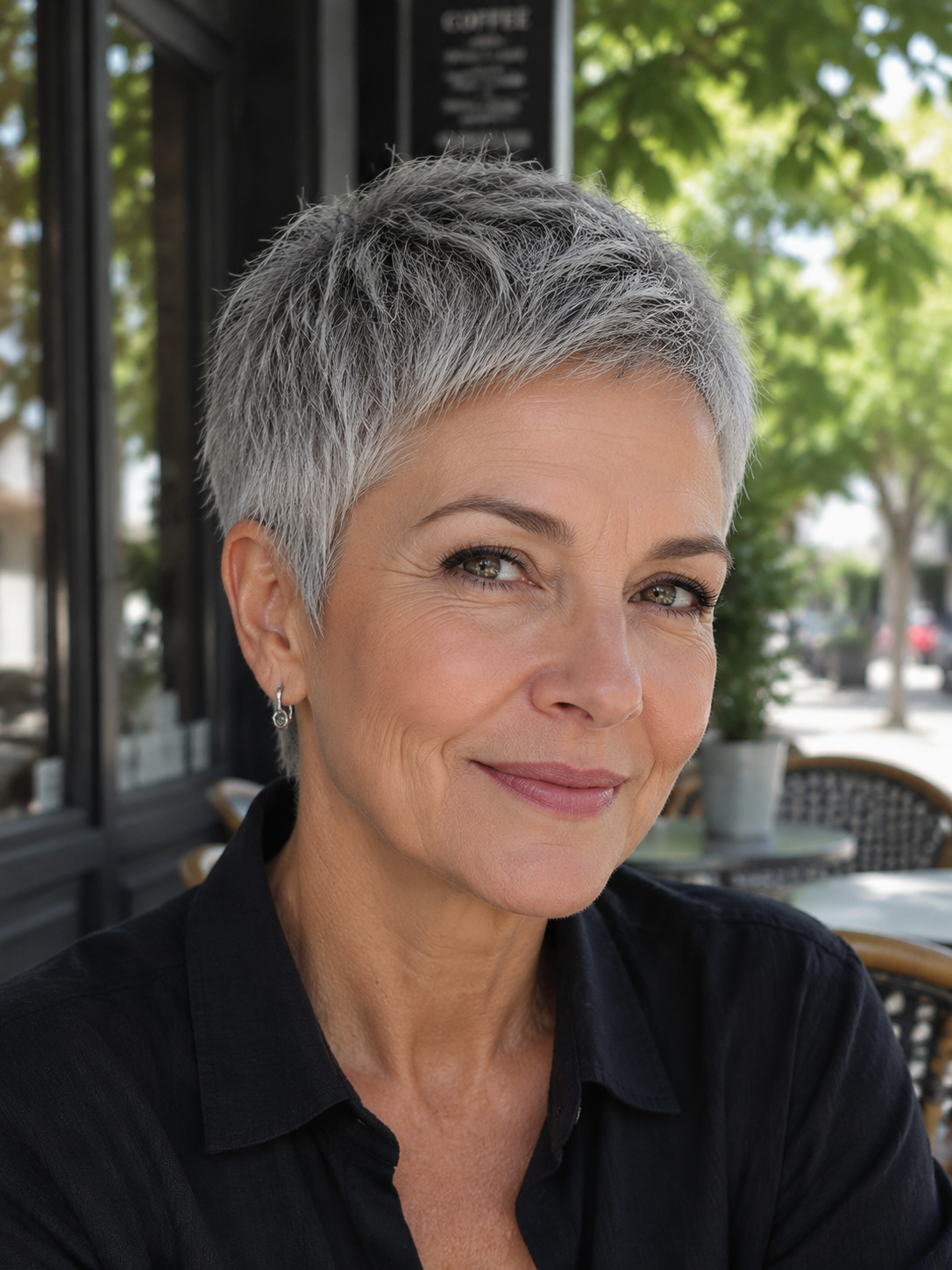
A pixie cut with visible internal texture from point-cutting and slide-cutting reads modern and effortless. The texture catches light differently than a smooth pixie, which adds visual interest to the cut. Style with texture cream worked through with fingers. Best executed by stylists experienced with textural cutting techniques. Pairs particularly well with silver or gray hair, which catches light beautifully along textured edges.
Pixie with Wedge Back
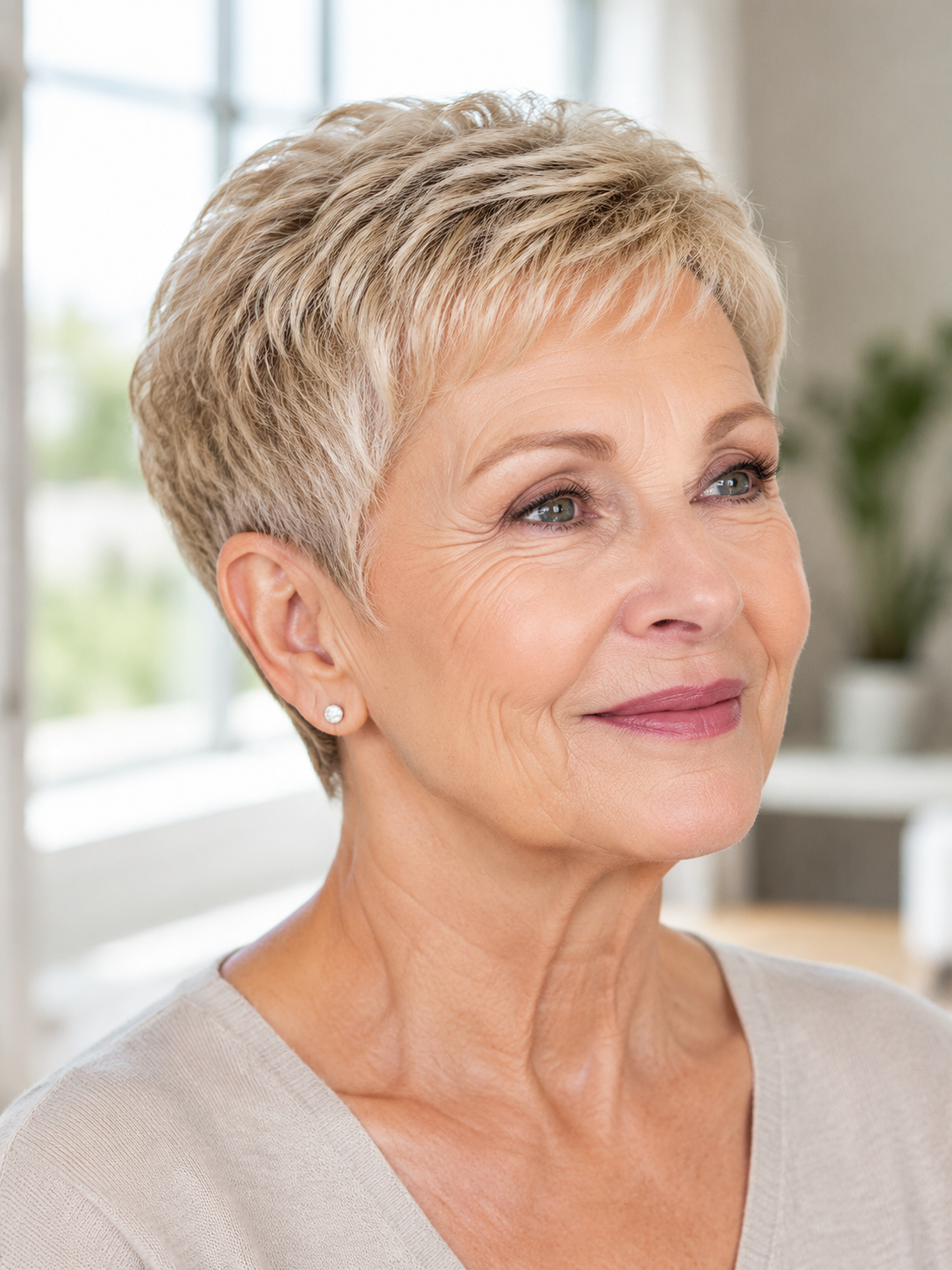
A pixie with a slightly wedged back, where the back graduates into a fuller shape, adds volume where mature hair sometimes falls flat. The wedge gives the cut a more rounded silhouette from behind. Style with a round brush on the back to set the wedge shape cleanly. Best on hair with enough density to support the rounded back without thinning out visibly.
Pixie with Tapered Sides
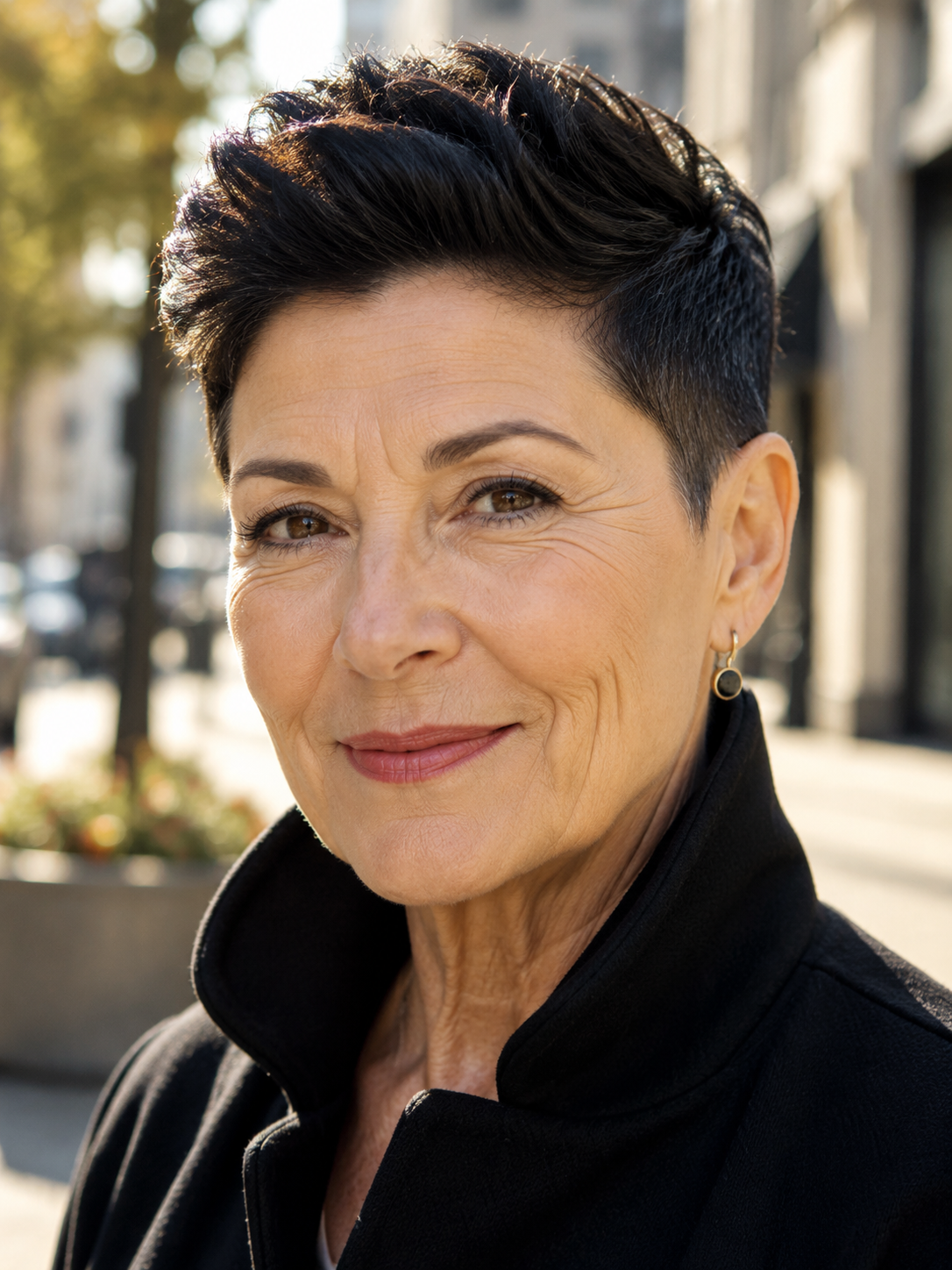
A pixie with tapered sides cut very close to the head while keeping length on top creates strong contrast and a defined shape. The taper gives the cut polish and structure. Style the top with a small amount of pomade for definition. Best for women comfortable with a more graphic, modern interpretation. Maintenance runs every three to four weeks to keep the taper crisp.
Pixie with Side Part
A pixie styled with a defined side part shifts hair from one side to the other across the top, creating asymmetry and softness. The side part flatters square or strong jaw lines. Train the part with a comb on damp hair and set with a small amount of pomade. Works on almost any pixie length. The deepest side part you can pull off creates the most visible volume.
Pixie with Slicked-Back Top
A pixie styled with the top slicked back away from the face creates a clean, polished, slightly editorial finish. The look emphasizes the cheekbones and forehead. Style with a moderate amount of pomade or styling cream worked through the top section from the hairline back. Best on hair with enough length on top to slick back cleanly, generally an inch and a half or more.
Pixie with Forward Fringe
A pixie with hair styled forward across the forehead creates a softer, more romantic interpretation than the slicked-back version. The forward styling frames the face and adds softness. Style with a small amount of styling cream worked through with fingers, directing all the top hair forward. Best on hair with some natural body or willingness to be encouraged forward with light styling product.
Piecey Pixie
A pixie cut with visibly separated pieces throughout the top reads modern and slightly edgy. The piecey finish comes from cutting technique combined with the right styling product. Use a small amount of pomade and work it through with fingers to separate the pieces. Best on hair with some natural texture to support the piecey finish. Pairs particularly well with bold color choices or platinum tones.
Sleek Pixie
A pixie styled with a smooth polished finish, where every piece sits exactly where intended, creates an elegant, refined silhouette. The look departs from the textured pixie aesthetic. Style with a small amount of smoothing cream and a vent brush. Best on hair with minimal frizz potential. Pairs particularly well with single-process rich brown shades or sophisticated silver tones for a polished mature look.
Pixie with Volume on Top
A pixie cut with significant length and volume on top while keeping the sides cropped close creates a strong height-focused silhouette. The volume on top adds visual height to the face. Style with a root-lifting product and direct the top hair up and slightly back while drying. Best on hair with some natural lift or willingness to work with volumizing products consistently for the desired effect.
Choppy Pixie
A pixie with visibly choppy ends from aggressive point-cutting reads modern and intentional. The choppiness gives the cut character beyond a clean classic crop. Style with texture cream worked through with fingers. Best executed by stylists who point-cut regularly. Pairs particularly well with silver or gray hair, which shows off the choppy texture through how it catches light along uneven edges throughout the cut.
Salt and Pepper Pixie
A pixie that embraces natural salt and pepper coloring, with the cut shape doing the visual work rather than color, gives the silver and dark tones a modern showcase. Style with a small amount of texture cream and finger-styling. The cut shape and the natural color combination feels intentional and modern rather than dated. Pairs particularly well with textured or piecey pixie variations that show off color variation.
Silver Pixie
A pixie with all-over silver or gray color, whether natural or achieved through color, gives the cut a sophisticated polish. The silver tone catches light beautifully and pairs particularly well with crisp pixie shapes. Use a purple shampoo every other wash to keep the silver from yellowing. Style with a smoothing cream for a polished finish or texture cream for a more relaxed interpretation.
Pixie with Highlights
A pixie with strategic highlights through the top creates dimension and visual interest. The highlights catch light as the hair moves and adds depth to what could otherwise look flat. Stylists tend to place highlights with hand-painting through the top section, leaving the sides and back single-process. Style with a small amount of pomade. Refresh highlights every ten to twelve weeks for the most natural grow-out.
Pixie with Money Piece
A pixie with lightened panels framing the face from the part to the temples adds brightness around the face. The money piece concept translates beautifully to pixie length because the cropped cut puts the lightened pieces in clear view. Base color stays consistent through the rest of the cut. Refresh the money piece every twelve to fourteen weeks. Pairs particularly well with deep brunette or rich espresso base shades.
Asymmetrical Pixie
A pixie with one side cut noticeably shorter than the other creates a strong directional shape. The asymmetry draws attention to the cheekbones and creates a focal point on one side of the face. Style with a small amount of pomade on the longer side for definition. Maintenance runs every four to five weeks to keep the asymmetrical angle crisp. Best for women comfortable with bolder, more graphic cuts.
Soft Pixie
A pixie cut with softer rounded edges instead of strong angular cutting reads gentle and feminine. The soft pixie suits women who want the practical benefits of short hair without a sharp graphic statement. Style with a small amount of styling cream worked through with fingers. The softer interpretation flatters round face shapes particularly well by adding gentle rather than angular framing around the face.
Bouncy Pixie
A pixie styled with visible curl or wave through the top section creates fullness through movement and shape. The curl breaks up flat scalp coverage and adds visual depth. Use a small barrel curling iron through the top section, working in small pieces. A flexible-hold spray sets the curls without crunching them. Best on hair with some willingness to hold curl, set with curl-priming product before styling.
Pixie with Crown Volume
A pixie cut specifically engineered to maximize volume at the crown, where mature hair often flattens first, addresses one of the most common density concerns. The cut includes graduated layers through the crown section to build height. Style with root-lifting product and direct the crown hair up while drying. Best on hair where crown volume specifically needs addressing through cut and styling combined for maximum effect.