
The pixie cut works for thin hair in a way that almost nothing else does. The reasoning isn’t aesthetic, it’s structural. When you remove length, you remove the section of hair where thinning shows most visibly. What’s left becomes denser-looking by default, because the hair gathers at the head rather than spreading across longer strands that expose the scalp. The 22 pixie cuts below all stay short, between ear-length and very cropped. Each one uses cutting and styling techniques specifically suited to fine, low-density hair. Pick the version that matches your styling time and how prominent your thinning concerns are.
Jump to:
Classic Cropped Pixie
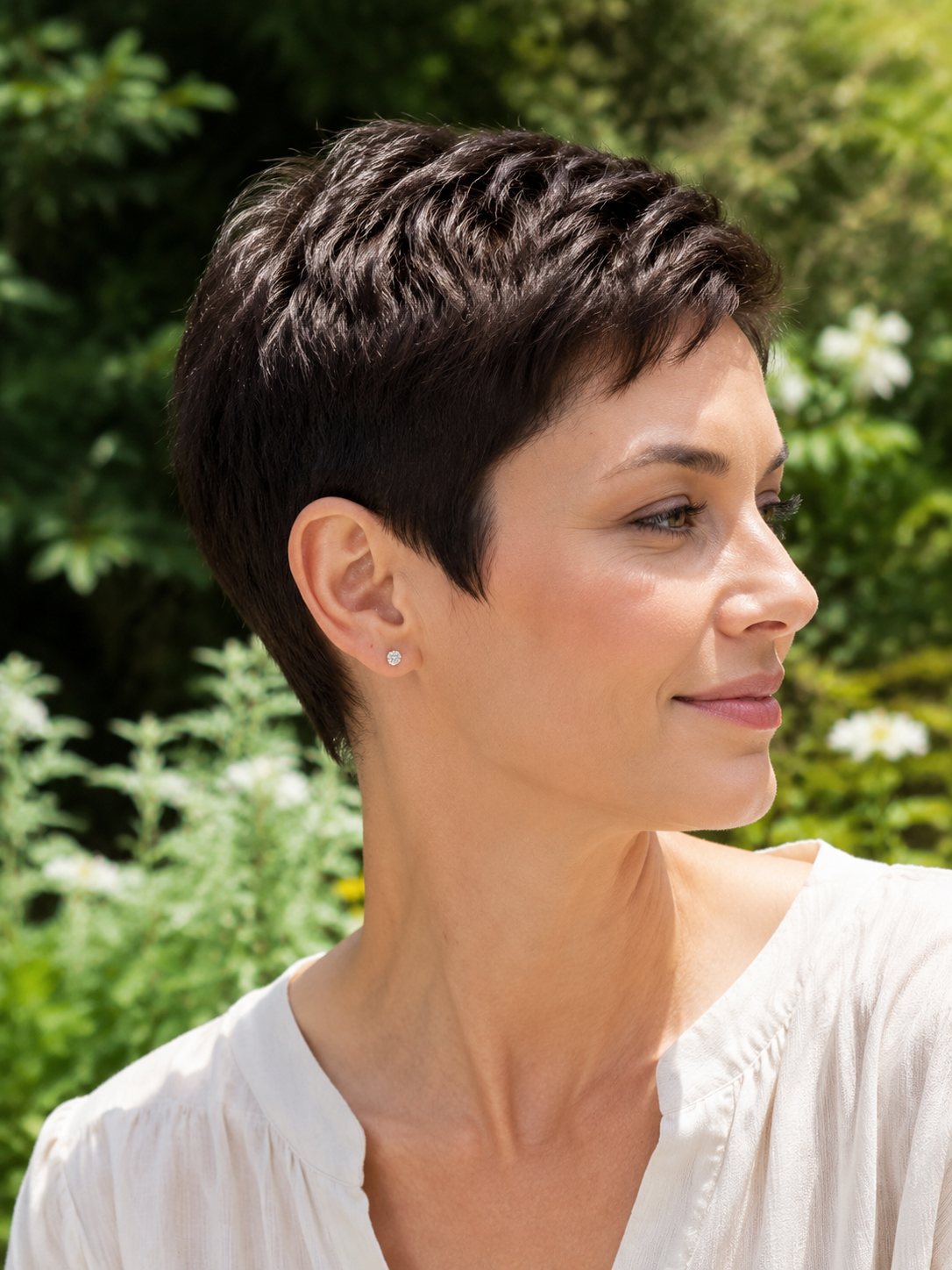
The traditional pixie shape, cut close to the head with slightly longer length on top, works exceptionally well on thin hair because the close cropping eliminates the length where thinness shows most. The remaining hair sits dense against the head. Style with a small amount of styling cream worked through with fingers. Maintenance every four to five weeks keeps the shape clean. The simplest and most effective pixie option for fine hair.
Volumized Top Pixie
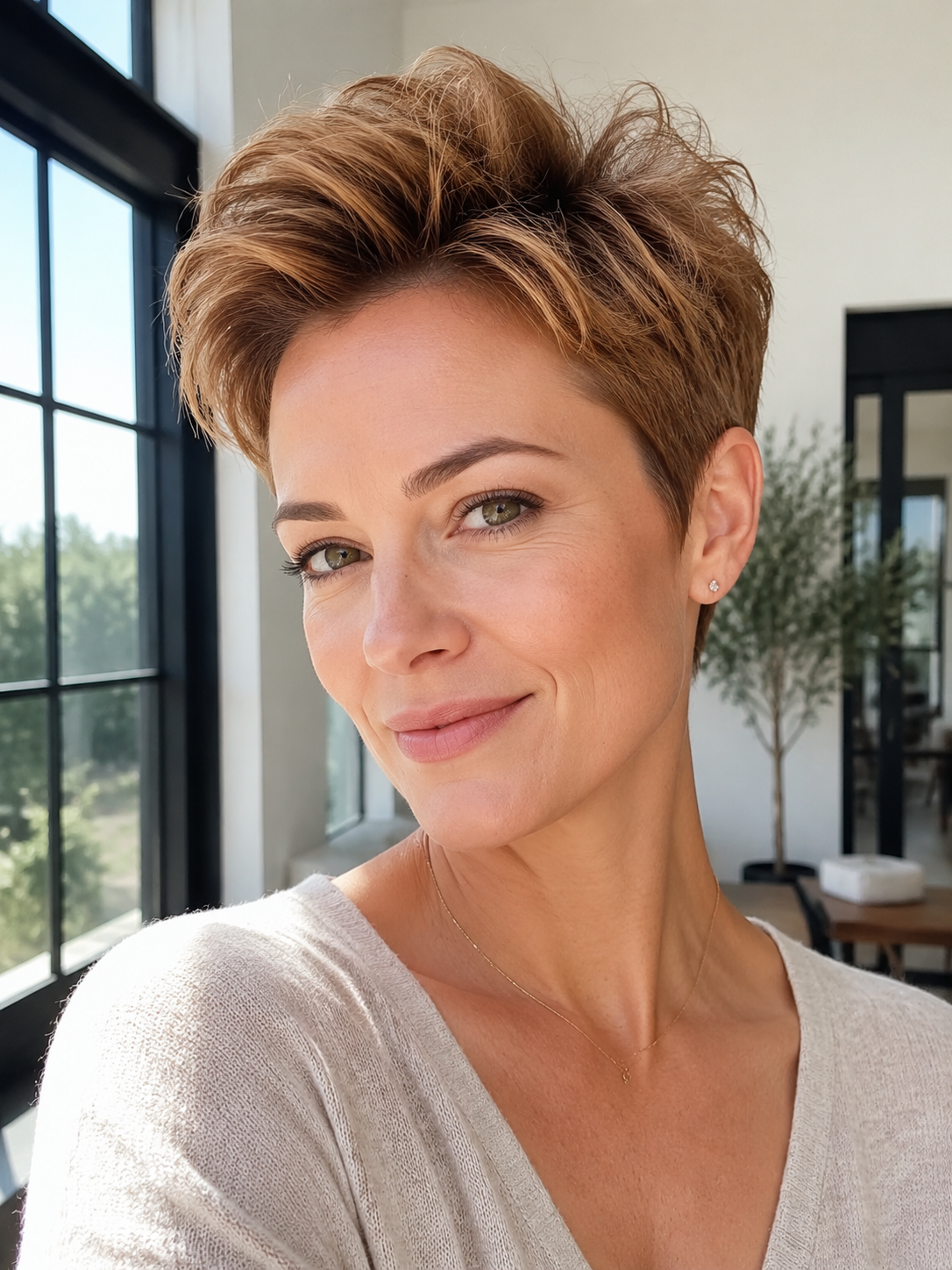
A pixie cut with extra length on top specifically engineered to create vertical volume, while keeping sides cropped close. The top length, around two to three inches, gives enough hair to build height with root-lifting product. Style by directing the top hair up and slightly back while drying with a small round brush. Best on hair where adding visual height to the crown specifically addresses density concerns.
Textured Pixie
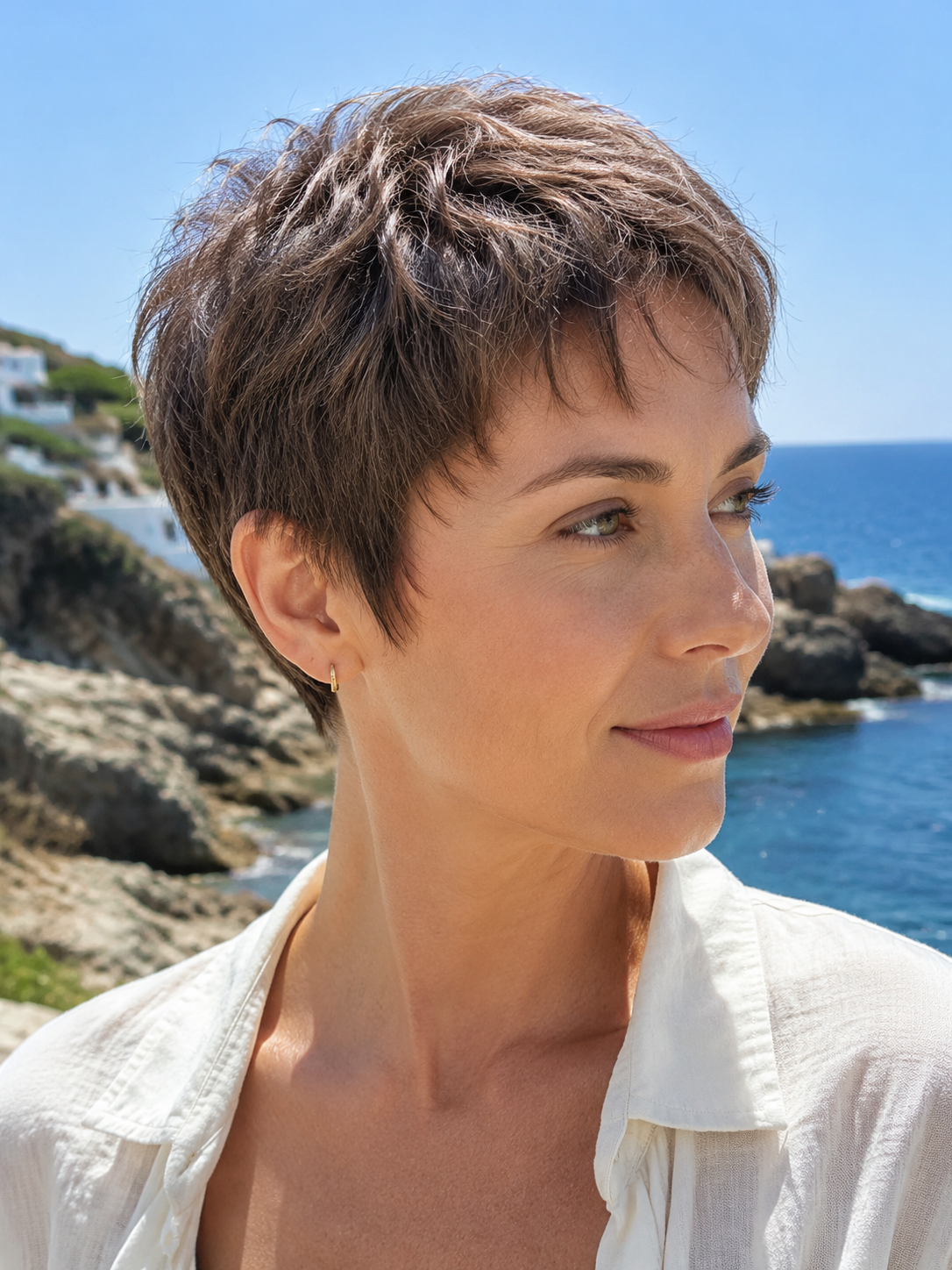
A pixie cut with visible internal texture from point-cutting and slide-cutting reads modern and adds visual fullness to thin hair through the texture itself. The varied edges catch light differently than a smooth cut, which creates the illusion of more hair. Style with texture cream worked through with fingers. Best executed by stylists experienced with textural cutting techniques on fine hair.
Piecey Pixie
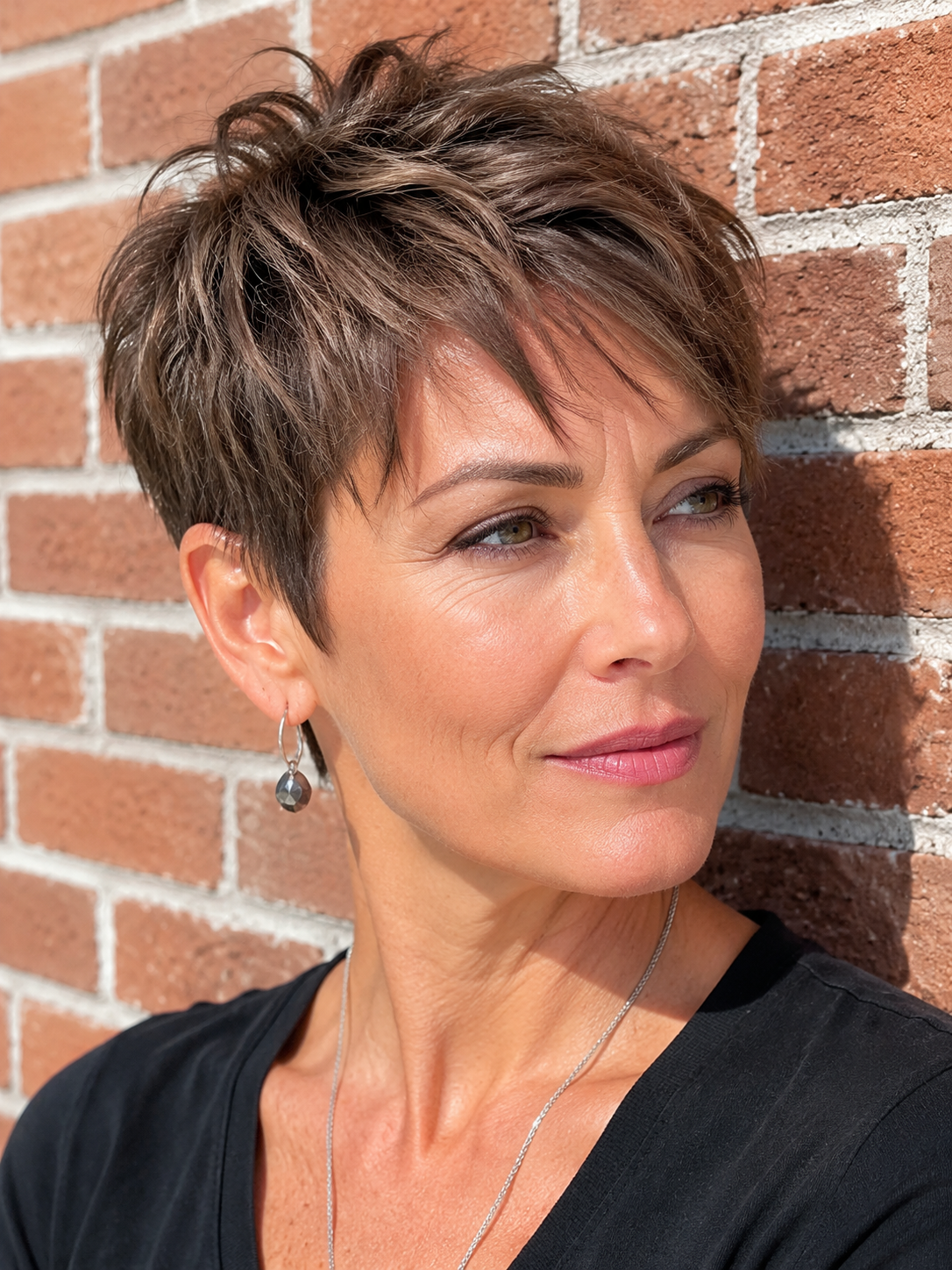
A pixie with visibly separated pieces throughout the top adds dimensional fullness to thin hair. The piecey finish comes from cutting technique combined with the right styling product. Use a small amount of pomade and work it through with fingers to separate the pieces. The separation creates the illusion of more hair through visible pieces rather than smooth flat coverage that exposes density loss.
Pixie with Side-Swept Fringe
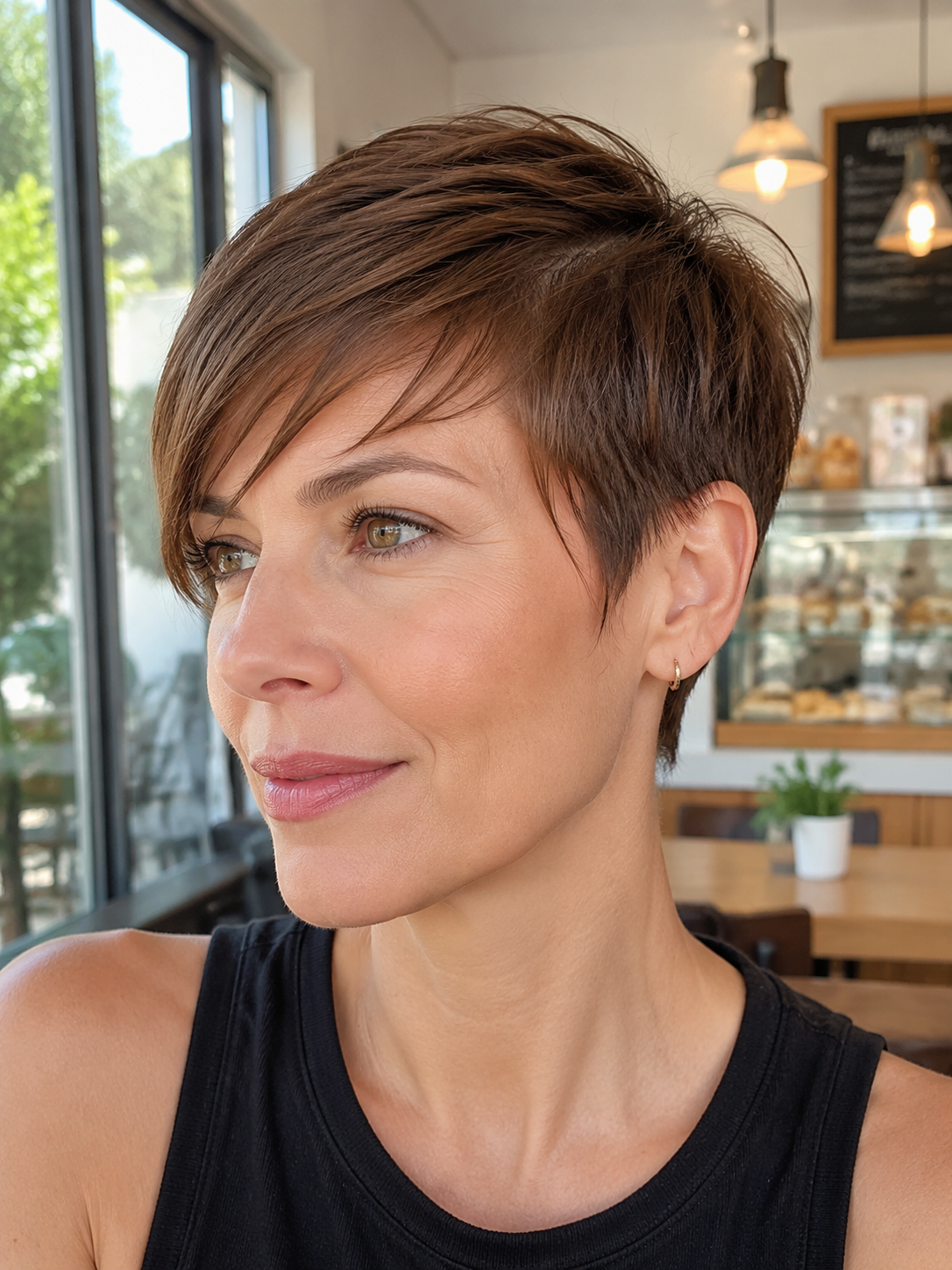
A pixie with a longer side-swept fringe falling diagonally across the forehead works for thin hair by concentrating bang weight on one side. The asymmetry creates fullness through directional styling rather than relying on actual density. Train the fringe with a comb on damp hair and set with a small amount of pomade. Best on hair with enough weight to keep the sweep in place.
Pixie with Wispy Bangs
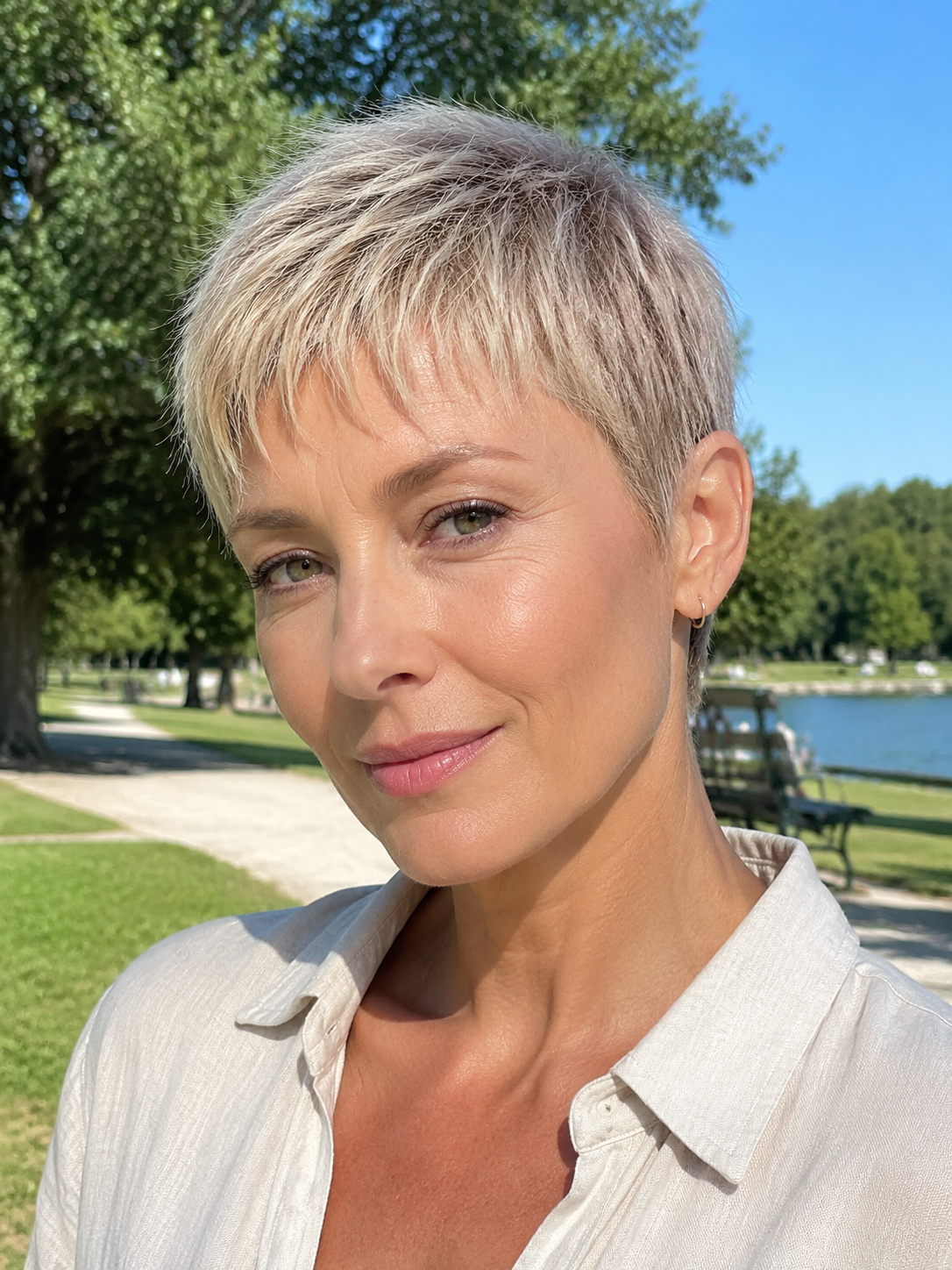
A pixie with piecey separated wispy bangs at the brow keeps the cut soft and suits thin hair beautifully. Heavy blunt bangs would expose scalp at the hairline and call attention to density loss. Wispy bangs do the opposite, breaking up the forehead in a flattering way. Blow-dry the bangs with fingers and break apart with a small amount of texture cream. Trim every five weeks.
Choppy Pixie
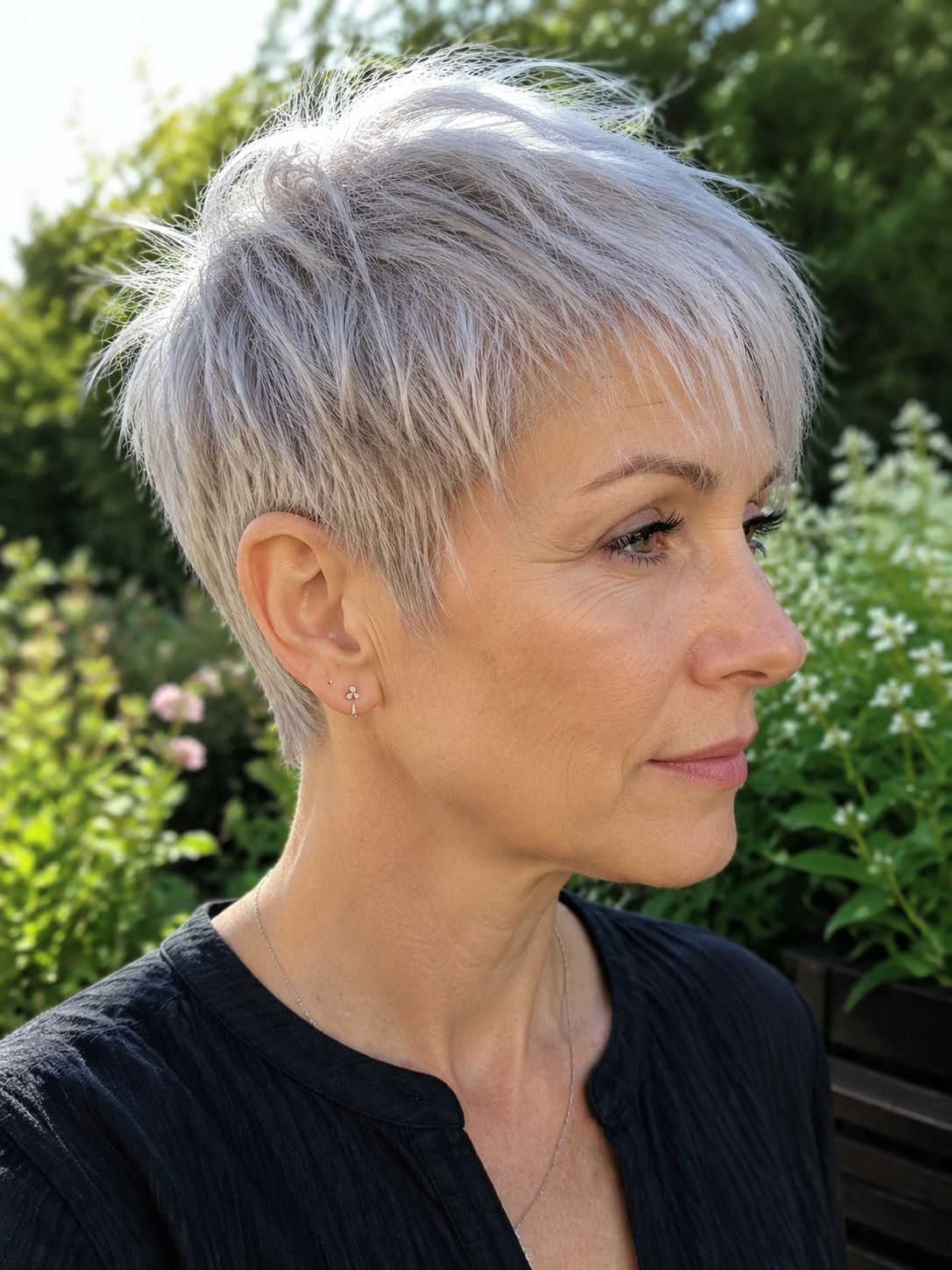
A pixie with visibly choppy ends from aggressive point-cutting adds dimensional fullness to thin hair through visible texture. The choppiness gives the cut character beyond a clean classic crop while making thin hair look more substantial through textured edges. Style with texture cream worked through with fingers. Best executed by stylists who point-cut regularly. Pairs particularly well with cool ash or silver tones.
Pixie with Long Bangs
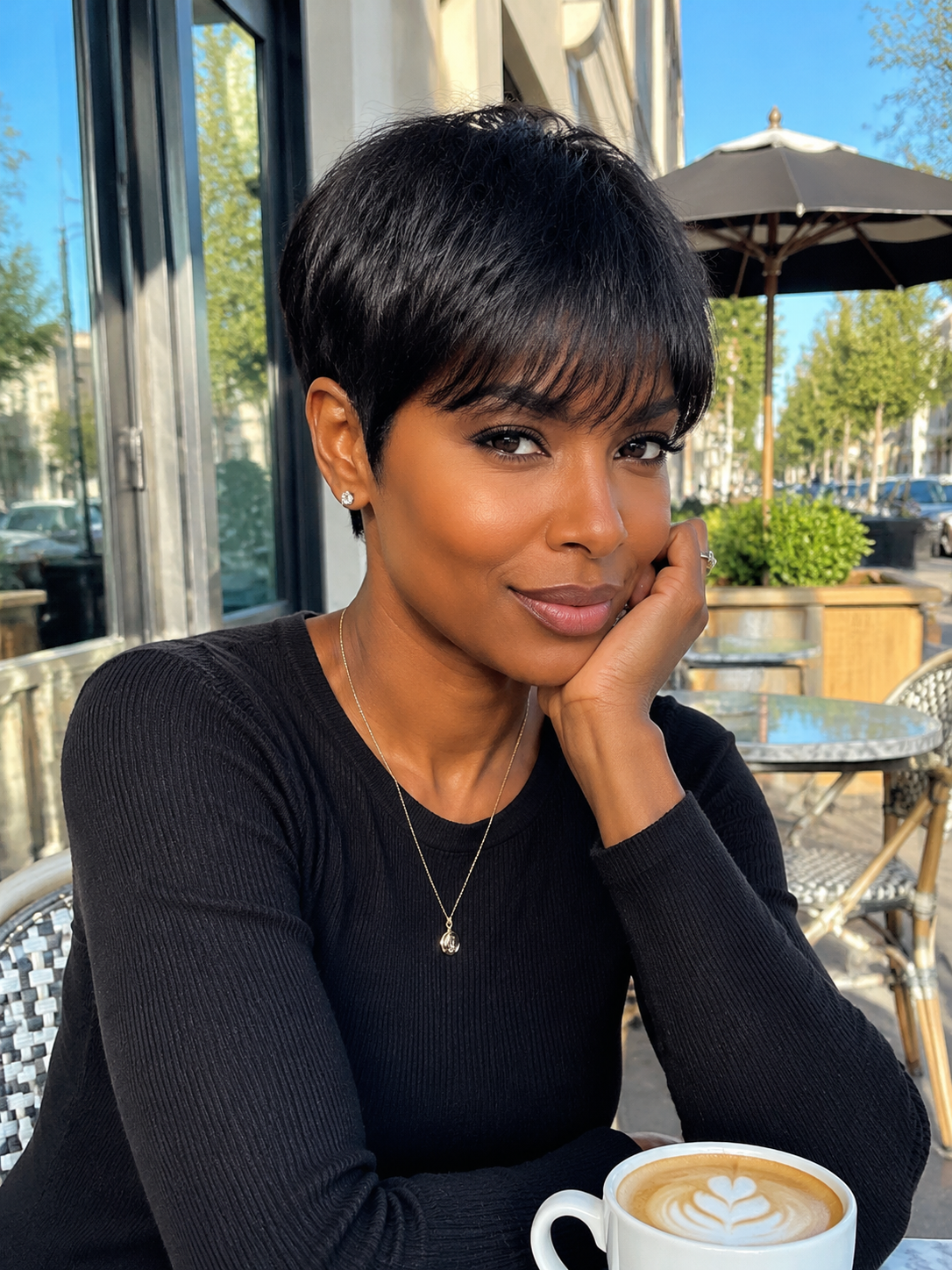
A pixie with bangs cut to fall at or past the eyebrow works for thin hair by adding visual weight at the front of the cut. The longer bangs frame the face and balance the cropped sides and back. Style with a round brush, directing the bangs outward and slightly back. The bang length creates an illusion of fuller hair around the face. Maintenance every four weeks.
Pixie with Side Part
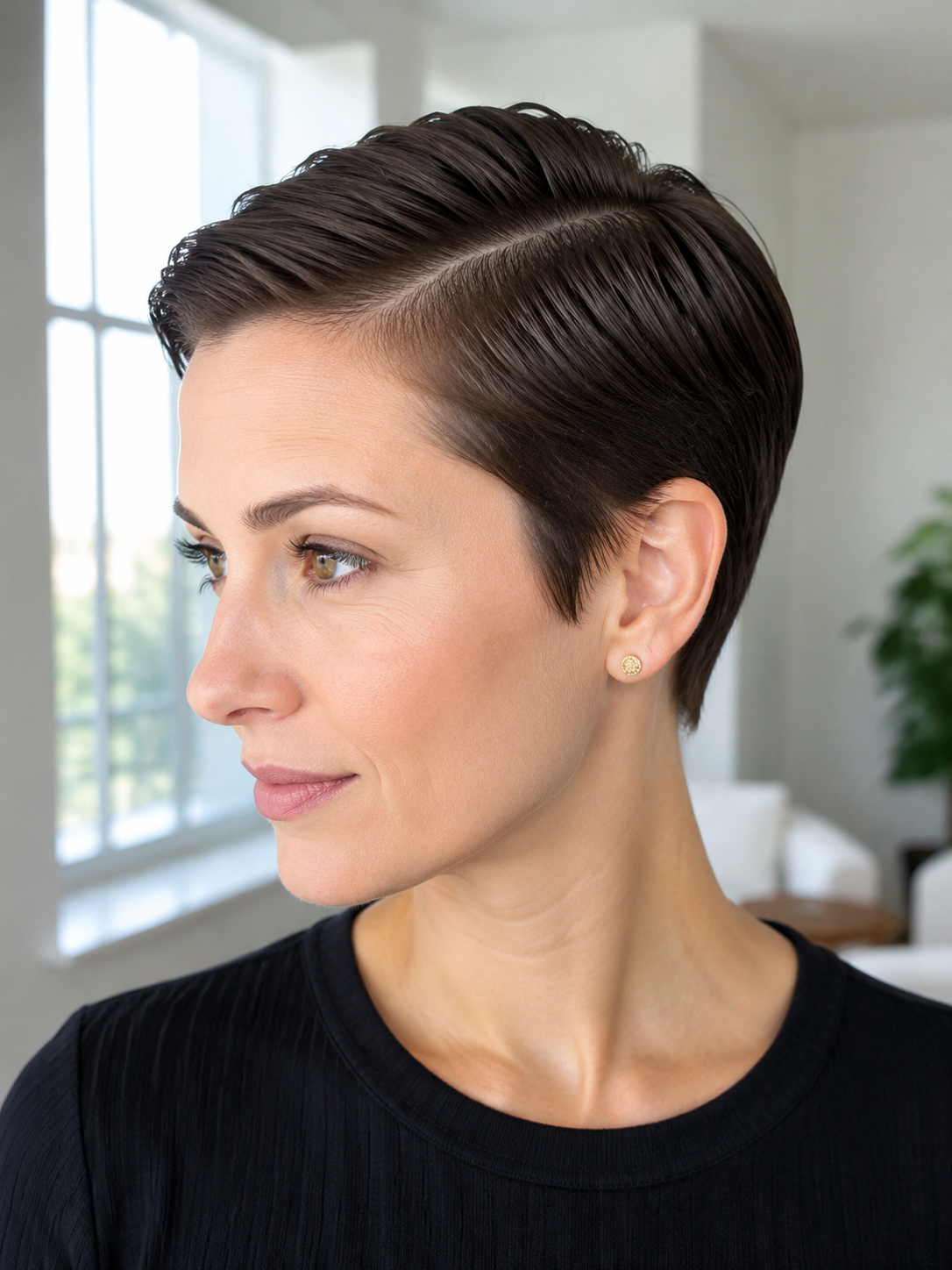
A pixie styled with a defined side part creates instant volume by shifting hair from one side to the other across the top. The redirection lifts the heavier side at the root, which thin hair lacks naturally. Train the part with a comb on damp hair and set with a small amount of pomade. The deepest side part you can pull off creates the most volume. Works on almost any pixie length.
Disconnected Pixie
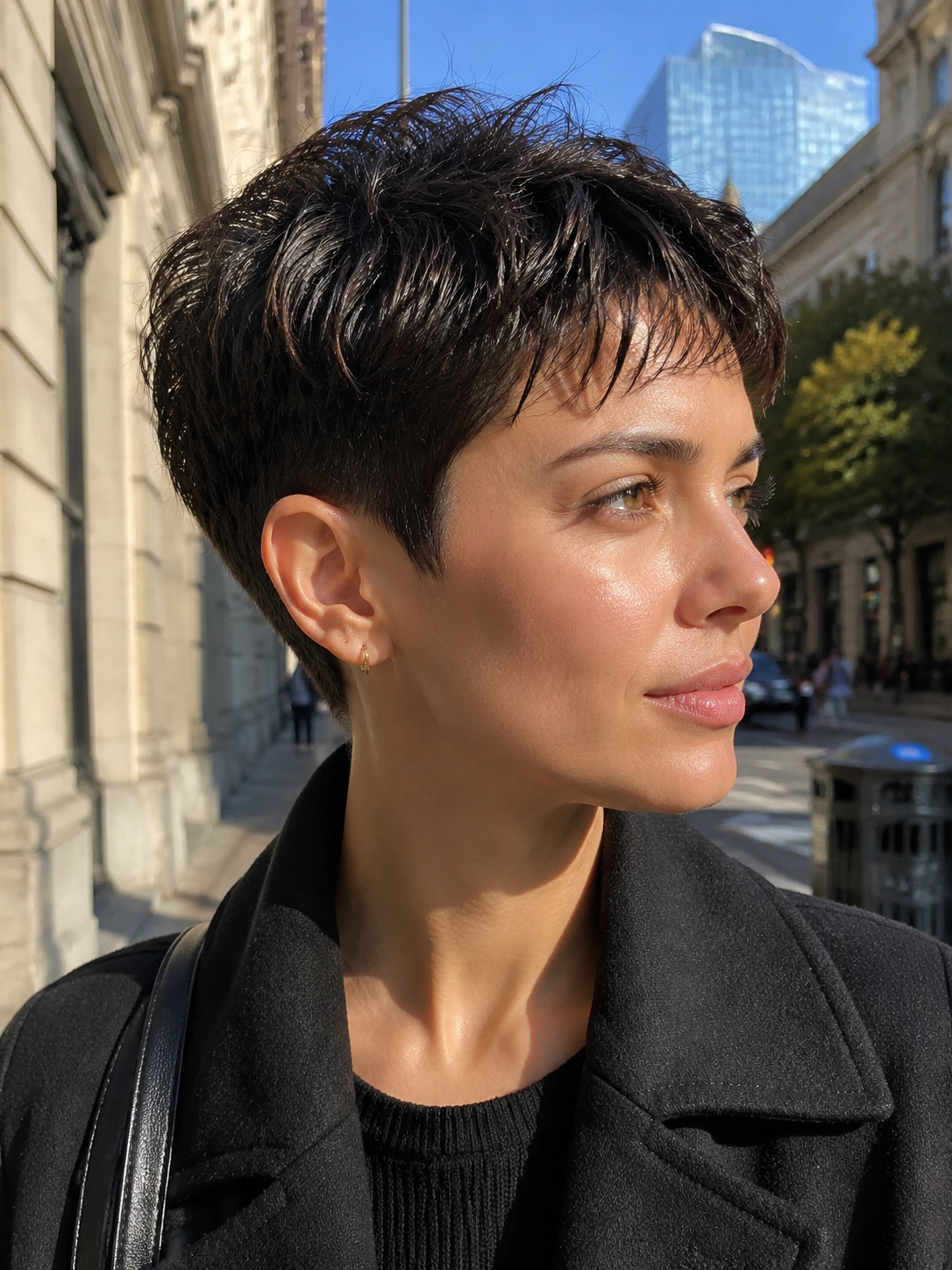
A pixie with disconnected sections, where the top length doesn’t blend smoothly into the cropped sides, creates strong visual interest through deliberate separation. The disconnection adds modern edge to fine hair while concentrating remaining density at the top. Style with pomade and finger-styling. Best for women comfortable with a bolder, more graphic cut. Maintenance every three to four weeks keeps the disconnection crisp.
Pixie with Crown Volume
A pixie cut specifically engineered to maximize volume at the crown, where thin hair often shows the most scalp visibility. The cut includes graduated layers through the crown section to build height. Style with root-lifting product and direct the crown hair up while drying with a small round brush. Best on hair where crown thinness specifically needs addressing through cut and styling combined.
Pixie with Curtain Micro Bangs
Curtain micro bangs, the short parted version of curtain bangs that fall from a soft center part to just above the brow, suit thin hair by avoiding the heavy single-block weight of blunt bangs. The parted shape adds movement and breaks up the forehead in a flattering way. Style by directing the bangs outward from the part. Refresh every three to four weeks. Pairs particularly well with platinum or silver tones.
Pixie with Forward Fringe
A pixie with hair styled forward across the forehead creates a softer interpretation that adds visual fullness around the face. The forward styling concentrates weight at the front, which is where thin hair often needs the most visual reinforcement. Style with a small amount of styling cream worked through with fingers. Best on hair with some natural willingness to be encouraged forward with light product.
Pixie with Tapered Sides
A pixie with tapered sides cut very close to the head while keeping length on top creates strong contrast that suits thin hair. The taper emphasizes the volume on top by minimizing visible hair on the sides. Style the top with a small amount of pomade for definition. The contrast between cropped sides and longer top works because thin hair concentrates where it’s most visible. Maintenance every three to four weeks.
Tousled Pixie
A pixie styled with visible texture and intentional roughness creates the illusion of fullness through textural variation. The tousled finish works particularly well on thin hair because the texture itself adds visual dimension that smooth styling can’t achieve. Style with a small amount of texture cream worked through with fingers and air-dry. Best on hair with some natural movement to support the tousled look.
Pixie with Bottleneck Bangs
A pixie with bottleneck bangs, shorter in the middle and longer at the outer edges, gives the fringe shape that suits thin hair beautifully. The bottleneck shape avoids the heavy block of blunt bangs while adding more visual structure than wispy versions. Style by directing the longer outer pieces back with a round brush. The shape creates fullness around the face through frame rather than density.
Pixie with Highlights
A pixie with strategic highlights through the top creates dimensional fullness on thin hair. The highlights catch light differently than the base color, which adds visual depth where thin hair often looks flat. Stylists tend to place highlights with hand-painting through the top section. Refresh every ten to twelve weeks. The dimensional approach works on fine hair where solid color sometimes reads thin.
Pixie with Money Piece
A pixie with lightened panels framing the face from the part to the temples adds visual brightness and dimension at the front of the cut. The money piece concept translates beautifully to pixie length and creates the illusion of fullness around the face through contrast. Base color stays consistent through the rest of the cut. Refresh every twelve to fourteen weeks. Pairs particularly well with deep brunette base shades.
Pixie with Root Shadow
A pixie with darker roots melting into lighter ends creates dimensional fullness on thin hair while disguising scalp visibility. The darker root color blends with any visible scalp tone, which thin hair often shows along parts and the crown. The technique also extends time between color appointments significantly. Best refreshed every twelve to fourteen weeks. Particularly flattering on cool blonde or ash tones.
Bouncy Pixie
A pixie styled with visible curl or wave through the top section creates fullness through movement and shape. The curl breaks up flat scalp coverage and adds visual depth. Use a small barrel curling iron through the top section, working in small pieces. A flexible-hold spray sets the curls without crunching them. Best on hair with some willingness to hold curl, set with curl-priming product before styling.
Soft Layered Pixie
A pixie with subtle layering through the top, focused on creating gentle movement rather than aggressive choppiness, suits thin hair beautifully. The soft layers add dimension without exposing the scalp through too-short cutting. Style with a small amount of styling cream worked through with fingers. The softer interpretation flatters round face shapes particularly well by adding gentle framing around the face.
Pixie with Diagonal Fringe
A pixie with a diagonal fringe cut at a strong angle across the forehead adds dramatic asymmetry and concentrates bang weight on one side. The diagonal cut creates strong visual interest while working with thin hair by concentrating remaining density into a directional shape. Style with a small amount of pomade and finger-styling. Best for women comfortable with bolder, more graphic interpretations of the pixie.