
Thick hair gets bad medium-bob advice constantly. The standard suggestion is to layer it heavily and call it done, but anyone with genuinely thick hair knows what happens next. The bottom poofs out, the middle goes triangular, and the cut looks like it was finished by someone who’d never worked with density above a five. Good medium bobs on thick hair start with the right weight removal strategy, not just layers. Internal thinning, slide cutting, and careful razor work all do different jobs. The 22 cuts below sit between collarbone and just past the shoulders. Each addresses thick hair’s two real challenges: keeping the shape from going pyramidal and styling it in under fifteen minutes.
Jump to:
Blunt Medium Bob
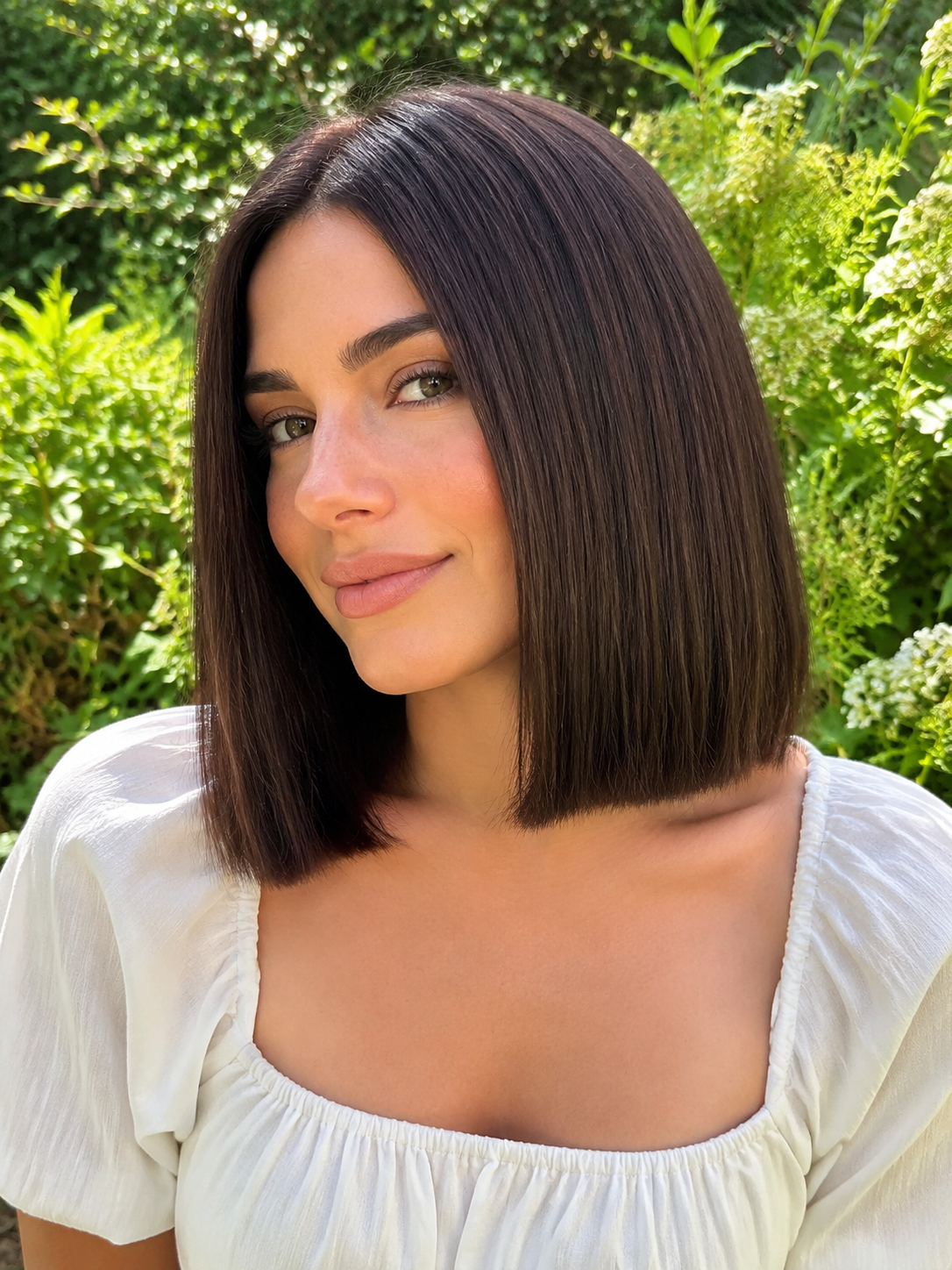
The clean perimeter at the collarbone works surprisingly well on thick hair. Ask for internal weight removal underneath while keeping the surface line crisp. The contrast between heavy outline and lighter interior is what makes the cut sit properly. Style with a smoothing cream and a flat iron pass. Thick hair holds the blunt line cleanly without fighting back, especially on straight to wavy textures.
Long Layered Medium Bob
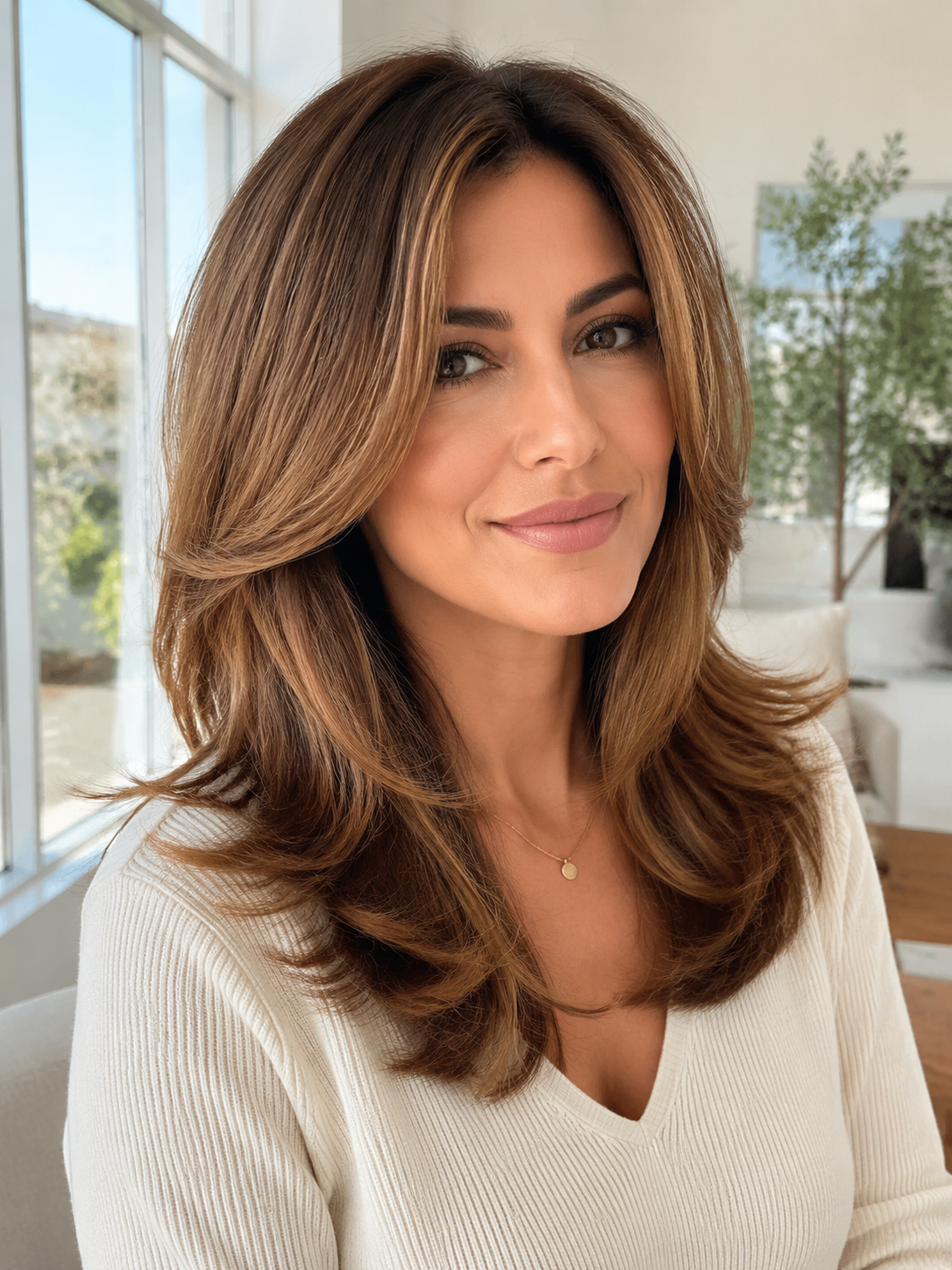
Longer connected layers starting below the cheekbone remove bulk progressively from the mid-lengths down. The longest layer should still hit at or near the perimeter. Otherwise thick hair stacks awkwardly at the bottom. This approach gives movement without sacrificing the strong shape thick hair needs. Best finished with a round brush or air-dried with a curl cream for natural body.
Heavy Layered Medium Bob
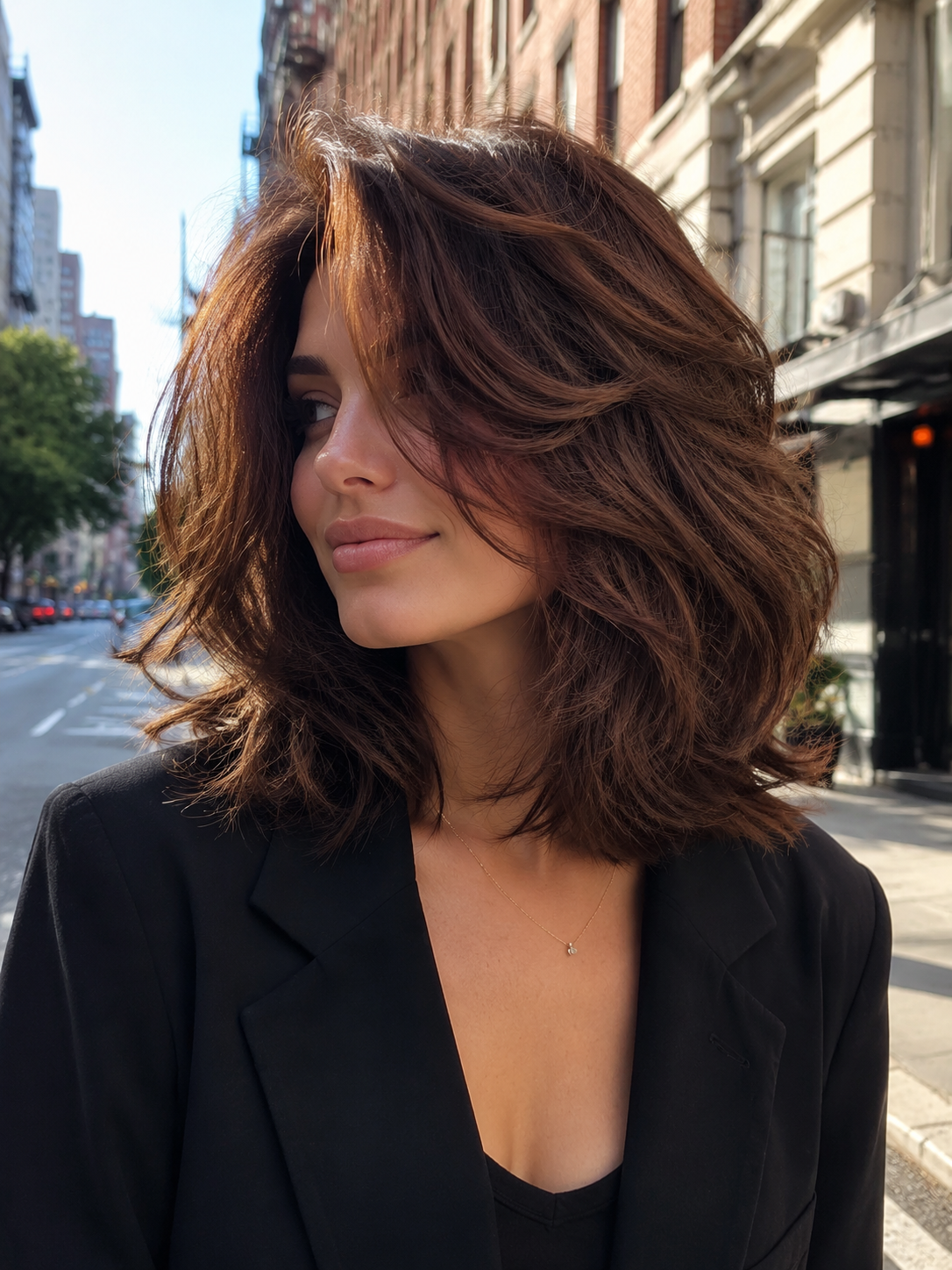
Shorter, more aggressive layering throughout the cut removes significant weight for women with very dense hair. The shortest layers can sit as high as the crown to disperse bulk evenly. The risk is going too short up top and creating the triangle effect. A skilled stylist will balance the layers against your face shape and density. Best on hair with natural wave or curl that disguises layer lines.
Razored Medium Bob

Razor cutting through the ends and the bottom third softens the perimeter and removes density at the heaviest point. The technique works particularly well on coarse thick hair, which can look helmet-like with blunt cutting. Ask specifically for a sharp razor and a stylist who razors regularly. Done with a dull blade, it creates split ends. The result moves better than scissor-cut bobs and air-dries with natural texture.
Slide-Cut Medium Bob
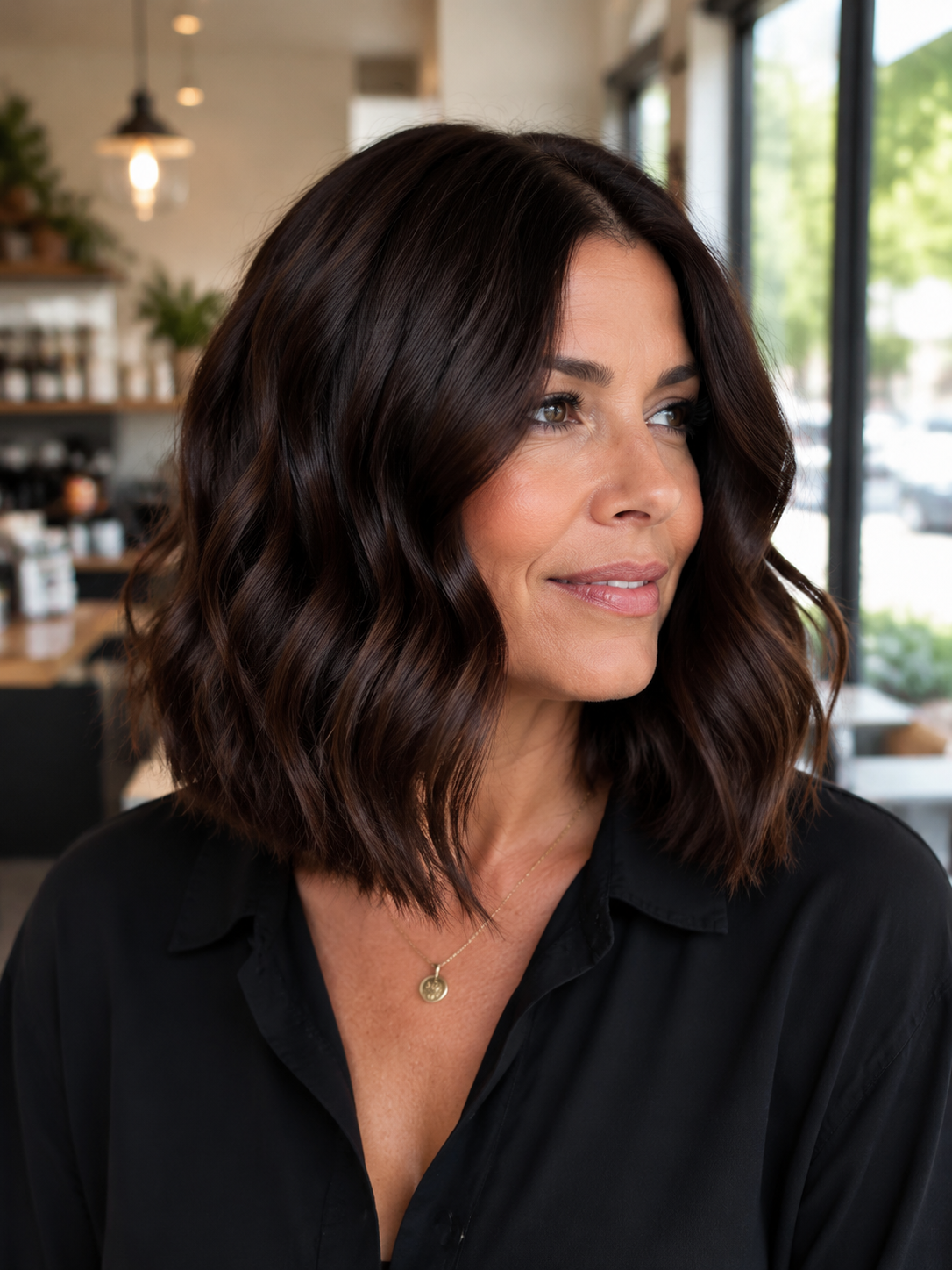
Slide cutting, where the scissors glide down the hair shaft rather than cutting straight across, removes interior weight without visible layer lines. The technique is ideal for thick hair that doesn’t want obvious layers but needs significant bulk reduction. The cut still looks one-length from a distance. Movement and lightness become apparent only with styling. A flat iron or wave wand brings out the slide-cut texture beautifully.
Internal Layered Medium Bob
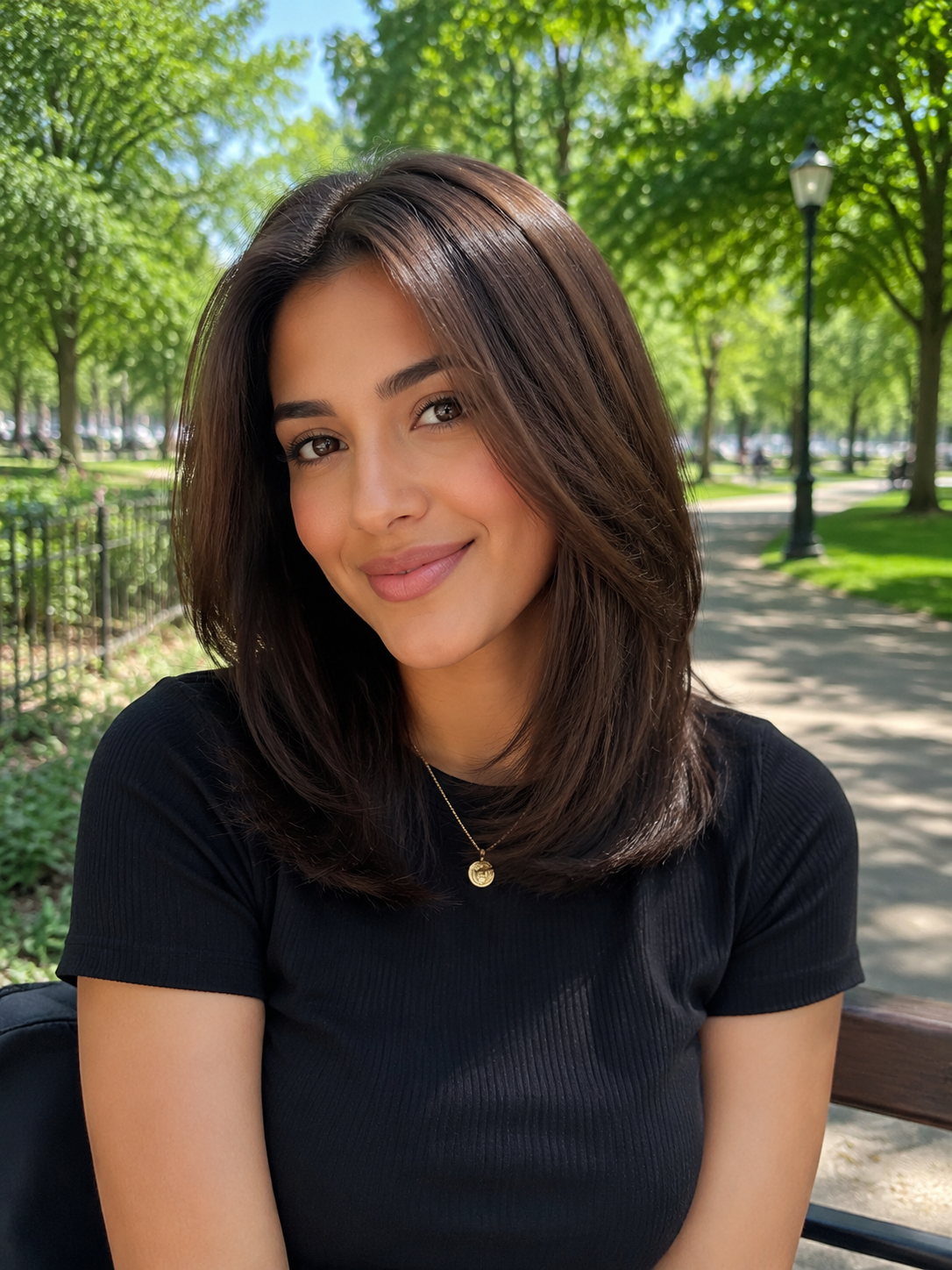
Layers built entirely inside the cut, invisible from the surface, work for thick hair that needs to keep its outline. The surface stays one-length while the interior gets significant weight removal. This is the most versatile option for genuinely dense hair. The cut behaves better when styled and air-dries without going pyramidal. Best executed by stylists who specialize in cutting around natural density.
Point-Cut Medium Bob

Point cutting into the ends creates softer, less blunt edges while maintaining a clean line overall. The technique pairs well with internal weight removal for thick hair. Vertical scissor work breaks up the hard perimeter just enough to look intentional rather than soft. Style with a smoothing serum and air-dry, or finish with a flat iron for definition. The point-cut ends keep the look from feeling severe.
A-Line Medium Bob
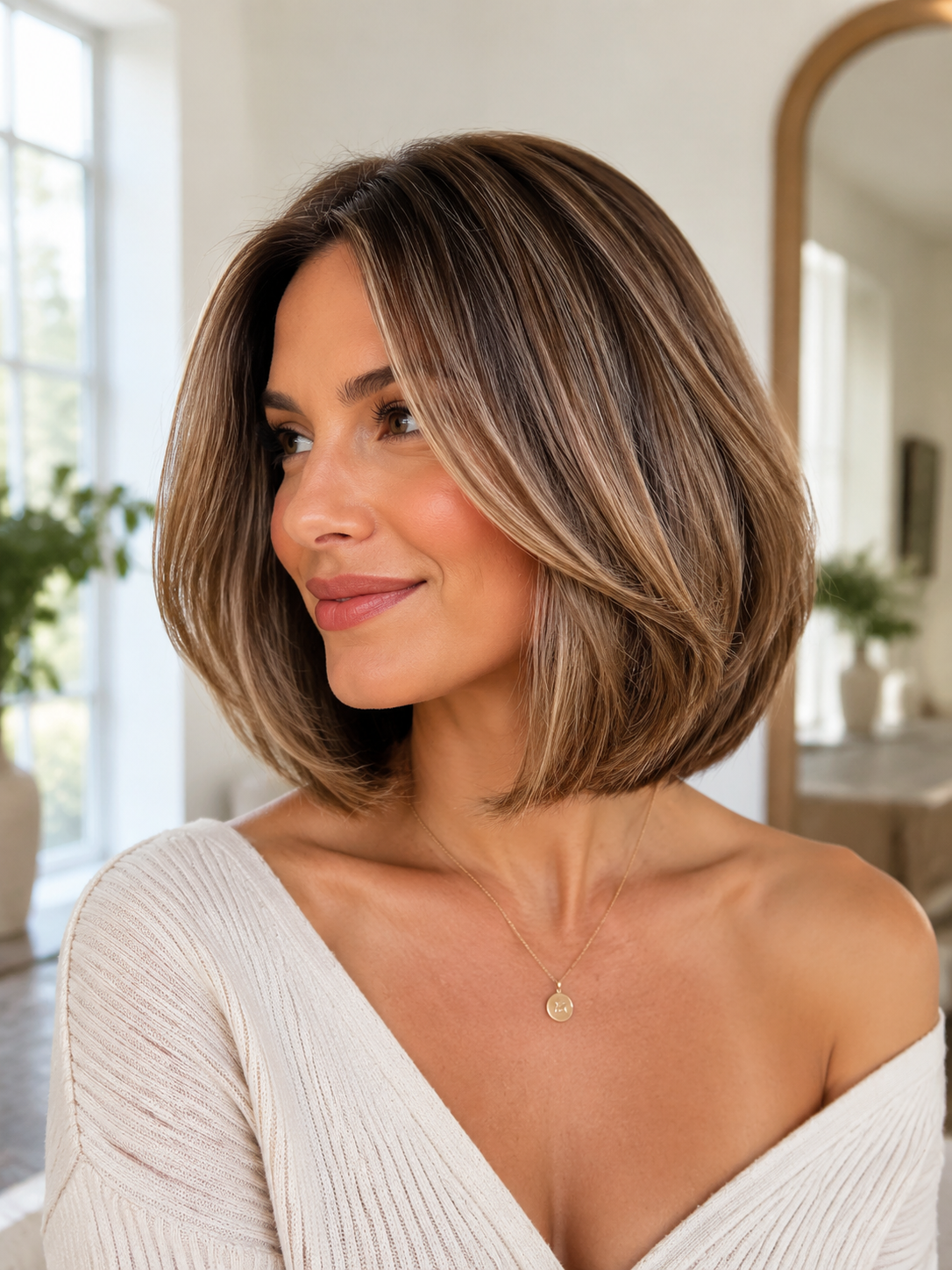
The A-line silhouette, slightly shorter in the back and longer in the front, suits thick hair particularly well. Density at the back gets removed through graduation rather than layering. The front length stays heavy and frames the jaw cleanly. Style with a round brush, rotating the ends inward at the perimeter. The shape gives thick hair a polished outline without requiring daily heat work.
Inverted Medium Bob
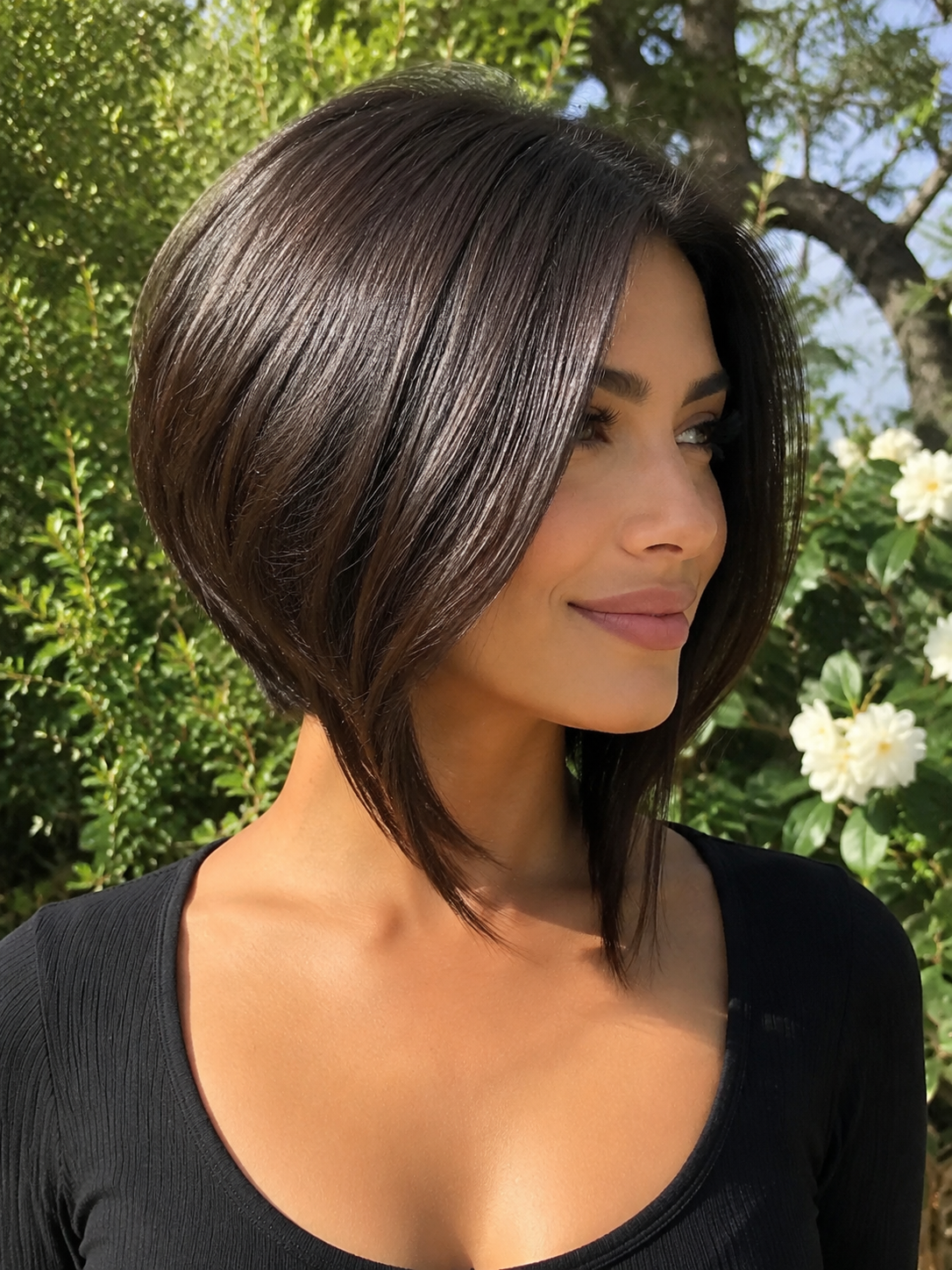
Stacked graduation at the back creates a defined shape without layering through the top of the cut. Thick hair holds the stacked back beautifully. There’s enough density to support the volume the cut creates. The front falls at the collarbone in longer pieces. Skip aggressive layering on the surface. The graduation does the bulk removal work efficiently and the styling stays simple with a round-brush finish.
U-Shape Medium Bob
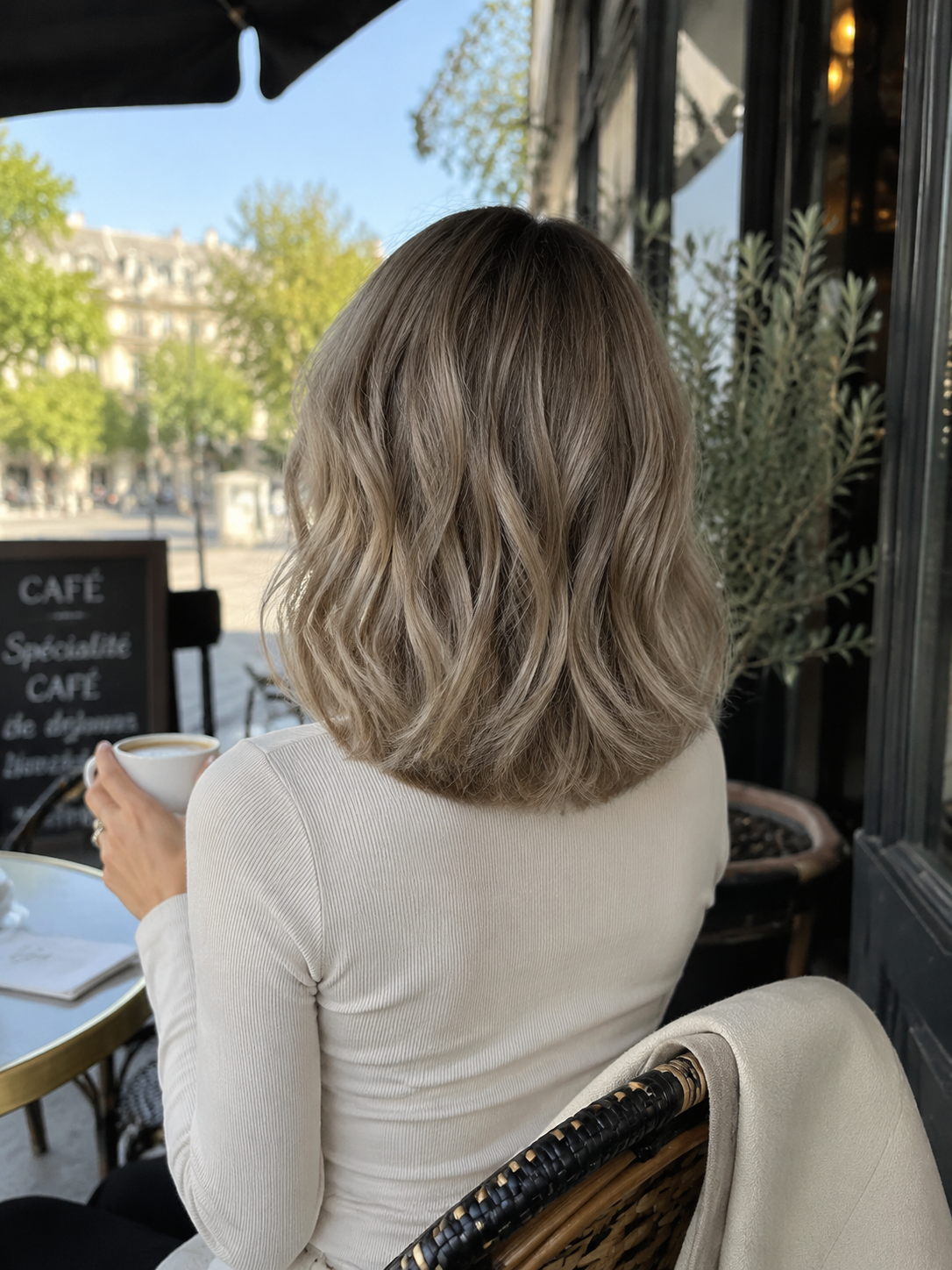
The U-shape, slightly longer in the center back and shorter at the sides, creates a curved perimeter that catches light and movement well on thick hair. The shape works because thick density fills out the curve naturally. Style straight for cleaner lines or wavy for softer interpretation. Best at just past the shoulder length, where the curve becomes pronounced enough to read as intentional rather than uneven.
Bottleneck Medium Bob
Narrowing at the jaw and expanding through the collarbone gives this version its bottleneck shape. The silhouette flatters thick hair because the natural density supports the wider bottom portion. Keep layering minimal. The shape relies on weight at the bottom, not internal layering. A round brush sets the shape cleanly. Smoothing cream keeps frizz down through the day for coarser textures.
Shaggy Medium Bob
Razored layers throughout with intentional roughness work surprisingly well on thick hair. The shag treatment disperses bulk through visible texture rather than hiding it. Volume at the crown reads natural rather than forced. Salt spray on damp hair, air-dry, and scrunch for the finish. The cut looks intentional even three months past your last appointment. Low-maintenance suits anyone tired of fighting their density.
Wavy Medium Bob
Soft S-waves through the mid-lengths give thick hair the movement it sometimes lacks when styled straight. Use a one-and-a-quarter inch wand, alternating direction by section. Thick hair holds curl beautifully but can drop quickly without prep. A mousse or wave-setting spray on damp hair before styling extends the life of the waves. Brush them out gently for softness once cool.
Curly Medium Bob
On thick natural curl, the longest layers hit just past the shoulders to account for spring factor. Wet hair will look noticeably longer than the dry result. Dry-cutting is essential for getting the perimeter right. Otherwise the cut shrinks unpredictably. A curl cream and a diffuser are required for definition. Refresh days two and three with a water-and-curl-cream mix in a spray bottle.
Side-Swept Medium Bob
A deep side part with the hair sweeping diagonally across the forehead works on thick hair with weight to spare. The sweep needs density to hold its line. Train the part with a comb on damp hair and set with a small amount of cream. The asymmetry softens square or strong jaw lines. Finish with a flat iron for polish or a wave wand for a softer interpretation.
Curtain Bangs Medium Bob
Parted bangs from cheekbone to jaw frame the face beautifully on thick hair. The fringe needs significant internal thinning to avoid heaviness across the forehead. Ask your stylist to texturize the bangs aggressively. Otherwise they sit like a curtain rather than falling open. Round-brush them outward and back from the face. The sweep should look effortless even though the cut underneath does the work.
Wispy Bangs Medium Bob
Piecey, separated bangs work on thick hair only when significant weight gets removed at the cut. Ask for point-cutting and slide-cutting through the bangs to create the wispy effect. Blow-dry with fingers and break apart with a small amount of texture cream. Heavy thick bangs age the face. Wispy versions keep the cut feeling modern. Trim every five to six weeks to maintain shape.
Asymmetrical Medium Bob
One side cut shorter than the other adds visual interest while removing bulk from one section of the cut. Thick hair carries asymmetry well, since density supports the strong contrast. Style straight for crisp asymmetry, or wavy for softer impact. Maintenance runs every six to eight weeks to keep the angle defined. Best on straight to wavy hair, since heavy curl pattern obscures the angle.
Choppy Medium Bob
Choppy, visibly textured ends give thick hair character without heavy layering. Ask for slide-cutting and point-cutting throughout the mid-lengths. Air-dry with a salt spray for the intended look. The finish disguises any natural unevenness in growth pattern. The choppy treatment also disperses thickness through visible texture rather than relying entirely on internal weight removal. Best for women who prefer a less polished aesthetic.
Tucked-Under Medium Bob
A round-brush blowout with the ends curled firmly under at the collarbone creates a polished retro shape. Thick hair holds the curl beautifully. The under-curve gives weight a clean ending point rather than letting it poof outward. Use a two-inch round brush and direct heat at the ends from above. A smoothing serum and a light hold spray finish the look without crunch.
C-Curl Medium Bob
The C-shape bend at the ends, popular for 2026, flips inward in a soft curl rather than a hard one. Use a flat iron or a one-and-a-half inch wand. Thick hair benefits from the curl shape because it gives the bottom of the cut a clear visual stopping point. Pairs particularly well with bronde, mushroom brown, or any cool brown shade trending right now.
Undercut Medium Bob
A hidden undercut at the nape removes significant weight invisibly. The undercut sits below where surface hair falls, so the cut still looks one-length from outside. This option works for genuinely thick hair where standard weight removal techniques don’t go far enough. Ask for a stylist experienced with undercuts on women. The cut grows out gradually and only needs maintenance every eight to ten weeks.