
The lob became the most-requested length for women over 50 for one reason that doesn’t get mentioned often. It’s the only cut that lets you wear hair both up and down without commitment. A true short bob locks you into wearing it down every day. A lob, sitting between collarbone and a few inches past the shoulders, still pulls back into a low pony or a clip for gym days, gardening, or when humidity wins. The 22 long bobs below all sit in that sweet spot. Each one accounts for the texture changes that come with age, the desire for low-maintenance styling, and the reality that hair patience drops the older you get.
Jump to:
Classic Blunt Lob
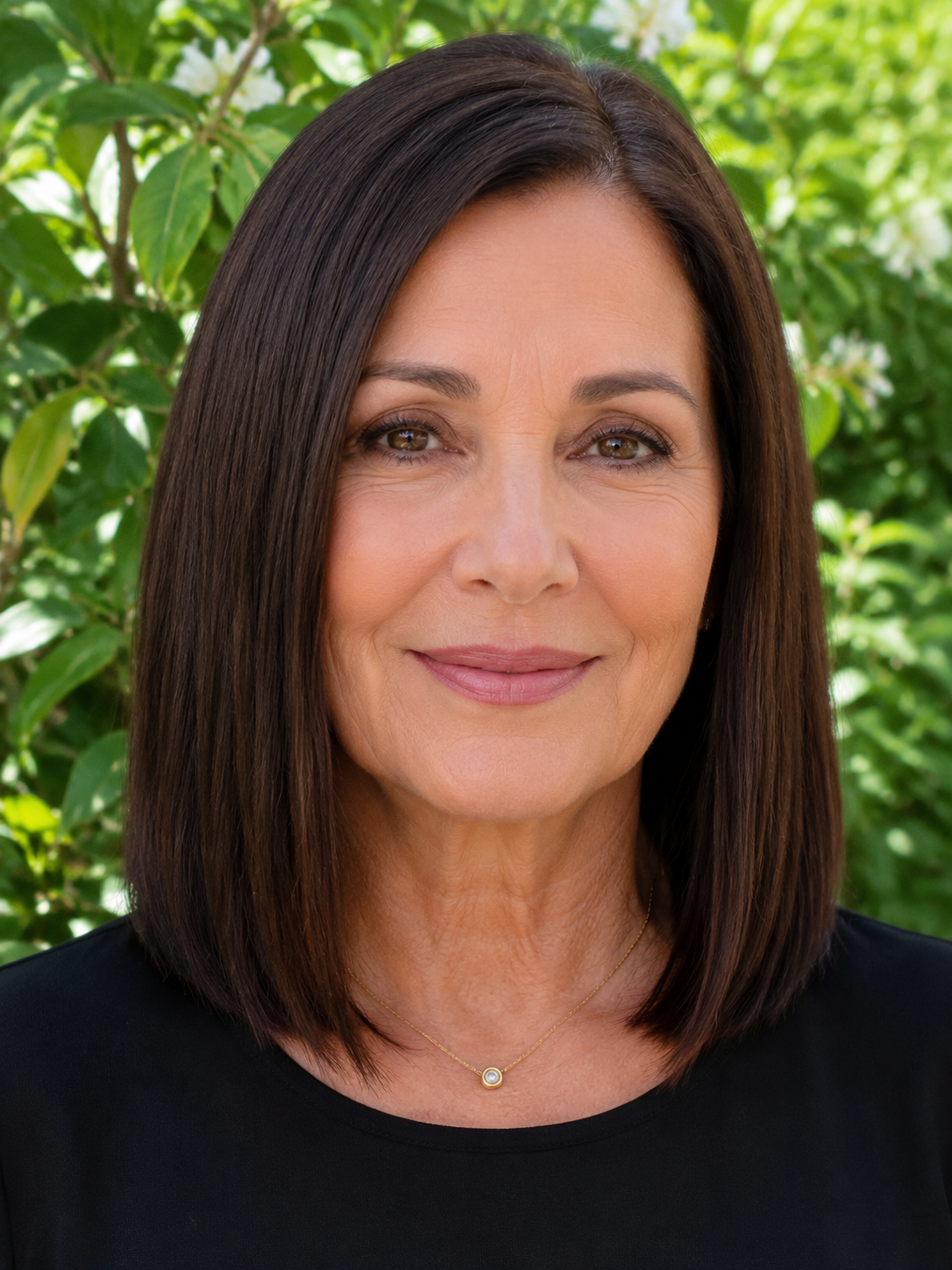
A clean blunt perimeter just past the shoulders gives the cut its weight and structure. No layers, no fuss. The bottom line does all the visual work, which suits hair that’s lost density along the part. Style straight with a smoothing serum and a flat iron pass. Best maintained every six to eight weeks. The blunt edge needs precision to keep its character and softens fast as it grows.
Soft Layered Lob
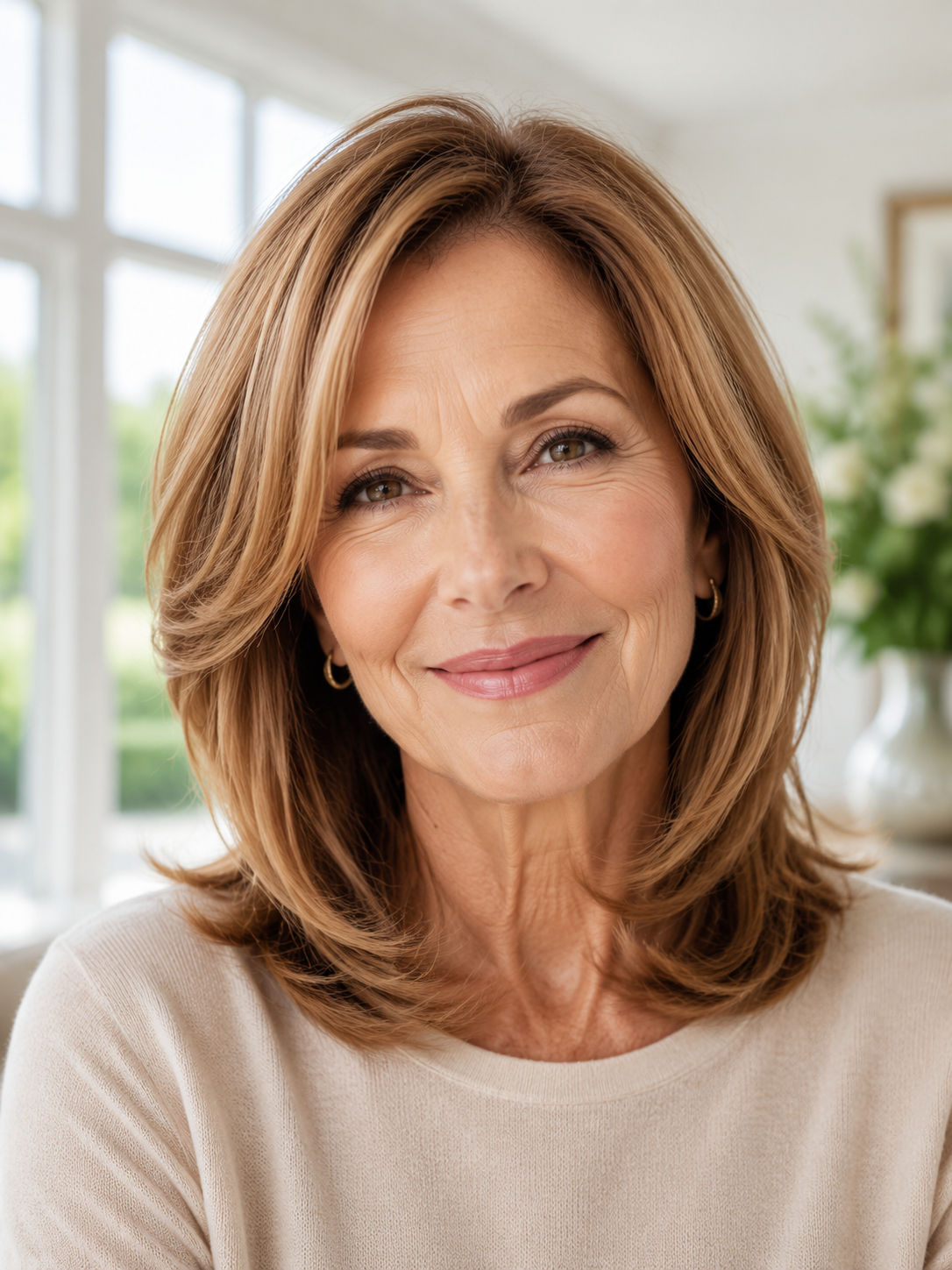
Long, subtle layers starting below the chin remove just enough bulk to give the cut movement without sacrificing the strong outline. Best on medium to thick hair that needs lightness through the mids. The layers stay invisible from the front and reveal themselves with movement. Air-dry with a curl cream for natural body. A round-brush finish brings out the softness if you want a polished version.
Wavy Lob

Loose S-waves through the mid-lengths and ends, set with a one-and-a-quarter inch wand, give this lob its signature softness. Skip the section closest to the face for a modern finish. Alternate the curl direction by section to keep the waves from looking uniform. A flexible-hold spray sets the shape without crunch. The waves hide density loss along the part beautifully, which becomes relevant after 50.
Curtain Bangs Lob
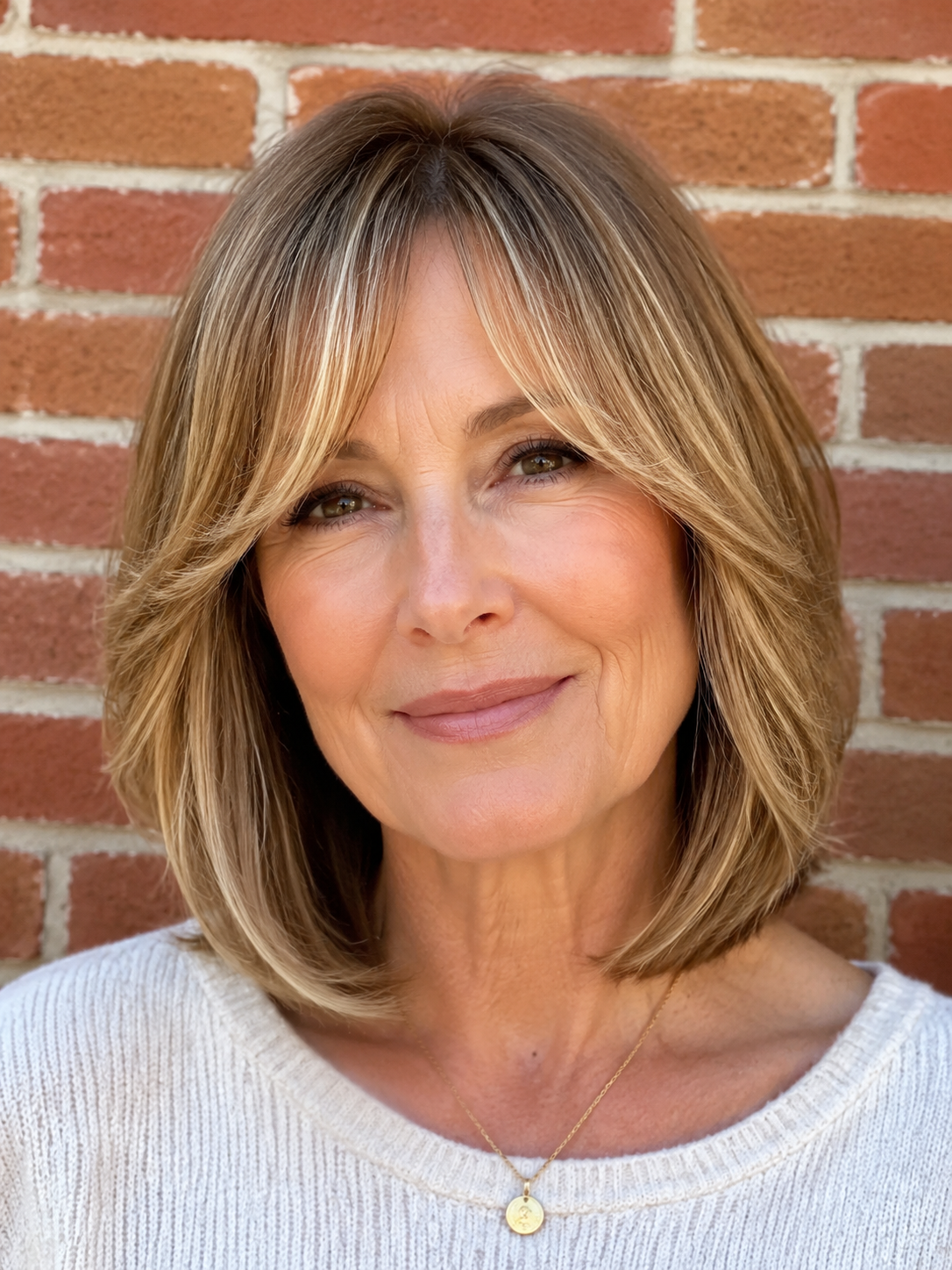
Parted bangs falling from the cheekbone to the jaw remain the most flattering fringe option after 50. The bangs blend into the rest of the cut as they grow out. That makes the upkeep painless. Round-brush them outward and away from the face. The sweep should look effortless even when it takes practice. Refresh every six weeks to keep the length sitting correctly.
Side-Parted Lob
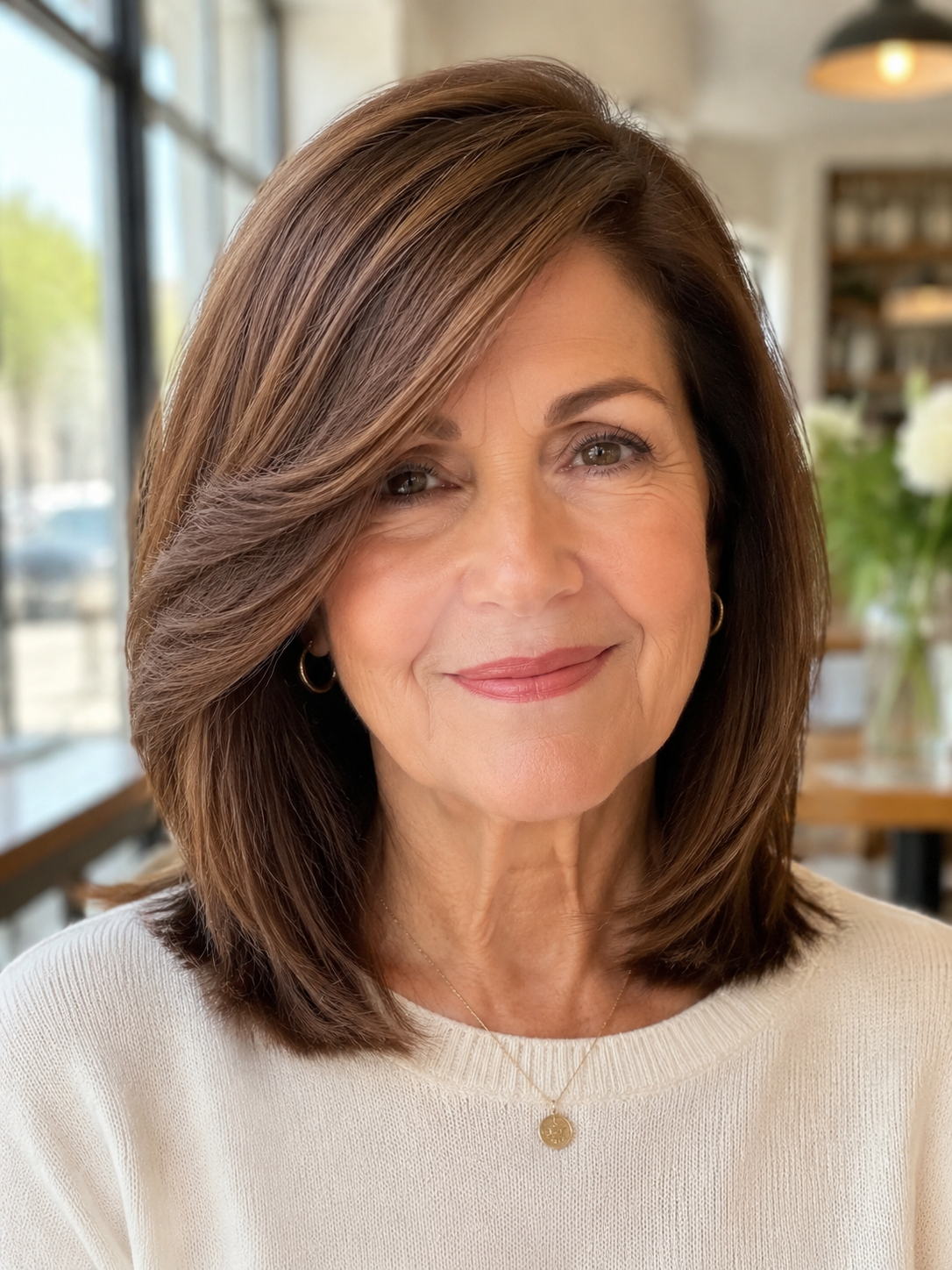
A deep side part lifts hair away from the face and adds asymmetry. The heavier side falls in a soft sweep across the forehead. The look softens square or strong jaw lines naturally. Train the part with a comb on damp hair and set with a small amount of mousse. Works for both blowouts and air-dried finishes, which makes it forgiving on weeks when styling time is short.
Center-Parted Lob
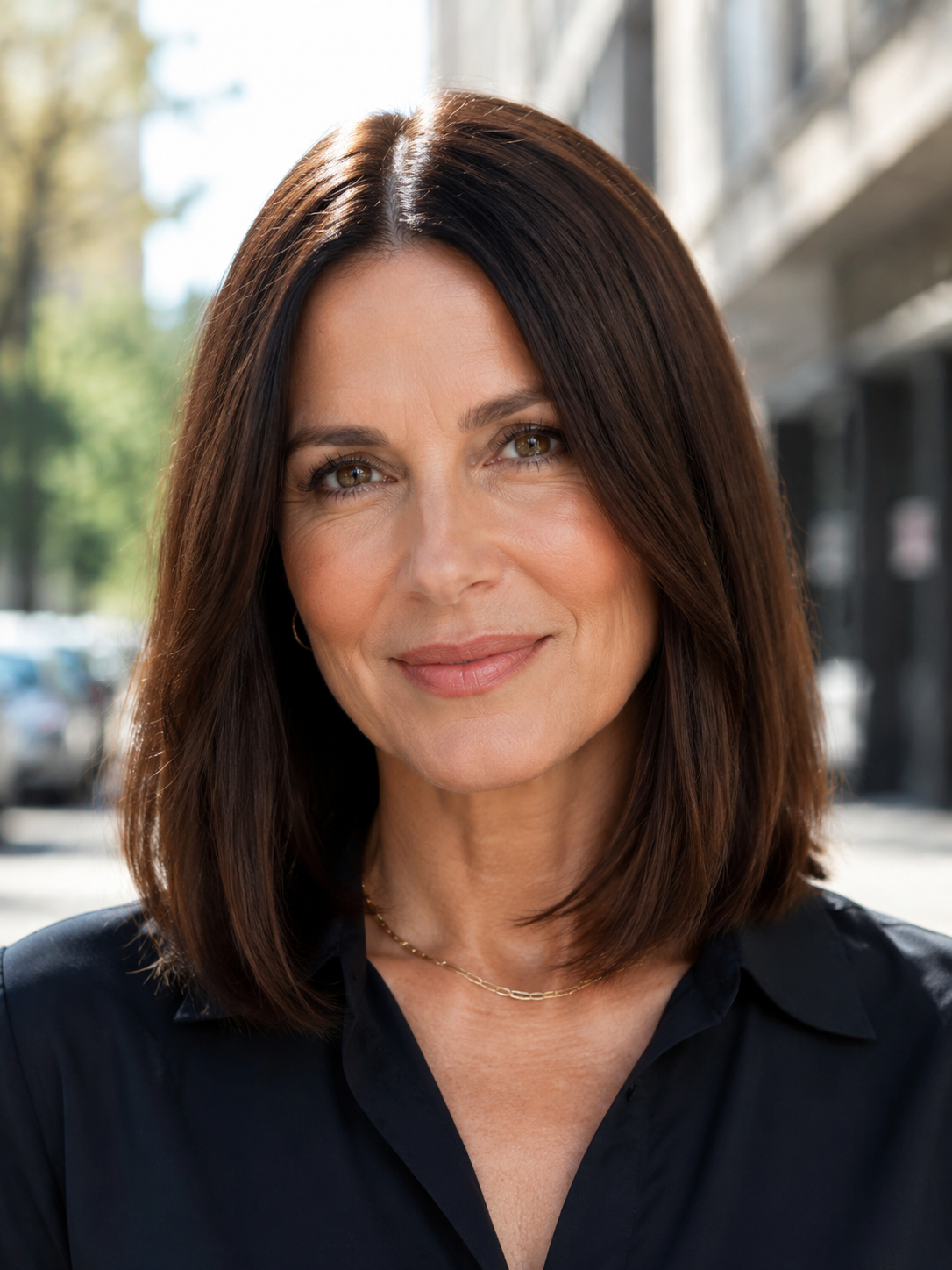
A clean center part with the lob falling at the collarbone gives the cut a polished, modern shape. The straight part requires hair to be styled either smooth or wavy. Neither too messy nor too set. Best on hair that hasn’t lost too much density along the parting line, since the center exposure shows scalp more than side parts do. A scalp brightening product helps along the parting if needed.
Shaggy Lob
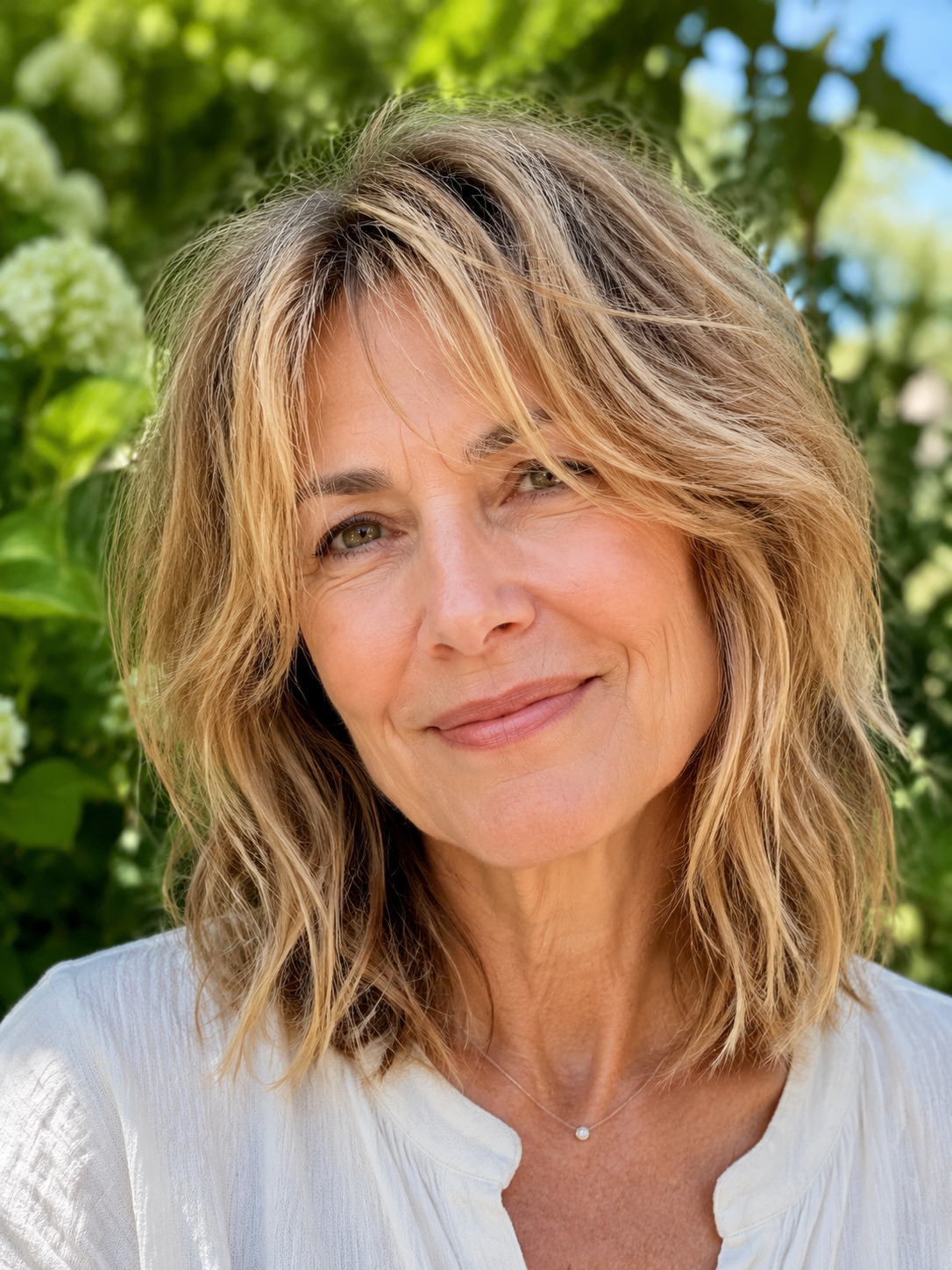
Razored layers and visible texture throughout give this lob its lived-in character. The shag treatment builds volume at the crown where mature hair often flattens. Skip the curling iron entirely. Salt spray on damp hair, air-dry, and scrunch. The look stays modern even three months past your last appointment. Best on hair that has some natural wave or texture to support the shape.
Choppy Lob
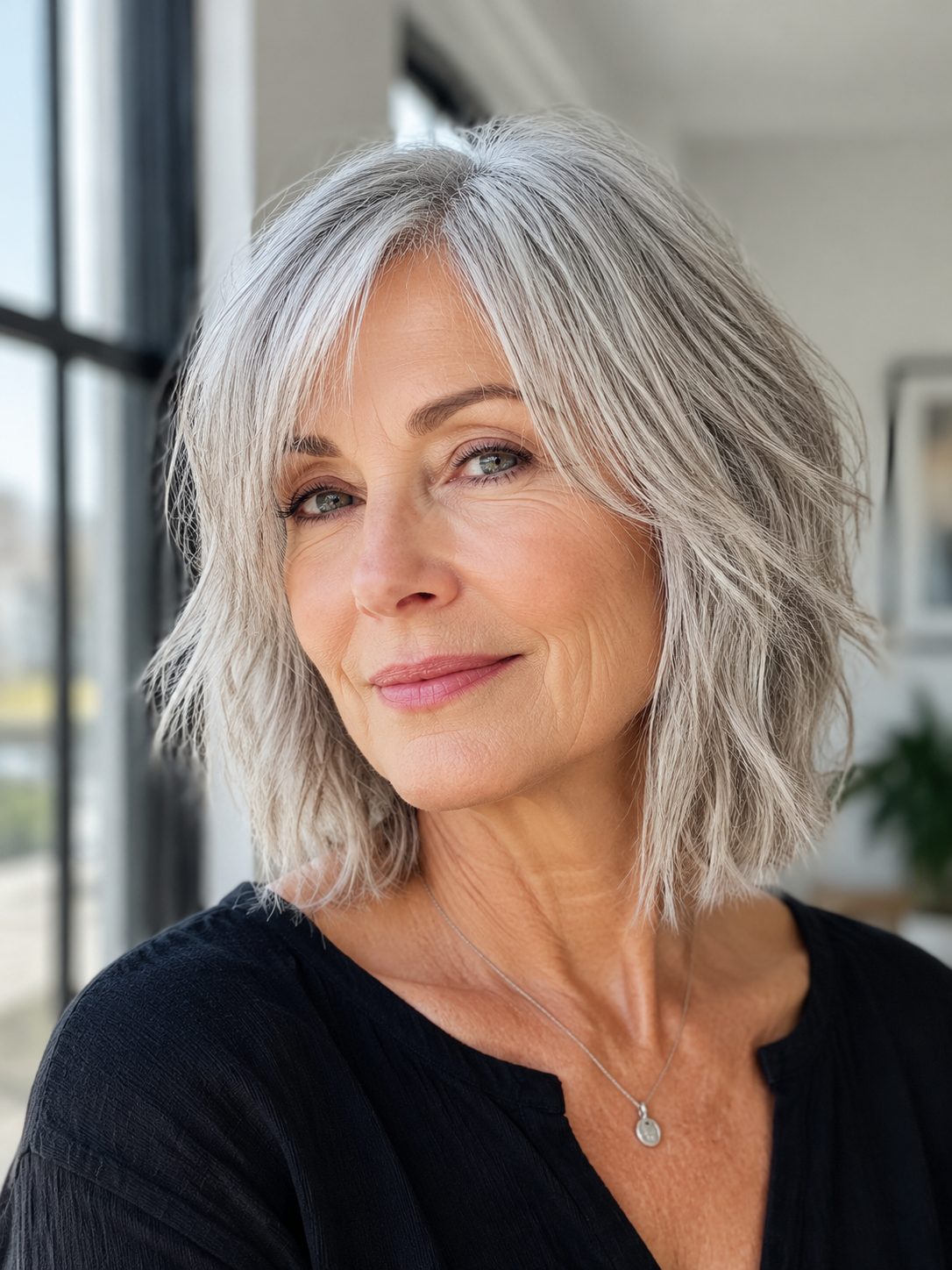
Visibly choppy ends with slide-cut texture throughout the mid-lengths keep the cut from feeling too set. Air-dried with a curl cream, the lob falls into pieces that look intentional rather than messy. The finish pairs particularly well with gray or silver hair, since texture catches light differently along uneven ends. Maintenance every eight weeks keeps the shape consistent.
A-Line Lob
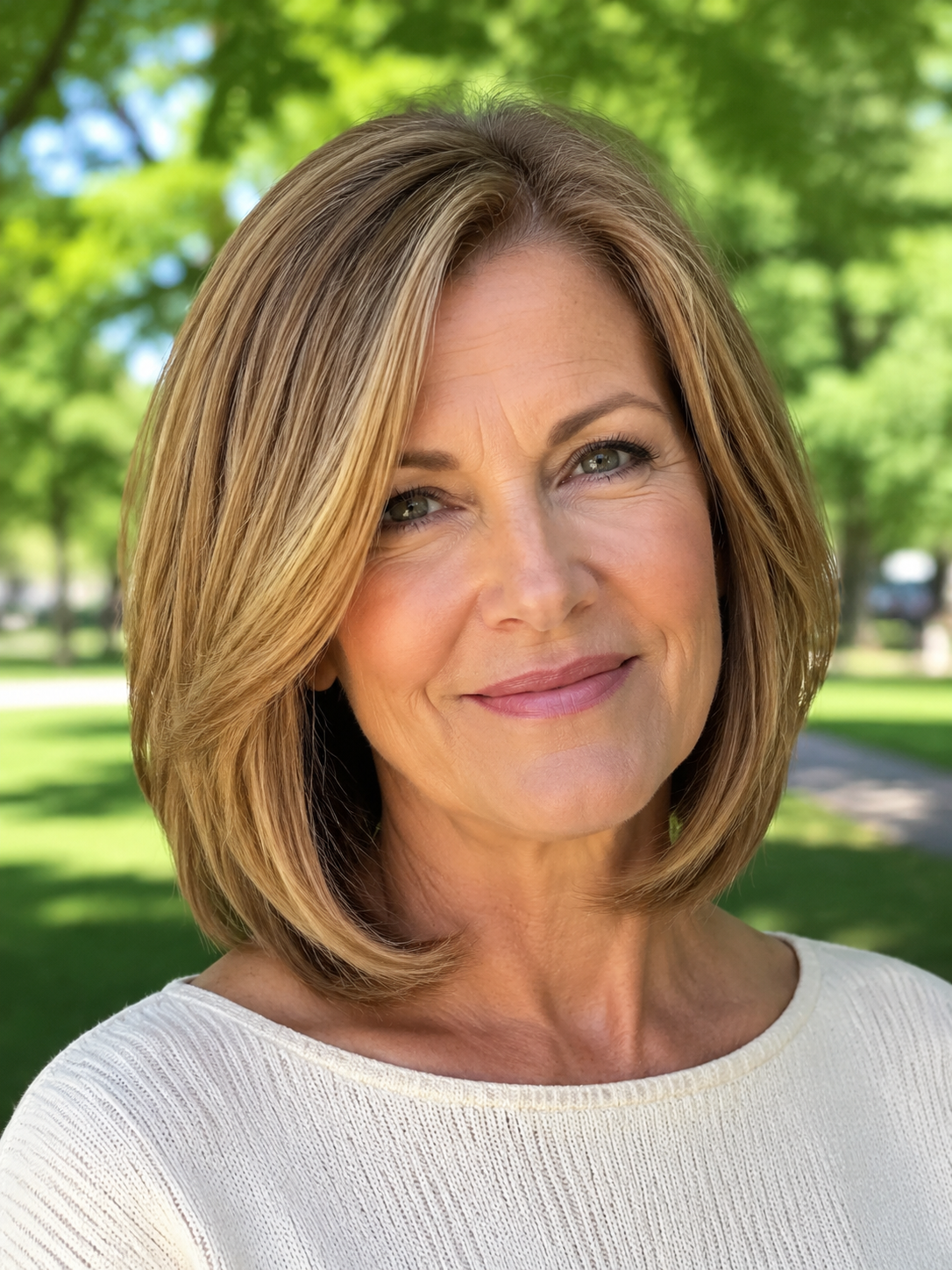
The A-line silhouette, slightly shorter in the back and longer toward the collarbone in the front, pulls focus forward and elongates the neck. The angle should stay subtle at lob length. Otherwise the front pieces start looking too heavy. The shape works especially well tucked behind the ears with the front falling forward to frame the jaw. A flat iron sets the inward bend at the ends.
Inverted Lob
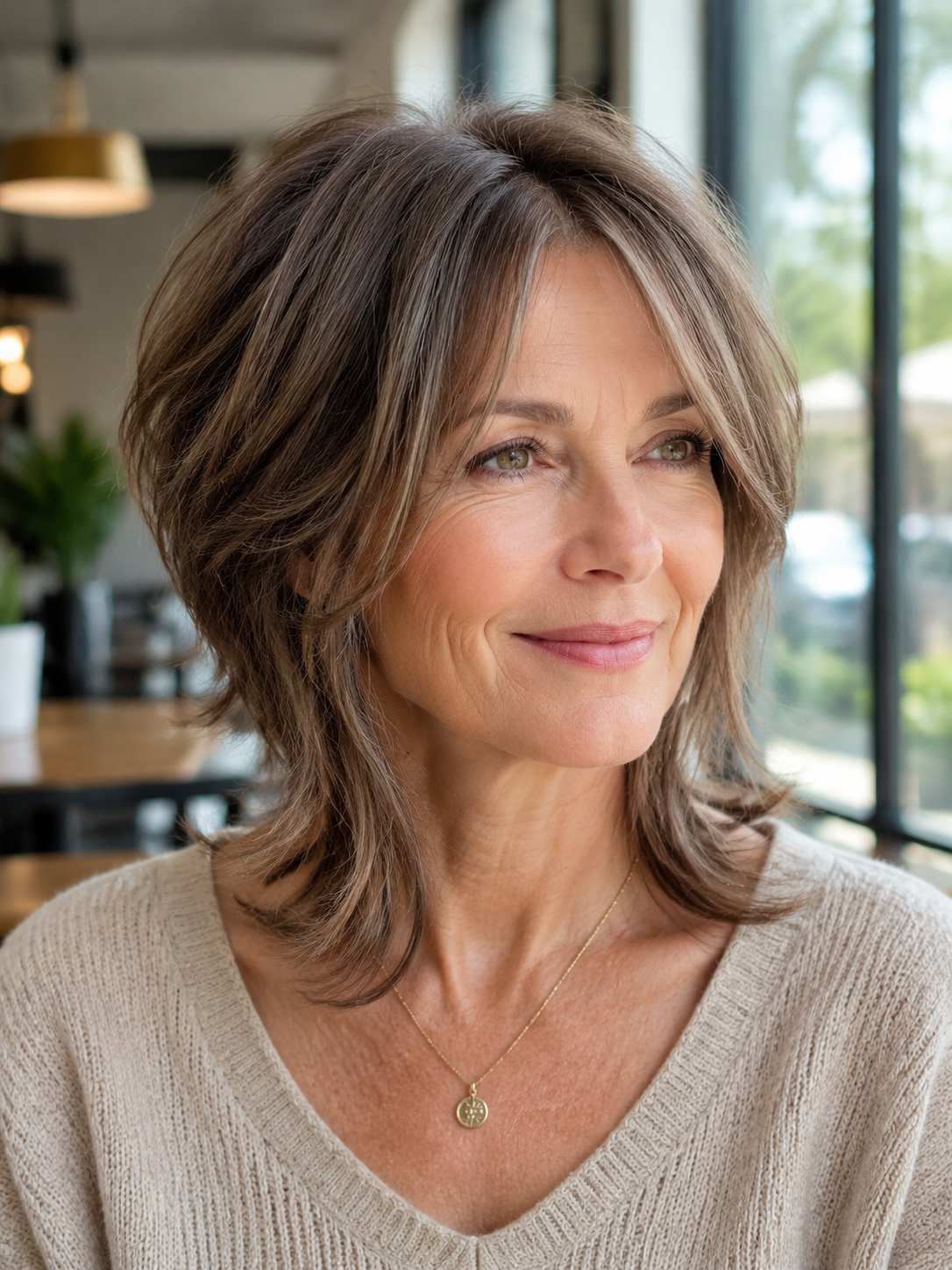
Stacked weight at the back creates volume where mature hair tends to lose body. The graduation provides lift without root spray every morning. The front falls in longer pieces along the collarbone. Keep the back texture slightly piecey for movement. Otherwise the stacking can look helmet-like. A round brush sets the shape on dry hair if you want to refresh between washes.
Razored Lob
Razor cutting at the perimeter creates softer, feathered ends instead of a hard blunt line. The technique removes weight at the bottom while keeping length intact. Best on medium to thick hair. Fine hair can look stringy with too much razor work. The finish moves better than blunt cutting and looks less severe, which matters as features soften with age.
Face-Framing Lob
Swept layers around the front of the face replace what bangs would do, without the daily styling commitment. The shortest face-framing pieces should hit at the chin or jaw, never higher. These layers can be tucked behind the ears or left forward depending on mood. They also disguise loss of definition along the jaw line, which is a common concern after 50.
Money Piece Lob
Lightened panels directly framing the face add brightness without committing to all-over color lift. Money pieces pull light forward and warm the complexion naturally. Keep the placement starting at the part and ending around the chin. The contrast with the rest of the hair should feel intentional but soft. Refresh the panels every twelve to sixteen weeks. The grow-out stays subtle compared to traditional highlights.
Balayage Lob
Hand-painted highlights through the mid-lengths and ends give the cut depth without harsh regrowth lines. The technique stays low-maintenance, which matters when monthly root touch-ups aren’t appealing. Stylists tend to place the lightest pieces around the face and slightly heavier through the bottom half. The painted dimension shows off best with a wavy finish. Single-process base color keeps the foundation consistent.
Bouncy Blowout Lob
A round-brush blowout with volume at the roots and a soft curve at the ends gives this lob its bouncy character. Roll the brush under at the ends and lift at the crown while drying. A flexible-hold spray locks it in without stiffness. The blowout works on almost any face shape and creates the illusion of fuller hair, which fine textures often need.
C-Curl Lob
The C-shape bend at the ends flips inward in a soft curl. Use a flat iron or a one-and-a-half inch curling iron, rolling under at the perimeter. The bend gives the cut polish without it looking dated. Works particularly well on hair colored in bronde, mushroom brown, or any of the cool brown shades trending now. Best refreshed every two to three washes.
Soft Waves Lob
S-shaped waves throughout, set with a curling iron and brushed out for softness, look polished without being stiff. The brushout step is essential, since fresh curls can look set rather than natural. Hairspray after brushing, never before, keeps the waves moving instead of locking them. The finish works for almost any face shape and forgives the texture changes mature hair brings beautifully.
Tucked-Behind-Ears Lob
Styled with the front pieces tucked behind the ears, the lob shifts focus to the face and frames the jaw cleanly. The cut needs enough length and weight to stay tucked through the day. Otherwise the front pieces slip forward constantly. A small amount of pomade behind each ear keeps the tuck in place. The styling option works for busy days when full styling isn’t an option.
Flipped-Out Lob
Flipping the ends outward instead of curling them under adds a retro nod that feels current again. Use a flat iron, rotating the wrist away from the head at the ends. The flip works best on straight or slightly wavy hair. Avoid going too dramatic with the angle. Extreme flipping looks dated rather than intentional. A light hold spray sets the shape without weight.
Beachy Lob
Loose, undone waves with visible texture and a slightly tousled finish give the lob its beachy character. The look reads relaxed without being unkempt. Salt spray on damp hair, scrunched and air-dried, gives the right amount of texture. A wave wand can supplement air-dried texture for special occasions. Pairs particularly well with sun-warmed bronde or honey blonde shades.
Sleek Lob
Smooth, high-shine finishing on a one-length lob leans into polish and reflective surface. Smoothness is the whole point. That means a glossing treatment, smoothing serum, and a flat iron pass. Best if your hair has minimal frizz potential, since the look depends on every strand staying in place. Pairs especially well with a single-process color in a deep, rich shade.
Tousled Lob
Worked through with a salt spray and rough-dried for visible texture, this version trades polish for character. The finish hides regrowth and texture changes along the part. Best left to air-dry the last twenty percent for natural shape. A small amount of dry shampoo at the roots between washes keeps volume up. The lived-in finish suits anyone who values quick styling over precision.