
The styling rule no one tells you when you start wearing glasses every day: full bangs are almost always a fight with your frames. Heavy fringe that sits at the brow line cuts the face into too many horizontal sections once you add glasses to the mix. The eye doesn’t know where to land. That’s why long bobs work so well with glasses, especially with curtain bangs, side-swept fringes, or no fringe at all. The 22 lobs below all sit between collarbone and a few inches past the shoulders. Each one has been chosen for how it interacts with frames, whether you wear bold acetate, thin metal, cat-eyes, or classic round wires.
Jump to:
Blunt Lob
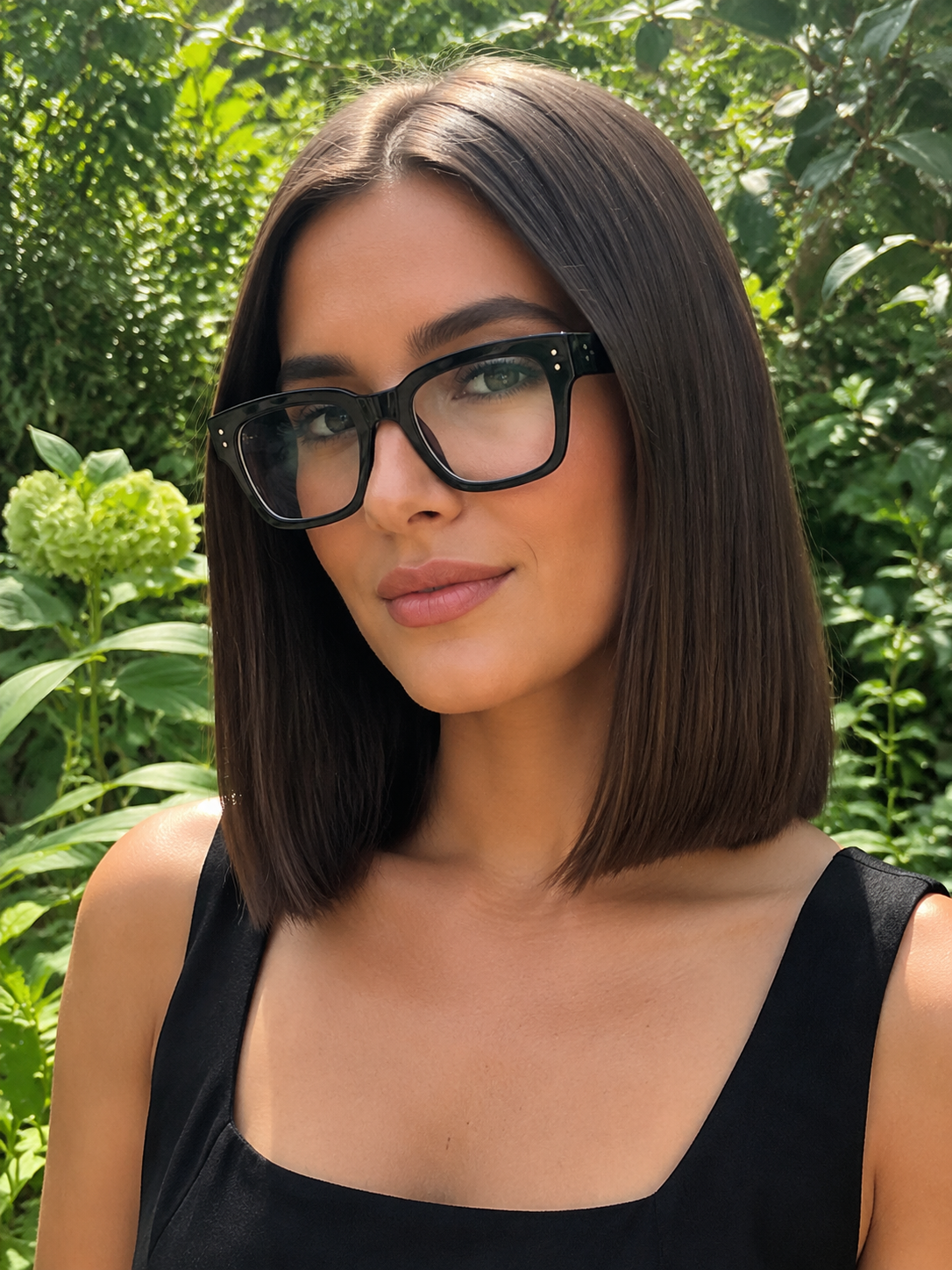
A clean blunt perimeter at the collarbone gives glasses room to be the focal point of the face. The cut’s strong outline complements frames without competing with them. Pair with bold acetate or geometric frames for the most striking effect. Style straight with a smoothing serum and a flat iron pass. The minimal silhouette lets the frames take center stage, which is often what glasses-wearers actually want from a haircut.
Curtain Bangs Lob

Parted bangs falling from cheekbone to jaw work beautifully with glasses because the fringe stays above frame tops. The sweep frames the face without hitting your lenses. Best on hair with some natural movement or styled with a round brush for the signature outward sweep. The bangs blend into the rest of the cut as they grow out. Refresh every five to six weeks to keep them sitting correctly.
Side-Swept Lob
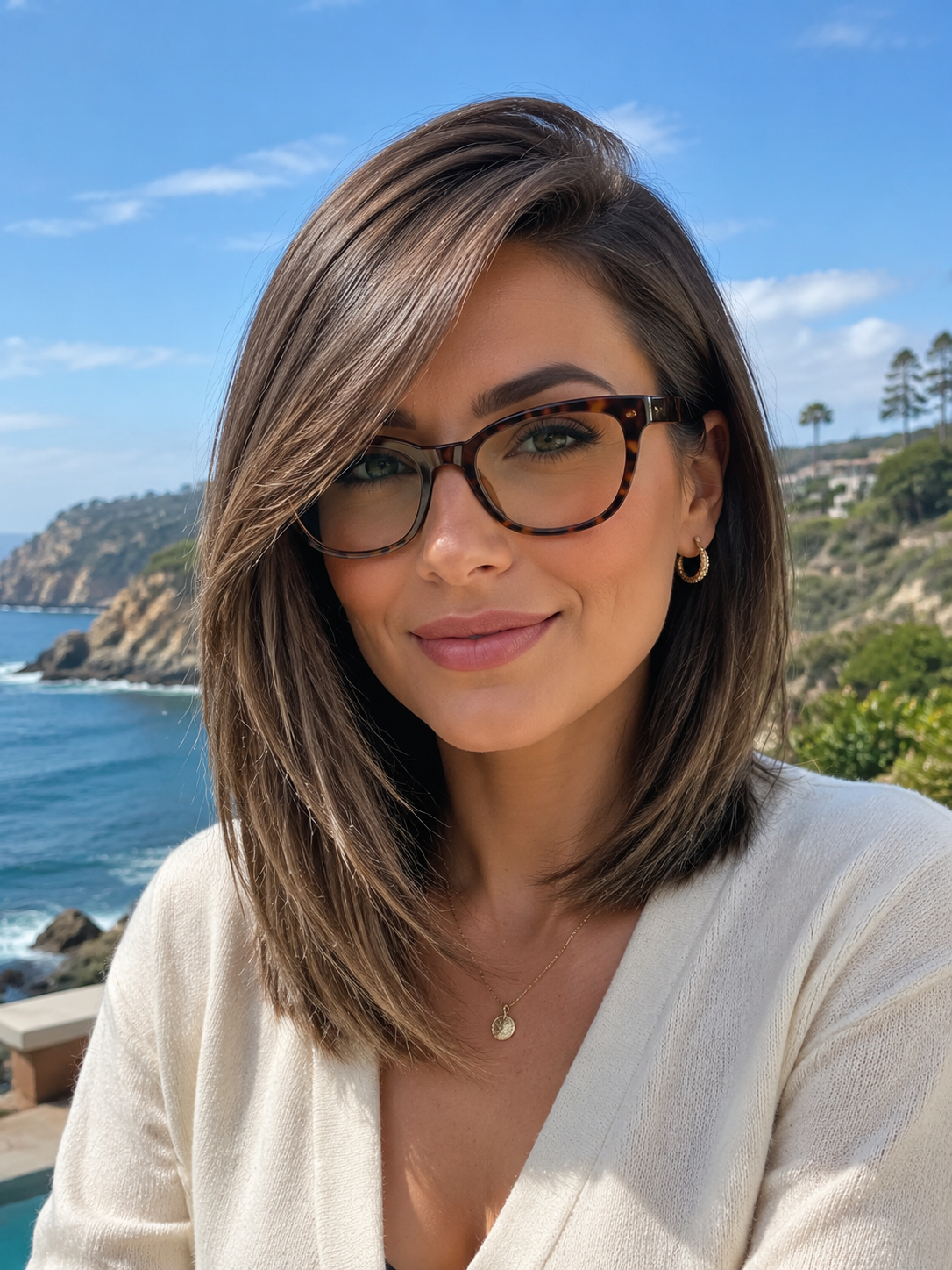
Hair swept diagonally across the forehead and falling to one side avoids competing with frames entirely. The sweep concentrates volume to one side, which adds asymmetry without crowding the top of the glasses. Train the part on damp hair with a comb and set with a small amount of mousse. Pairs particularly well with rectangular or rectangular-rounded frames, where the horizontal frame top benefits from a clear top edge of hair.
Side-Parted Lob
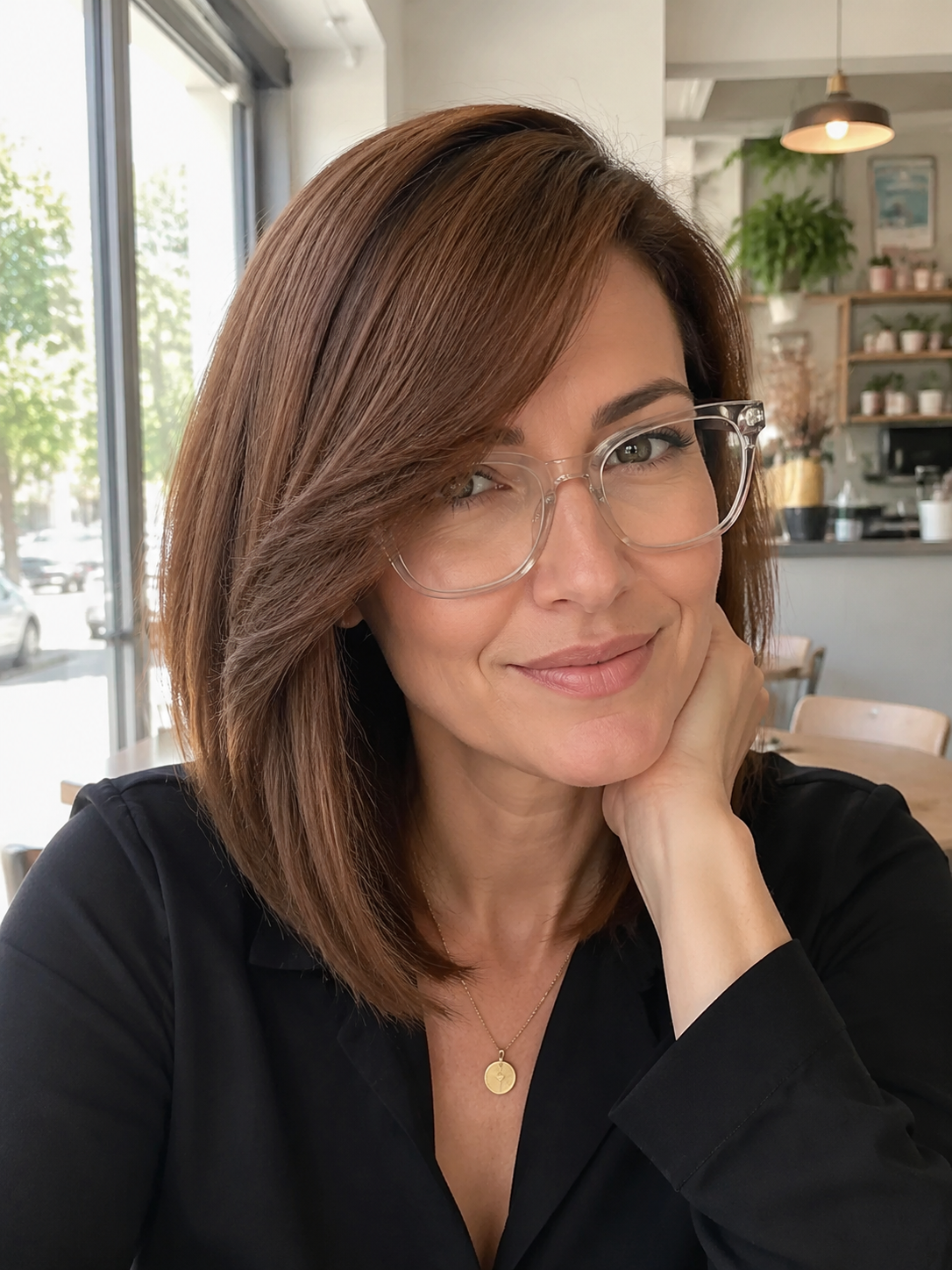
A deep side part lifts hair away from the face and works with virtually any frame style. The asymmetry softens square jaw lines and helps balance bolder frame shapes. Train the part with a comb on damp hair and set with a small amount of mousse at the root. Works for both blowouts and air-dried finishes, which makes it a forgiving option for daily wear with glasses.
Center-Parted Lob
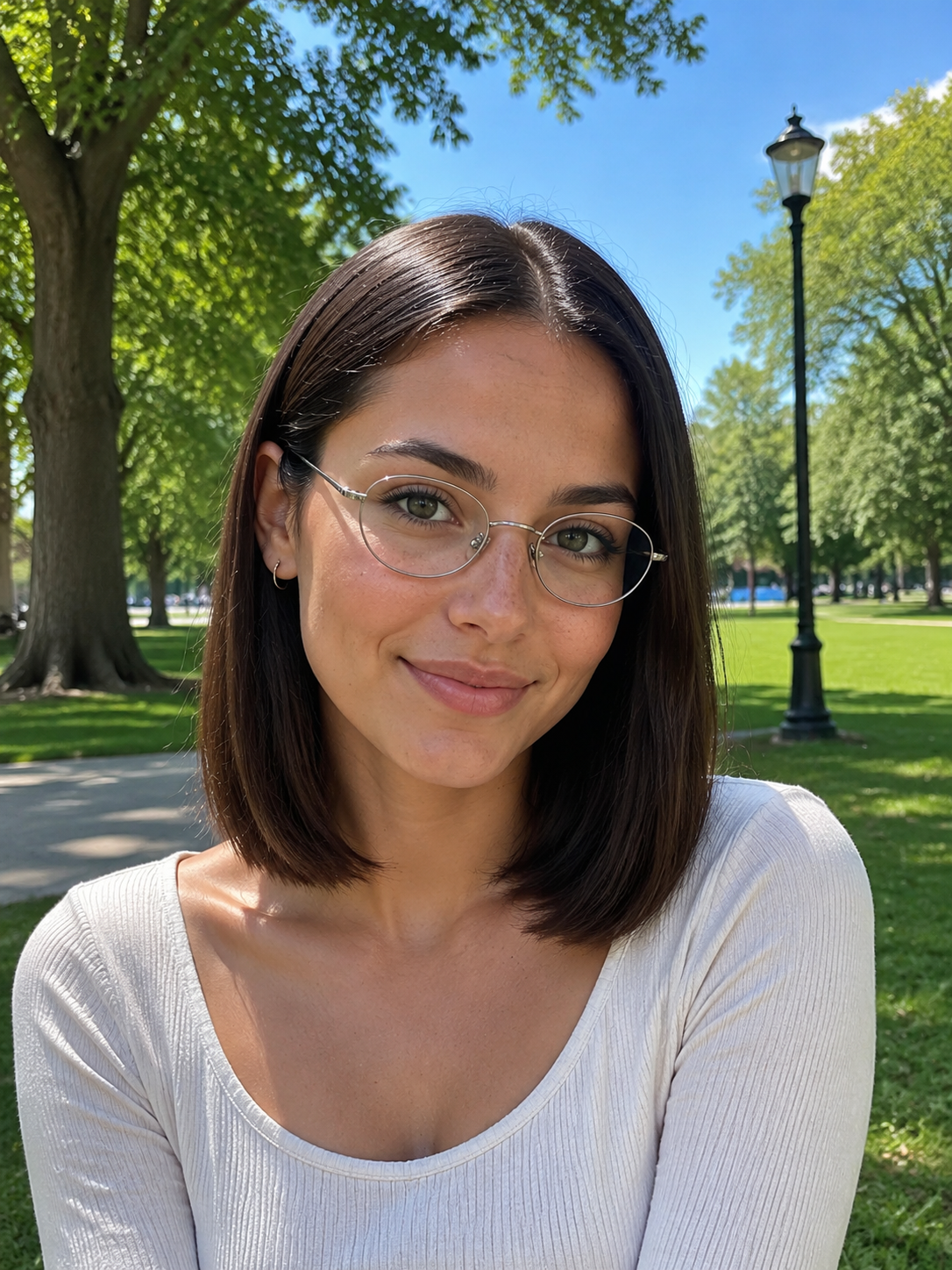
A clean center part with the lob falling at the collarbone gives the cut a polished, modern shape. The vertical line of the part complements round, oval, and cat-eye frames especially well by adding visual structure. Best on hair styled either smooth or wavy, not messy. A small amount of root-lifting spray at the part keeps the cut from going flat on top of the glasses.
Wavy Lob
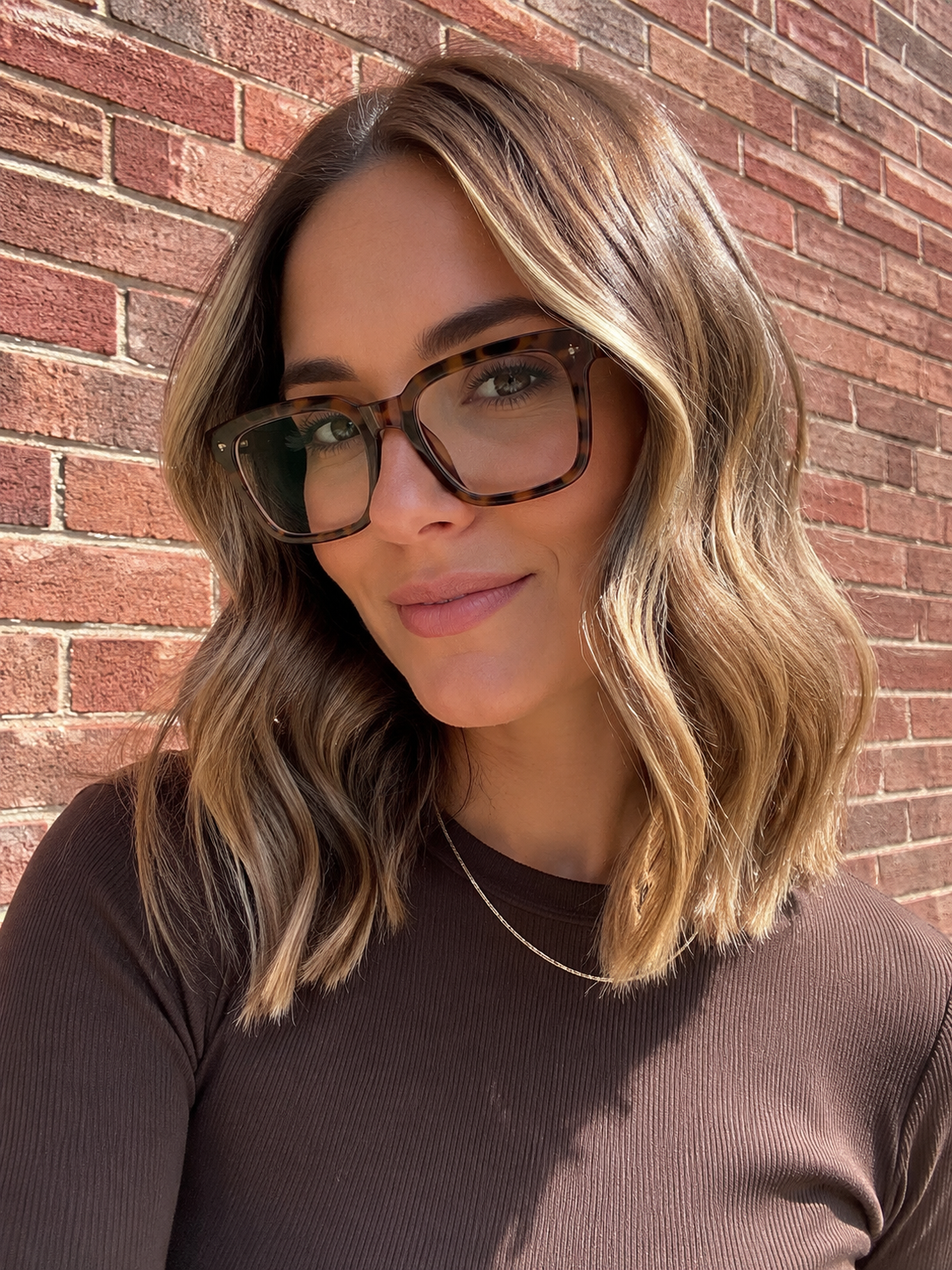
Loose waves through the mid-lengths and ends soften the geometry of bold frames. The waves add curvature to balance the angular shapes that many modern glasses use. A one-and-a-quarter inch wand, alternating direction by section, sets the waves. The softness contrasts beautifully with strong frame shapes like rectangular acetate or square wire. Avoid heavy hair products that flatten the wave and weigh down the front pieces.
Layered Lob

Internal layering removes bulk while keeping the strong perimeter that works alongside glasses. The layers stay invisible from the front and reveal themselves with movement. Best on medium to thick hair, where layering improves rather than thins the cut. Air-dry with a curl cream for natural body or finish with a round brush for polish. The layered version dries faster, which matters on rushed mornings.
Shaggy Lob

Razored layers and visible texture throughout work surprisingly well with glasses, particularly oversized or bold frames. The textural contrast keeps the look balanced. The shag’s intentional roughness reads modern next to clean frame lines. Salt spray on damp hair, air-dry, and scrunch. Best on hair with some natural wave or texture. The cut looks intentional even months past your last appointment.
Choppy Lob
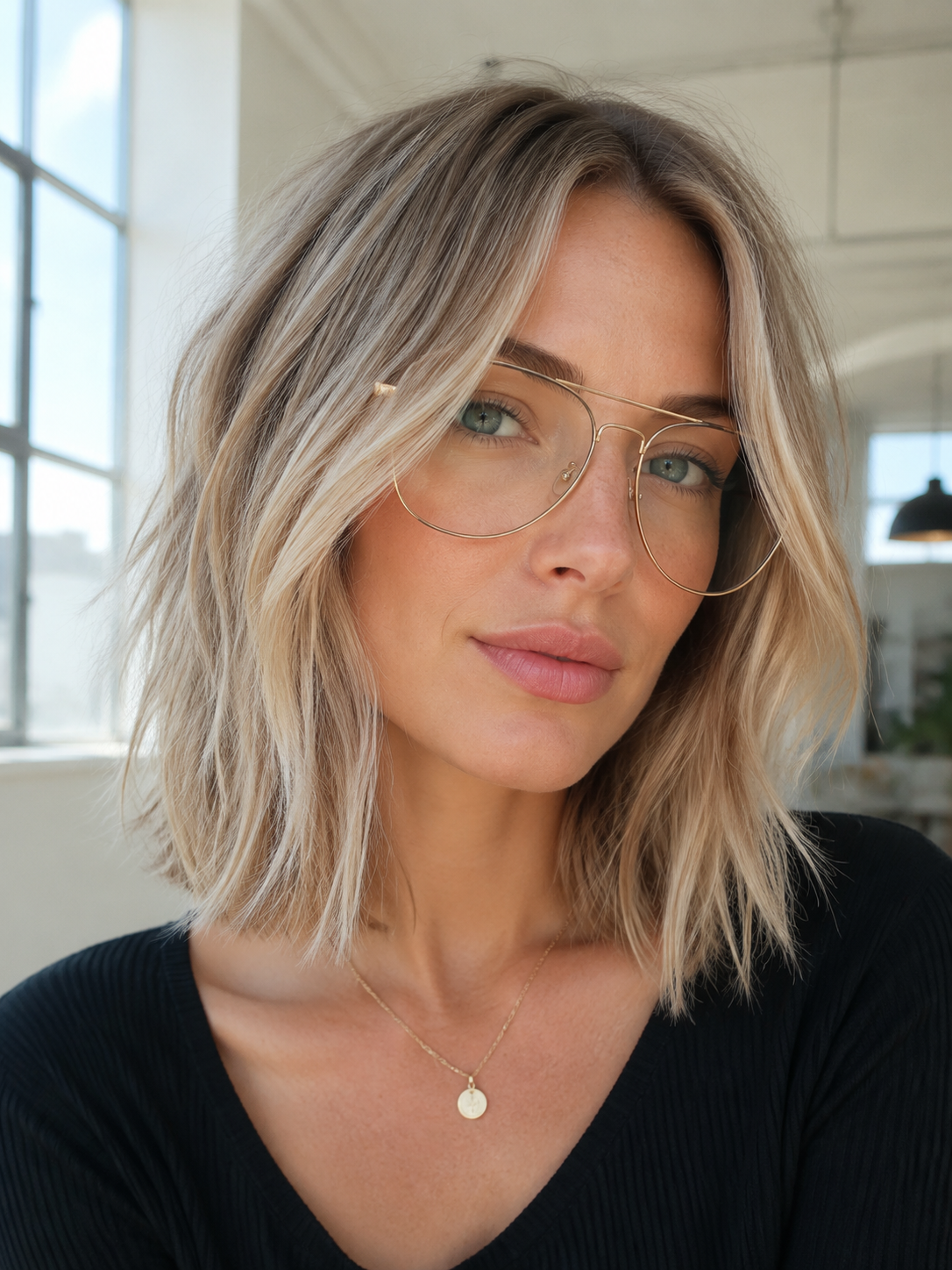
Visibly choppy ends with slide-cut texture throughout the mid-lengths suit anyone who wants a cut with personality beyond their frames. Air-dried with a curl cream, the lob falls into pieces that look intentional rather than messy. The finish pairs particularly well with thin metal or wire frames, where the textural cut adds visual weight that thin frames lack. Maintenance every eight weeks keeps the shape consistent.
Wispy Bangs Lob

Piecey, separated bangs that skim the brow line work with glasses only if the wispiness creates space for frames to show through. Heavy thick bangs cover too much forehead and clash with frame tops. Wispy bangs do the opposite, breaking up the forehead while still allowing the eye to see frames clearly. Blow-dry with fingers and break apart with a tiny amount of texture cream. Trim every five weeks.
Bottleneck Bangs Lob
Bottleneck bangs, which are shorter in the middle and longer at the sides, frame the face without sitting flat across the brow. The shape creates negative space directly above the glasses, which prevents competing horizontal lines. Style by directing the longer outer pieces back and to the sides with a round brush. Refresh every six weeks. Works especially well with cat-eye and oval frames.
A-Line Lob
The A-line silhouette, slightly shorter in the back and longer toward the collarbone in the front, draws the eye downward and balances the visual weight of larger frames. The longer front pieces fall along the jaw, framing the face beneath the glasses. Style with a flat iron and a small inward bend at the ends. Pairs particularly well with bold or oversized frames that benefit from a strong cut beneath them.
Inverted Lob
Stacked weight at the back creates volume that balances larger frames. The graduation provides height where mature features sometimes lack it, which is especially relevant for women in their 40s and beyond who wear glasses regularly. The front falls in longer pieces along the collarbone. Keep the back texture slightly piecey for movement. A round brush sets the shape cleanly on dry hair.
Face-Framing Lob
Swept layers around the front of the face replace what bangs would do, without the daily styling commitment. The shortest face-framing pieces should hit at the chin or jaw, never higher. Glasses-wearers benefit from this layering because it adds structure around the lenses without crowding them. The layers can be tucked behind the ears or left forward depending on mood and frame style.
Tucked-Behind-Ears Lob
Styled with the front pieces tucked behind the ears, the lob shifts focus entirely to the face and frames. The tuck creates a clean line that complements bold acetate, oversized, and statement frames especially well. A small amount of pomade behind each ear keeps the tuck in place. The styling option works for busy days and emphasizes the frames as the focal point.
Bouncy Blowout Lob
A round-brush blowout with volume at the roots and a soft curve at the ends gives the lob its bouncy character. The lift at the crown balances the visual weight glasses add to the lower face. Roll the brush under at the ends and lift at the crown while drying. A flexible-hold spray locks the shape without stiffness. Works for nearly any frame style.
Sleek Lob
Smooth, high-shine finishing on a one-length lob leans into polish and reflective surface. The clean finish lets bold frames take center stage without distraction. A glossing treatment, smoothing serum, and a flat iron pass deliver the finish. Best if your hair has minimal frizz potential. Pairs particularly well with rectangular or rectangular-rounded frames, where horizontal clean lines complement the cut.
Beachy Lob
Loose, undone waves with visible texture and a slightly tousled finish give the lob its beachy character. The lived-in finish balances out very polished frame styles like thin metal or wire. Salt spray on damp hair, scrunched and air-dried, gives the right amount of texture. Pairs particularly well with sun-warmed bronde or honey blonde shades. The casual finish suits anyone who values low-effort styling.
Razored Lob
Razor cutting at the perimeter creates softer, feathered ends instead of a hard blunt line. The softness balances geometric or angular frames beautifully. Best on medium to thick hair. Fine hair can look stringy with too much razor work. The finish moves better than blunt cutting and looks softer overall, which works particularly well with tortoiseshell or warm-toned frames.
C-Curl Lob
The C-shape bend at the ends flips inward in a soft curl. Use a flat iron or a one-and-a-half inch curling iron, rolling under at the perimeter. The inward bend creates a clean visual stopping point that complements glasses by giving the face a polished frame. Pairs particularly well with cat-eye and oval frames, where the soft curve at the ends echoes the curve of the frame.
Money Piece Lob
Lightened panels directly framing the face add brightness around the glasses without committing to all-over lift. Money pieces pull light forward and warm the complexion. The contrast around the frames helps draw attention to the eyes. Keep the placement starting at the part and ending around the chin. The contrast should feel intentional but soft, not stripy.
Asymmetrical Lob
One side cut shorter than the other adds visual interest that complements modern, bold, or statement frames. The asymmetry creates a focal point that works with rather than against strong eyewear. Best on straight or wavy hair, since heavy curl pattern obscures the angle. Style straight for crisp asymmetry, or wavy for softer impact. Maintenance runs every six to eight weeks to keep the angle defined.