
The advice thin-haired women get most often is wrong: “add layers for movement.” Layers on genuinely fine, low-density hair do the opposite of what’s promised. They expose the scalp, thin out the perimeter, and make the cut look like it’s missing pieces. Stylists who specialize in fine hair will tell you the truth, which is that blunt perimeters and minimal layering create the illusion of density that thin hair lacks. The 18 lobs below all sit between collarbone and a few inches past the shoulders. Each one prioritizes the cut and color techniques that make fine hair look fuller, not the ones that work for thick hair and got recommended anyway.
Jump to:
Blunt Lob
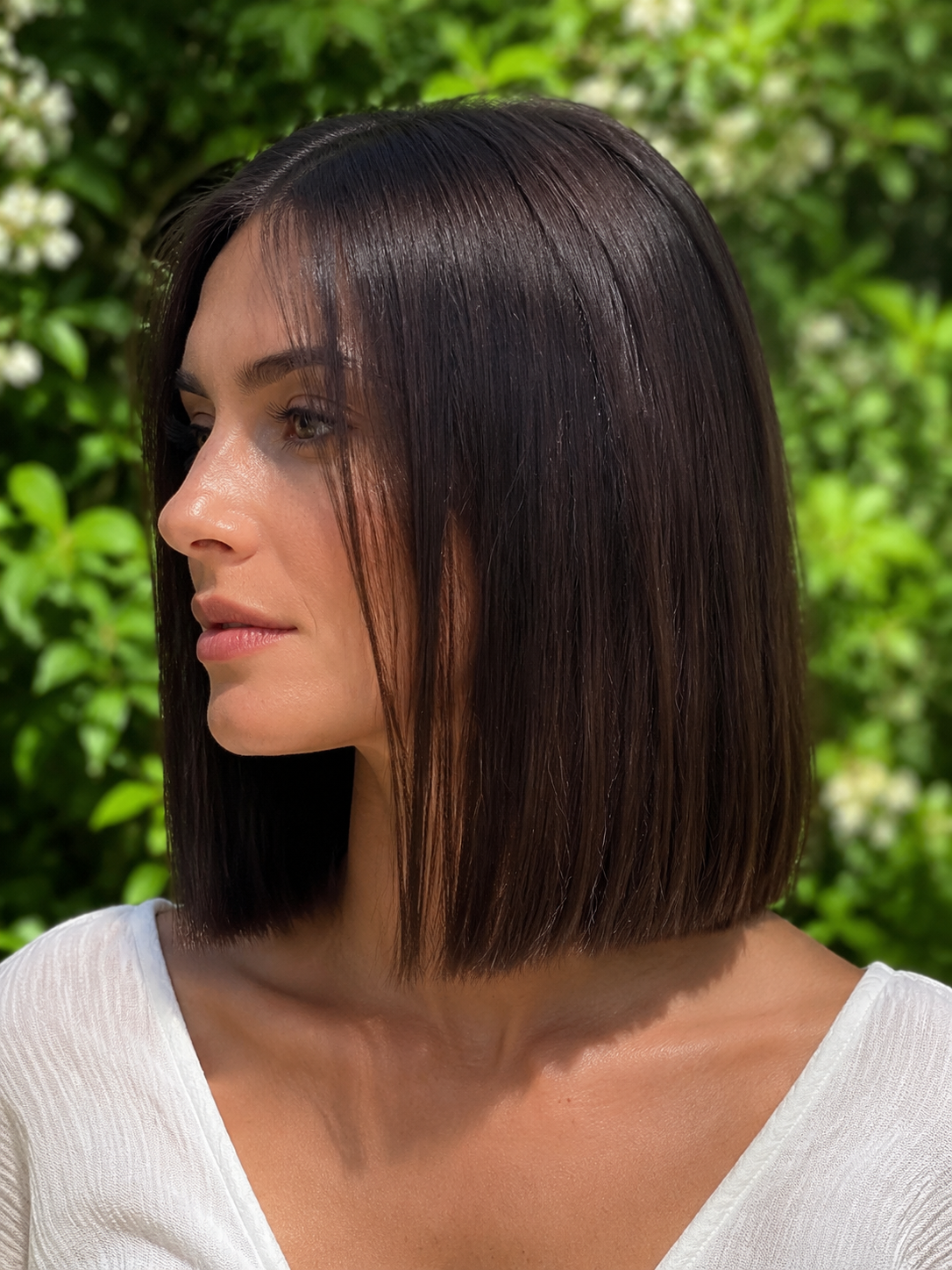
The single best cut for thin hair, full stop. A clean blunt perimeter at the collarbone creates the illusion of density along the bottom edge. No layers, no thinning, no texturizing. The cut works because hair gathers visually at the perimeter rather than spreading thinly throughout the length. Style with a smoothing serum and a flat iron pass. Maintenance every six weeks keeps the blunt edge looking intentional.
Slight A-Line Lob
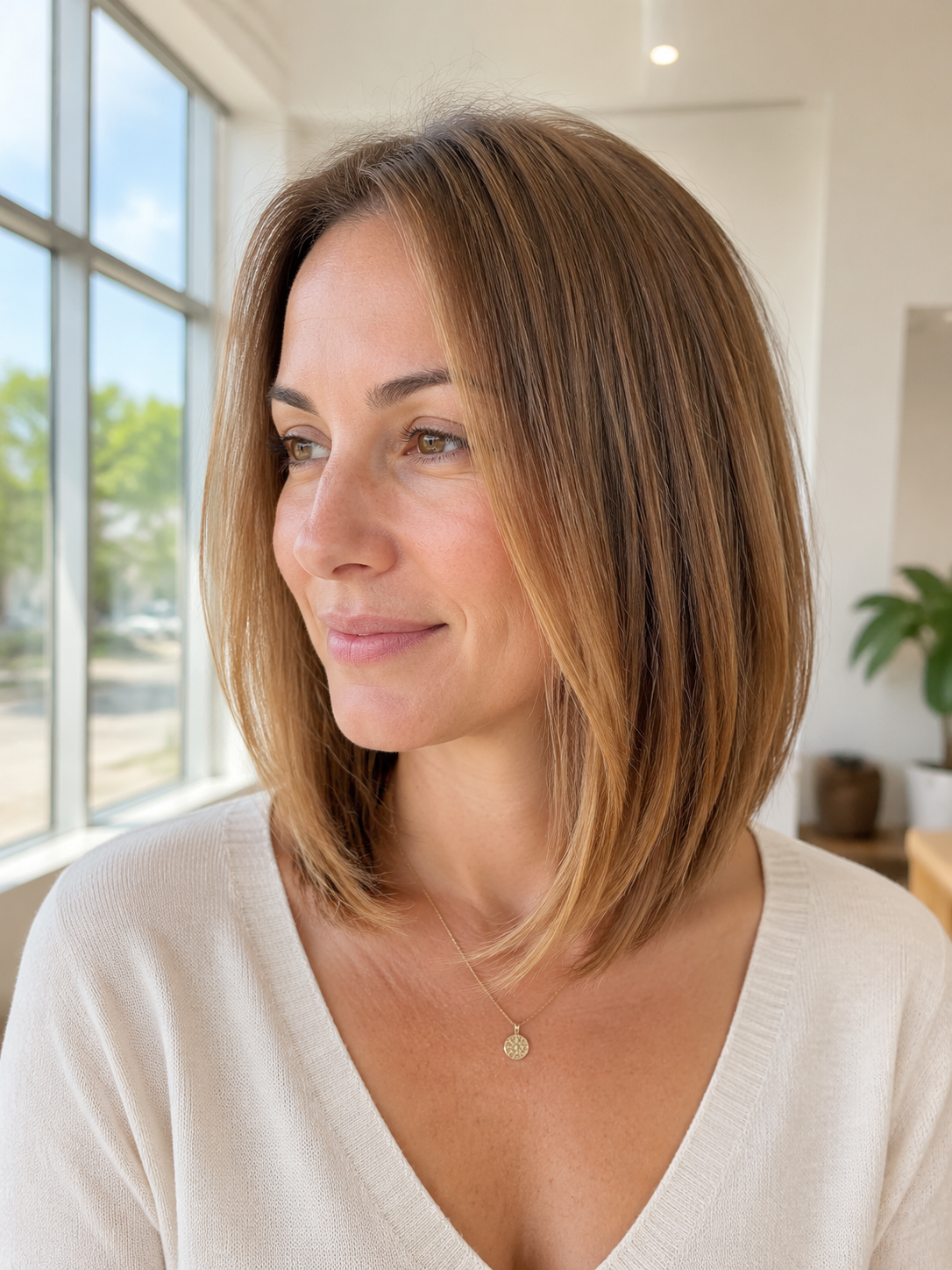
A subtle A-line, just an inch or two longer in the front than the back, adds shape without sacrificing the strong perimeter thin hair needs. The angle pulls focus forward and elongates the neck. Keep the graduation minimal. Aggressive A-lines remove too much weight from the back, which thin hair can’t afford to lose. Style with a round brush and a small bend inward at the ends.
Soft Wave Lob
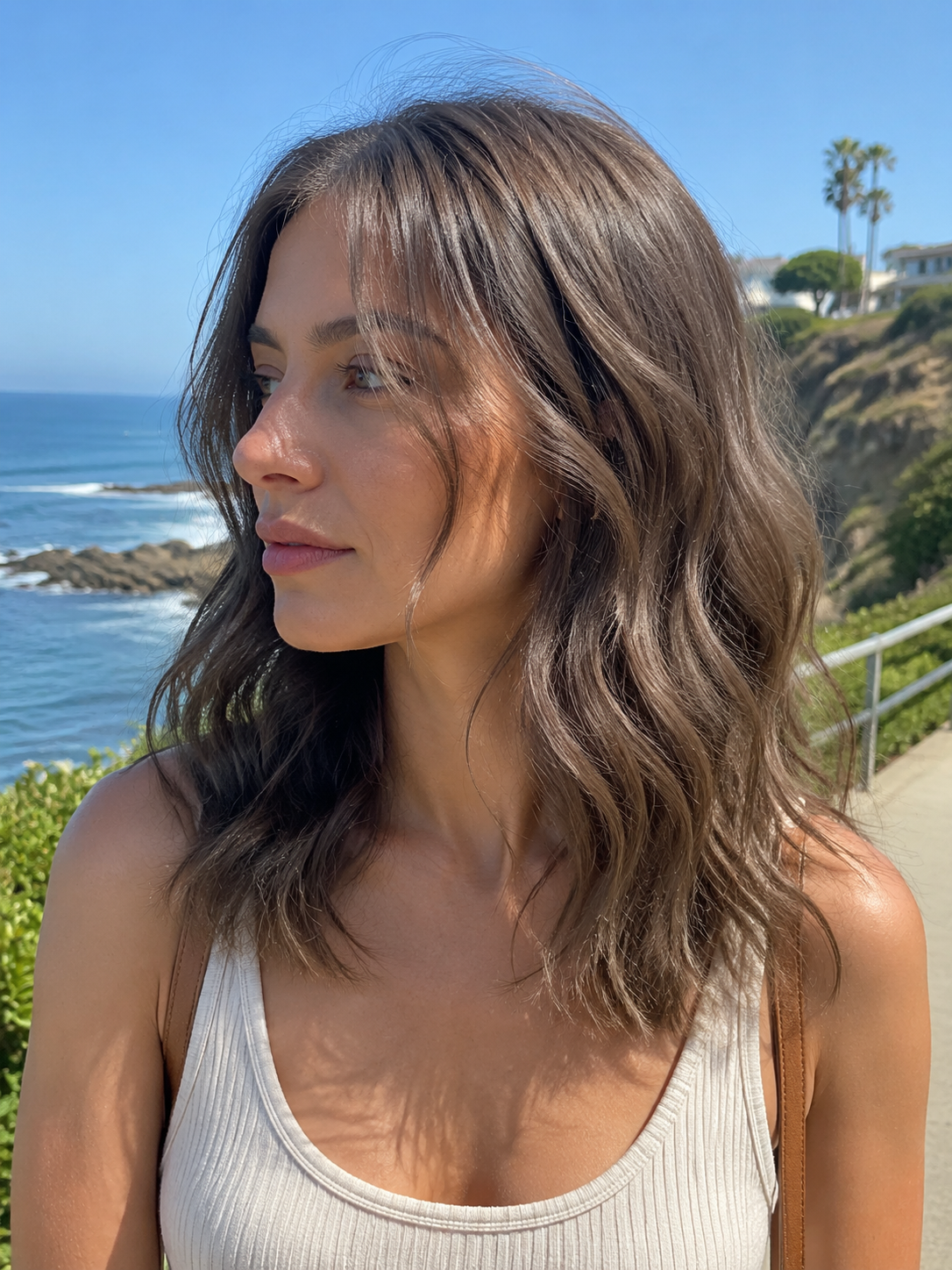
Loose waves through the mid-lengths and ends add visual fullness that straight thin hair lacks. Use a one-and-a-quarter inch wand and alternate direction by section. A volumizing mousse on damp hair before drying gives the waves something to hold onto. Brush out gently with fingers for softness. The waves create the illusion of width and density without requiring extra hair to do it.
Center-Parted Lob
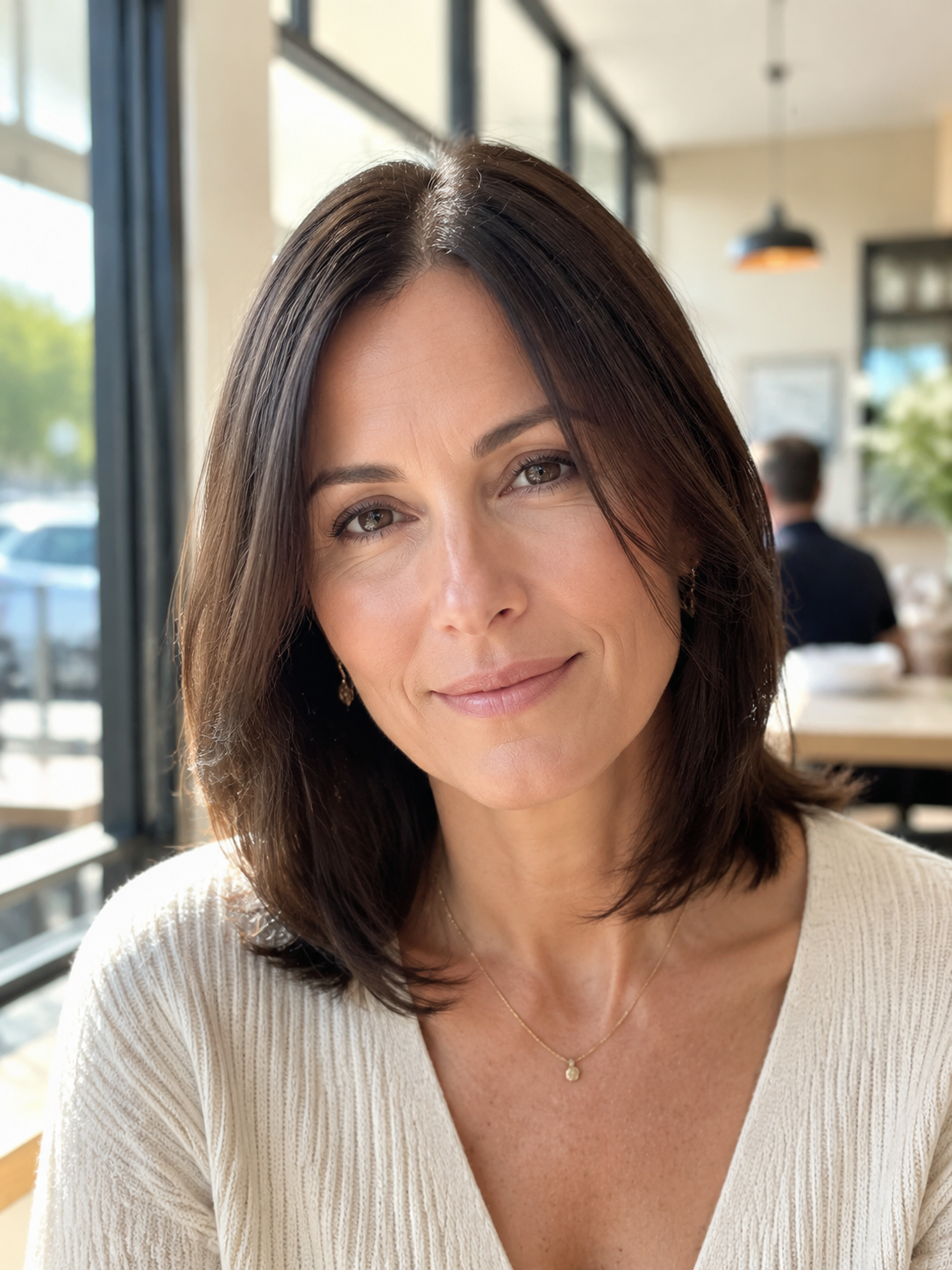
A clean center part with the lob falling at the collarbone gives the cut a polished, modern shape. The center exposure works on thin hair only if styled smooth or wavy, never messy. A small amount of root-lifting spray at the part adds discreet volume where thin hair often falls flat. Color the parting line slightly darker if needed to disguise scalp visibility.
Deep Side-Parted Lob

A deep side part dramatically increases the appearance of volume on thin hair. The shift creates lift at the root on the heavier side, since hair gets trained against its natural fall direction. Train the part with a comb on damp hair and set with a small amount of mousse at the root. The deep side part also disguises any thinning along the natural center part line.
Curtain Bangs Lob
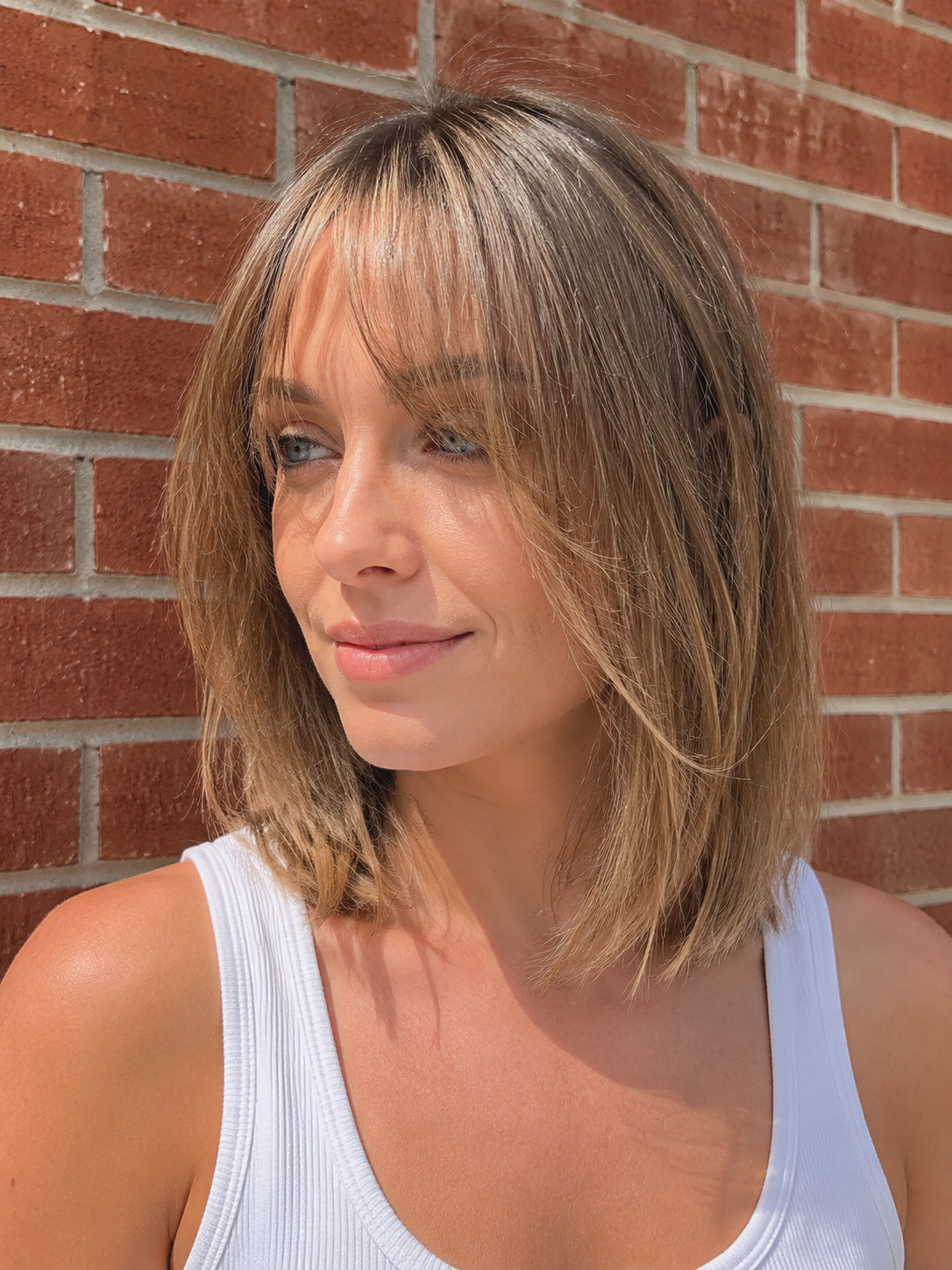
Parted bangs from cheekbone to jaw add fullness around the face where thin hair often lacks density. Keep the bangs light and wispy. Heavy thick curtain bangs look incongruent with thin hair underneath. Round-brush them outward and back from the face. The sweep should look effortless. Refresh every five to six weeks to keep the length sitting correctly without growing into the eye.
Wispy Bangs Lob
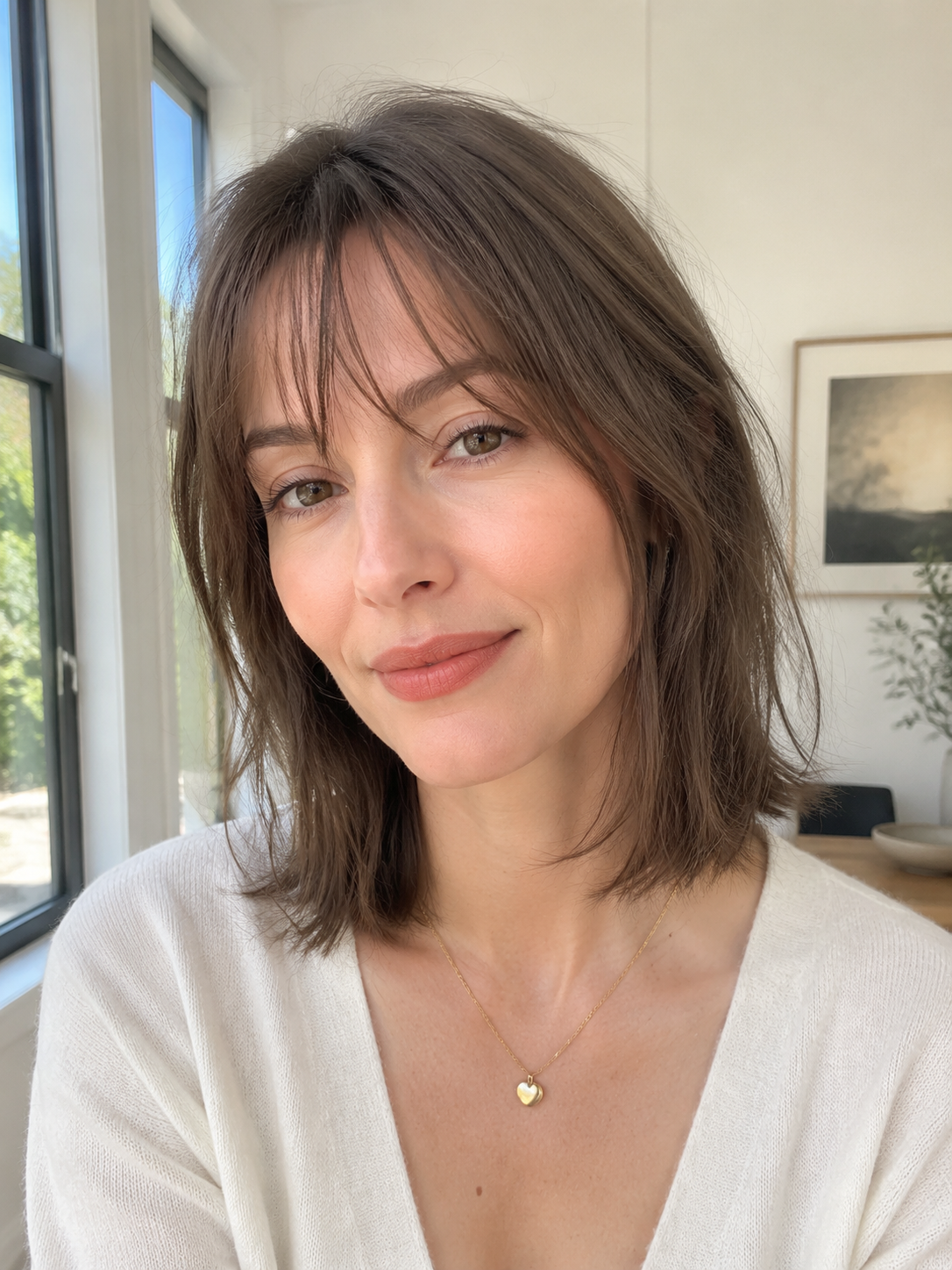
Piecey, separated bangs work beautifully with thin hair. The wispiness suits the natural texture rather than fighting it. Heavy blunt bangs would expose scalp at the hairline and call attention to density loss. Wispy bangs do the opposite, breaking up the forehead in a flattering way. Blow-dry with fingers and break apart with a tiny amount of texture cream. Avoid heavy products that flatten thin hair.
Side-Swept Lob
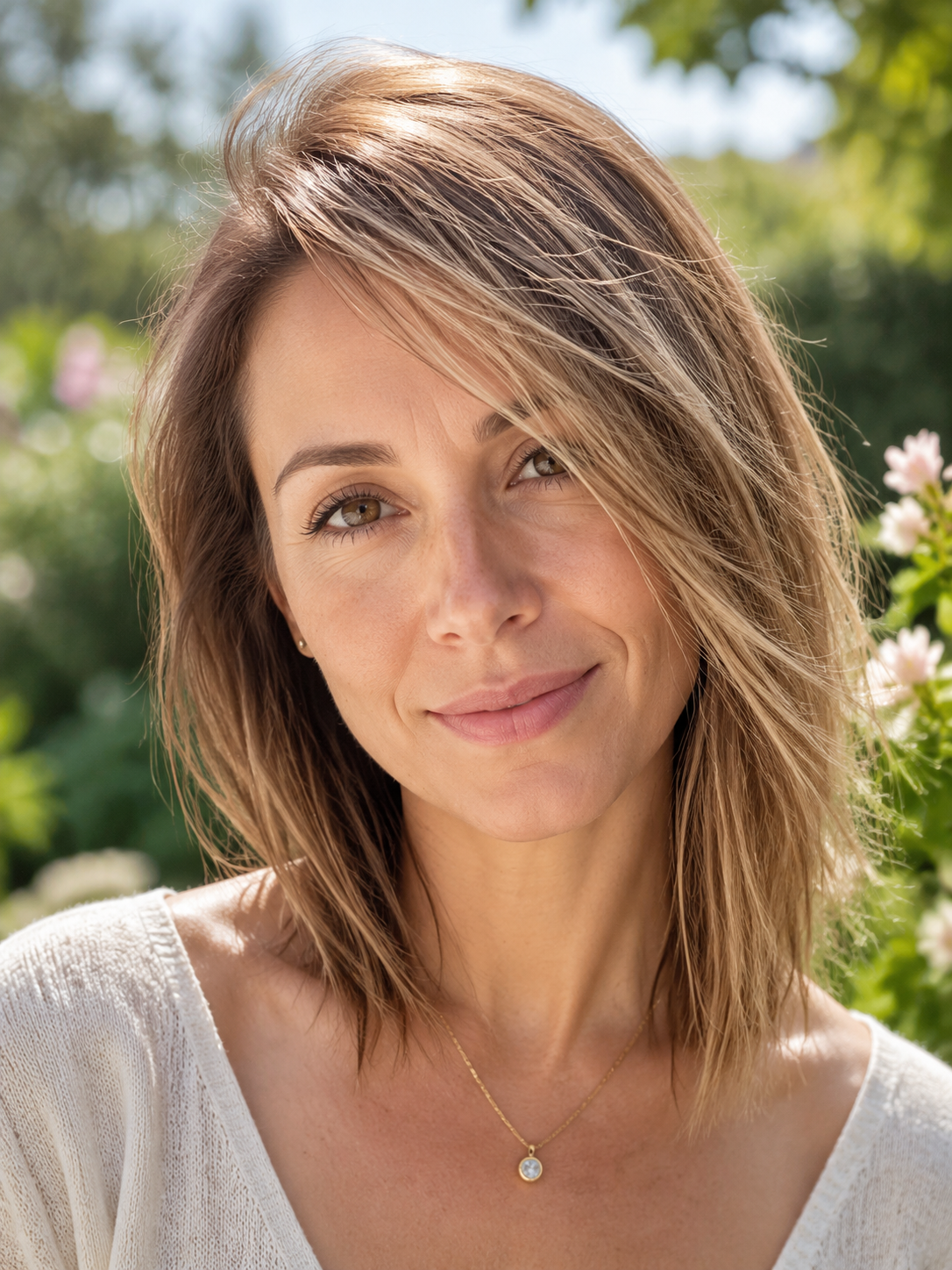
Hair swept diagonally across the forehead and falling to one side adds asymmetry and volume in one move. The sweep needs training on damp hair with a comb and a small amount of mousse. Best on thin hair because it concentrates what density exists into one visible mass rather than splitting it evenly across both sides. Pairs well with subtle face-framing layers around the chin.
Bouncy Blowout Lob
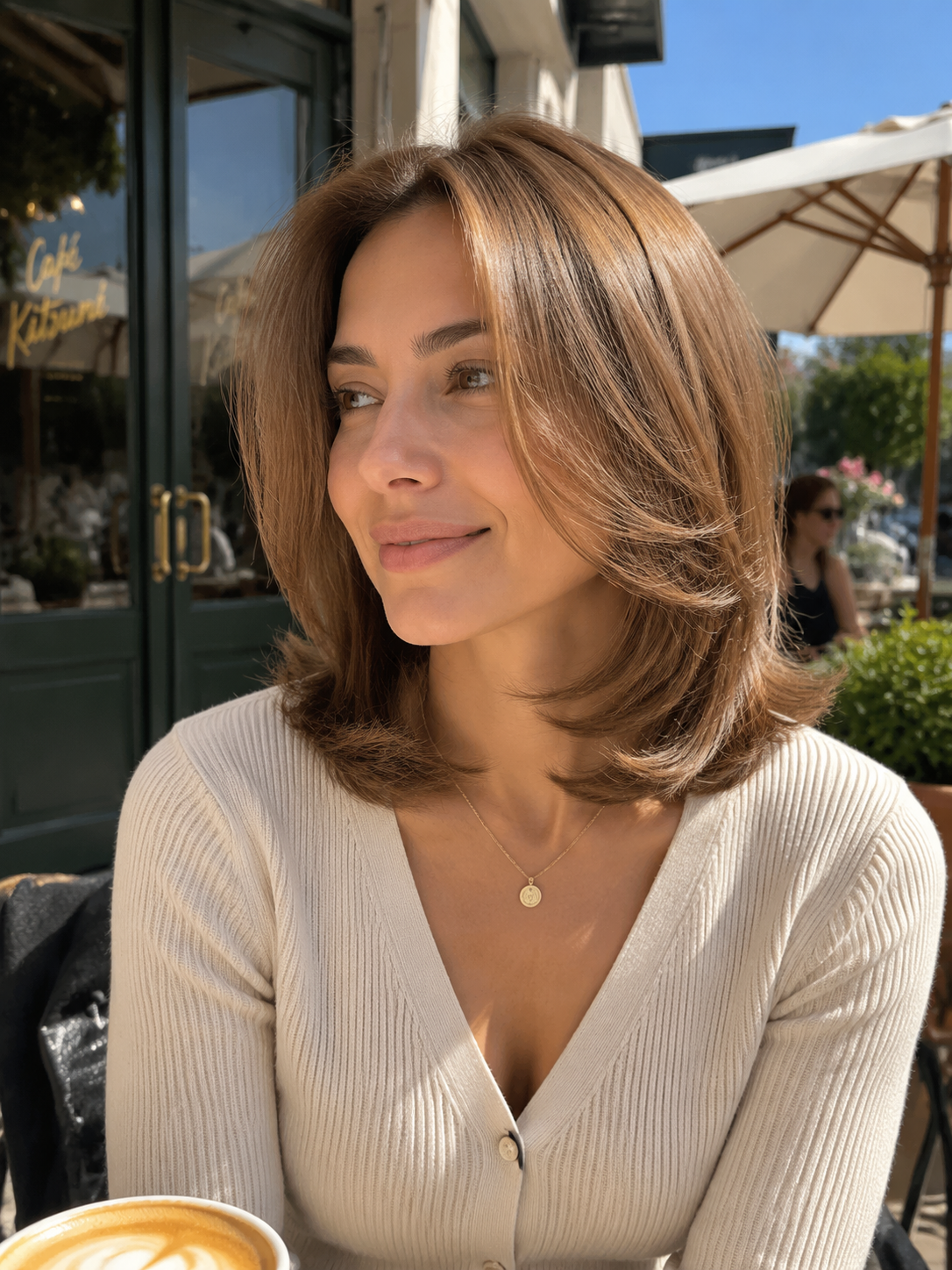
A round-brush blowout with volume at the roots and a soft curve at the ends gives thin hair the lift it doesn’t produce on its own. Roll the brush under at the ends and lift at the crown while drying. A flexible-hold spray and a small amount of root-lifting powder at the crown extend the volume through the day. The blowout creates instant fullness that lasts two or three days.
Inverted Lob
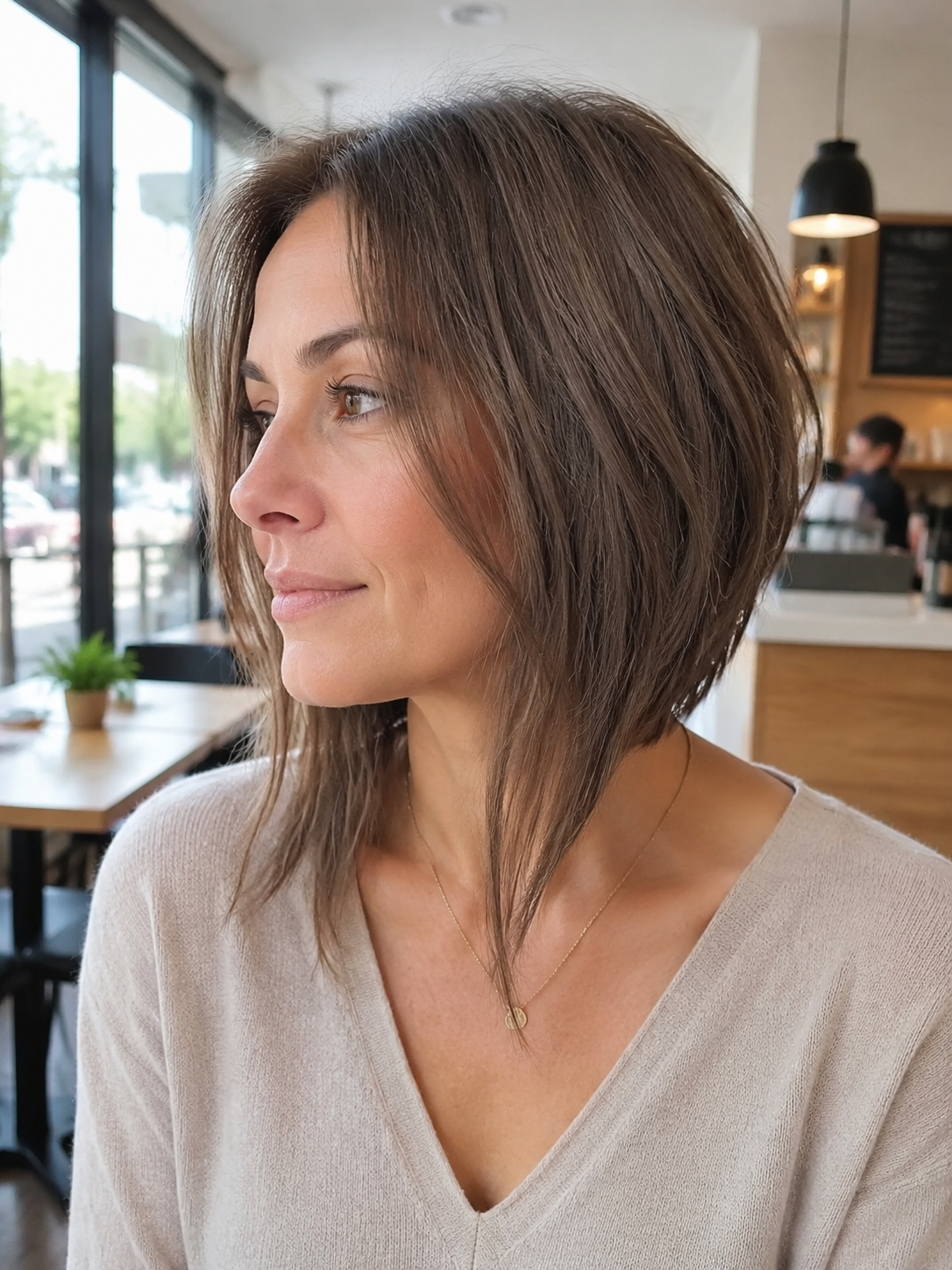
Stacked weight at the back of the head builds visible volume where thin hair often appears flattest. The graduation creates lift without root spray every morning. The front falls in longer pieces along the collarbone. The stacked back works because thin hair gathers into the graduation rather than thinning out. Keep the surface above the stacking clean and minimally layered for the best effect.
Tucked-Behind-Ears Lob
Styled with the front pieces tucked behind the ears, the lob shifts focus to the face. The styling option works on thin hair because tucking pulls volume backward and creates fullness behind the ears rather than around the face. A small amount of pomade behind each ear keeps the tuck in place through the day. Pairs well with curtain bangs left forward.
Money Piece Lob
Lightened panels directly framing the face add visual brightness and dimension to thin hair without committing to all-over lift. The contrast between the lighter pieces and the base color creates depth, which thin hair often lacks visually. Keep the placement starting at the part and ending around the chin. The grow-out stays soft, which matters when you’re already touching up roots regularly.
Balayage Lob
Hand-painted highlights through the mid-lengths and ends give the cut dimension without harsh regrowth lines. The painted dimension creates visual fullness on thin hair by adding tonal variation. The technique stays low-maintenance, which matters when monthly root touch-ups aren’t appealing. Stylists tend to place the lightest pieces around the face and slightly heavier through the bottom half for the most flattering effect.
Dimensional Highlights Lob
Traditional foil highlights placed strategically through the cut create the illusion of fuller hair through contrast. The technique works particularly well on thin hair because varied tones add visual weight where actual weight is lacking. Ask for ribbons of lighter pieces rather than chunky striping, which looks dated. The placement should look natural with the base color showing through clearly.
Root Shadow Lob
Darker roots melting into a lighter base creates dimension and the illusion of density. Thin hair often shows scalp visibility, especially along the part. A root shadow disguises this beautifully because the darker color at the base blends with any visible scalp tone. The technique also extends the time between root touch-ups significantly. Best refreshed every twelve to fourteen weeks.
C-Curl Lob
The C-shape bend at the ends flips inward in a soft curl. Use a flat iron or a one-and-a-half inch curling iron, rolling under at the perimeter. The bend gives the cut polish and visual weight at the ends, which is exactly what thin hair needs to look fuller. Pairs particularly well with hair colored in bronde, mushroom brown, or any of the cool brown shades trending right now.
Polished Sleek Lob
Smooth, high-shine finishing on a one-length lob leans into polish and reflective surface. Smoothness is the whole point. The reflective finish makes thin hair look healthier and more substantial by maximizing the light it bounces. A glossing treatment, smoothing serum, and a flat iron pass deliver the finish. Pairs especially well with a single-process color in a deep, rich shade.
Curtain Layer Lob
The lightest possible layering treatment, focused only on the longest face-framing pieces, adds subtle movement without exposing scalp through the interior of the cut. The longest face-framing layer should still hit at the collarbone. Otherwise the front pieces look choppy on thin hair. Best executed by stylists experienced with fine hair, who understand how little layering it actually needs.